
Property owners
Adam's Needle
- Plant
- Adam's Needle
- Botanical name
- Yucca filamentosa
- Group
- Succulents and cacti
Sourced light, soil, size and flowering details for Adam's Needle.
On this page
Botanical name: Yucca filamentosa.[1]
Light and soil
Full sun. Use well-drained soil; it does not tolerate wet sites or poor drainage. The native-plant profile lists coarse, dry sand.[1][2]
Size and foliage
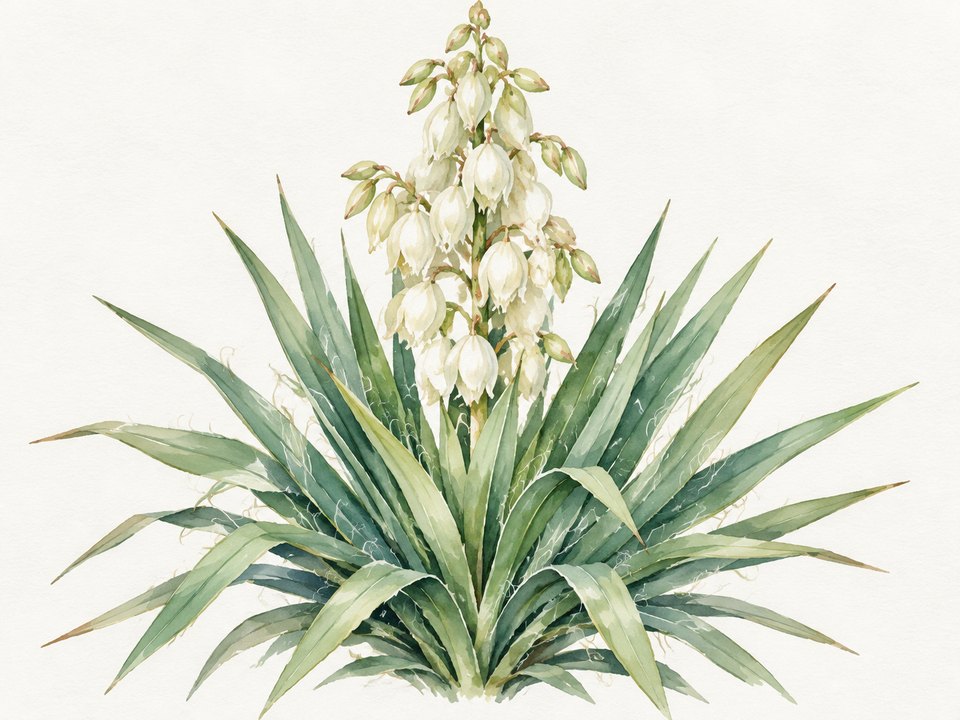
Evergreen clumps of stiff, blue-green, sword-like leaves reach about 2 to 3 feet tall. Flower stalks rise above the leaves, commonly around 6 feet; the profile notes plants can reach about 9 feet in bloom.[1]
Flowers
Creamy-white, bell-shaped flowers appear on tall stalks. The listed bloom period is April through August.[1]
Pruning
After flowering, cut the spent flower stalk to the ground. This yucca does not die simply because it has flowered.[2]
When to Plant Adam's Needle
Plant Adam's Needle in spring through early fall, while the soil is warm. Drainage matters most going into winter: roots sitting in cold, wet soil rot, so a plant established long before winter handles the season better.
Avoid planting right before winter.
If you would like a hand, the Texas Allied Landscape team can plant your Adam's Needle and keep it thriving.
Planting
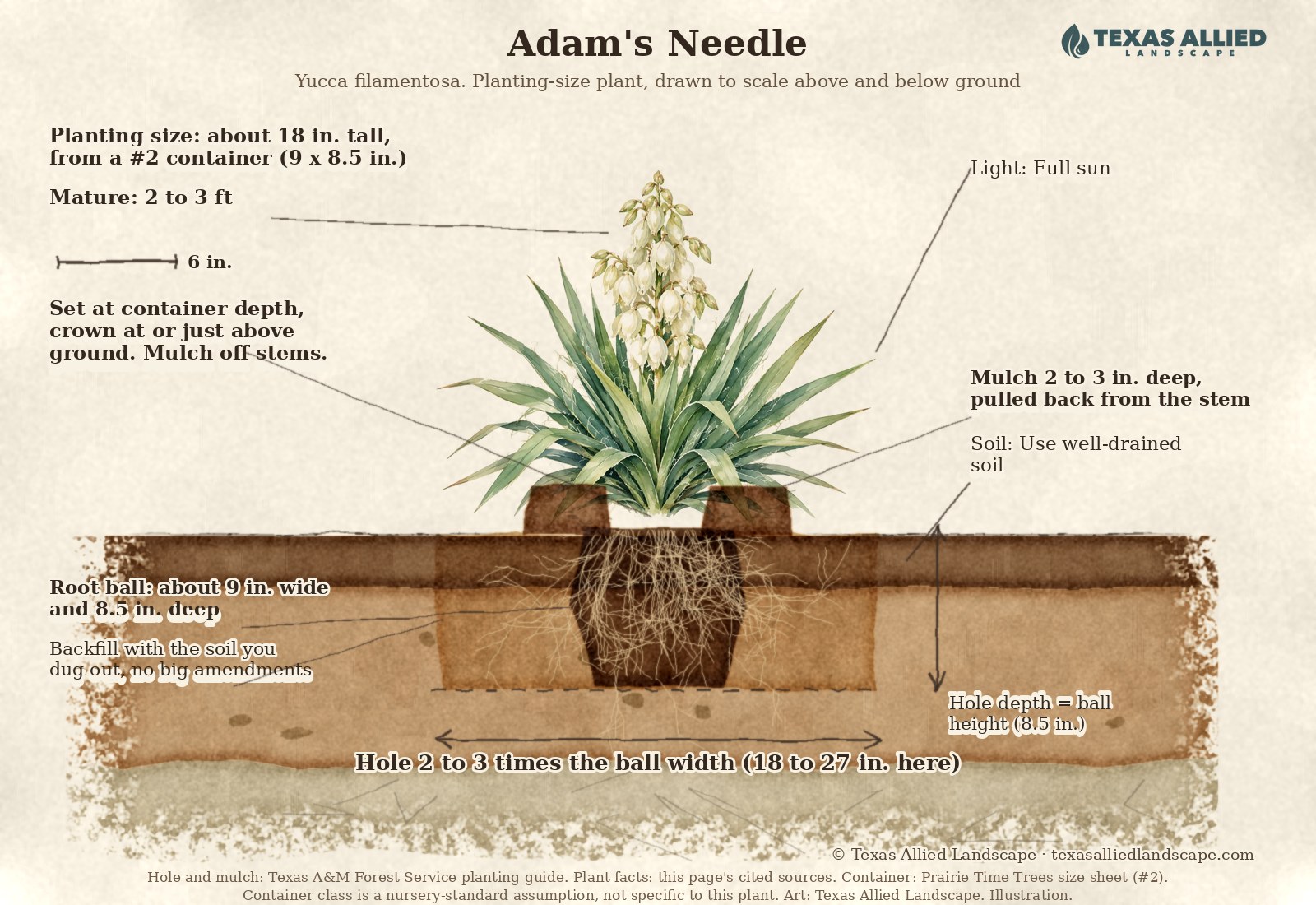
- Set the plant at the same depth it grew in its pot - never deeper - and ease it out of the container instead of pulling on the stems.[3]
- Soil and drainage: Use well-drained soil; it does not tolerate wet sites or poor drainage. The native-plant profile lists coarse, dry sand.[1][2]
- Timing: Plant Adam's Needle in spring through early fall, while the soil is warm.
- It needs no staking or other support.
Care Instructions for Your Adam's Needle
How to Water an Adam's Needle
Sunlight and soil
Full sun. Use well-drained soil; it does not tolerate wet sites or poor drainage. The native-plant profile lists coarse, dry sand.[1][2]
Pruning
After flowering, cut the spent flower stalk to the ground. This yucca does not die simply because it has flowered.[2]
Flowers
Creamy-white, bell-shaped flowers appear on tall stalks. The listed bloom period is April through August.[1]
Adam's needle questions
Can I cut an overgrown Adam's needle back or divide it?
Yes. Slice off the pups (the baby rosettes at the base) with a sharp spade and replant them - that is the easiest way to shrink a clump and get free plants. A woody old rosette can be cut to the ground and will resprout.[4]
Next step: Our horticulturalists can divide an overgrown yucca clump and reset the bed in one visit.
Why won't my Adam's needle bloom?
Young plants take a few years to flower for the first time. After that, full sun is the trigger - a yucca in shade grows leaves but skips the tall white bloom stalk.[5]
Should I cut off the flower stalk after it blooms?
Yes - once the white bells fade, cut the stalk at the base. The rosette that bloomed will not bloom again, but the pups around it take over.[6]
How much water does Adam's needle need?
Almost none once established. It is a true drought plant for Central Texas - the one way to kill it is wet, poorly drained soil, which rots the roots.[7]
Let Texas Allied Landscape care for your Adam's Needle
Adam's Needle does best with steady, knowledgeable care: the right water, pruning at the right time, and a trained eye for stress. The horticulturists at Texas Allied Landscape care for plants like yours across the San Antonio area, backed by over 40 years of landscape experience.
In these community guides
- Art in progress
Esperanza Landscaping
Plan your Esperanza landscape with help on plants, irrigation and the approval package. We check your neighborhood, lot…
Sources
- Yucca filamentosa (Adam's Needle), Lady Bird Johnson Wildflower Center.https://www.wildflower.org/plants/result.php?id_plant=yufiabcdefg
- Loss of bloom stalk on Yucca filamentosa from Scotch Plains NJ, Lady Bird Johnson Wildflower Center Ask Mr. Smarty Plants.https://www.wildflower.org/expert/show.php?id=9285abcde
- Back to basics: Planting perennials, SAWS Garden Style San Antonio.https://www.gardenstylesanantonio.com/garden-articles/back-to-basics-planting-perennials/↑
- Garden.org, "Yucca questions: cutting an overgrown clump down to size, splitting off pups."https://garden.org/learn/faq/view/159/Yucca-questions-cutting-an-overgrown-clump-down-to-size-splitting-off-pups-moving-a-mature-plant-how-many-years-to-the-first-flowers-growing-from-seed-and-reviving-an-indoor-yucca/↑
- Garden.org, "Yucca questions."https://garden.org/learn/faq/view/159/Yucca-questions-cutting-an-overgrown-clump-down-to-size-splitting-off-pups-moving-a-mature-plant-how-many-years-to-the-first-flowers-growing-from-seed-and-reviving-an-indoor-yucca/↑
- The Spruce, "How to Grow and Care for Adam's Needle."https://www.thespruce.com/adams-needle-yucca-filamentosa-2131814↑
- USDA NRCS plant guide, "Adam's Needle (Yucca filamentosa)."https://plants.sc.egov.usda.gov/DocumentLibrary/plantguide/pdf/cs_yufi.pdf↑