
Property owners
Bamboo Muhly
- Plant
- Bamboo Muhly
- Botanical name
- Muhlenbergia dumosa
- Group
- Ornamental grasses
Bamboo Muhly (Muhlenbergia dumosa): light, water, soil, size and care for San Antonio area landscapes.
On this page
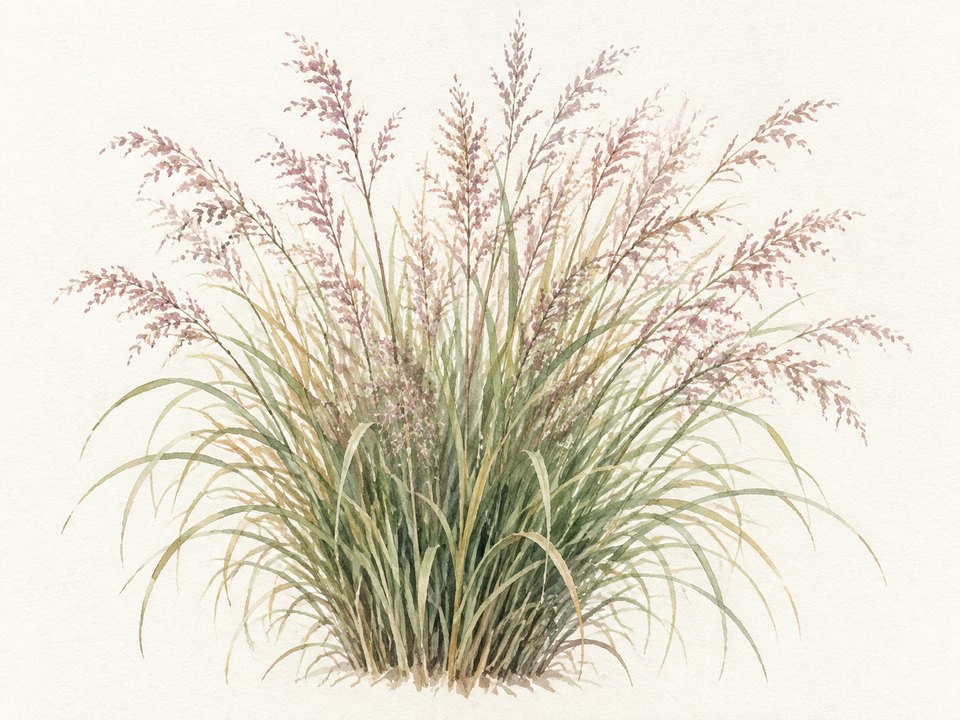
Bamboo Muhly (Muhlenbergia dumosa) is a clumping ornamental grass with fine, feathery leaves and upright, bamboo-like stems. It adds soft movement to a planting bed without the spreading habit of running bamboo.[1][2]
Light
Sun to part shade. In our strong Central Texas heat, bright filtered light or light afternoon shade is a good fit.[1][2]
Soil and drainage
Choose well-drained soil. Bamboo muhly can grow in thin soil or clay, but its crown can rot if it stays too wet. Avoid a low spot that holds water.[1][2]
Height
Allow for a mature height of 3 to 5 feet.[1]
Spread
Give each clump room to grow 3 to 4 feet wide.[1]
Foliage
The fine green leaves make a soft, airy mound. It may stay nearly evergreen in a mild winter, but cold can turn the foliage brown.[1][2]
Water
Water regularly while a new plant gets established. After that, it needs little water; exposed plants may need an occasional summer soaking. Let drainage, recent rain and the soil guide you rather than keeping the bed wet.[1][2]
Pruning
Remove brown or damaged growth just before fresh spring growth starts. Selectively prune stems to keep the plant's natural shape. A healthy green clump does not need an automatic cut to the ground.[2][3]
Seasonal behavior
Bamboo muhly brings billowy texture through the growing season and straw-colored seed heads in fall and winter. It is deer resistant, but a long, severe freeze can damage or kill plants, especially new ones. Do not assume a brown clump is dead before spring growth has a chance to appear.[1][2]
When to Plant Bamboo Muhly
For a new bamboo muhly in an exposed yard, spring after hard freezes is a cautious choice: young plants are more vulnerable to prolonged cold. Early fall planting is another option in a protected, well-drained spot. San Antonio's SAWS guidance includes muhly grass among warm-season perennials that can be planted in early fall.[2][4]
Texas Allied Landscape can help choose the spot, plant your bamboo muhly and care for it as the roots settle in.
Planting
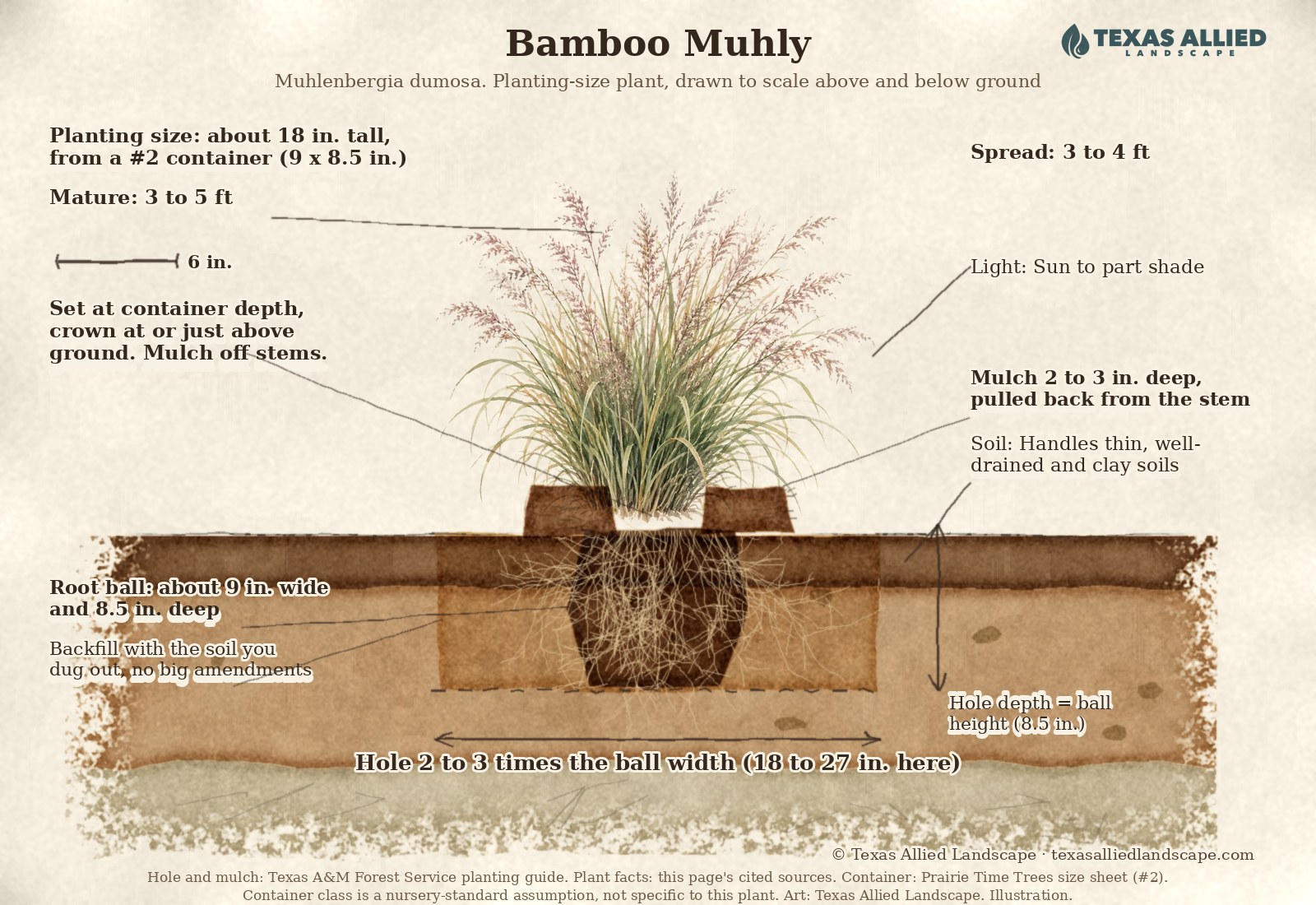
- Clear grass and weeds from the planting area. Leave enough room for a clump 3 to 4 feet wide.[4][1]
- Dig a hole twice as wide as the pot and no deeper, with sloping sides. Gently loosen tightly circling roots.[4]
- Set the plant at the same soil depth it had in its pot. Fill around the root ball and press the soil gently with your hands.[4]
- Water thoroughly after planting. Keep checking and watering the root ball while the plant establishes, without leaving it soggy.[4][2]
- Add 2 to 4 inches of mulch around the plant, keeping it a few inches away from the stems and crown.[4]
- Handle the stems gently: they can be brittle. Choose a spot where the plant has room for its natural form.[3][1]
Care Instructions for Your Bamboo Muhly
Region
This advice is for San Antonio and the surrounding Central Texas area. Shelter and drainage matter during severe winter weather.[1][2]
Water for a new plant
Check the root ball as the plant settles in. Water regularly during establishment, but avoid constantly wet soil.[2]
Water for an established plant
Reduce watering once established. In exposed locations, occasional summer water may be enough; do not water again just because the lawn is on a schedule.[1][2]
Sunlight
Sun to part shade, with bright filtered light or light shade helpful in intense Central Texas heat.[1][2]
Soil and drainage
Well-drained soil is the priority. Thin soil and clay can work, provided water does not sit around the crown.[1][2]
Mature height and spread
Plan for 3 to 5 feet tall and 3 to 4 feet wide.[1]
Pruning
Prune out brown foliage before new spring growth emerges. Keep healthy stems where possible, and cut back more only when damage calls for it.[2][3]
Signs of stress
Brown foliage after a freeze can be cold damage rather than a dead plant. Wait for warmer weather before deciding to remove it. A crown kept too wet is at risk of rot, so check drainage before adding more water.[2]
Normal seasonal behavior
Mild winters may leave it nearly evergreen. Colder winters can brown the top growth; surviving roots may send up new shoots in spring.[1][2]
Bamboo Muhly questions
Is bamboo muhly the same as bamboo?
Will bamboo muhly survive a hard freeze?
It can recover from surviving roots after the top turns brown, but recovery is not guaranteed. Long, extreme cold can kill it, and new plants are most vulnerable. Mulch around the roots and give it time to show new growth in spring.[2]
When should I cut back bamboo muhly?
Can bamboo muhly grow in shade?
It grows in part shade. Bright filtered light or light shade is useful in our strong summer sun. That does not make a dark, deeply shaded corner the same kind of site.[2]
Let Texas Allied Landscape care for your Bamboo Muhly
Want soft texture without a bed that needs constant watering? We can place and plant bamboo muhly, then handle watering checks and spring cleanup. Our horticulturists help keep the clump healthy without treating it like a lawn or a bamboo screen.
In these community guides
- Art in progress
Homestead Landscaping
Share your Homestead address, survey and yard ideas with Texas Allied Landscape. We help prepare a clear plan for…
Sources
- Bamboo Muhly, SAWS Garden Style San Antonio. Reviewed 2026-11-17.https://www.gardenstylesanantonio.com/plants/bamboo-muhly/abcdefghijklmnopqr
- Bamboo Muhly, Central Texas Gardener. Reviewed 2026-11-17.https://centraltexasgardener.org/resource/bamboo-muhly/abcdefghijklmnopqrstuvw
- Muhly, Bamboo, City of Austin Grow Green. Reviewed 2026-11-17.https://www.austintexas.gov/department/grow-green/plant-guide/muhly-bambooabcd
- Back to basics: Planting perennials, SAWS Garden Style San Antonio. Reviewed 2026-11-17.https://www.gardenstylesanantonio.com/garden-articles/back-to-basics-planting-perennials/abcdef
- Trimming of native Muhlenbergia dumosa (Bamboo grass), Lady Bird Johnson Wildflower Center. Reviewed 2026-11-17.https://www.wildflower.org/expert/show.php?frontpage=true&id=1984↑