
Property owners
Berkeley Sedge
- Plant
- Berkeley Sedge
- Botanical name
- Carex divulsa
- Group
- Ornamental grasses
Sourced light, water, size and care details for Berkeley Sedge.
On this page
Botanical name: Carex divulsa. NC State lists it as grassland sedge or European gray sedge.[1]
Light, soil and water
Sun to partial or full shade, and a wide range of soils from dry to boggy. It tolerates heat and humidity. It is drought tolerant but looks lusher with regular irrigation.[1]
Size and habit
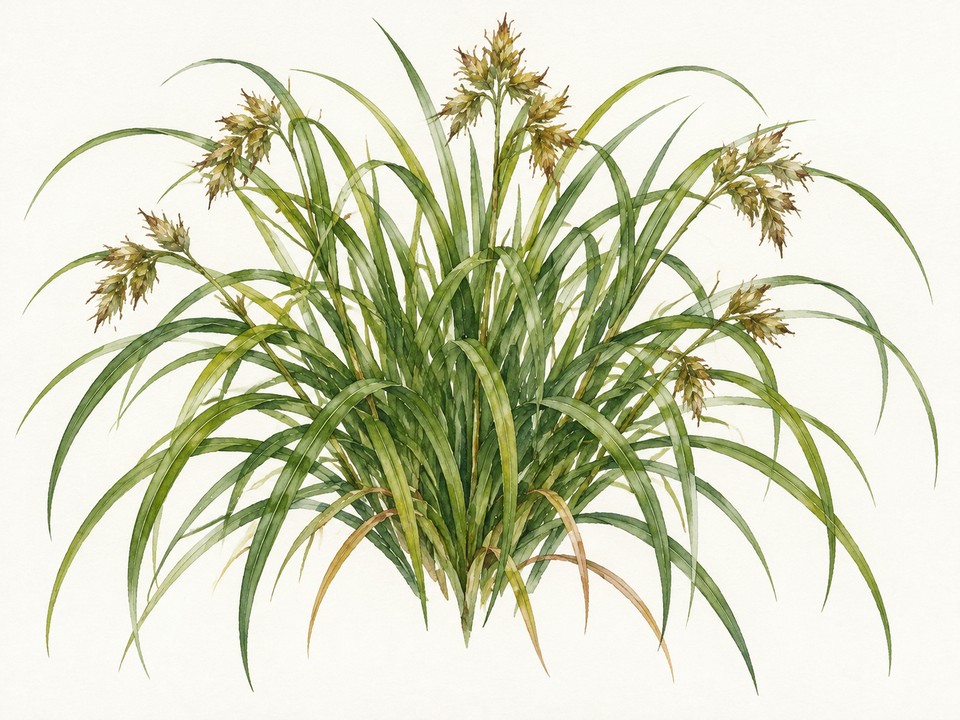
A cool-season perennial that grows in arching clumps, about 2 feet wide, with bright green leaves and a tidy habit. It can reseed and naturalize in the right conditions.[1]
Uses and wildlife
Useful under established trees and in dry shade, on slopes for erosion control, and as a groundcover or accent in groups. It adds winter interest, resists deer damage and attracts songbirds and pollinators.[1]
When to Plant Berkeley Sedge
Plant Berkeley Sedge in fall or spring in Central Texas, when cooler weather and seasonal moisture help the plugs or divisions knit in. Keep new plantings watered through the first summer.[2]
If you would like a hand, the Texas Allied Landscape team can plant your Berkeley Sedge and keep it thriving.
Planting
- Dig a hole twice as wide as the pot and no deeper, with sloping sides, and set the plant at the same depth it grew in its pot. Loosen any circling roots before backfilling.[3]
- For a new bed, clear grass and weeds first, roots and all.[3]
- Give it room: A cool-season perennial that grows in arching clumps, about 2 feet wide, with bright green leaves and a tidy habit. It can reseed and naturalize in the right conditions.[1] Space plants for that full size, not the pot size.[3]
- Timing: Keep new plantings watered through the first summer.[2]
- Soak it well at planting and keep watering while the roots establish.[3]
- Mulch 2 to 4 inches, kept a few inches away from the stems to prevent crown rot. It needs no staking or other support.[3]
Care Instructions for Your Berkeley Sedge
Sunlight, soil and water
Sun to partial or full shade, and a wide range of soils from dry to boggy. It tolerates heat and humidity. It is drought tolerant but looks lusher with regular irrigation.[1]
Berkeley sedge questions
Is Berkeley sedge a good grass substitute for shade?
It is one of the best - it grows in sun to full shade, stays about a foot tall in soft arching clumps, and never needs mowing. Under live oaks where turf fails, it fills in as a green carpet.[4]
How much water does Berkeley sedge need?
It is drought tolerant once established but looks lusher with regular irrigation - a good fit for beds that get sprinkler overspray and for dry shade alike.[5]
Should I cut back Berkeley sedge?
A light comb-through or shearing in late winter freshens it, since it is a cool-season grower that stays green most of the year here. Otherwise it needs almost no maintenance.[6]
Next step: Our horticulturalists can fold the late-winter cutback into your regular bed care.
Will Berkeley sedge take over my beds?
It clumps rather than runs, though it can reseed and naturalize where it is happy. Seedlings pull easily, so it is an easy spreader to manage.[7]
Let Texas Allied Landscape care for your Berkeley Sedge
Berkeley Sedge does best with steady, knowledgeable care: the right water, pruning at the right time, and a trained eye for stress. The horticulturists at Texas Allied Landscape care for plants like yours across the San Antonio area, backed by over 40 years of landscape experience.
Sources
- Carex divulsa, North Carolina Extension Gardener Plant Toolbox.https://plants.ces.ncsu.edu/plants/carex-divulsa/abcdefg
- October Gardening Checklist, Travis County AgriLife Extension.https://travis-tx.tamu.edu/about-2/horticulture/monthly-gardening-calendar-for-austin-area/october-gardening-checklist-for-austin-and-central-texas/ab
- Back to basics: Planting perennials, SAWS Garden Style San Antonio.https://www.gardenstylesanantonio.com/garden-articles/back-to-basics-planting-perennials/abcde
- Texas SmartScape, "Sedge, Berkeley."https://www.txsmartscape.com/plant-search/sedge-berkeley↑
- North Carolina Extension Gardener Plant Toolbox, "Carex divulsa."https://plants.ces.ncsu.edu/plants/carex-divulsa/↑
- West Texas Gardening, "Ornamental Sedges."https://www.westtexasgardening.org/post/ornamental-sedges↑
- Missouri Botanical Garden Plant Finder, "Carex divulsa."https://www.missouribotanicalgarden.org/PlantFinder/PlantFinderDetails.aspx?taxonid=293893↑