
Property owners
Engelmann Daisy
- Plant
- Engelmann Daisy
- Botanical name
- Engelmannia peristenia
- Group
- Ground cover
Engelmann Daisy (Engelmannia peristenia): light, water, soil, size and care for San Antonio area landscapes.
On this page
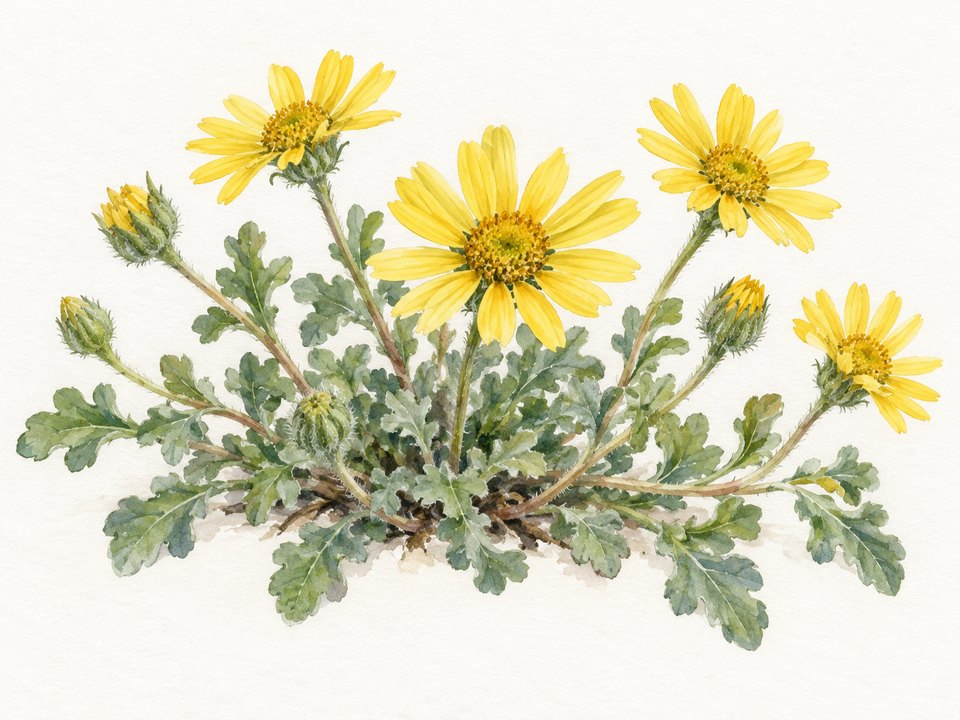
Its botanical name is Engelmannia peristenia.
Light
It needs full sun.[1]
Soil and drainage
It grows in thin, sandy, well-drained and clay soil categories.
Height
It grows up to 3 feet.
Spread
It spreads to a maximum of 3 feet.
Foliage
Its foliage provides year-round interest. The flowering stems are seasonal.
Water
Sources differ on water needs. Some list Low or Very Low Water. Another source labels it Medium and says unusually dry winter or spring may need supplemental water.[2] If watering ever feels like a guessing game, our horticulturists can care for your Engelmann Daisy on a schedule that fits your yard.
Pruning
Allow seeds to mature fully before mowing. After bloom, tidy old stems. A late-summer cutback can sometimes produce fall flowers.
Seasonal behavior
It grows up to 3 feet tall. Yellow flowers appear March through July, with occasional warm-winter bloom. The deeply lobed foliage provides year-round interest.
When to Plant Engelmann Daisy
Sow Engelmann Daisy seed in fall, September through November in Central Texas. Fall sowing lets the plants establish over winter and bloom on schedule in spring or summer.[3]
Nursery transplants, where available, can go in during fall or early spring. Water new plantings through dry spells.
If you would like a hand, the Texas Allied Landscape team can plant your Engelmann Daisy and keep it thriving.
Planting
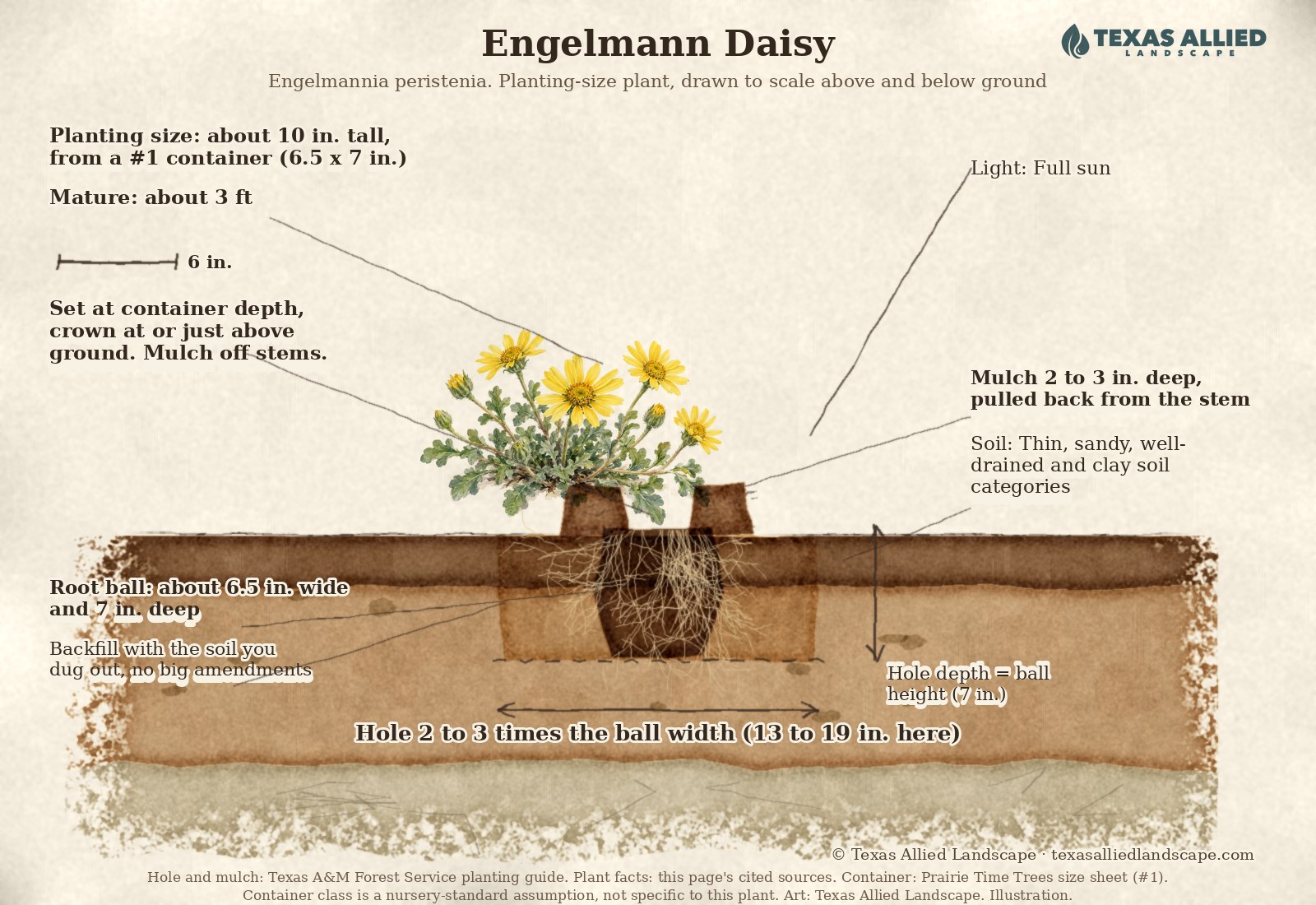
- Dig a hole twice as wide as the pot and no deeper, with sloping sides. Set the plant at the same depth it grew in its pot. Loosen any circling roots before backfilling.[4]
- For a new bed, clear grass and weeds first, roots and all.[4]
- Site: It needs full sun.[1]
- Timing: Fall sowing lets the plants establish over winter and bloom on schedule in spring or summer.[3]
- Soak it well at planting and keep watering while the roots establish.[4] Once it is established, sources differ on water needs. Some list Low or Very Low Water. Another source labels it Medium and says unusually dry winter or spring may need supplemental water.[2]
- Mulch 2 to 4 inches, kept a few inches away from the stems to prevent crown rot. It needs no staking or other support.[4]
When can I mow Engelmann daisy without losing its seed crop?
Wait until the seeds have fully matured before mowing. After bloom you can tidy old stems, and a late-summer cutback can sometimes bring fall flowers.
Care Instructions for Your Engelmann Daisy
Sunlight
It needs full sun.[1]
Soil and drainage
It grows in thin, sandy, well-drained and clay soil categories.
Mature height and spread
It grows up to 3 feet. It spreads to a maximum of 3 feet.
Pruning
Allow seeds to mature fully before mowing. After bloom, tidy old stems. A late-summer cutback can sometimes produce fall flowers.
Normal seasonal behavior
It grows up to 3 feet tall. Yellow flowers appear March through July, with occasional warm-winter bloom. The deeply lobed foliage provides year-round interest.
Engelmann daisy questions
Is Engelmann daisy a Texas native?
Yes. Engelmannia peristenia is a tough native prairie daisy that blooms yellow from spring to frost.[5]
How long does Engelmann daisy bloom?
Nearly the whole growing season. It is one of the longest-blooming Texas natives, and it even holds up to grazing and mowing.[6]
How much water does it need?
Very little. It is a dry-prairie plant. Cut it back in midsummer if it flags, and it flushes right back.[7]
Next step: Our horticulturalists can shear it midsummer for a fresh fall bloom.
Is Engelmann daisy deer resistant?
Mostly. Deer sample it less than most daisies, and it recovers quickly from browsing.[8]
Let Texas Allied Landscape care for your Engelmann Daisy
Engelmann Daisy does best with steady, knowledgeable care. That means the right water, pruning at the right time, and a trained eye for stress. The horticulturists at Texas Allied Landscape care for plants like yours across the San Antonio area. They are backed by over 40 years of landscape experience.
In these community guides
- Art in progress
Esperanza Landscaping
Plan your Esperanza landscape with help on plants, irrigation and the approval package. We check your neighborhood, lot…
Sources
- Engelmann's Daisy (Engelmannia peristenia), Garden Style San Antonio (San Antonio Water System).https://www.gardenstylesanantonio.com/plants/engelmanns-daisy/abc
- Engelmannia peristenia (Engelmann's daisy), Lady Bird Johnson Wildflower Center.https://www.wildflower.org/plants/result.php?id_plant=enpe4abc
- October Gardening Checklist, Travis County AgriLife Extension.https://travis-tx.tamu.edu/about-2/horticulture/monthly-gardening-calendar-for-austin-area/october-gardening-checklist-for-austin-and-central-texas/ab
- Back to basics: Planting perennials, Garden Style San Antonio (San Antonio Water System).https://www.gardenstylesanantonio.com/garden-articles/back-to-basics-planting-perennials/abcd
- Native Plant Society of Texas, "Engelmannia peristenia."https://www.npsot.org/posts/native-plant/engelmannia-peristenia/↑
- City of Austin Grow Green plant guide, "Daisy, Engelmann."https://www.austintexas.gov/watershed-protection/plant-guide/daisy-engelmann↑
- Central Texas Gardener, "Engelmann's Daisy."https://centraltexasgardener.org/resource/engelmanns-daisy/↑
- Native Backyards, "Cutleaf Daisy."https://nativebackyards.com/cutleaf-daisy/↑