
Property owners
European Olive
- Plant
- European Olive
- Botanical name
- Olea europaea
- Group
- Ornamental trees
European Olive: planting and care guidance for Central Texas landscapes.
On this page
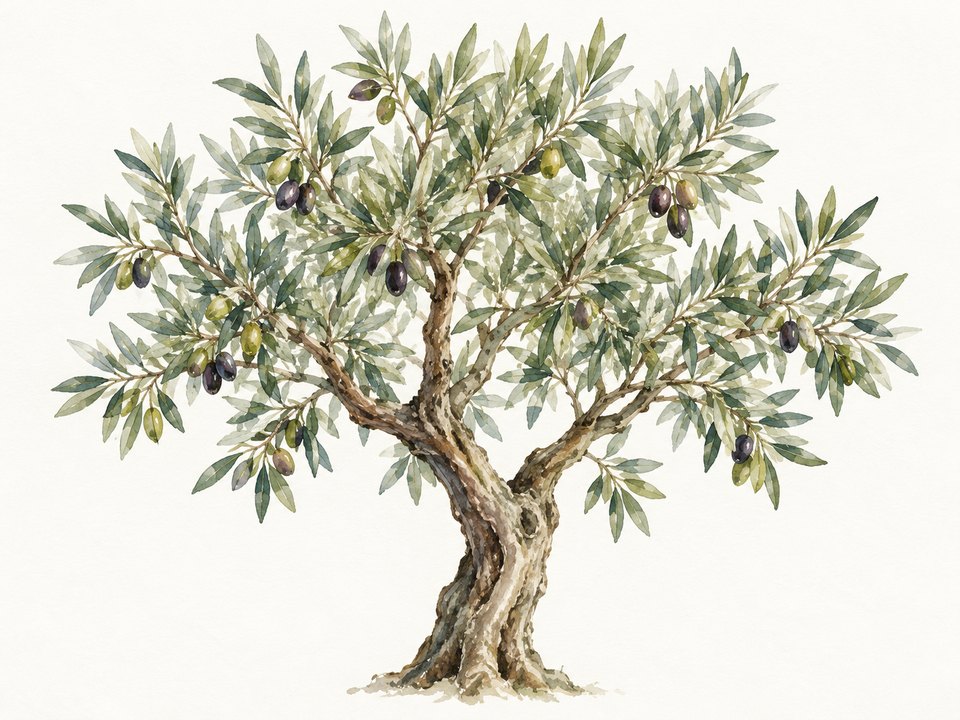
Botanical name: Olea europaea. The classic Mediterranean evergreen tree, grown in Texas for its silvery foliage, gnarled trunk, and exceptional drought tolerance.[1]
Light and soil
Full sun and excellent drainage. It thrives in thin, alkaline, rocky soil but declines in ground that stays wet.[1]
Height and spread
In San Antonio landscapes, typically 15 to 25 feet tall and wide over time, and easily kept smaller with pruning.[2]
Foliage and seasonal behavior
Silvery gray-green leaves year-round. Small spring flowers; fruiting varieties set olives, while fruitless cultivars stay clean for patios and pools.[3]
Water
Very low once established. Deep but infrequent watering suits it best.[1]
Pruning
Prune in late winter to open the canopy and shape; it tolerates hard pruning and responds with dense new growth.[2]
When to Plant European Olive
Plant a European olive in spring after the last frost; a full warm growing season helps young trees harden off before their first winter.[1]
If you would like a hand, the Texas Allied Landscape team can plant your european olive and keep it thriving.
Planting
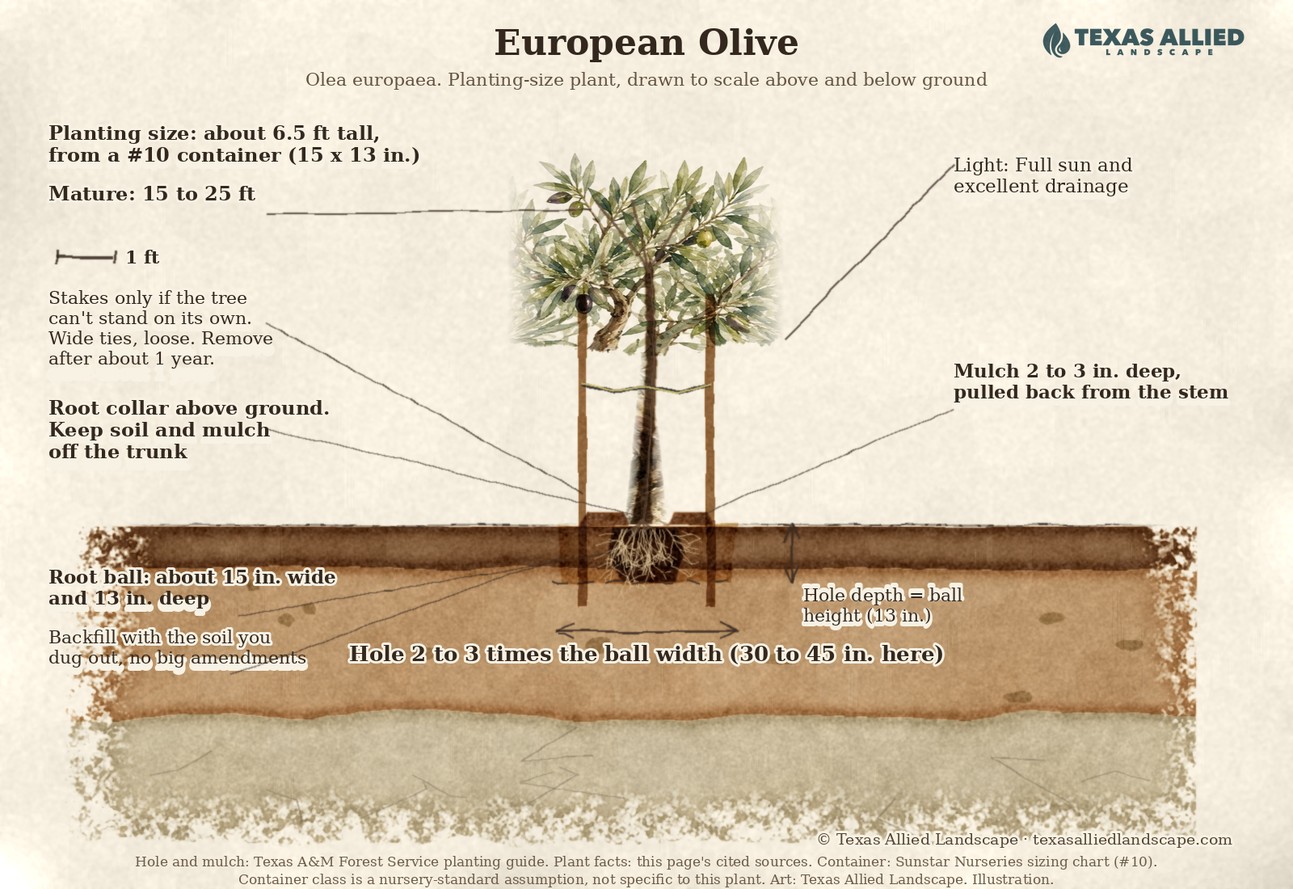
Set the tree at the same depth it grew in the container, in the sunniest, best-drained spot you have.[4]
Care Instructions for Your European Olive
How to Water an European Olive
Sunlight and soil
Full sun; sharp drainage.[1]
Mature height and spread
15 to 25 feet, smaller with pruning.[2]
Pruning
Late-winter shaping; responds well to hard cuts.[2]
Normal seasonal behavior
Evergreen; fruit drop from fruiting varieties is normal and avoidable with fruitless cultivars.[3]
european olive questions
Do olive trees really grow in Texas?
Yes, with full sun and excellent drainage they do well here. Wet, heavy soil is what holds them back.[1]
Why is my olive tree dropping leaves?
Check the soil first: olives suffer in ground that stays wet. They want deep but infrequent watering.[1]
Next step: If leaf drop continues after the soil dries out, our horticulturalists can check for root problems.
Will an olive tree make a mess?
Fruiting varieties drop olives, which stain paving. Fruitless cultivars stay clean for patios and pools.[3]
How big does a European olive get?
Typically 15 to 25 feet in San Antonio, and it takes well to pruning if you want it smaller.[2]
Let Texas Allied Landscape care for your European Olive
Want a European olive in your yard? We plant it, and we can keep it healthy for years with ongoing maintenance.
In these community guides
Illustration. Illustration based on reference photos of The Dominion. Not a single literal view. The Dominion Landscaping
Plan your Dominion landscape with help on planting, irrigation and the ACC package. We check your lot's standards and…
Sources
- Texas A&M AgriLife Extension, "Olives."https://aggie-horticulture.tamu.edu/fruit-nut/files/2015/04/olives_2015.pdfabcdefg
- North Carolina Extension Gardener Plant Toolbox, "Olea europaea."https://plants.ces.ncsu.edu/plants/olea-europaea/abcde
- University of California Agriculture and Natural Resources, "Olive."https://ipm.ucanr.edu/PMG/GARDEN/FRUIT/olives.htmlabc
- Planting, Texas A&M Forest Service.https://tfsweb.tamu.edu/trees/tree-care/planting/↑