
Property owners
Harvard Agave
- Plant
- Harvard Agave
- Botanical name
- Agave havardiana
- Group
- Succulents and cacti
Sourced care for Agave havardiana, with the catalog spelling explained.
On this page
The catalog label is "Harvard Agave." The botanical name is Agave havardiana, named in the Wildflower Center profile as Havard's Century Plant.[1]
Light, soil and water
Full sun to light shade. Low water needs. Use dry, well-drained soil.[1]
Size and form
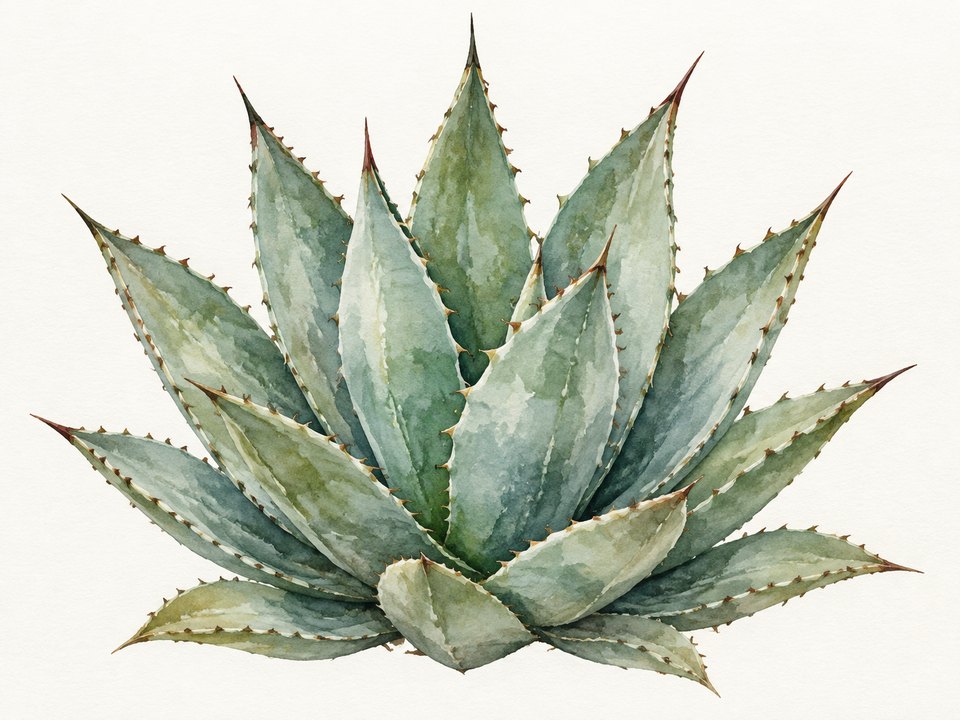
About 3 feet tall and wide, with a flower stalk reaching about 15 feet. Evergreen, with broad, fleshy gray-green leaves. Leaf edges have teeth, and the tips have stout spines.[1]
Flowers and life cycle
The Wildflower Center lists summer flowering from June through September. It describes a mature plant flowering after about 20 to 40 years, followed by the flowering plant's death. Do not use that age range as a countdown for an individual plant.[1]
Cold
The profile lists hardiness to 15 degrees F. This is not a guarantee for every site or freeze.[1]
When to Plant Harvard Agave
Plant Harvard Agave in spring through early fall, while the soil is warm. Drainage matters most going into winter: roots sitting in cold, wet soil rot, so a plant established long before winter handles the season better.
Avoid planting right before winter.
If you would like a hand, the Texas Allied Landscape team can plant your Harvard Agave and keep it thriving.
Planting
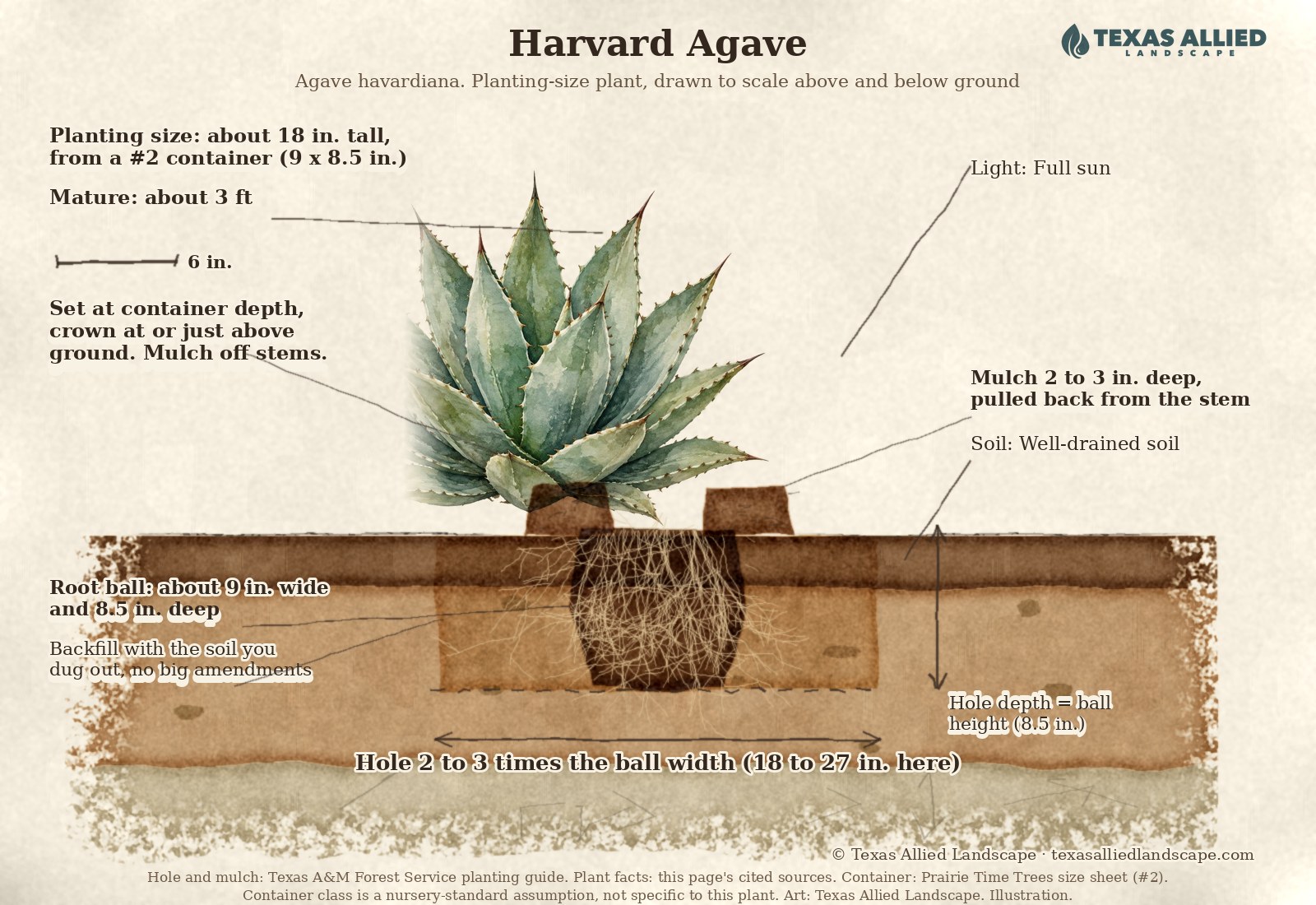
- Set the plant at the same depth it grew in its pot - never deeper - and ease it out of the container instead of pulling on the stems.[2]
- Soil and drainage: Use dry, well-drained soil.[1]
- Timing: Plant Harvard Agave in spring through early fall, while the soil is warm.
- It needs no staking or other support.
Care Instructions for Your Harvard Agave
Sunlight, soil and water
Full sun to light shade. Low water needs. Use dry, well-drained soil.[1]
Mature height and spread
About 3 feet tall and wide, with a flower stalk reaching about 15 feet. Evergreen, with broad, fleshy gray-green leaves. Leaf edges have teeth, and the tips have stout spines.[1]
Cold
The profile lists hardiness to 15 degrees F. This is not a guarantee for every site or freeze.[1]
Flowers and life cycle
The Wildflower Center lists summer flowering from June through September. It describes a mature plant flowering after about 20 to 40 years, followed by the flowering plant's death. Do not use that age range as a countdown for an individual plant.[1]
Harvard agave questions
Is Harvard agave cold hardy?
Yes - Agave havardiana is one of the most cold-hardy agaves, native to high-elevation West Texas mountains. It laughs at our winters.[3]
How big does Harvard agave get?
2-3 ft tall and 3-4 ft wide - a handsome, medium-size blue-gray rosette.[4]
Is Harvard agave a Texas native?
Yes - it is native to the Davis and Chisos Mountains of West Texas.[5]
Does Harvard agave have spines?
Yes - stout terminal spines, so give it room away from paths. It rarely offsets, so it stays a clean single rosette.[6]
Next step: Our horticulturalists can place it as a sculptural specimen in a dry bed.
Let Texas Allied Landscape care for your Harvard Agave
Harvard Agave does best with steady, knowledgeable care: the right water, pruning at the right time, and a trained eye for stress. The horticulturists at Texas Allied Landscape care for plants like yours across the San Antonio area, backed by over 40 years of landscape experience.
In these community guides
- Art in progress
Esperanza Landscaping
Plan your Esperanza landscape with help on plants, irrigation and the approval package. We check your neighborhood, lot…
Sources
- Agave havardiana, Lady Bird Johnson Wildflower Center.https://www.wildflower.org/plants/result.php?id_plant=aghaabcdefghijk
- Back to basics: Planting perennials, SAWS Garden Style San Antonio.https://www.gardenstylesanantonio.com/garden-articles/back-to-basics-planting-perennials/↑
- Missouri Botanical Garden, "Agave havardiana."https://www.missouribotanicalgarden.org/PlantFinder/PlantFinderDetails.aspx?hf=1&isprofile=0&taxonid=275724↑
- Santa Fe Botanical Garden, "Agave havardiana."https://santafebotanicalgarden.gardenexplorer.org/taxon-252.aspx↑
- Xera Plants, "Agave havardiana."https://xeraplants.com/plants/agave-harvardiana/↑
- Royal Horticultural Society, "Agave havardiana."https://www.rhs.org.uk/plants/139920/agave-havardiana/details↑