
Property owners
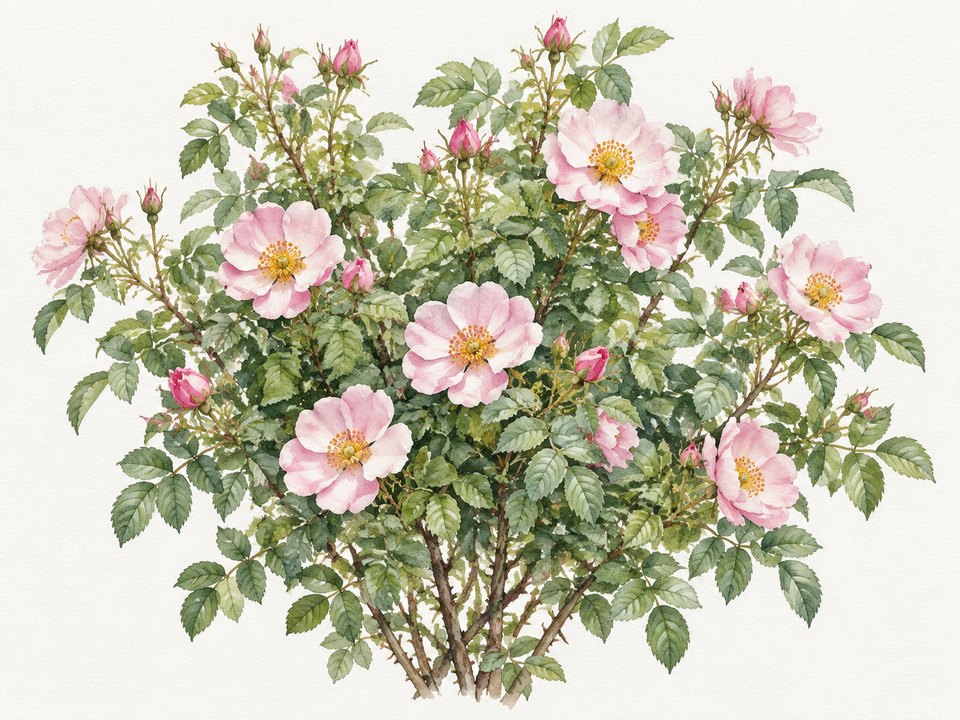
Nearly Wild Rose
- Plant
- Nearly Wild Rose
- Botanical name
- Rosa 'Nearly Wild'
- Cultivar
- 'Nearly Wild'
- Group
- Large shrubs
Nearly Wild Rose (Rosa 'Nearly Wild'): light, water, soil, size and care for San Antonio area landscapes.
On this page
Botanical name: Rosa 'Nearly Wild'.
Light
Sun.[1]
Soil and drainage
Soil with compost added.
Height
3 feet.
Spread
4 feet.
Foliage
Semi-evergreen.
Water
Medium Water. If watering ever feels like a guessing game, our horticulturists can care for your Nearly Wild Rose on a schedule that fits your yard.
Seasonal behavior
Semi-evergreen, repeat-flowering single pink rose. Disease resistance is not disease immunity.
Is winter leaf loss normal for Nearly Wild rose?
Yes - it is semi-evergreen, so some winter leaf loss is normal.
Do bare leaves or short canes on a newly shipped Nearly Wild rose prove it is dying?
Not by themselves. Antique Rose Emporium says its own-root Nearly Wild stock may be defoliated and is cut to about 12-18 inches to fit packaging. That describes this supplier's shipping preparation, not every nursery plant or a reason to dismiss visible damage.[2]
When to Plant Nearly Wild Rose
In Central Texas, the standard time to plant roses is late winter, January through February, while they are dormant. That is also when bare-root roses are available.
Container-grown roses can go in the ground almost any time of year, though planting in the cooler months means less stress while roots establish. Avoid planting in the peak of summer heat.
If you would like a hand, the Texas Allied Landscape team can plant your Nearly Wild Rose and keep it thriving.
Planting
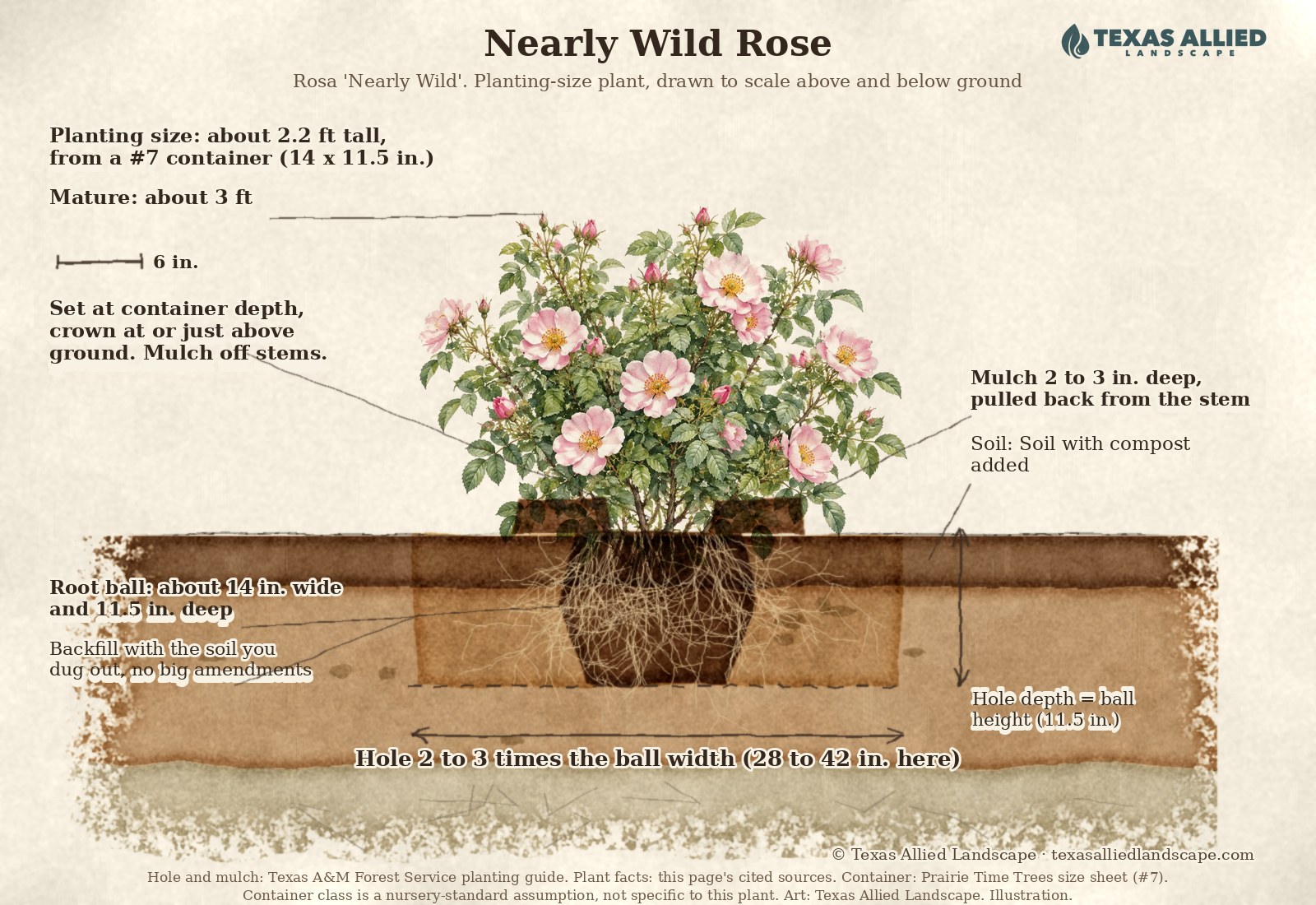
- Dig a hole at least twice as wide as the root ball and no deeper, so the roots can grow out into the surrounding soil.[3]
- Fill the empty hole with water and check the drainage. If it takes longer than 24 hours to drain, choose another spot: roots sitting under water will kill the plant.[3]
- Set it with the root collar (where the stems meet the roots) level with the ground, and take off the container and any twine or bags before backfilling.[3]
- Backfill with the same soil that came out of the hole, without amendments, and settle it with water rather than packing it down.[3]
- Give it room: 3-4 ft tall and wide - a compact, ever-blooming shrub rose.[4] Space plants so they can reach that size without crowding.
- Timing: In Central Texas, the standard time to plant roses is late winter, January through February, while they are dormant.
- Water regularly through the first growing season while roots establish, without overwatering: a thorough soaking beats light, frequent watering.[3]
- Mulch 2 to 3 inches deep, up to but not touching the stems. It needs no staking or other support. Do not fertilize during the first growing season.[3]
Care Instructions for Your Nearly Wild Rose
How to Water a Nearly Wild Rose
Medium Water.
Sunlight
Sun.[1]
Soil and drainage
Soil with compost added.
Mature height and spread
3 feet. 4 feet.
Normal seasonal behavior
Semi-evergreen, repeat-flowering single pink rose. Disease resistance is not disease immunity.
Nearly Wild rose questions
Is Nearly Wild rose easy to grow?
Yes - it is one of the easiest roses for Texas: a tough, single-flowered pink shrub rose that shrugs off blackspot better than fussier roses.[5]
How big does Nearly Wild rose get?
3-4 ft tall and wide - a compact, ever-blooming shrub rose.[4]
How do I prune a Nearly Wild rose?
Shear it back by about a third in late winter - it blooms on new growth and needs no fancy pruning.[6]
Next step: Our horticulturalists can do the late-winter cutback with your other shrubs.
Does Nearly Wild rose need spraying?
Rarely - disease resistance is the reason people grow it; good sun and air flow keep it clean.[7]
Let Texas Allied Landscape care for your Nearly Wild Rose
Nearly Wild Rose does best with steady, knowledgeable care: the right water, pruning at the right time, and a trained eye for stress. The horticulturists at Texas Allied Landscape care for plants like yours across the San Antonio area, backed by over 40 years of landscape experience.
In these community guides
- Art in progress
Esperanza Landscaping
Plan your Esperanza landscape with help on plants, irrigation and the approval package. We check your neighborhood, lot…
Sources
- Rose, 'Nearly Wild', City of Austin Watershed Protection - Grow Green.https://www.austintexas.gov/watershed-protection/plant-guide/rose-nearly-wildab
- Nearly Wild rose product profile, Antique Rose Emporium.https://www.antiqueroseemporium.com/products/nearly-wild↑
- Planting, Texas A&M Forest Service.https://tfsweb.tamu.edu/trees/tree-care/planting/abcdef
- NC State Extension, "Rosa 'Nearly Wild'."https://plants.ces.ncsu.edu/plants/rosa-nearly-wild/ab
- City of Austin Grow Green plant guide, "Rose, Nearly Wild."https://www.austintexas.gov/department/grow-green/plant-guide/rose-nearly-wild↑
- Missouri Botanical Garden, "Rosa 'Nearly Wild'."https://www.missouribotanicalgarden.org/PlantFinder/PlantFinderDetails.aspx?kempercode=x820↑
- Colorado Springs Utilities, "Nearly Wild Rose."https://www.csu.org/water-wise-plants/nearly-wild-rose↑