
Property owners
Pride of Barbados
- Plant
- Pride of Barbados
- Botanical name
- Caesalpinia pulcherrima
- Group
- Medium shrubs and perennials
Pride of Barbados (Caesalpinia pulcherrima): light, water, soil, size and care for San Antonio area landscapes.
On this page
Its botanical name is Caesalpinia pulcherrima.
Light
It wants full sun. It blooms best in full sun and tolerates partial shade.[1]
Soil and drainage
It is easy to grow in alkaline to acidic, well-drained soils. It is moderately tolerant of salty conditions.
Height
It grows 8 to 12 feet tall. It stays smaller where winter cuts it back.
Foliage
It dies to the ground after frost or freezing temperatures. But it behaves as a returning perennial in zone 8b, which covers South Central Texas and San Antonio. It is evergreen only in frost-free climates.
Water
It is extremely drought tolerant, with low water use. If watering ever feels like a guessing game, our horticulturists can care for your Pride of Barbados on a schedule that fits your yard.
Seasonal behavior
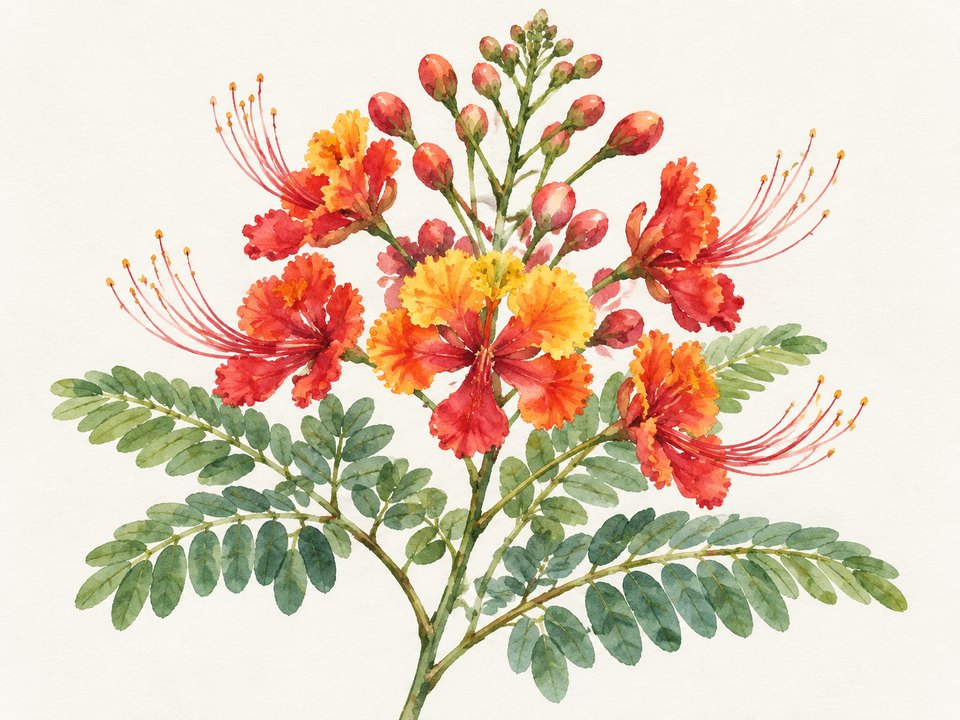
It grows fast in the heat. The orange-red flowers come from mid to late summer and fall. It breaks dormancy late. It behaves as a returning perennial in the San Antonio area.
When to Plant Pride of Barbados
Pride of Barbados is frost-tender in San Antonio, so plant it in spring after the last frost, usually around mid-March. Spring planting gives it a full growing season to establish before its first winter.
Even established plants can be damaged by hard freezes.
If you would like a hand, the Texas Allied Landscape team can plant your Pride of Barbados and keep it thriving.
Planting
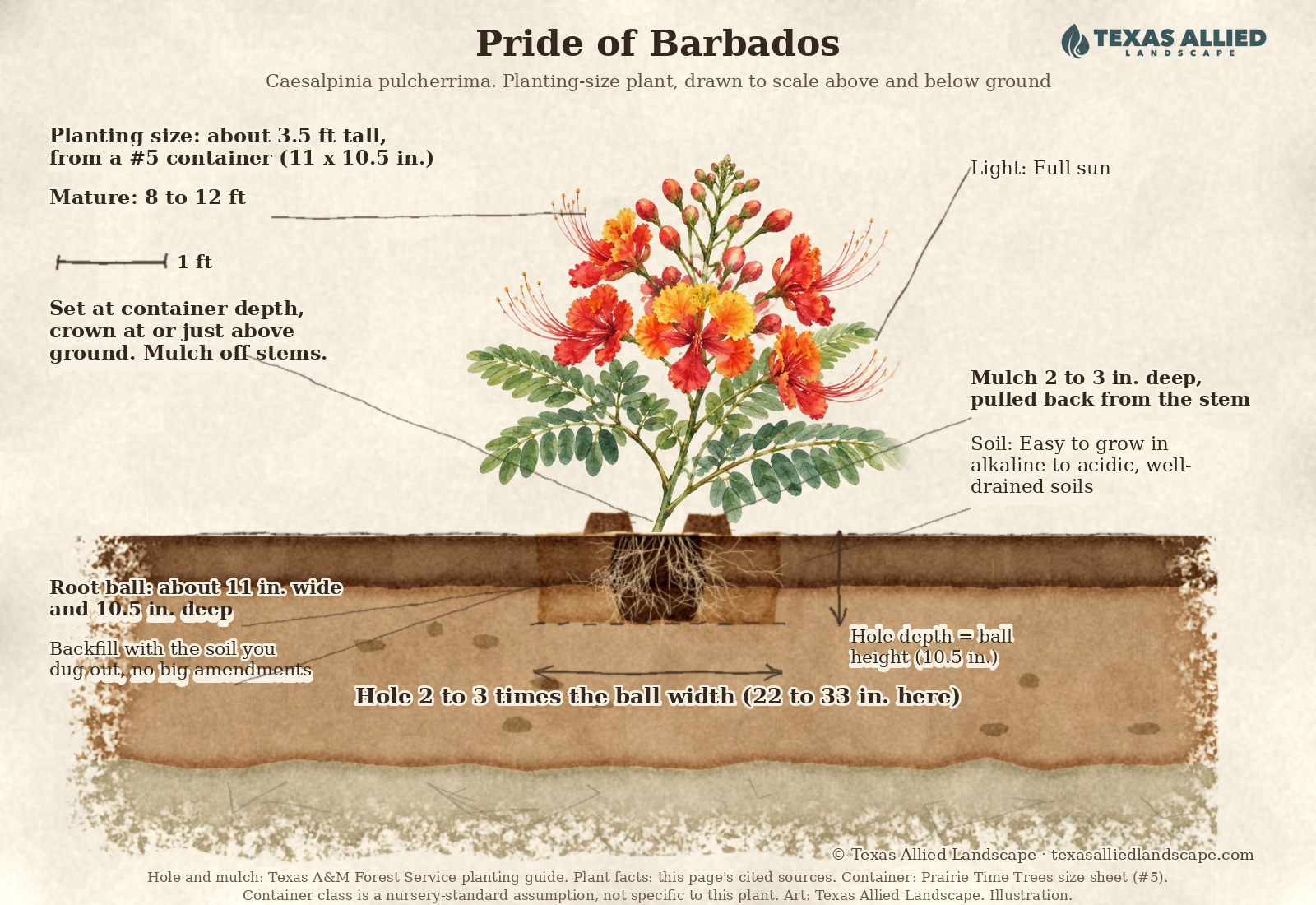
- Dig a hole twice as wide as the pot and no deeper, with sloping sides. Set the plant at the same depth it grew in its pot. Loosen any circling roots before backfilling.[2]
- For a new bed, clear grass and weeds first, roots and all.[2]
- Site: It wants full sun. It blooms best in full sun and tolerates partial shade.[1]
- Timing: Pride of Barbados is frost-tender in San Antonio, so plant it in spring after the last frost, usually around mid-March.
- Soak it well at planting and keep watering while the roots establish.[2]
- Add 2 to 4 inches of mulch, kept a few inches away from the stems to prevent crown rot. It needs no staking or other support.[2]
Care Instructions for Your Pride of Barbados
How to Water a Pride of Barbados
It is extremely drought tolerant, with low water use.
Sunlight
It wants full sun. It blooms best in full sun and tolerates partial shade.[1]
Soil and drainage
It is easy to grow in alkaline to acidic, well-drained soils. It is moderately tolerant of salty conditions.
Mature height and spread
It grows 8 to 12 feet tall. It stays smaller where winter cuts it back.
Normal seasonal behavior
It grows fast in the heat. The orange-red flowers come from mid to late summer and fall. It breaks dormancy late. It behaves as a returning perennial in the San Antonio area.
Pride of Barbados questions
Will pride of Barbados come back after a freeze?
Usually, yes. It freezes to the ground most Central Texas winters, but it regrows from the roots once the soil warms, often by late spring. In mild winters it stays a shrub. After hard freezes, treat it as a die-back perennial.[3]
When should I cut back pride of Barbados?
Cut it back in late winter or early spring, after the worst cold is past. Cut frozen stems to the ground or to live wood. Pruning too early in winter exposes the crown to further cold damage.[4]
Next step: Our horticulturalists can do the late-winter cutback and mulch the crown so the plant rebounds faster.
Why won't my pride of Barbados bloom?
It needs heat and full sun. The orange-red flowers come on strong in summer and stop in shade or cool weather. A plant that blooms poorly is almost always a plant wanting more sun.[5]
Is pride of Barbados a good hummingbird plant?
It is one of the best. The showy flowers draw hummingbirds and butterflies all summer. The plant asks for almost nothing but sun and drainage in return.[6]
Let Texas Allied Landscape care for your Pride of Barbados
Pride of Barbados does best with steady, knowledgeable care. That means the right water, pruning at the right time, and a trained eye for stress. The horticulturists at Texas Allied Landscape care for plants like yours across the San Antonio area. They are backed by over 40 years of landscape experience.
In these community guides
- Art in progress
Homestead Landscaping
Share your Homestead address, survey and yard ideas with Texas Allied Landscape. We help prepare a clear plan for…
Sources
- PRIDE OF BARBADOS, Texas Superstar® Plants - Texas A&M AgriLife Extension.https://texassuperstar.com/pride-of-barbados/abc
- Back to basics: Planting perennials, SAWS Garden Style San Antonio.https://www.gardenstylesanantonio.com/garden-articles/back-to-basics-planting-perennials/abcd
- Central Texas Gardener, "Pride of Barbados."https://centraltexasgardener.org/resource/pride-barbados/↑
- Texas A&M AgriLife Extension, "Dealing with Freeze Damage on Plants."https://txmg.org/grayson/files/2021/03/Freeze-Damage.pdf↑
- Henderson County Master Gardeners, "Pride of Barbados."https://txmg.org/hendersonmg/plant-library/pride-of-barbados/↑
- Landscape Source Nursery, "Pride of Barbados care guide."https://landscapesourcenursery.com/plant/pride-of-barbados↑