
Property owners
Purple Heart
- Plant
- Purple Heart
- Botanical name
- Tradescantia pallida
- Group
- Ground cover
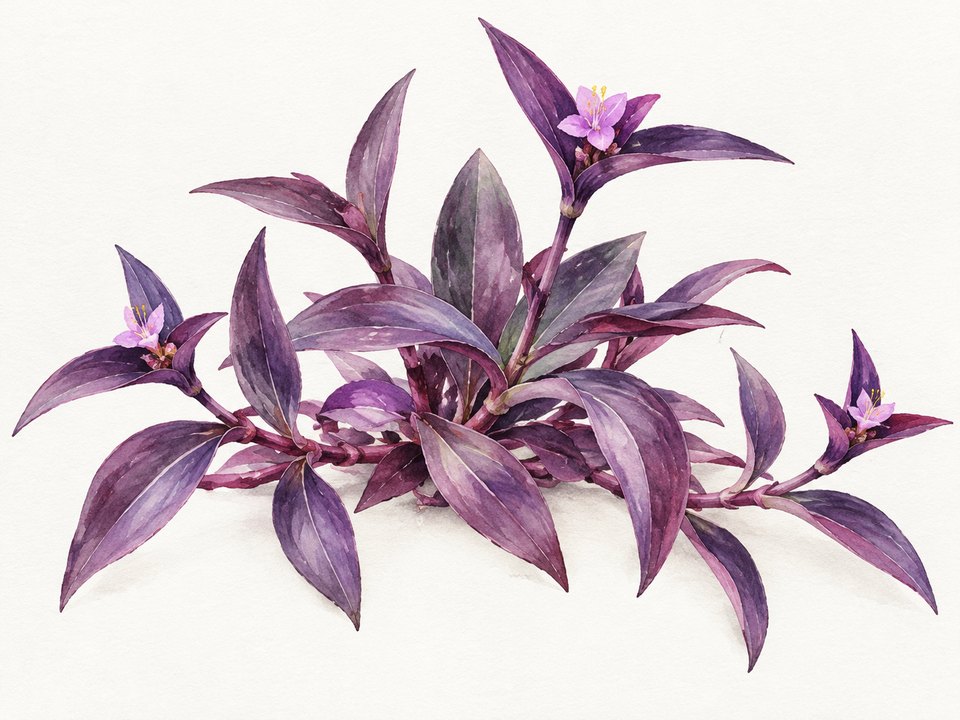
Purple Heart (Tradescantia pallida): light, water, soil, size and care for San Antonio area landscapes.
On this page
Botanical name: Tradescantia pallida.
Light
Sun or shade.[1]
Soil and drainage
Well-drained and clay soils.
Height
1 to 2 feet.
Spread
3 to 6 feet.
Foliage
Winter freeze-back is expected; do not promise year-round foliage.
Water
Low Water category. If watering ever feels like a guessing game, our horticulturists can care for your Purple Heart on a schedule that fits your yard.
Pruning
Contain unwanted spread.
Seasonal behavior
Expect winter freeze-back. one source describes local hardiness, but another source warns it is not fully cold hardy in a severe winter unless protected.[2]
When to Plant Purple Heart
Purple Heart is frost-tender, so plant it in spring after the last frost, around mid-March in San Antonio. It needs warm months ahead to establish, and it often dies back to the roots in winter.
If you would like a hand, the Texas Allied Landscape team can plant your Purple Heart and keep it thriving.
Planting
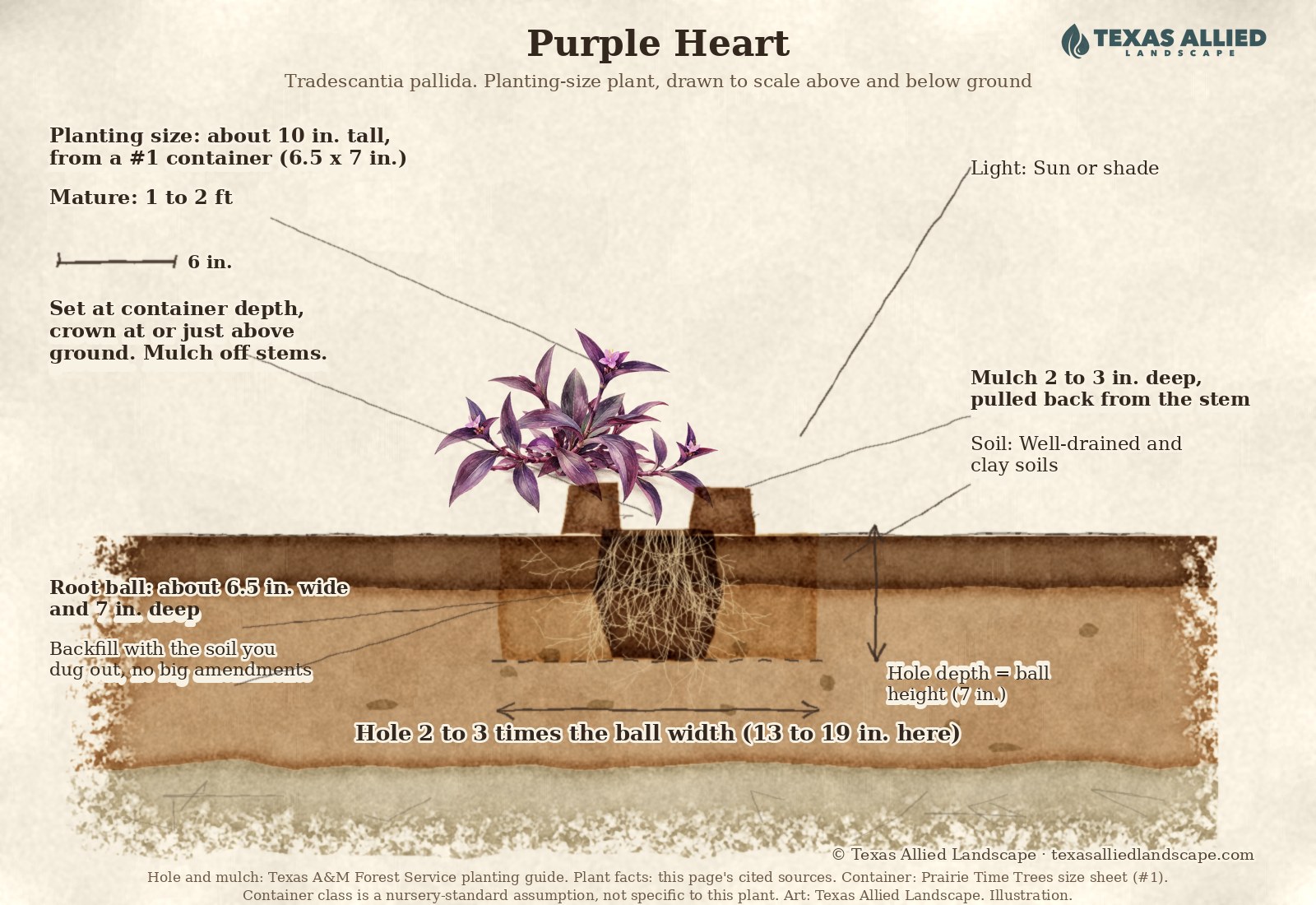
- Dig a hole twice as wide as the pot and no deeper, with sloping sides, and set the plant at the same depth it grew in its pot. Loosen any circling roots before backfilling.[3]
- For a new bed, clear grass and weeds first, roots and all.[3]
- Give it room: It spreads aggressively by stem fragments: any piece left on soil can root, which is why it escapes beds and pops up in lawns. In a maintained bed it is easy to contain by edging; just do not toss trimmings where they can root.[4] Space plants for that full size, not the pot size.[3]
- Site: Sun or shade.[1]
- Timing: Purple Heart is frost-tender, so plant it in spring after the last frost, around mid-March in San Antonio.
- Soak it well at planting and keep watering while the roots establish.[3]
- Mulch 2 to 4 inches, kept a few inches away from the stems to prevent crown rot. It needs no staking or other support.[3]
Will it always come back after a freeze?
Not always - a severe winter can kill it unless it is in a protected spot.
Care Instructions for Your Purple Heart
How to Water a Purple Heart
Low Water category.
Sunlight
Sun or shade.[1]
Soil and drainage
Well-drained and clay soils.
Mature height and spread
1 to 2 feet. 3 to 6 feet.
Pruning
Contain unwanted spread.
Normal seasonal behavior
Expect winter freeze-back. one source describes local hardiness, but another source warns it is not fully cold hardy in a severe winter unless protected.[2]
Purple heart questions
Is purple heart invasive?
It spreads aggressively by stem fragments: any piece left on soil can root, which is why it escapes beds and pops up in lawns. In a maintained bed it is easy to contain by edging; just do not toss trimmings where they can root.[4]
Why is my purple heart turning green?
Not enough sun. The deep purple color needs strong light; in shade the stems stretch and fade to green-purple. Move or thin it into more light to bring the color back.[5]
Does purple heart survive Central Texas winters?
Tops freeze back in a hard frost, but it returns from the roots reliably in spring. Trim off the mushy top growth after a freeze to keep beds tidy.[6]
Can I grow new purple heart plants from cuttings?
Easily - it is one of the simplest plants to propagate. Stick a 4-to-6-inch stem cutting directly in soil or a glass of water and it roots in a couple of weeks.[7]
Let Texas Allied Landscape care for your Purple Heart
Purple Heart does best with steady, knowledgeable care: the right water, pruning at the right time, and a trained eye for stress. The horticulturists at Texas Allied Landscape care for plants like yours across the San Antonio area, backed by over 40 years of landscape experience.
In these community guides
- Art in progress
Esperanza Landscaping
Plan your Esperanza landscape with help on plants, irrigation and the approval package. We check your neighborhood, lot…
Sources
- Purple Heart (Tradescantia pallida) - Garden Style San Antonio, San Antonio Water System.https://www.gardenstylesanantonio.com/plants/purple-heart/abc
- Purple Heart | Austin Watershed Protection | AustinTexas.gov, City of Austin.https://www.austintexas.gov/watershed-protection/plant-guide/purple-heartab
- Back to basics: Planting perennials, Garden Style San Antonio (San Antonio Water System).https://www.gardenstylesanantonio.com/garden-articles/back-to-basics-planting-perennials/abcde
- Ask Extension, "Purple Heart elimination."https://ask.extension.org/kb/faq.php?id=759778ab
- Southern Living, "How To Grow And Care For Purple Heart Plants."https://www.southernliving.com/garden/plants/purple-heart-plant↑
- Lady Bird Johnson Wildflower Center, plant profile for Tradescantia pallida.https://www.wildflower.org/plants/result.php?id_plant=TRPA3↑
- Southern Living, "How To Grow And Care For Purple Heart Plants."https://www.southernliving.com/garden/plants/purple-heart-plant↑