
Property owners
Texas Manfreda
- Plant
- Texas Manfreda
- Botanical name
- Manfreda maculosa
- Group
- Succulents and cacti
Sourced light, drainage, size and grooming details for Manfreda maculosa.
On this page
Botanical name: Manfreda maculosa. Also called Texas Tuberose.[1]
Light and drainage
Partial sun or light shade, especially in the hottest part of the day. Use fast-draining soil. Leaves can wither in strong summer heat and recover as temperatures cool.[1][2]
Size and form
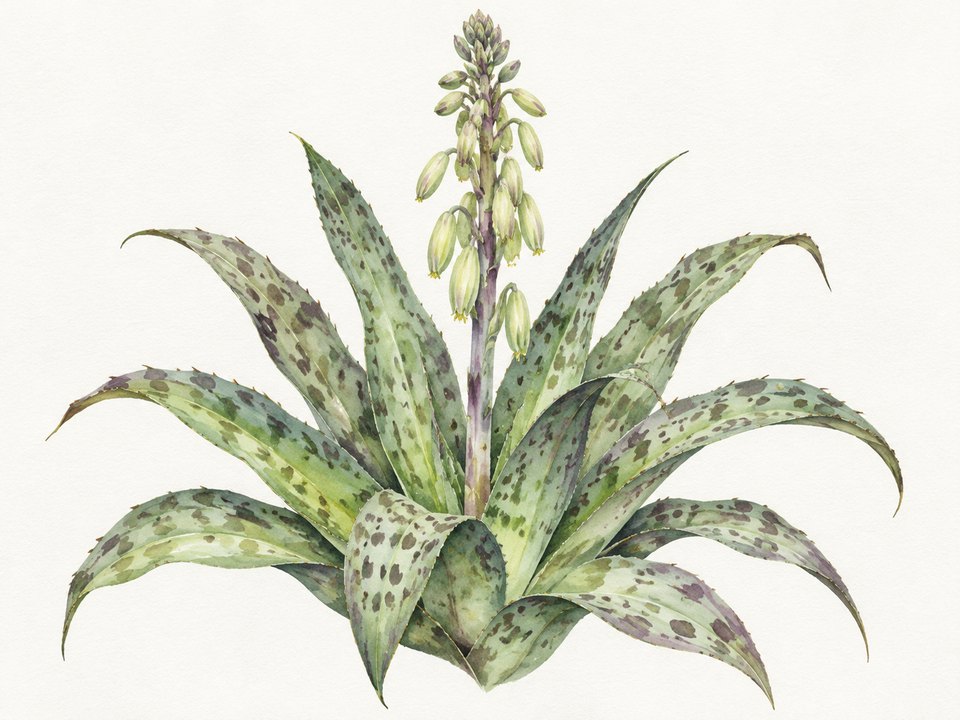
Thick, fleshy leaves often have maroon spots. The Wildflower Center lists foliage 5 to 8 inches tall; SAWS gives up to 1 foot tall and 2 to 3 feet wide. It can spread into a rough groundcover.[1][2]
Water
The sources differ. SAWS lists low water needs, while the Wildflower Center lists medium water use and says it does best with regular summer water. Neither supplies a fixed local establishment schedule.[1][2] If watering ever feels like a guessing game, our horticulturists can care for your Texas Manfreda on a schedule that fits your yard.
Flowers and wildlife
Fragrant flowers open creamy white, sometimes pink, and darken as they age. The Wildflower Center lists April through July flowering. It is a host for the Manfreda giant-skipper butterfly.[1]
Grooming and propagation
Spent leaves and flower stalks can be removed after blooming. The plant can be grown from seed or by separating offsets.[2][1]
When to Plant Texas Manfreda
Plant Texas Manfreda in spring through early fall, while the soil is warm. Drainage matters most going into winter: roots sitting in cold, wet soil rot, so a plant established long before winter handles the season better.
Avoid planting right before winter.
If you would like a hand, the Texas Allied Landscape team can plant your Texas Manfreda and keep it thriving.
Planting
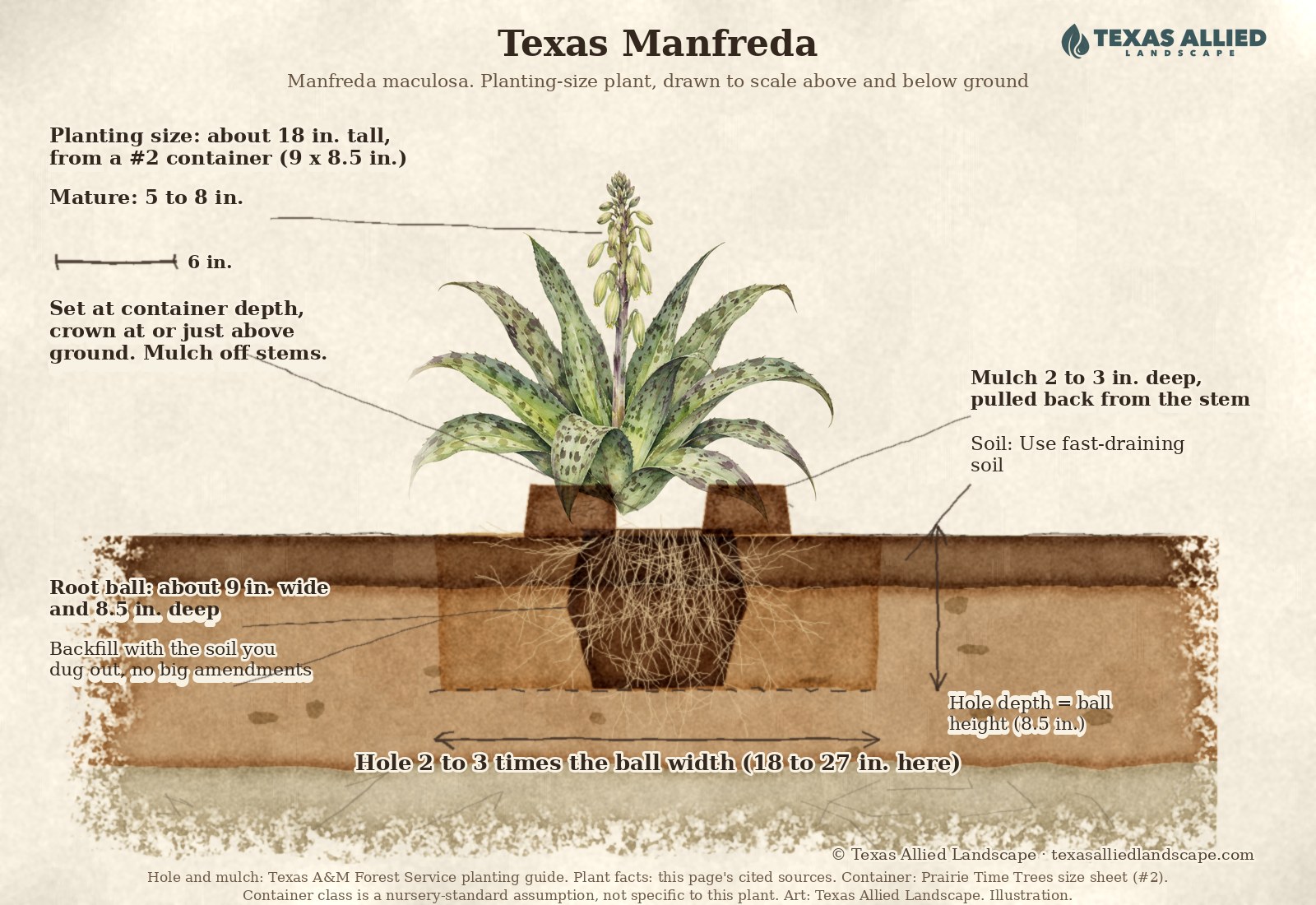
- Set the plant at the same depth it grew in its pot - never deeper - and ease it out of the container instead of pulling on the stems.[3]
- Timing: Plant Texas Manfreda in spring through early fall, while the soil is warm.
- It needs no staking or other support.
Care Instructions for Your Texas Manfreda
Mature height and spread
Thick, fleshy leaves often have maroon spots. The Wildflower Center lists foliage 5 to 8 inches tall; SAWS gives up to 1 foot tall and 2 to 3 feet wide. It can spread into a rough groundcover.[1][2]
Flowers and wildlife
Fragrant flowers open creamy white, sometimes pink, and darken as they age. The Wildflower Center lists April through July flowering. It is a host for the Manfreda giant-skipper butterfly.[1]
Texas manfreda questions
Is Texas manfreda a Texas native?
Yes - Manfreda maculosa, also called Texas tuberose or spice lily, is a native succulent of South Texas.[4]
Does Texas manfreda bloom?
Yes - a tall spike of fragrant, unusual greenish flowers rises from the rosette in late spring or summer, and pollinators mob it.[5]
Sun or shade for Texas manfreda?
Part shade to sun - it handles more shade than most succulents and likes morning sun best here.[6]
How much water does Texas manfreda need?
Little - it grows from a fleshy tuber and rots in wet soil. Good drainage is the whole secret.[7]
Next step: Our horticulturalists can tuck it into a dry rock-garden pocket where it thrives.
Let Texas Allied Landscape care for your Texas Manfreda
Texas Manfreda does best with steady, knowledgeable care: the right water, pruning at the right time, and a trained eye for stress. The horticulturists at Texas Allied Landscape care for plants like yours across the San Antonio area, backed by over 40 years of landscape experience.
In these community guides
- Art in progress
Esperanza Landscaping
Plan your Esperanza landscape with help on plants, irrigation and the approval package. We check your neighborhood, lot…
Sources
- Manfreda maculosa, Lady Bird Johnson Wildflower Center.https://www.wildflower.org/plants/result.php?id_plant=mama7abcdefghi
- Manfreda, SAWS Garden Style San Antonio.https://www.gardenstylesanantonio.com/plants/manfreda/abcdef
- Back to basics: Planting perennials, SAWS Garden Style San Antonio.https://www.gardenstylesanantonio.com/garden-articles/back-to-basics-planting-perennials/↑
- Lady Bird Johnson Wildflower Center, "Manfreda maculosa."https://www.wildflower.org/plants/result.php?id_plant=MAMA7↑
- PlantNative, "Texas Tuberose."https://plantnative.org/native-plants/texas-tuberose-manfreda-maculosa.htm↑
- Native Gardeners, "Texas Tuberose."https://nativegardeners.com/products/texas-tuberose↑
- PlantNative, "Texas Tuberose."https://plantnative.org/native-plants/texas-tuberose-manfreda-maculosa.htm↑