
Property owners
Ajuga
- Plant
- Ajuga
- Botanical name
- Ajuga reptans
- Group
- Ground cover
Sourced light, water, size and care details for Ajuga.
On this page
Botanical name: Ajuga reptans.
Plant group: Ground cover.
Light
Part shade to shade in Central Texas; morning sun is fine, but hot afternoon sun scorches it.[1]
Soil and drainage
Ordinary garden soil with good drainage; crown rot is its main weakness, so avoid spots that stay wet.[2]
Height
4-6 in, with flower spikes to 8-10 in.
Spread
12-18 in per plant; spreads by above-ground runners into a dense mat.
Foliage
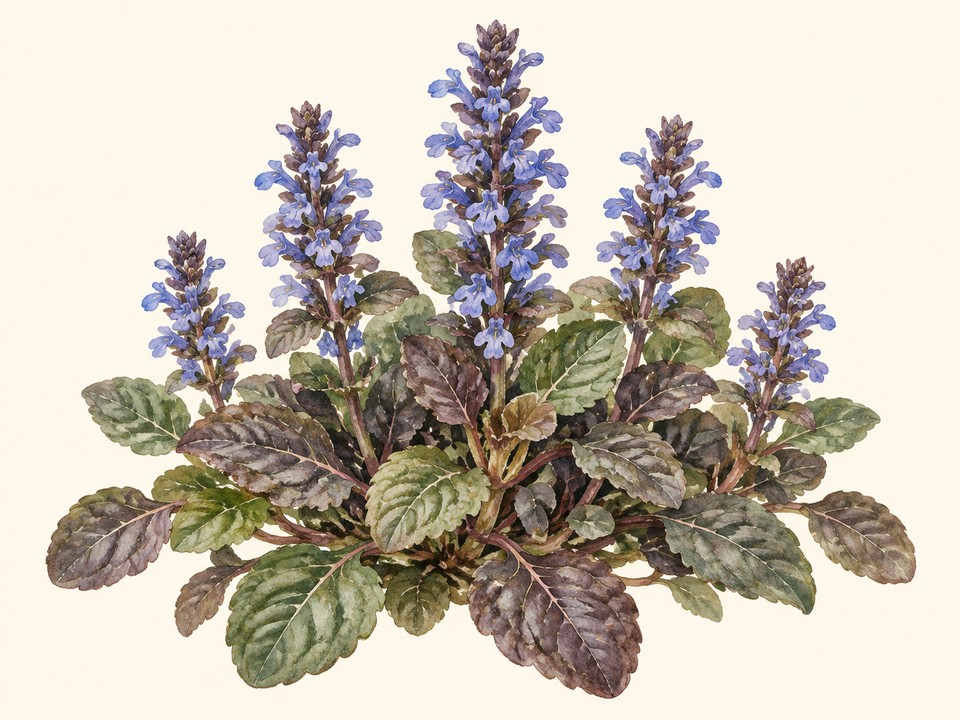
Semi-evergreen rosettes; colors from green to bronze, burgundy and variegated depending on variety.
Water
Medium; wilts fast in dry shade under trees, so keep it watered through summer. If watering ever feels like a guessing game, our horticulturists can care for your Ajuga on a schedule that fits your yard.[1]
Pruning
Shear off the flower spikes after bloom; thin crowded patches to keep air moving and rot out.[2]
Seasonal behavior
Short blue flower spikes in spring; colorful foliage carpet the rest of the year.
When to Plant Ajuga
Plant Ajuga in fall or early spring in Central Texas. A fall planting establishes roots through the cool season and is ready to spread the following year; spring planting works too if you water through the first summer.[3]
If you would like a hand, the Texas Allied Landscape team can plant your Ajuga and keep it thriving.
Planting
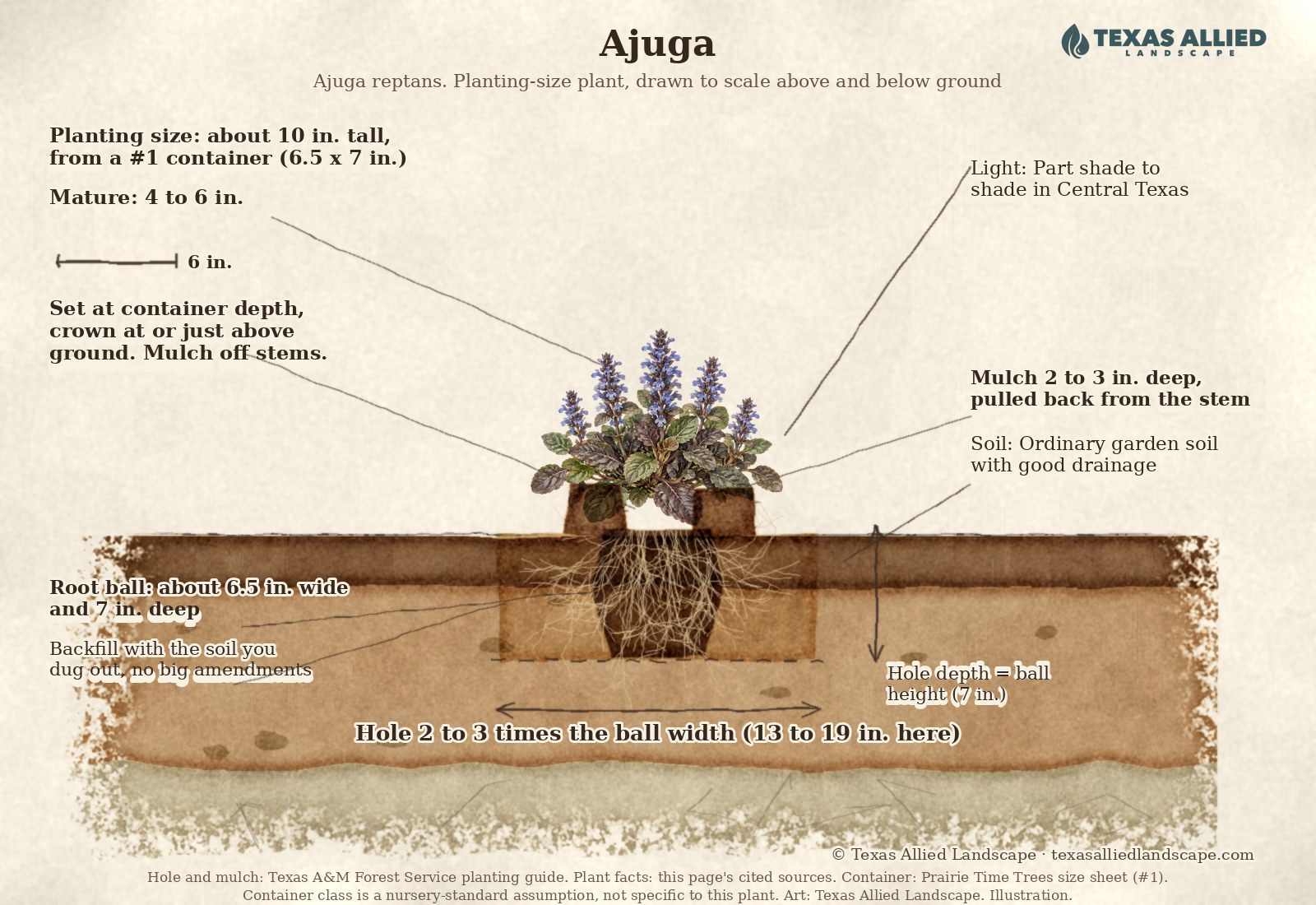
- Dig a hole twice as wide as the pot and no deeper, with sloping sides, and set the plant at the same depth it grew in its pot. Loosen any circling roots before backfilling.[4]
- For a new bed, clear grass and weeds first, roots and all.[4]
- Site: Part shade to shade in Central Texas; morning sun is fine, but hot afternoon sun scorches it.[1]
- Soil: Ordinary garden soil with good drainage; crown rot is its main weakness, so avoid spots that stay wet.[2]
- Timing: A fall planting establishes roots through the cool season and is ready to spread the following year; spring planting works too if you water through the first summer.[3]
- Soak it well at planting and keep watering while the roots establish.[4] Once established: A fall planting establishes roots through the cool season and is ready to spread the following year; spring planting works too if you water through the first summer.[3]
- Mulch 2 to 4 inches, kept a few inches away from the stems to prevent crown rot. It needs no staking or other support.[4]
Care Instructions for Your Ajuga
Sunlight
Part shade to shade in Central Texas; morning sun is fine, but hot afternoon sun scorches it.[1]
Soil and drainage
Ordinary garden soil with good drainage; crown rot is its main weakness, so avoid spots that stay wet.[2]
Mature height and spread
4-6 in, with flower spikes to 8-10 in. 12-18 in per plant; spreads by above-ground runners into a dense mat.
Pruning
Shear off the flower spikes after bloom; thin crowded patches to keep air moving and rot out.[2]
Normal seasonal behavior
Short blue flower spikes in spring; colorful foliage carpet the rest of the year.
Ajuga questions
Why is my ajuga dying in patches?
Usually crown rot, which hits in hot, wet weather when drainage is poor. Pull the dead plants, improve airflow by thinning, and let the bed dry between waterings.[5]
Next step: Recurring die-out in the same spot points to a drainage problem our horticulturalists can diagnose on site.
Will ajuga grow in full Texas sun?
Not happily here. In Central Texas it needs shade from the brutal afternoon sun; morning sun or dappled light under trees is ideal.[6]
Does ajuga spread into the lawn?
It creeps by runners and will wander past the bed edge without a border. A steel or stone edging keeps it contained; strays pull up easily.[7]
When does ajuga bloom?
Spring, with short spikes of blue-purple flowers standing a few inches above the foliage. The colorful leaves are the year-round feature.[8]
Let Texas Allied Landscape care for your Ajuga
Ajuga does best with steady, knowledgeable care: the right water, pruning at the right time, and a trained eye for stress. The horticulturists at Texas Allied Landscape care for plants like yours across the San Antonio area, backed by over 40 years of landscape experience.
In these community guides

Illustration. Illustration based on reference photos of Arbors of Fair Oaks. Not a single literal view. Arbors of Fair Oaks Landscaping
Bring your address, unit and yard ideas. Texas Allied Landscape helps design the planting and irrigation, prepare the…
Sources
- Bugleweed, Ajuga, Texas Tech Plant Database.https://www.depts.ttu.edu/plantresources/Pages/directories/landscape-info-sheets/herbaceous-info/Ajuga_reptans.phpabcde
- Ajuga, Texas A&M Plant Disease Handbook.https://plantdiseasehandbook.tamu.edu/landscaping/ground-covers/ajuga/abcde
- October Gardening Checklist, Travis County AgriLife Extension.https://travis-tx.tamu.edu/about-2/horticulture/monthly-gardening-calendar-for-austin-area/october-gardening-checklist-for-austin-and-central-texas/abc
- Back to basics: Planting perennials, SAWS Garden Style San Antonio.https://www.gardenstylesanantonio.com/garden-articles/back-to-basics-planting-perennials/abcd
- Texas A&M Plant Disease Handbook, "Ajuga."https://plantdiseasehandbook.tamu.edu/landscaping/ground-covers/ajuga/↑
- Texas Tech Plant Database, "Bugleweed, Ajuga."https://www.depts.ttu.edu/plantresources/Pages/directories/landscape-info-sheets/herbaceous-info/Ajuga_reptans.php↑
- Texas Tech Plant Database, "Bugleweed, Ajuga."https://www.depts.ttu.edu/plantresources/Pages/directories/landscape-info-sheets/herbaceous-info/Ajuga_reptans.php↑
- Texas A&M Plant Disease Handbook, "Ajuga."https://plantdiseasehandbook.tamu.edu/landscaping/ground-covers/ajuga/↑