
Property owners
Annual Morning Glory
- Plant
- Annual Morning Glory
- Botanical name
- Ipomoea tricolor
- Group
- Vines
Sourced light, water, size and care details for Annual Morning Glory.
On this page
Its botanical name is Ipomoea purpurea.
It belongs to the vines group.
Light
This vine needs full sun. Vines grown in the shade grow leaves but few flowers.[1][2]
Soil and drainage
It grows well in ordinary or even poor soil. Rich soil and fertilizer push leaves at the expense of blooms.[3]
Height
It grows 8 to 12 feet of twining vine in a single season.
Spread
It spreads 2 to 4 feet wide on its support. It reseeds itself for next year.
Foliage
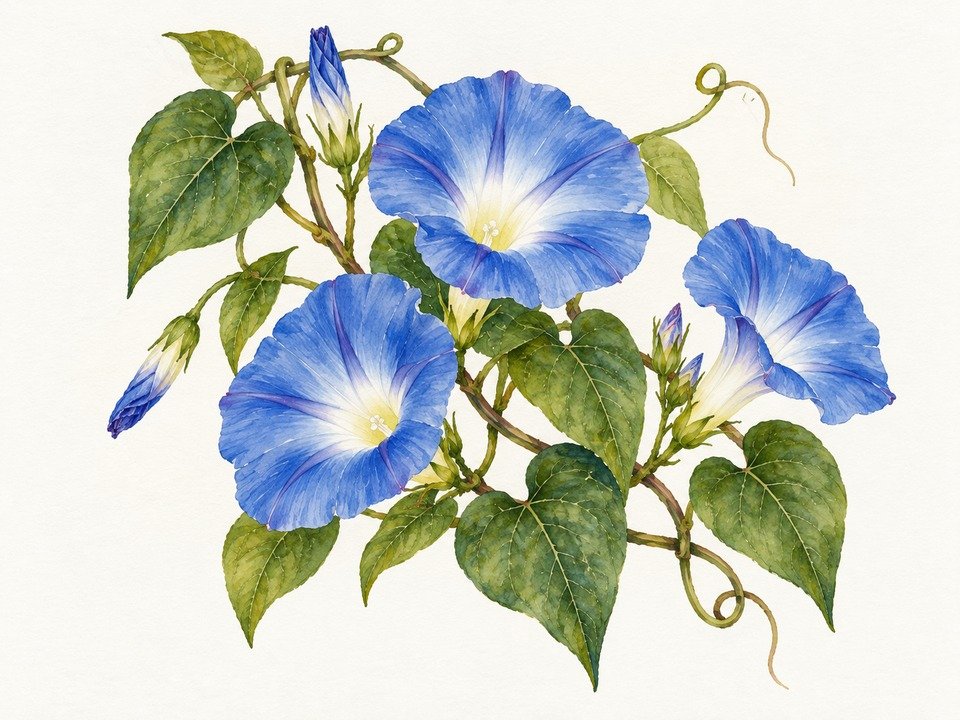
It has heart-shaped green leaves. It is an annual, so it dies with the first hard freeze.
Water
Give it a medium amount of water while it gets established. After that, it needs little water. Too much water means leaves, not flowers. If watering ever feels like a guessing game, our horticulturists can care for your Annual Morning Glory on a schedule that fits your yard.[2]
Pruning
It needs no pruning. Pinch the tips early if you want a bushier vine. Pull seedlings next spring where you do not want volunteers.[4]
Seasonal behavior
It blooms from early summer until frost. The trumpet flowers come in blue, purple, pink or white, and they open each morning. Each bloom lasts one day.
When to Plant Annual Morning Glory
Sow Annual Morning Glory seed after the last freeze in spring, once the soil warms. In Central Texas that is usually March to April. Blooms follow from early summer to frost.[1]
If you would like a hand, the Texas Allied Landscape team can plant your Annual Morning Glory and keep it thriving.
Planting

- Dig a hole twice as wide as the pot and no deeper, with sloping sides. Set the plant at the same depth it grew in its pot. Loosen any circling roots before backfilling.[5]
- Give it support from the start. Plant it at the base of whatever it should climb, such as a trellis, fence or arbor.
- Pick a site with full sun. Shady vines grow leaves but few flowers.[1][2]
- Soak it well at planting and keep watering while the roots establish.[5] Once it is established, it needs little water. Too much water means leaves, not flowers. It needs no pruning. Pinch the tips early for a bushier vine, and pull seedlings next spring where you do not want volunteers.[4]
- Add 2 to 4 inches of mulch. Keep it a few inches away from the stems to prevent crown rot.[5]
Care Instructions for Your Annual Morning Glory
Sunlight
This vine needs full sun. Vines grown in the shade grow leaves but few flowers.[1][2]
Soil and drainage
It grows well in ordinary or even poor soil. Rich soil and fertilizer push leaves at the expense of blooms.[3]
Mature height and spread
It grows 8 to 12 feet of twining vine in a single season. It spreads 2 to 4 feet wide on its support. It reseeds itself for next year.
Pruning
It needs no pruning. Pinch the tips early if you want a bushier vine. Pull seedlings next spring where you do not want volunteers.[4]
Normal seasonal behavior
It blooms from early summer until frost. The trumpet flowers come in blue, purple, pink or white, and they open each morning. Each bloom lasts one day.
Morning glory questions
Why is my morning glory all leaves and no flowers?
The usual cause is too much kindness. Rich soil, fertilizer and overwatering all push vine growth over blooms. Morning glories flower best in poor soil with full sun and modest water.[6]
Do morning glories come back every year?
The vine itself dies at the first hard freeze. But it drops seed, and volunteers pop up the following spring. So it behaves like a perennial in most Central Texas beds.[7]
Is morning glory invasive?
The annual garden kinds self-sow freely, but they pull up easily. The one to avoid is its cousin bindweed. Bindweed is a perennial weed with small white flowers that strangles beds.[8]
When do morning glories bloom in Texas?
They bloom from early summer until the first frost. Fresh trumpet flowers open each morning and close by afternoon.[9]
Let Texas Allied Landscape care for your Annual Morning Glory
Annual Morning Glory does best with steady, knowledgeable care. That means the right water, pruning at the right time, and a trained eye for stress. The horticulturists at Texas Allied Landscape care for plants like yours across the San Antonio area. They are backed by over 40 years of landscape experience.
In these community guides
Sources
- Vertical Beauty: The Magic of Morning Glories, Comal County Master Gardeners.https://ccmgatx.org/resources/articles/article-repository/2024/july/vertical-beauty-the-magic-of-morning-glories/abcd
- Growing Annual Morning Glory, Oregon State University Extension.https://extension.oregonstate.edu/catalog/em-9880-growing-annual-morning-gloryabcde
- Morning Glory (Annual Vine), The Morton Arboretum.https://mortonarb.org/plant-and-protect/trees-and-plants/morning-glory-annual-vine/ab
- Morning Glory, Daydreams Consulting.https://www.daydreamsconsulting.com/plants-for-central-texas/vines/morning-gloryabc
- Back to basics: Planting perennials, SAWS Garden Style San Antonio.https://www.gardenstylesanantonio.com/garden-articles/back-to-basics-planting-perennials/abc
- The Morton Arboretum, "Morning Glory (Annual Vine)."https://mortonarb.org/plant-and-protect/trees-and-plants/morning-glory-annual-vine/↑
- Comal County Master Gardeners, "Vertical Beauty: The Magic of Morning Glories."https://ccmgatx.org/resources/articles/article-repository/2024/july/vertical-beauty-the-magic-of-morning-glories/↑
- Daydreams Consulting, "Morning Glory."https://www.daydreamsconsulting.com/plants-for-central-texas/vines/morning-glory↑
- Texas Tech Plant Database, "Morning Glory."https://www.depts.ttu.edu/plantresources/Pages/directories/landscape-info-sheets/herbaceous-info/Ipomoea_purpurea.php↑