
Property owners
Beaked Yucca
- Plant
- Beaked Yucca
- Botanical name
- Yucca rostrata
- Group
- Succulents and cacti
Sourced care for the catalog's Yucca rostrata, with a naming caution.
On this page
The catalog calls this plant Yucca rostrata. SAWS lists that name under Big Bend Yucca and includes Beaked Yucca as a common name. The Wildflower Center instead treats Yucca rostrata as a synonym of Yucca thompsoniana. These sources describe different sizes and forms, so this page uses the SAWS Yucca rostrata profile rather than combining their measurements.[1][2]
Light and soil
Full sun, including reflected heat. Use thin, well-drained soil. It suits exposed rocky slopes.[1]
Size and form
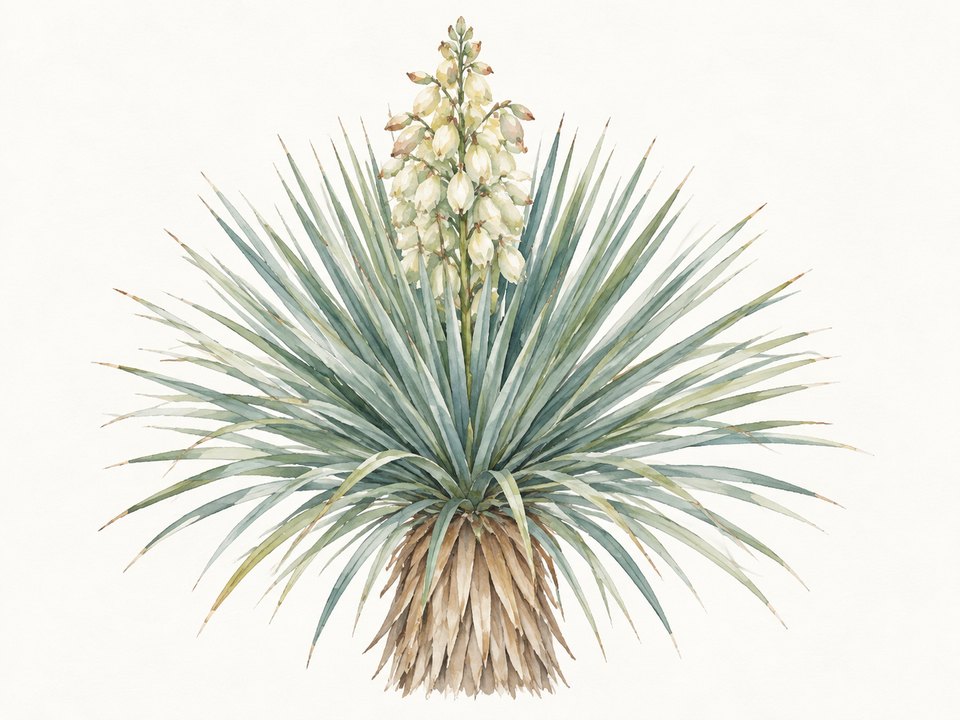
SAWS lists 4 to 20 feet tall and 4 to 8 feet wide. This evergreen, tree-form yucca can branch. Thin blue-gray leaves grow in a tight cluster above the trunk.[1]
Water
Low to very low water needs in the SAWS profile. The Wildflower Center warns that yuccas need little water and do not like wet roots. Do not assume a mixed planting's irrigation schedule suits this plant.[1][3] If watering ever feels like a guessing game, our horticulturists can care for your Beaked Yucca on a schedule that fits your yard.
Flowers and grooming
White flower clusters attract migrating hummingbirds. Remove spent flower stalks. SAWS advises leaving the leaves to form a skirt around the trunk.[1]
Handle with care
The leaves are flexible, but their rough edges can cut skin.[1]
When to Plant Beaked Yucca
Plant Beaked Yucca in spring through early fall, while the soil is warm. Drainage matters most going into winter: roots sitting in cold, wet soil rot, so a plant established long before winter handles the season better.
Avoid planting right before winter.
If you would like a hand, the Texas Allied Landscape team can plant your Beaked Yucca and keep it thriving.
Planting
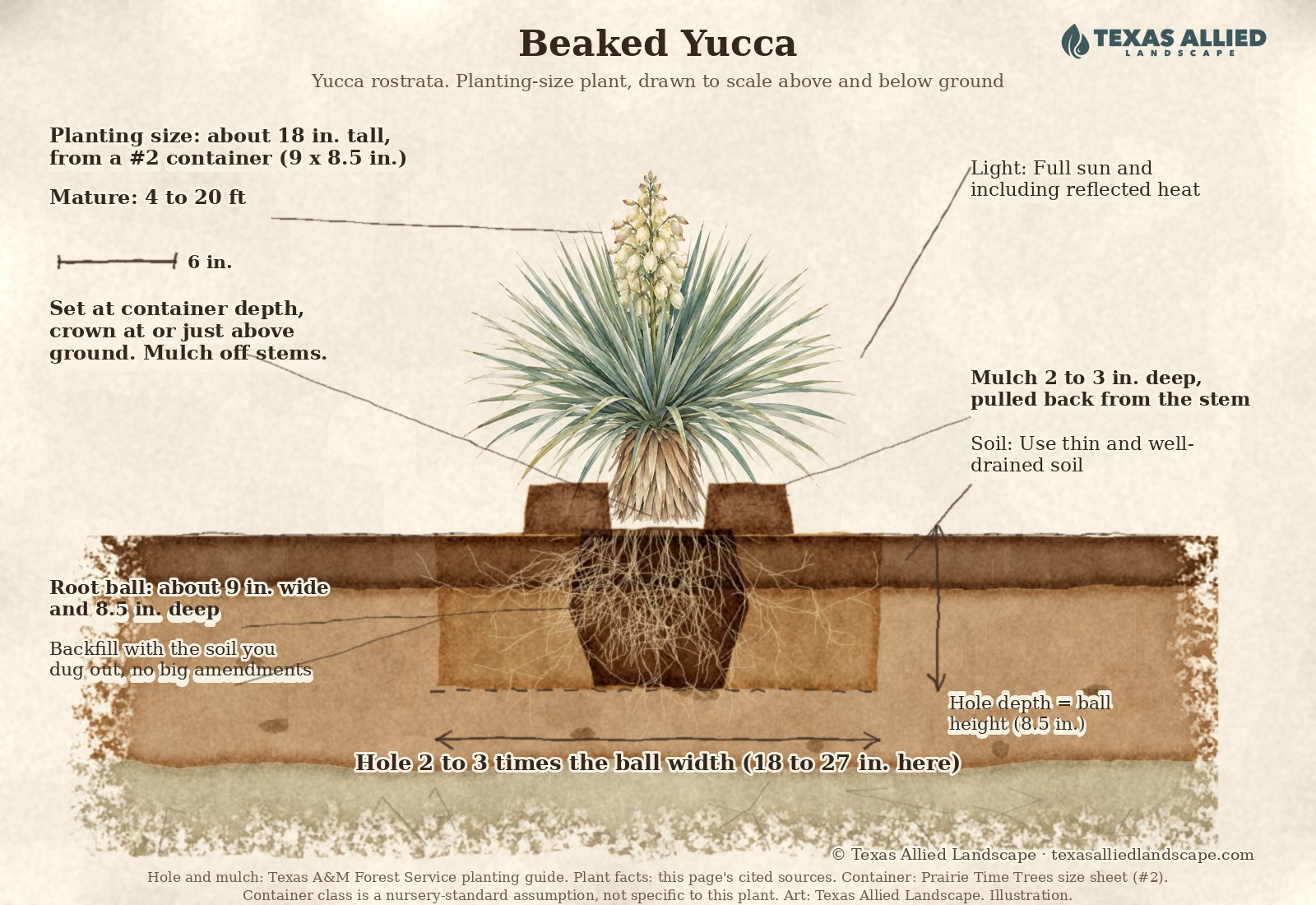
- Set the plant at the same depth it grew in its pot - never deeper - and ease it out of the container instead of pulling on the stems.[4]
- Soil and drainage: Use thin, well-drained soil. It suits exposed rocky slopes.[1]
- Timing: Plant Beaked Yucca in spring through early fall, while the soil is warm.
- It needs no staking or other support.
Care Instructions for Your Beaked Yucca
Sunlight and soil
Full sun, including reflected heat. Use thin, well-drained soil. It suits exposed rocky slopes.[1]
Mature height and spread
SAWS lists 4 to 20 feet tall and 4 to 8 feet wide. This evergreen, tree-form yucca can branch. Thin blue-gray leaves grow in a tight cluster above the trunk.[1]
Beaked yucca questions
How fast does beaked yucca grow?
Slowly - a few inches of trunk a year. The tall trunked specimens you see in Austin yards are old plants; buy the size you want if you do not want to wait.[5]
How cold-hardy is beaked yucca?
Very - Yucca rostrata handles Central Texas winters including hard freezes, down to around 0 degrees, as long as drainage is sharp.[6]
Should I remove the dead skirt of leaves on my beaked yucca?
Optional. The dried leaves form a natural thatch that protects the trunk; removing them gives a cleaner look. If you trim, cut close to the trunk and wear gloves.[7]
Next step: Our horticulturalists can de-skirt tall yuccas without damaging the trunk.
How much water does beaked yucca need?
Very little once established - deep, infrequent soaking in peak summer is plenty. Wet soil is its only real enemy.[8]
Let Texas Allied Landscape care for your Beaked Yucca
Beaked Yucca does best with steady, knowledgeable care: the right water, pruning at the right time, and a trained eye for stress. The horticulturists at Texas Allied Landscape care for plants like yours across the San Antonio area, backed by over 40 years of landscape experience.
In these community guides
Illustration. Illustration based on reference photos of Shavano Rogers Ranch - Crosstimber. Not a single literal view. Crosstimber Landscaping
Plan your Crosstimber plants, shade and irrigation. Get help matching your lot rules, preparing the review package and…
Sources
- Big Bend Yucca (Yucca rostrata), SAWS Garden Style San Antonio.https://www.gardenstylesanantonio.com/plants/big-bend-yucca/abcdefghij
- Yucca thompsoniana, Lady Bird Johnson Wildflower Center.https://www.wildflower.org/plants/result.php?id_plant=YUTH↑
- Yucca rostrata needs some help in Austin, TX, Lady Bird Johnson Wildflower Center Ask Mr. Smarty Plants.https://www.wildflower.org/expert/show.php?id=9841ab
- Back to basics: Planting perennials, SAWS Garden Style San Antonio.https://www.gardenstylesanantonio.com/garden-articles/back-to-basics-planting-perennials/↑
- Oregon State University Landscape Plants, "Yucca rostrata."https://landscapeplants.oregonstate.edu/plants/yucca-rostrata↑
- Red Agave (Austin), "Yucca Rostrata in Austin, TX."https://www.redagaveatx.com/blog/yucca-rostrata-austin-tx↑
- Oregon State University Landscape Plants, "Yucca rostrata."https://landscapeplants.oregonstate.edu/plants/yucca-rostrata↑
- Red Agave (Austin), "Yucca Rostrata in Austin, TX."https://www.redagaveatx.com/blog/yucca-rostrata-austin-tx↑