
Property owners
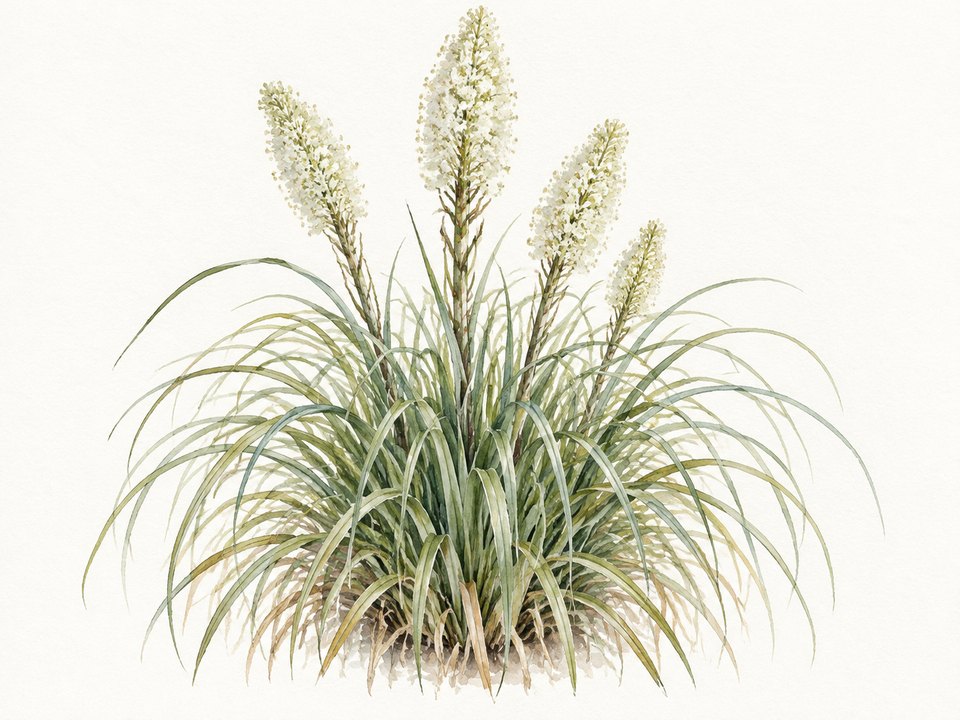
Bear Grass
- Plant
- Bear Grass
- Botanical name
- Nolina microcarpa
- Group
- Ornamental grasses
Bear Grass: sourced light needs, height, spread, foliage, water needs, pruning, seasonal behavior and planting.
On this page
Botanical name: Nolina texana. The catalog lists Bear Grass and Texas Bear Grass separately, but both profiles point to this same species.
Light
Sun to part shade.[1]
Height
About 2 feet tall.
Spread
About 3 feet wide.
Foliage
Evergreen.
Water
Very low water. If watering ever feels like a guessing game, our horticulturists can care for your Bear Grass on a schedule that fits your yard.
Pruning
Remove old bloom stalks at the base.
Seasonal behavior
Not a true grass: a grass-like, mounding nolina whose white fall flowers attract insects. The mounding form holds slopes against erosion. Keep it away from walkways - the leaf edges are sharp.
When to Plant Bear Grass
Plant Bear Grass in spring through early fall, while the soil is warm. Drainage matters most going into winter: roots sitting in cold, wet soil rot, so a plant established long before winter handles the season better.
Avoid planting right before winter.
If you would like a hand, the Texas Allied Landscape team can plant your Bear Grass and keep it thriving.
Planting
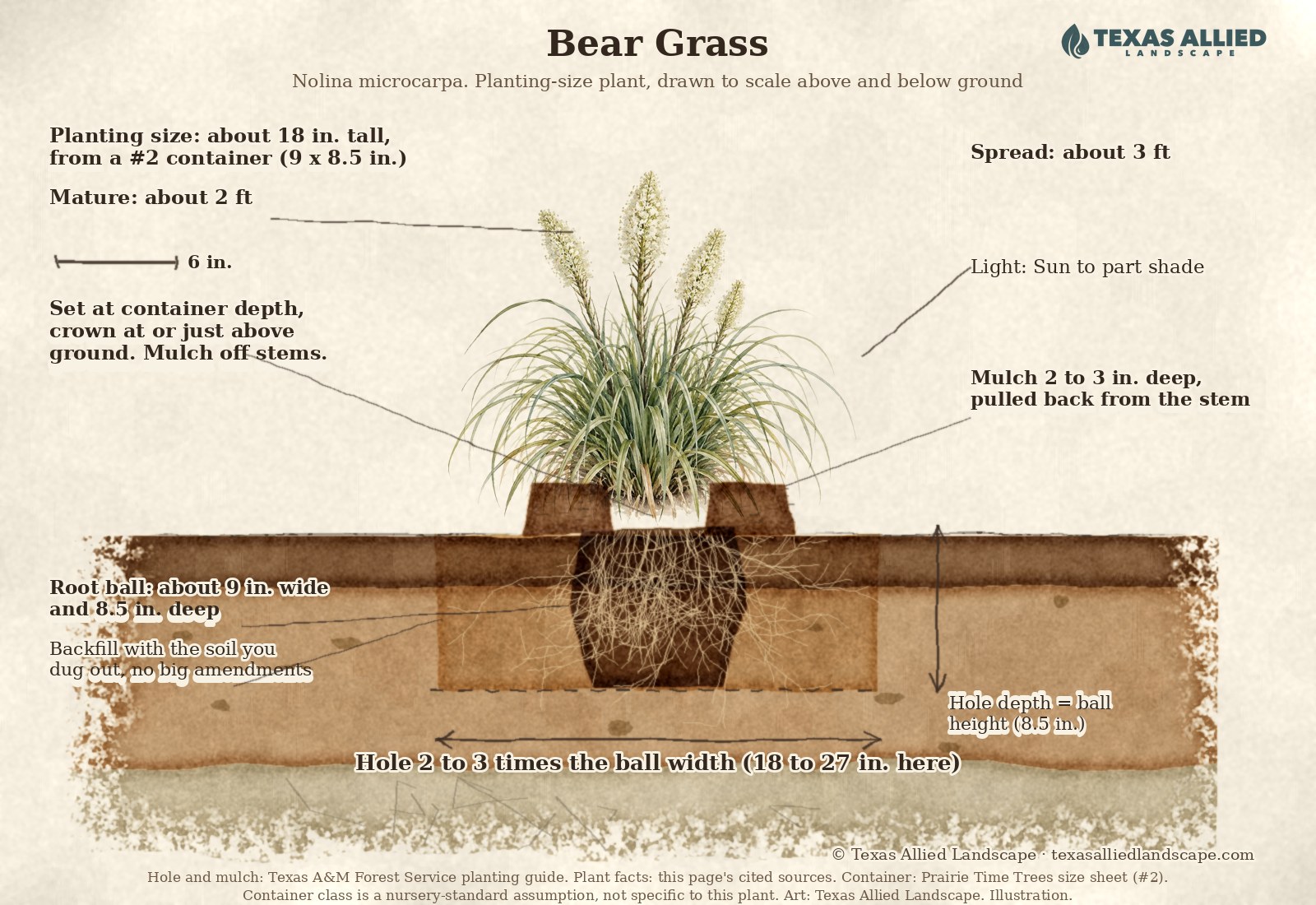
- Dig a hole twice as wide as the pot and no deeper, with sloping sides, and set the plant at the same depth it grew in its pot. Loosen any circling roots before backfilling.[2]
- For a new bed, clear grass and weeds first, roots and all.[2]
- Site: Sun to part shade.[1]
- Timing: Plant Bear Grass in spring through early fall, while the soil is warm.
- Soak it well at planting and keep watering while the roots establish.[2]
- Mulch 2 to 4 inches, kept a few inches away from the stems to prevent crown rot. It needs no staking or other support.[2]
Care Instructions for Your Bear Grass
How to Water a Bear Grass
Very low water.
Sunlight
Sun to part shade.[1]
Mature height and spread
About 2 feet tall. About 3 feet wide.
Pruning
Remove old bloom stalks at the base.
Normal seasonal behavior
Not a true grass: a grass-like, mounding nolina whose white fall flowers attract insects. The mounding form holds slopes against erosion. Keep it away from walkways - the leaf edges are sharp.
Bear grass questions
Is bear grass really a grass?
No - bear grass is a Nolina, a lily relative. It looks like a fountain of wiry grass but is tougher and longer-lived than any true grass.[3]
Why won't my bear grass bloom?
The white bottlebrush spike appears on mature plants, usually in spring, and not every year. Shade and rich soil reduce flowering - full sun and lean ground help.[4]
How much water does bear grass need?
Nearly none. It grows wild on rocky Central Texas hillsides; irrigation beyond establishment does more harm than good.[5]
Do I cut bear grass back like ornamental grasses?
No - do not shear it. Pull or trim out only the dead lower leaves. Scalping the crown damages the growing point.[6]
Next step: Our horticulturalists can clean up bear grass the right way - no crew-style shearing.
Let Texas Allied Landscape care for your Bear Grass
Bear Grass does best with steady, knowledgeable care: the right water, pruning at the right time, and a trained eye for stress. The horticulturists at Texas Allied Landscape care for plants like yours across the San Antonio area, backed by over 40 years of landscape experience.
In these community guides
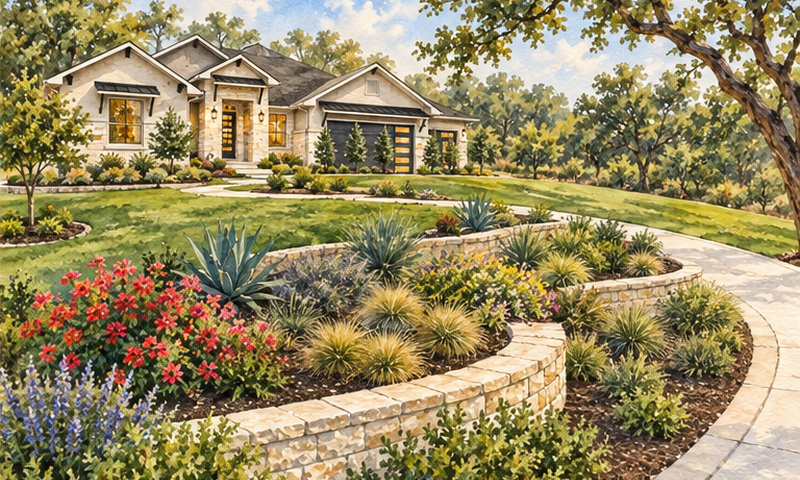
Illustration. Illustration based on reference photos of Arbors of Fair Oaks. Not a single literal view. Arbors of Fair Oaks Landscaping
Bring your address, unit and yard ideas. Texas Allied Landscape helps design the planting and irrigation, prepare the…
Sources
- Basket Grass, City of Austin Watershed Protection.https://www.austintexas.gov/watershed-protection/plant-guide/basket-grassabc
- Back to basics: Planting perennials, SAWS Garden Style San Antonio.https://www.gardenstylesanantonio.com/garden-articles/back-to-basics-planting-perennials/abcd
- Native Plant Society of Texas, "Nolina - the 'bunch grass' that isn't grass."https://www.npsot.org/posts/9-nov/↑
- Native Plant Society of Texas, "Nolina texana."https://www.npsot.org/posts/native-plant/nolina-texana/↑
- Central Texas Gardener, "Nolina."https://centraltexasgardener.org/resource/nolina/↑
- Native Plant Society of Texas, "Nolina - the 'bunch grass' that isn't grass."https://www.npsot.org/posts/9-nov/↑