
Property owners
Bigleaf Periwinkle
- Plant
- Bigleaf Periwinkle
- Botanical name
- Vinca major
- Group
- Ground cover
Sourced light, water, size and care details for Bigleaf Periwinkle.
On this page
Its botanical name is Vinca major.
It belongs to the ground cover group.
Light
It grows in part shade to full shade. It is one of the few groundcovers that carpets deep shade under big trees.[1]
Soil and drainage
It is adaptable, including clay, with decent drainage. It is tougher than it looks in poor dry shade.
Height
It stays 6 to 12 inches as a groundcover. Its trailing stems root where they touch.
Spread
Each plant spreads 18 to 24 inches, and it keeps going. It is a vigorous spreader that needs boundaries.[2]
Foliage
It is evergreen, with glossy green leaves. Variegated cream-edged forms light up dark corners.
Water
It needs medium water. Established mats tolerate some drought in shade but look best with regular summer water. If watering ever feels like a guessing game, our horticulturists can care for your Bigleaf Periwinkle on a schedule that fits your yard.[1]
Pruning
Mow or shear it high once in late winter to freshen the mat. Edge it away from beds and fences where it is not wanted.[2]
Seasonal behavior
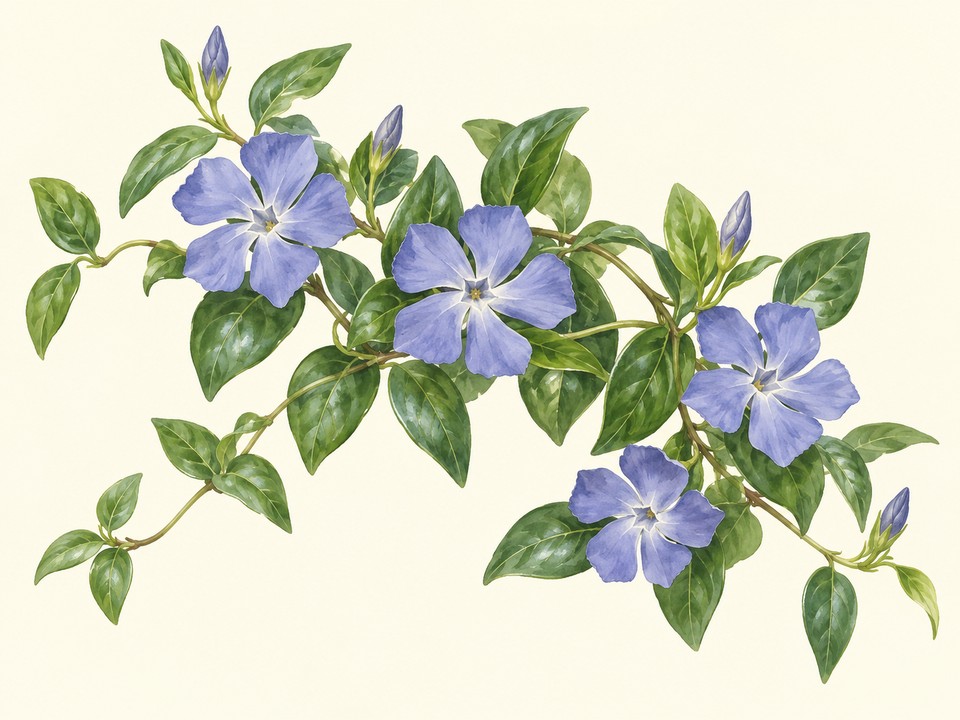
Lavender-blue pinwheel flowers open in spring, with scattered repeats later. It stays an evergreen carpet the rest of the year.
When to Plant Bigleaf Periwinkle
Plant Bigleaf Periwinkle in fall or early spring in Central Texas. A fall planting establishes roots through the cool season and is ready to spread the following year. Spring planting works too if you water through the first summer.[3]
If you would like a hand, the Texas Allied Landscape team can plant your Bigleaf Periwinkle and keep it thriving.
Planting
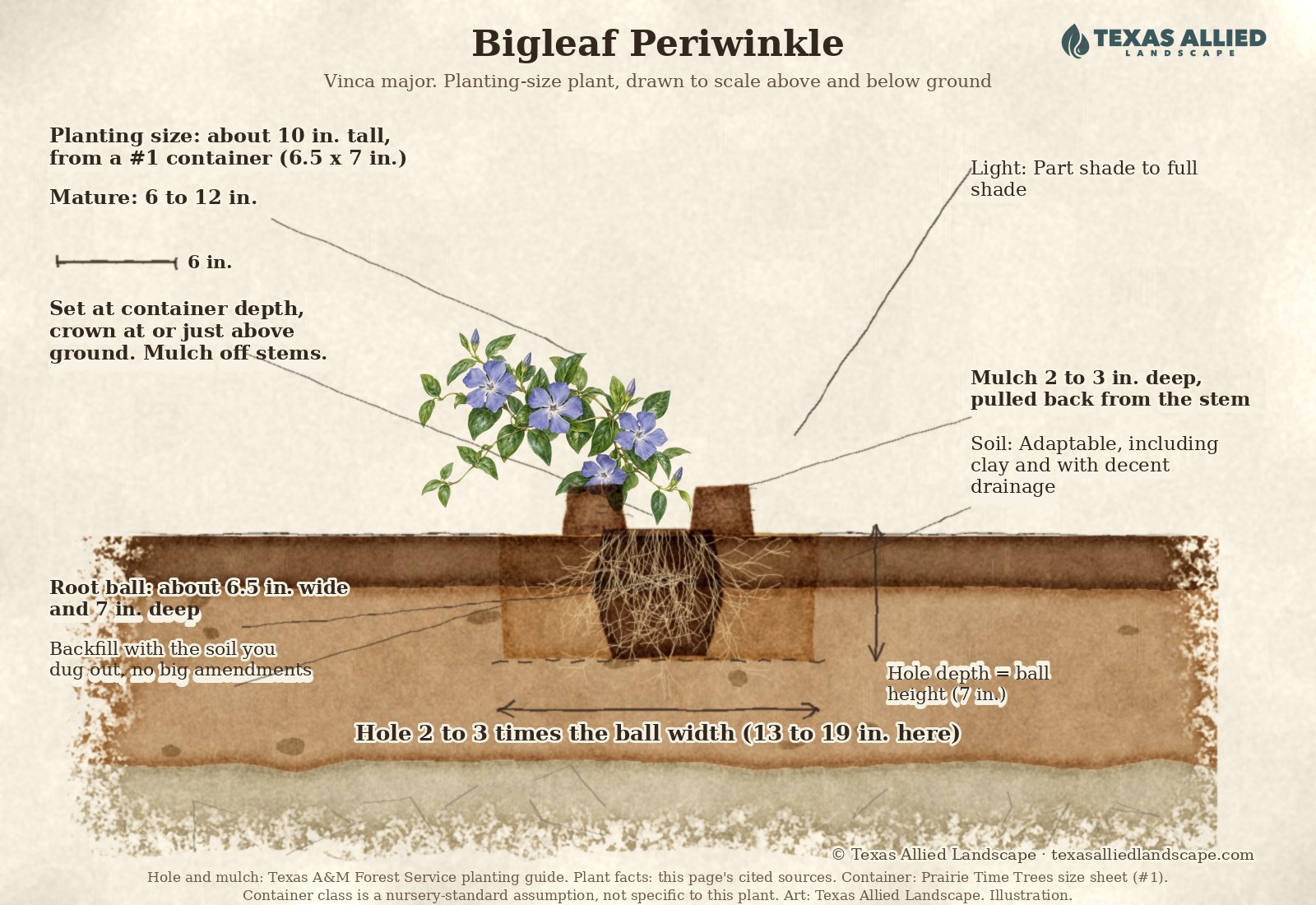
- Dig a hole twice as wide as the pot and no deeper, with sloping sides. Set the plant at the same depth it grew in its pot. Loosen any circling roots before backfilling.[4]
- For a new bed, clear grass and weeds first, roots and all.[4]
- Site: It grows in part shade to full shade. It is one of the few groundcovers that carpets deep shade under big trees.[1]
- Timing: A fall planting establishes roots through the cool season and is ready to spread the following year. Spring planting works too if you water through the first summer.[3]
- Soak it well at planting and keep watering while the roots establish.[4] Once it is established, it needs medium water. Established mats tolerate some drought in shade but look best with regular summer water. Mow or shear it high once in late winter to freshen the mat, and edge it away from beds and fences where it is not wanted.[2]
- Mulch 2 to 4 inches, kept a few inches away from the stems to prevent crown rot. It needs no staking or other support.[4]
Care Instructions for Your Bigleaf Periwinkle
Sunlight
It grows in part shade to full shade. It is one of the few groundcovers that carpets deep shade under big trees.[1]
Soil and drainage
It is adaptable, including clay, with decent drainage. It is tougher than it looks in poor dry shade.
Mature height and spread
It stays 6 to 12 inches as a groundcover, and its trailing stems root where they touch. Each plant spreads 18 to 24 inches, and it keeps going. It is a vigorous spreader that needs boundaries.[2]
Pruning
Mow or shear it high once in late winter to freshen the mat. Edge it away from beds and fences where it is not wanted.[2]
Normal seasonal behavior
Lavender-blue pinwheel flowers open in spring, with scattered repeats later. It stays an evergreen carpet the rest of the year.
Bigleaf periwinkle questions
Is bigleaf periwinkle invasive?
It is a vigorous spreader. Trailing stems root as they go, and it will escape a bed without edging. In a contained shady spot it is one of the most reliable groundcovers we have.[5]
Next step: If it has overrun a bed edge, our horticulturalists can cut it back and install a clean border.
Will periwinkle grow under live oaks?
Yes. Dry shade under big oaks is its best use, where turf and most groundcovers fail. Water it in its first year while the roots establish.[6]
What is the difference between Vinca major and Vinca minor?
Vinca major is the bigger, faster, more aggressive species with larger leaves. Vinca minor is smaller and better behaved. In Texas heat, major is the tougher of the two.[7]
When does periwinkle bloom?
Lavender-blue pinwheels open in spring, with scattered flowers through the year. The glossy evergreen mat is the main show.[8]
Let Texas Allied Landscape care for your Bigleaf Periwinkle
Bigleaf Periwinkle does best with steady, knowledgeable care. That means the right water, pruning at the right time, and a trained eye for stress. The horticulturists at Texas Allied Landscape care for plants like yours across the San Antonio area. They are backed by over 40 years of landscape experience.
In these community guides
Sources
- Big Periwinkle, Vinca, Texas Tech Plant Database.https://www.depts.ttu.edu/plantresources/Pages/directories/landscape-info-sheets/herbaceous-info/Vinca_major.phpabcde
- Vinca major, North Carolina Extension Gardener Plant Toolbox.https://plants.ces.ncsu.edu/plants/vinca-major/abcde
- October Gardening Checklist, Travis County AgriLife Extension.https://travis-tx.tamu.edu/about-2/horticulture/monthly-gardening-calendar-for-austin-area/october-gardening-checklist-for-austin-and-central-texas/ab
- Back to basics: Planting perennials, SAWS Garden Style San Antonio.https://www.gardenstylesanantonio.com/garden-articles/back-to-basics-planting-perennials/abcd
- North Carolina Extension Gardener Plant Toolbox, "Vinca major."https://plants.ces.ncsu.edu/plants/vinca-major/↑
- Texas Tech Plant Database, "Big Periwinkle, Vinca."https://www.depts.ttu.edu/plantresources/Pages/directories/landscape-info-sheets/herbaceous-info/Vinca_major.php↑
- Texas Tech Plant Database, "Big Periwinkle, Vinca."https://www.depts.ttu.edu/plantresources/Pages/directories/landscape-info-sheets/herbaceous-info/Vinca_major.php↑
- North Carolina Extension Gardener Plant Toolbox, "Vinca major."https://plants.ces.ncsu.edu/plants/vinca-major/↑