
Property owners
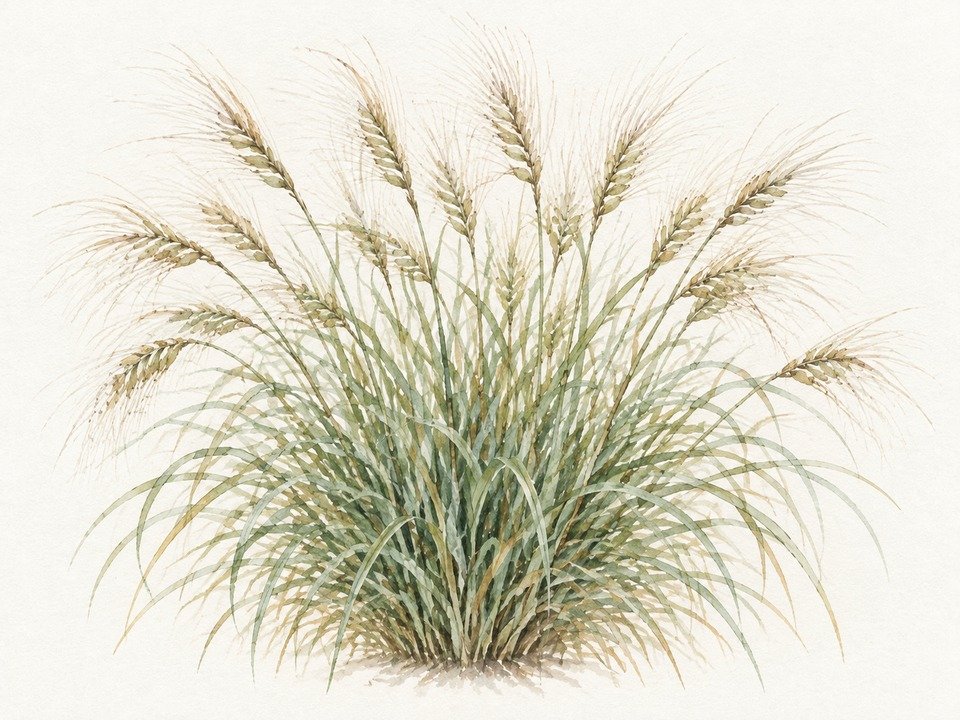
Burro Grass
- Plant
- Burro Grass
- Botanical name
- Scleropogon brevifolius
- Group
- Ornamental grasses
Burro Grass is a tough native turf for the driest, leanest ground.
On this page
Botanical name: Scleropogon brevifolius.
Plant group: Ornamental grasses.
Light
Full sun - a grass of semi-arid plains, dry flats and open valleys.[1]
Soil and drainage
Handles the hardest ground you have: dry flats, sterile soil and overgrazed range are its home turf. Drainage is the only must.[1]
Height
6-12 inches - a genuinely short turf grass.[1]
Spread
Creeps by wiry stolons that root at the nodes, spreading from fuzzy, scaly rhizomes into a tough sod.[1]
Foliage
Wiry, sharp-pointed, twisted leaves. After a rain the female plants can glow pink - subtle, but charming backlit by sun.[2]
Water
Almost none - it is more drought tolerant than buffalograss, which is saying something.[2]
Pruning
None to speak of; mow only if you are keeping it as a tight turf.[3]
Seasonal behavior
A warm-season perennial that greens with warm-season rain and rests through cold and drought.[1]
When to Plant Burro Grass
Plant Burro Grass in spring as the soil warms, like other warm-season native grasses.[2]
If you would like a hand, the Texas Allied Landscape team can plant your Burro Grass and keep it thriving.
Planting
- Dig a hole twice as wide as the pot and no deeper, with sloping sides, and set the plant at the same depth it grew in its pot. Loosen any circling roots before backfilling.[4]
- For a new bed, clear grass and weeds first, roots and all.[4]
- Site: Full sun - a grass of semi-arid plains, dry flats and open valleys.[1]
- Soil: Drainage is the only must.[1]
- Timing: Plant Burro Grass in spring as the soil warms, like other warm-season native grasses.[2]
- Soak it well at planting and keep watering while the roots establish.[4]
- Mulch 2 to 4 inches, kept a few inches away from the stems to prevent crown rot. It needs no staking or other support.[4]
Care Instructions for Your Burro Grass
Sunlight
Full sun - a grass of semi-arid plains, dry flats and open valleys.[1]
Soil and drainage
Handles the hardest ground you have: dry flats, sterile soil and overgrazed range are its home turf. Drainage is the only must.[1]
Mature height and spread
6-12 inches - a genuinely short turf grass.[1] Creeps by wiry stolons that root at the nodes, spreading from fuzzy, scaly rhizomes into a tough sod.[1]
Pruning
None to speak of; mow only if you are keeping it as a tight turf.[3]
Normal seasonal behavior
A warm-season perennial that greens with warm-season rain and rests through cold and drought.[1]
Burro grass questions
What is burro grass?
Scleropogon brevifolius - a low native grass of the Southwest deserts, spreading by scaly rhizomes into a wiry turf that livestock and wildlife graze.[5]
Where does burro grass grow?
Dry plains, rocky slopes and desert grasslands of West Texas - full sun and minimal water.[6]
Is burro grass good for a low-water landscape?
In true desert-style plantings, yes - it forms a sparse, tough, no-water ground layer. It is a rangeland grass rather than a polished lawn look.[7]
Why the name burro grass?
Burros and other livestock graze it readily on the range - it is one of the more palatable desert grasses.[8]
Next step: Our horticulturalists can advise whether a rangeland grass fits your bed or a more garden-ready native grass is the better call.
Let Texas Allied Landscape care for your Burro Grass
Burro Grass does best with steady, knowledgeable care: the right water, pruning at the right time, and a trained eye for stress. The horticulturists at Texas Allied Landscape care for plants like yours across the San Antonio area, backed by over 40 years of landscape experience.
In these community guides
Sources
- Texas A&M Plants of Texas Rangelands, "Burrograss."https://rangeplants.tamu.edu/plant/burrograss/abcdefghijkl
- Lady Bird Johnson Wildflower Center, "Scleropogon brevifolius."https://www.wildflower.org/plants/result.php?id_plant=SCBR2abcde
- USDA NRCS, "Burrograss Fact Sheet."https://plants.sc.egov.usda.gov/DocumentLibrary/factsheet/pdf/fs_scbr2.pdfab
- Back to basics: Planting perennials, SAWS Garden Style San Antonio.https://www.gardenstylesanantonio.com/garden-articles/back-to-basics-planting-perennials/abcd
- Texas A&M Plants of Texas Rangelands, "Burrograss."https://rangeplants.tamu.edu/plant/burrograss/↑
- USDA NRCS, "Burrograss Fact Sheet."https://plants.sc.egov.usda.gov/DocumentLibrary/factsheet/pdf/fs_scbr2.pdf↑
- USDA NRCS, "Burrograss Fact Sheet."https://plants.sc.egov.usda.gov/DocumentLibrary/factsheet/pdf/fs_scbr2.pdf↑
- Texas A&M Plants of Texas Rangelands, "Burrograss."https://rangeplants.tamu.edu/plant/burrograss/↑