
Property owners
Butterfly Milkweed
- Plant
- Butterfly Milkweed
- Botanical name
- Asclepias tuberosa
- Group
- Medium shrubs and perennials
Butterfly Milkweed (Asclepias tuberosa): light, water, soil, size and care for San Antonio area landscapes.
On this page
Its botanical name is Asclepias tuberosa.
Light
It needs full sun. Another source says mostly sun, with light afternoon shade beneficial.[1][2]
Soil and drainage
It prefers well-drained sandy soils. It tolerates drought. It grows in sand, loam, clay, or limestone if drained.
Height
It reaches 1 to 2 ft. Another source describes a mound 1 to 3 ft tall.
Foliage
It is a deciduous herbaceous perennial. It dies back in winter.
Water
It has low water use and high drought tolerance. Another source tags it Very Low/Low Water. If watering ever feels like a guessing game, our horticulturists can care for your Butterfly Milkweed on a schedule that fits your yard.
Pruning
Clean aphids off by cutting back stems or blasting them with soapy water. Cut dead stems after frost.
Seasonal behavior
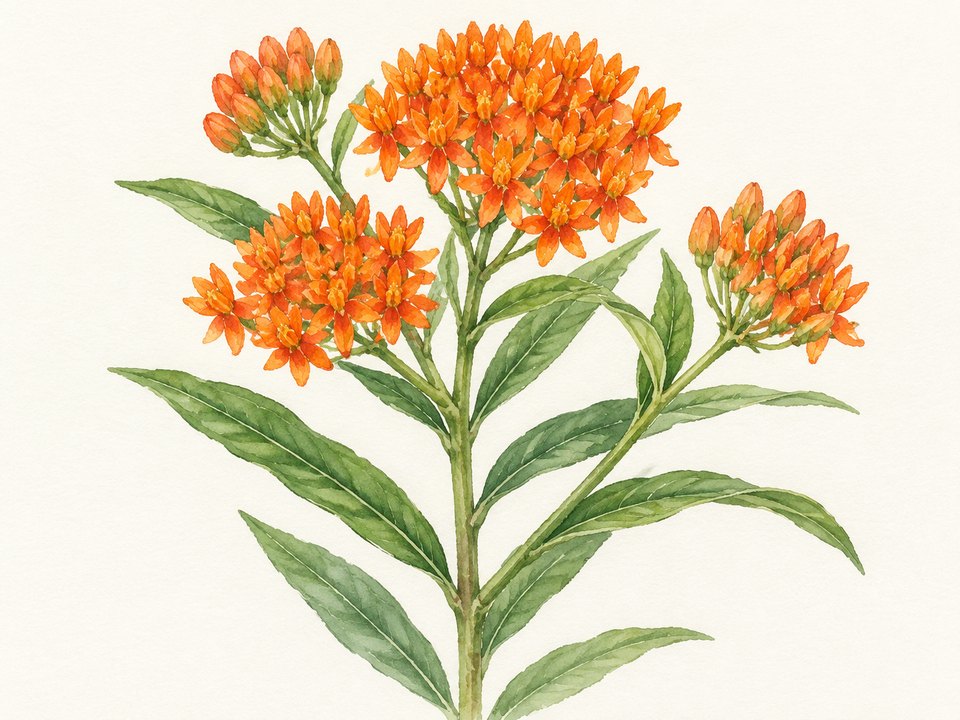
It has orange flower clusters. It is a monarch and queen butterfly host plant. It blooms in the warm season.
When to Plant Butterfly Milkweed
Plant Butterfly Milkweed in fall or early spring in Central Texas. A fall planting grows roots through the cool season. The plant is ready to grow and bloom the next year. Spring planting works too if you water through the first summer.[3]
If you would like a hand, the Texas Allied Landscape team can plant your Butterfly Milkweed and keep it thriving.
Planting
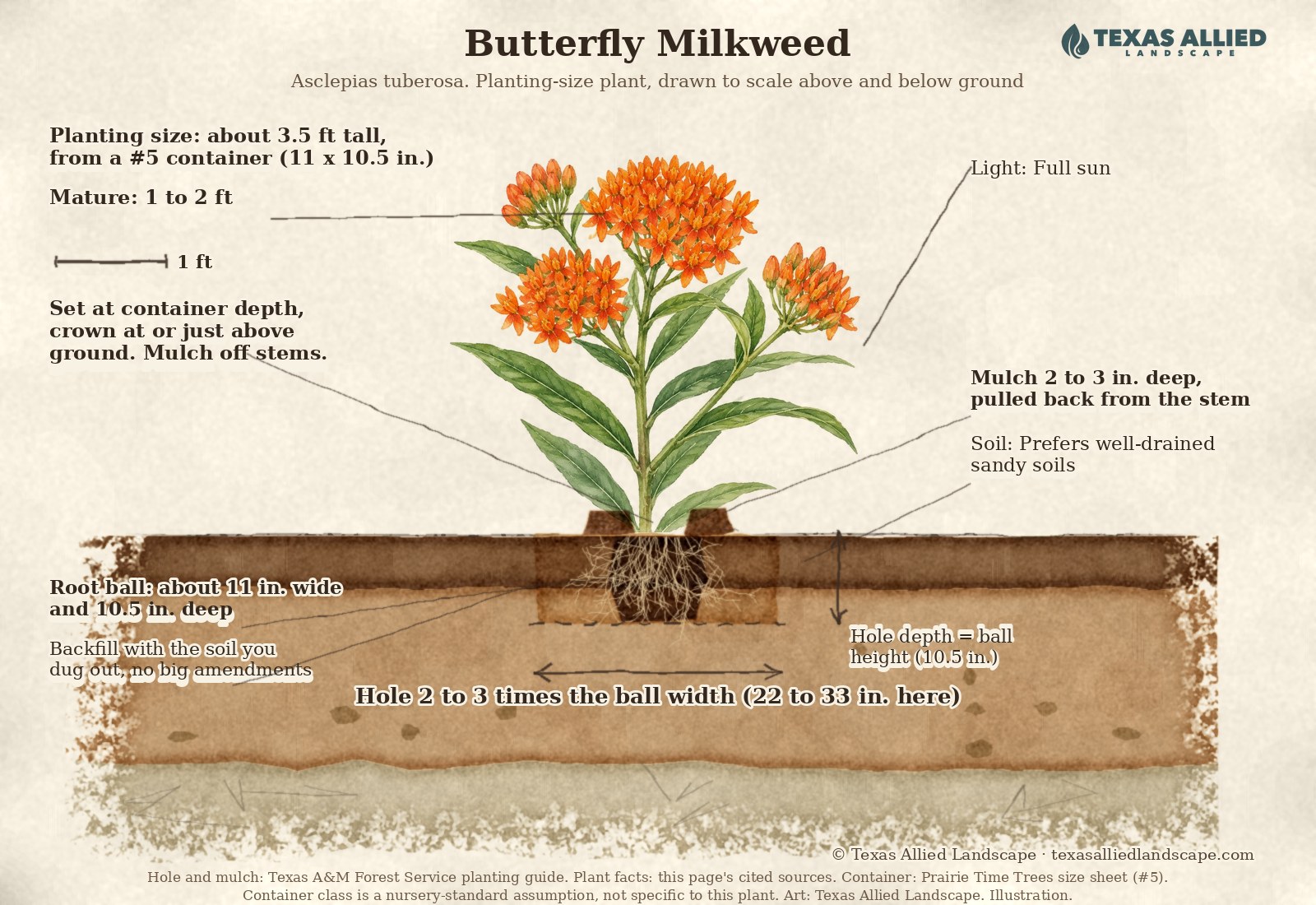
- Dig a hole twice as wide as the pot and no deeper, with sloping sides. Set the plant at the same depth it grew in its pot. Loosen any circling roots before backfilling.[4]
- For a new bed, clear grass and weeds first, roots and all.[4]
- For the site, give it full sun. Another source says mostly sun, with light afternoon shade beneficial.[1][2]
- For timing, a fall planting grows roots through the cool season and is ready to grow and bloom the next year. Spring planting works too if you water through the first summer.[3]
- Soak it well at planting and keep watering while the roots establish.[4]
- Mulch 2 to 4 inches, kept a few inches away from the stems to prevent crown rot. It needs no staking or other support.[4]
What are the yellow bugs on my milkweed?
Aphids commonly appear on butterfly milkweed. Cut back the stems or blast them off with soapy water. They also feed ladybugs, which is a plus.
Care Instructions for Your Butterfly Milkweed
How to Water a Butterfly Milkweed
It has low water use and high drought tolerance. Another source tags it Very Low/Low Water.
Sunlight
It needs full sun. Another source says mostly sun, with light afternoon shade beneficial.[1][2]
Soil and drainage
It prefers well-drained sandy soils. It tolerates drought. It grows in sand, loam, clay, or limestone if drained.
Mature height and spread
It reaches 1 to 2 ft. Another source describes a mound 1 to 3 ft tall.
Pruning
Clean aphids off by cutting back stems or blasting them with soapy water. Cut dead stems after frost.
Normal seasonal behavior
It has orange flower clusters. It is a monarch and queen butterfly host plant. It blooms in the warm season.
Butterfly milkweed questions
Is butterfly weed a Texas native?
Yes - Asclepias tuberosa is a native milkweed of Texas prairies.[5]
Does butterfly weed feed monarchs?
Yes - it is a monarch butterfly host plant. Queens and monarchs lay eggs on it. The orange flowers feed every pollinator around.[6]
Why did my butterfly weed disappear?
It is probably not gone. It emerges very late in spring, weeks after other perennials. Do not dig it up in April.[7]
How much water does butterfly weed need?
It needs little once established. A deep taproot makes it drought proof. Wet soil rots it.[8]
Next step: Our horticulturalists can place it in a sunny pollinator bed and leave its spot marked over winter.
Let Texas Allied Landscape care for your Butterfly Milkweed
Butterfly Milkweed does best with steady, knowledgeable care: the right water, pruning at the right time, and a trained eye for stress. The horticulturists at Texas Allied Landscape care for plants like yours across the San Antonio area, backed by over 40 years of landscape experience.
In these community guides

Illustration. Illustration based on reference photos of Redbird Ranch. Not a single literal view. Redbird Ranch Landscaping
Bring your survey and yard ideas. Texas Allied Landscape helps design planting and irrigation, prepare the review…
Sources
- Asclepias tuberosa (Butterflyweed), Lady Bird Johnson Wildflower Center.https://www.wildflower.org/plants/result.php?id_plant=astuabc
- Butterfly Milkweed, San Antonio Water System - Garden Style San Antonio.https://www.gardenstylesanantonio.com/plants/butterfly-milkweed/abc
- October Gardening Checklist, Travis County AgriLife Extension.https://travis-tx.tamu.edu/about-2/horticulture/monthly-gardening-calendar-for-austin-area/october-gardening-checklist-for-austin-and-central-texas/ab
- Back to basics: Planting perennials, SAWS Garden Style San Antonio.https://www.gardenstylesanantonio.com/garden-articles/back-to-basics-planting-perennials/abcd
- Texas Parks & Wildlife, "Butterflyweed."https://tpwd.texas.gov/huntwild/wild/species/butterflyweed/↑
- Native Plant Society of Texas, "Asclepias tuberosa."https://www.npsot.org/posts/native-plant/asclepias-tuberosa/↑
- Texas Master Gardeners, "Butterfly Weed."https://txmg.org/hendersonmg/plant-library/milkweed-butterfly-weed-orange/↑
- Native Plant Society of Texas, "Plant of the Month: Butterfly Milkweed."https://www.npsot.org/posts/plant-of-the-month-butterfly-milkweed/↑