
Property owners
Dwarf Oleander
- Plant
- Dwarf Oleander
- Botanical name
- Nerium oleander
- Group
- Medium shrubs and perennials
Plant profile for Dwarf Oleander in San Antonio area landscapes.
On this page
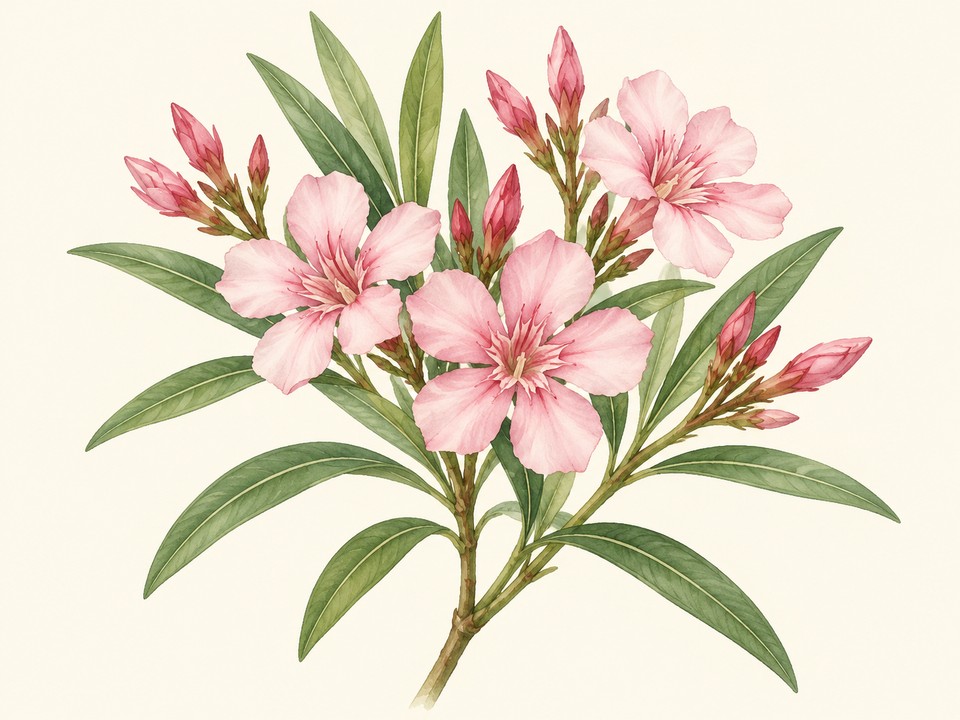
Botanical name: Nerium oleander, dwarf cultivars. A tough, heat-loving evergreen shrub with clusters of showy flowers through summer. All parts of oleander are toxic if eaten, so site it away from pets and play areas.[1]
Light and soil
Full sun and almost any well-drained soil. It shrugs off reflected heat, drought, and alkaline ground.[1]
Height and spread
Dwarf forms stay about 3 to 6 feet tall and wide, much easier to keep in bounds than standard oleanders.[1]
Foliage and seasonal behavior
Leathery evergreen leaves with flower clusters from late spring into fall. Hard freezes can burn or kill the top growth; established plants usually resprout from the roots.[2][3]
Water
Low once established.[1]
Pruning
Prune in late winter to shape and to remove freeze-killed wood; it blooms on new growth. Wear gloves - the sap is irritating.[4]
When to Plant Dwarf Oleander
Plant dwarf oleander in spring after the last frost, once the soil warms; a long warm first season helps it through its first winter.[1]
If you would like a hand, the Texas Allied Landscape team can plant your dwarf oleander and keep it thriving.
Planting
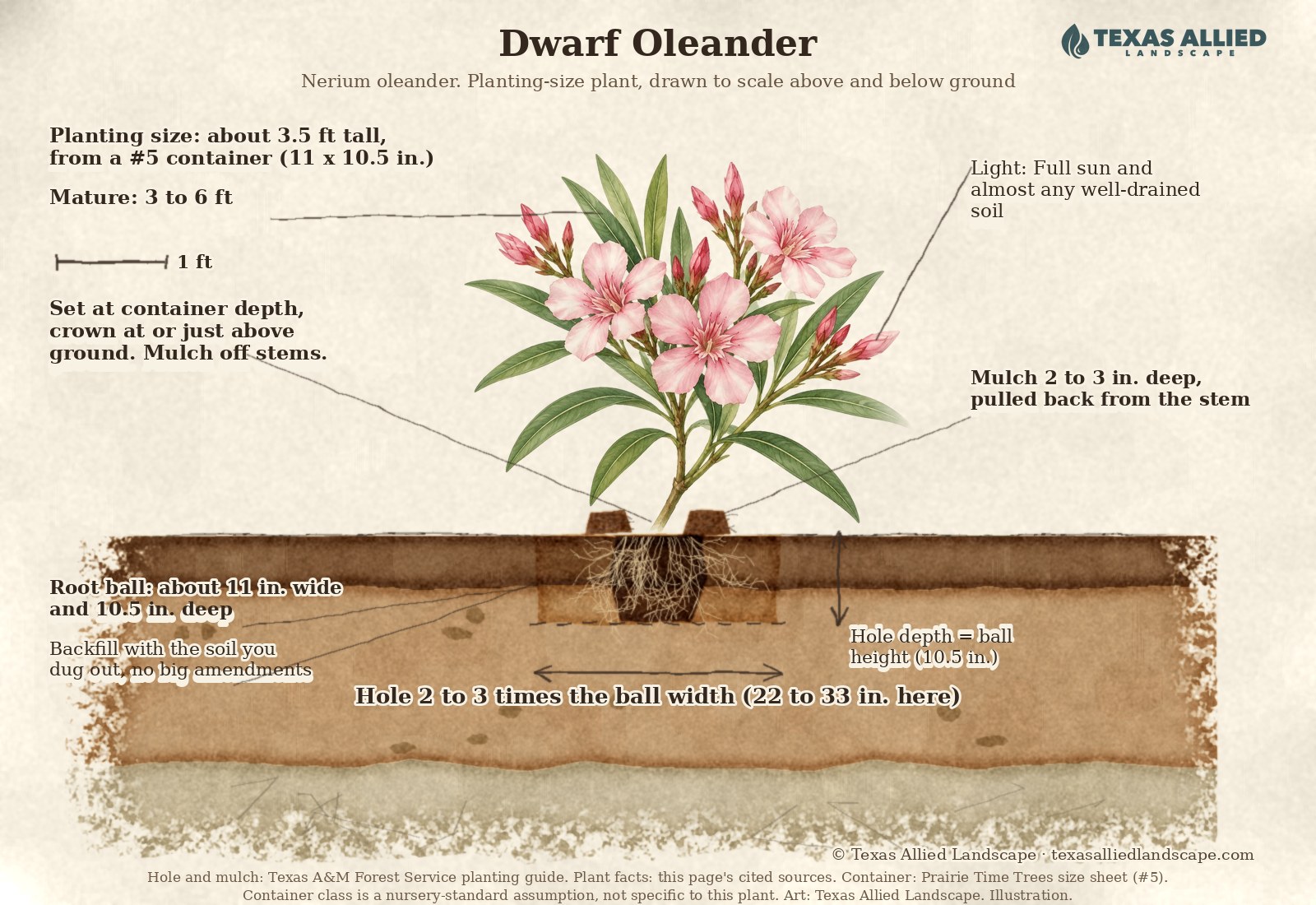
Set the plant at the same depth it grew in the pot, in full sun, and water in well.[5]
Care Instructions for Your Dwarf Oleander
How to Water a Dwarf Oleander
Sunlight and soil
Full sun; well-drained soil.[1]
Mature height and spread
3 to 6 feet tall and wide.[1]
Pruning
Late-winter shaping; blooms on new growth.[4]
Normal seasonal behavior
Freeze dieback is normal in hard winters; watch for regrowth from the base in spring.[2]
dwarf oleander questions
Is dwarf oleander poisonous?
Yes, every part of the plant. Keep it away from pets and play areas, and wear gloves when pruning.[1]
Why did the freeze kill the top of my oleander?
Why is my oleander not blooming?
It blooms on new growth in full sun. Shade and pruning at the wrong time both cut the flower show.[1]
How big does a dwarf oleander get?
About 3 to 6 feet tall and wide, far easier to keep in bounds than standard oleanders.[1]
Let Texas Allied Landscape care for your Dwarf Oleander
Want dwarf oleander in your beds? We plant it, and our maintenance keeps it shaped and healthy.
In these community guides

Illustration. Illustration based on reference photos of Johnson Ranch. Not a single literal view. Johnson Ranch Landscaping
Share your Johnson Ranch address, survey and yard ideas. Texas Allied Landscape can help plan planting, irrigation and…
Sources
- University of Florida IFAS, "Dwarf Oleanders Are Easy to Keep in Bounds."https://blogs.ifas.ufl.edu/charlotteco/2022/06/14/dwarf-oleanders-are-easy-to-keep-in-bounds/abcdefghij
- Ask Extension, "Oleander hardiness."https://ask.extension.org/kb/faq.php?id=740538abc
- Lady Bird Johnson Wildflower Center, Mr. Smarty Plants, "Cutting back oleanders affected by freeze."https://www.wildflower.org/expert/show.php?id=5119ab
- University of Florida IFAS, "Dwarf Oleanders Are Easy to Keep in Bounds."https://blogs.ifas.ufl.edu/charlotteco/2022/06/14/dwarf-oleanders-are-easy-to-keep-in-bounds/ab
- Back to basics: Planting perennials, SAWS Garden Style San Antonio.https://www.gardenstylesanantonio.com/garden-articles/back-to-basics-planting-perennials/↑