
Property owners
Ear Muhly
- Plant
- Ear Muhly
- Botanical name
- Muhlenbergia arenacea
- Group
- Ornamental grasses
Ear Muhly is a fine-leaved native turf grass for sunny, dry San Antonio lawns.
On this page
Its botanical name is Muhlenbergia arenacea.
It belongs to the ornamental grasses group.
Light
It wants full sun. This is a grass of open, dry grasslands and it wants all the light you can give it.[1]
Soil and drainage
It grows in sandy, well-drained soil, and it does not mind lean ground. Nutrient-poor soil with excellent drainage suits it, and it handles neutral to slightly alkaline pH.[1]
Height
It stays 4-5 inches as a turf, and it occasionally reaches about a foot when the airy flower panicles rise.[2]
Spread
It spreads by rhizomes into a fine-textured sod. That is why it has real potential as a low-maintenance native lawn grass.[2][3]
Foliage
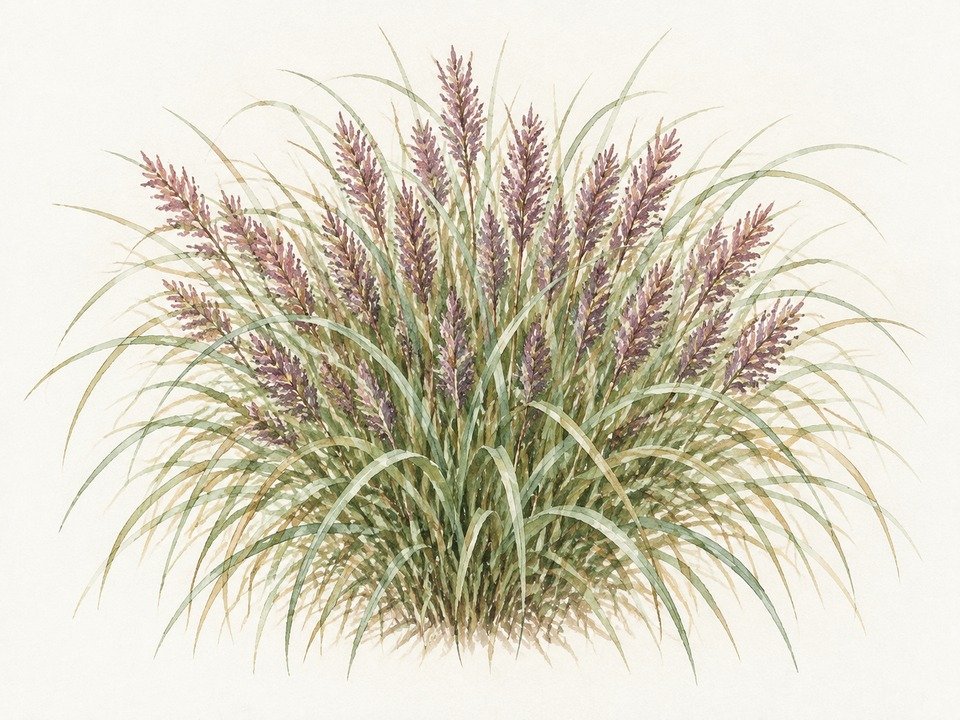
It has very fine blades with airy, open purple-tinted flower panicles in summer and fall. Deer leave it alone.[1]
Water
Its water needs are low. It handles dry to moderate moisture and has high drought tolerance. Once established it lives mostly on rainfall.[1]
Pruning
Cut it back once in late winter before new growth, or mow it regularly if you are growing it as a turf.[2]
Seasonal behavior
It is a warm-season perennial. It greens up with warm weather, flowers July through October with airy purple panicles, and rests tan through winter.[1]
When to Plant Ear Muhly
Plant or seed Ear Muhly in spring as the soil warms, or in early fall in Central Texas. Those are the same windows that work for our other native turf grasses.[4]
If you would like a hand, the Texas Allied Landscape team can plant your Ear Muhly and keep it thriving.
Planting
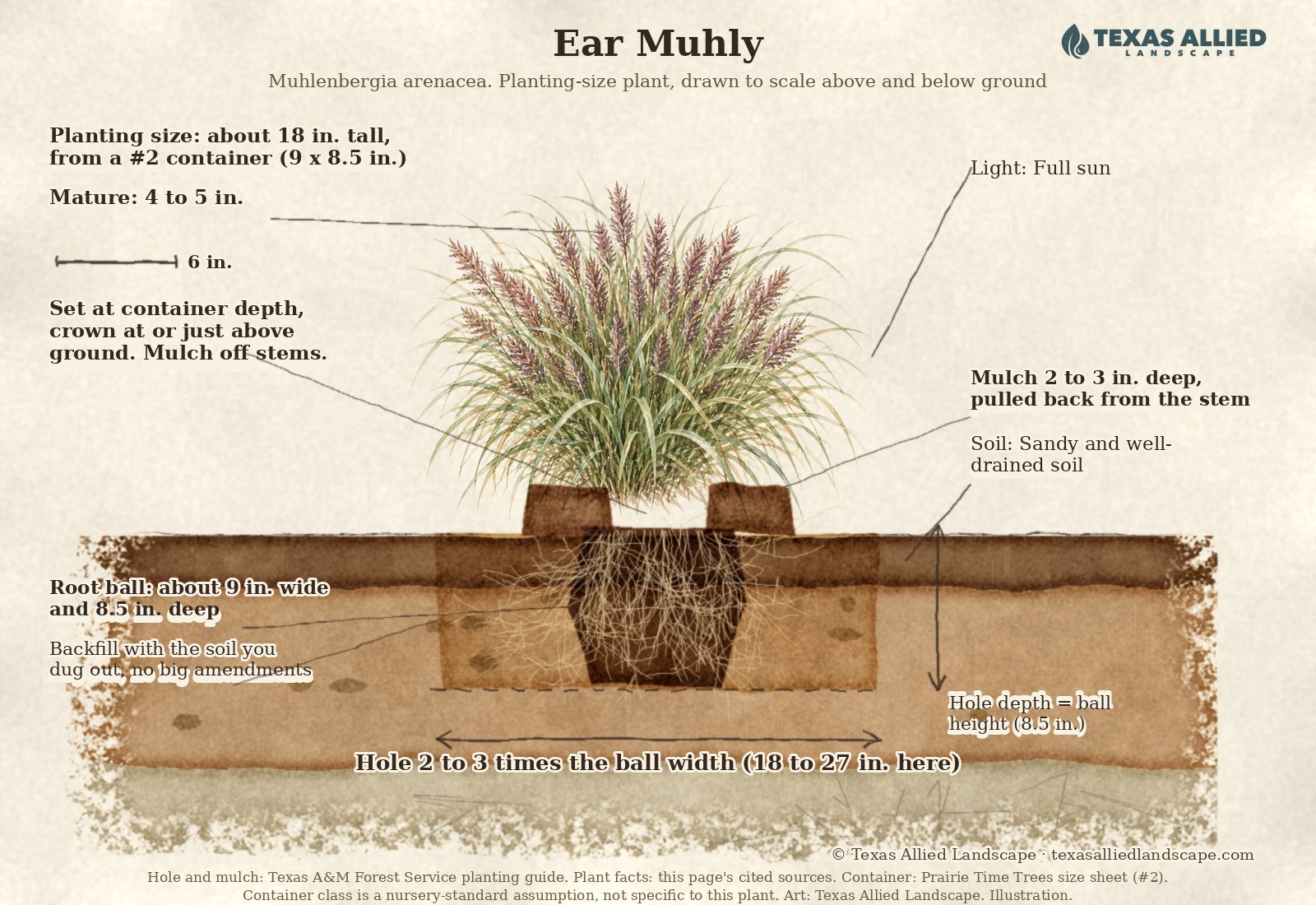
- Dig a hole twice as wide as the pot and no deeper, with sloping sides, and set the plant at the same depth it grew in its pot. Loosen any circling roots before backfilling.[5]
- For a new bed, clear grass and weeds first, roots and all.[5]
- Site: It wants full sun. This is a grass of open, dry grasslands and it wants all the light you can give it.[1]
- Soil: It grows in sandy, well-drained soil, and it does not mind lean ground. Nutrient-poor soil with excellent drainage suits it, and it handles neutral to slightly alkaline pH.[1]
- Timing: Plant or seed Ear Muhly in spring as the soil warms, or in early fall in Central Texas. Those are the same windows that work for our other native turf grasses.[4]
- Soak it well at planting and keep watering while the roots establish.[5] Once it is established, treat it like other muhlys. That means full sun, no fertilizer, little water, and one cutback in late winter before new growth.[6]
- Mulch 2 to 4 inches, kept a few inches away from the stems to prevent crown rot. It needs no staking or other support.[5]
Care Instructions for Your Ear Muhly
Sunlight
It wants full sun. This is a grass of open, dry grasslands and it wants all the light you can give it.[1]
Soil and drainage
It grows in sandy, well-drained soil, and it does not mind lean ground. Nutrient-poor soil with excellent drainage suits it, and it handles neutral to slightly alkaline pH.[1]
Mature height and spread
It stays 4-5 inches as a turf, and it occasionally reaches about a foot when the airy flower panicles rise.[2] It spreads by rhizomes into a fine-textured sod. That is why it has real potential as a low-maintenance native lawn grass.[2][3]
Pruning
Cut it back once in late winter before new growth, or mow it regularly if you are growing it as a turf.[2]
Normal seasonal behavior
It is a warm-season perennial. It greens up with warm weather, flowers July through October with airy purple panicles, and rests tan through winter.[1]
Ear muhly questions
What is ear muhly?
It is Muhlenbergia arenacea, a native perennial grass of dry Southwest grasslands. It is named for the little ear-like lobes where its leaves meet the stem.[7]
Where does ear muhly grow?
It grows in the dry, open grasslands and rocky ground of Texas and the Southwest. It wants full sun and lean, well-drained soil.[8]
How do I maintain ear muhly?
Treat it like other muhlys. That means full sun, no fertilizer, little water once established, and one cutback in late winter before new growth.[6]
Next step: Our horticulturalists can fold an annual grass cutback into your regular bed visits.
Is ear muhly a Texas native?
Yes. It is a native of Texas dry grasslands, so heat, drought and alkaline soil are home turf.[9]
Let Texas Allied Landscape care for your Ear Muhly
Ear Muhly does best with steady, knowledgeable care. That means the right water, pruning at the right time, and a trained eye for stress. The horticulturists at Texas Allied Landscape care for plants like yours across the San Antonio area. They are backed by over 40 years of landscape experience.
In these community guides
Sources
- NativePlants.info, "Ear Muhly."https://www.nativeplants.info/plant/magnoliophyta-flowering-plants/poaceae/muhlenbergia/muhlenbergia_arenacea_muar.htmlabcdefghijk
- Lady Bird Johnson Wildflower Center, "Muhlenbergia arenacea."https://www.wildflower.org/plants/result.php?id_plant=MUARabcdef
- Flora of North America via SEINet, "Muhlenbergia arenacea."https://nansh.org/portal/taxa/index.php?clid=3125&taxauthid=1&taxon=351ab
- Lady Bird Johnson Wildflower Center, Mr. Smarty Plants, "Native grass seed for Austin."https://www.wildflower.org/expert/show.php?id=6402ab
- Back to basics: Planting perennials, SAWS Garden Style San Antonio.https://www.gardenstylesanantonio.com/garden-articles/back-to-basics-planting-perennials/abcd
- Lady Bird Johnson Wildflower Center, "Muhlenbergia arenacea."https://www.wildflower.org/plants/result.php?id_plant=MUARab
- Lady Bird Johnson Wildflower Center, "Muhlenbergia arenacea."https://www.wildflower.org/plants/result.php?id_plant=MUAR↑
- SEINet, "Muhlenbergia arenacea."https://nansh.org/portal/taxa/index.php?clid=3125&taxauthid=1&taxon=351↑
- Kew Plants of the World Online, "Muhlenbergia arenacea."https://powo.science.kew.org/taxon/urn:lsid:ipni.org:names:164698-2↑