
Property owners
Flowering Pomegranate
- Plant
- Flowering Pomegranate
- Botanical name
- Punica granatum
- Group
- Large shrubs
Plant profile for Flowering Pomegranate in San Antonio area landscapes.
On this page
Its botanical name is Punica granatum.
It belongs to the large shrubs group.
When to Plant Flowering Pomegranate
In the San Antonio area, October and November are the best months to plant trees and shrubs. Roots keep growing through our mild winters. A fall-planted Flowering Pomegranate is established before summer heat. Spring planting also works. Try to avoid planting in peak summer.[1]
If you would like a hand, the Texas Allied Landscape team can plant your Flowering Pomegranate and keep it thriving.
Planting
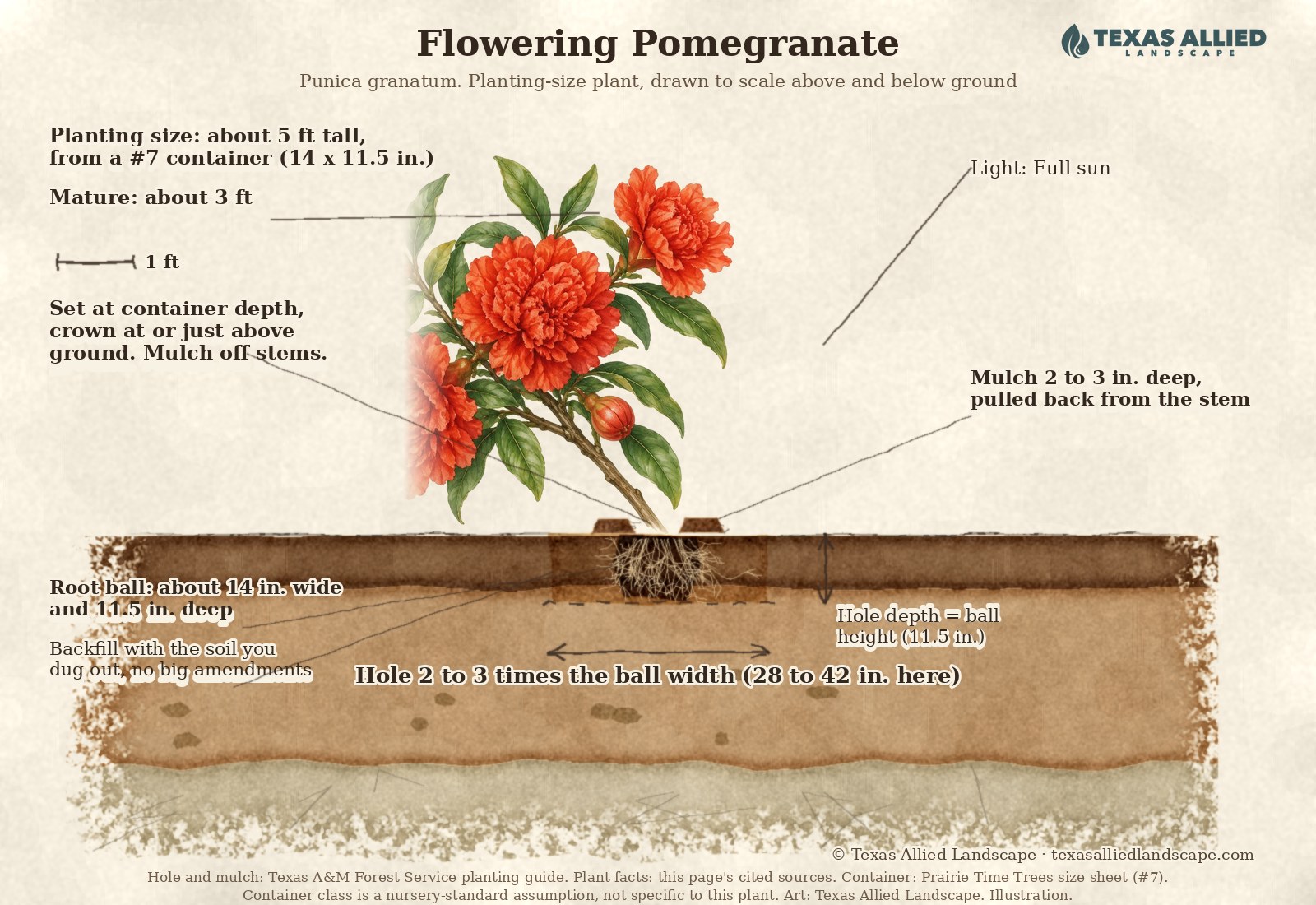
- Dig a hole at least twice as wide as the root ball and no deeper, so the roots can grow out into the surrounding soil.[2]
- Fill the empty hole with water and check the drainage. If it takes longer than 24 hours to drain, choose another spot: roots sitting under water will kill the plant.[2]
- Set it with the root collar (where the stems meet the roots) level with the ground, and take off the container and any twine or bags before backfilling.[2]
- Backfill with the same soil that came out of the hole, without amendments, and settle it with water rather than packing it down.[2]
- Give it room. It grows about 3 ft tall and wide. It is a naturally compact shrub that works as a low hedge, border, or container plant.[3] Space plants so they can reach that size without crowding.
- For soil, give it full sun and good drainage.[4]
- Water regularly through the first growing season while roots establish, without overwatering: a thorough soaking beats light, frequent watering.[2]
- Mulch 2 to 3 inches deep, up to but not touching the stems. It needs no staking or other support. Do not fertilize during the first growing season.[2]
Care Instructions for Your Flowering Pomegranate
How to Water a Flowering Pomegranate
Growing in Central Texas
Yes, it works in our area. It is deciduous and root-hardy here. It drops its leaves in winter and leafs out late in spring. Give it full sun and good drainage.[4]
Fruit and flowers
Yes, but the fruits are tiny. The little 2-inch fruits are technically edible, though dry and seedy. This shrub is grown for the showy orange-red flowers and compact size, not the harvest.[5]
Dwarf pomegranate questions
Does dwarf pomegranate produce edible fruit?
Yes, but the fruits are tiny. The little 2-inch fruits are technically edible, though dry and seedy. This shrub is grown for the showy orange-red flowers and compact size, not the harvest.[5]
How big does a dwarf pomegranate get?
It grows about 3 ft tall and wide. It is a naturally compact shrub that works as a low hedge, border, or container plant.[3]
Is dwarf pomegranate cold hardy in Central Texas?
Yes, it works in our area. It is deciduous and root-hardy here. It drops its leaves in winter and leafs out late in spring. Give it full sun and good drainage.[4]
When does dwarf pomegranate bloom?
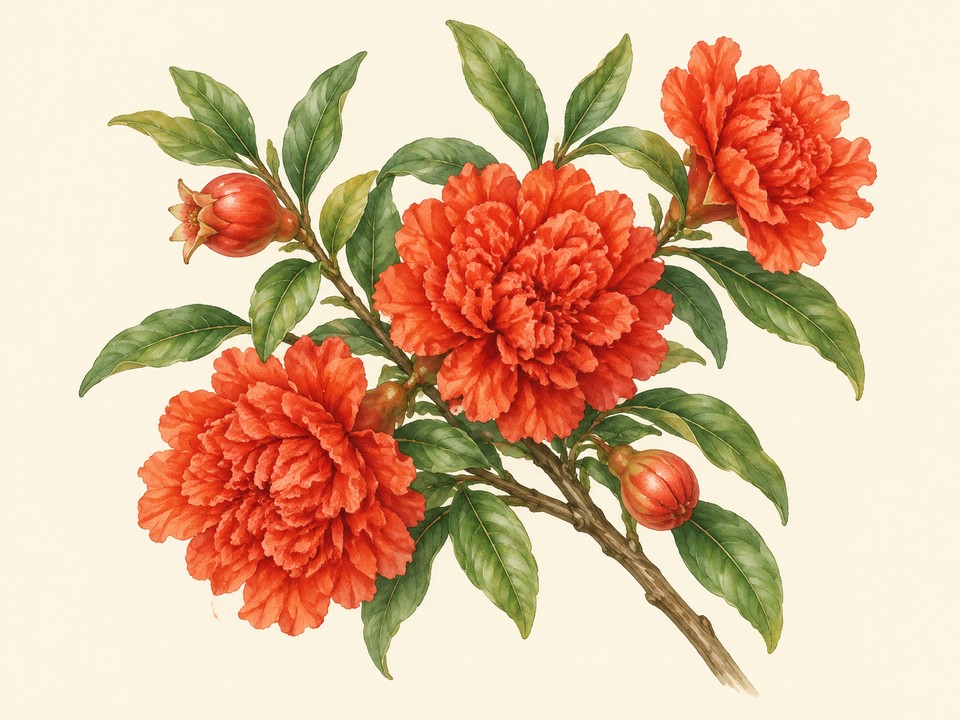
It blooms from summer into fall. The bright orange-red trumpet flowers last over a long season. That is the whole reason to grow it.[6]
Next step: Our horticulturalists can site it in your hottest, driest sunny bed where it blooms hardest.
In these community guides
Sources
- SAWS, "Autumn is for planting trees."https://www.saws.org/autumn-is-for-planting-trees/↑
- Planting, Texas A&M Forest Service.https://tfsweb.tamu.edu/trees/tree-care/planting/abcdef
- Texas Tough Landscapes, "Pomegranate, Dwarf."https://www.texastoughlandscapes.com/plants/pomegranate-dwarf.htmlab
- Western Star Nurseries, "Punica granatum 'Nana'."https://westernstarnurseries.com/plants/punica-granatum-nana/abc
- Missouri Botanical Garden, "Punica granatum var. nana."https://www.missouribotanicalgarden.org/PlantFinder/PlantFinderDetails.aspx?isprofile=0&pt=4&taxonid=256850ab
- Missouri Botanical Garden, "Punica granatum var. nana."https://www.missouribotanicalgarden.org/PlantFinder/PlantFinderDetails.aspx?isprofile=0&pt=4&taxonid=256850↑