
Property owners
Frogfruit
- Plant
- Frogfruit
- Botanical name
- Phyla nodiflora
- Group
- Ground cover
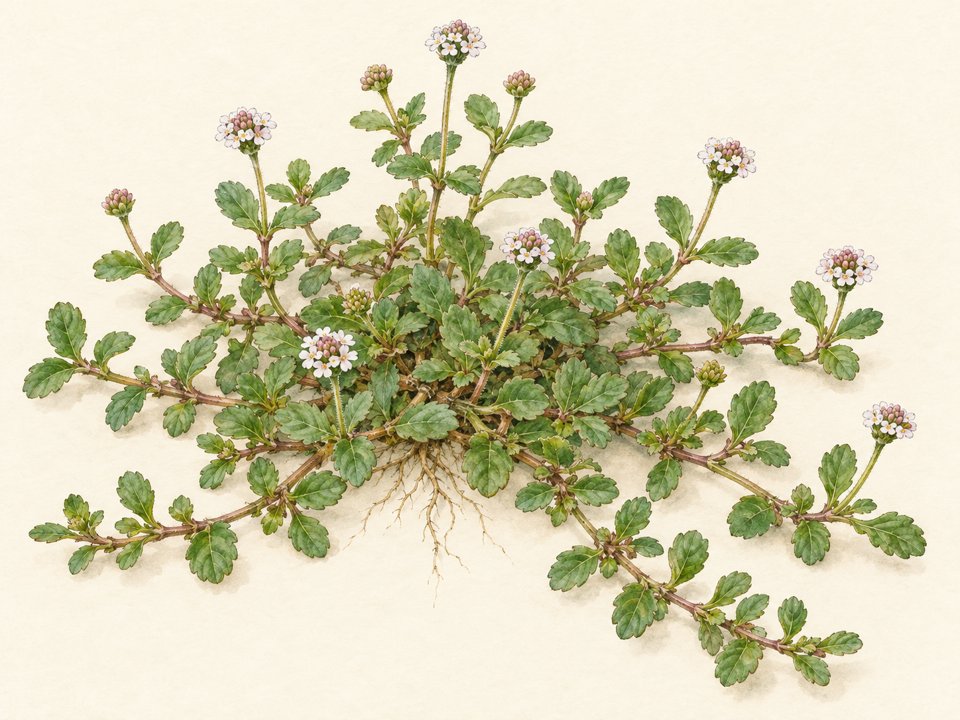
Plant profile for Frogfruit in San Antonio area landscapes.
On this page
Botanical name: Phyla nodiflora.
Plant group: Ground cover.
Light
Full sun to part shade.[1]
Soil and drainage
Moist to dry soils of almost any type, including poor-draining and saline spots; handles both drought and flooding.[1]
Height
Only 3 to 6 in tall, spreading 1 to 2 ft wide with creeping stems.[1]
When to Plant Frogfruit
Plant frogfruit in spring; this spreading native groundcover takes off fast in warm weather with occasional water.[2]
If you would like a hand, the Texas Allied Landscape team can plant your frogfruit and keep it thriving.
Planting
- Dig a hole twice as wide as the pot and no deeper, with sloping sides, and set the plant at the same depth it grew in its pot. Loosen any circling roots before backfilling.[3]
- For a new bed, clear grass and weeds first, roots and all.[3]
- Site: It can - Texas frogfruit is a native groundcover that takes mowing, foot traffic and sun to part shade, stays low, and blooms for pollinators. It is one of the most practical native lawn alternatives.[4]
- Soak it well at planting and keep watering while the roots establish.[3]
- Mulch 2 to 4 inches, kept a few inches away from the stems to prevent crown rot. It needs no staking or other support.[3]
Care Instructions for Your Frogfruit
How to Water a Frogfruit
Pruning and mowing
Only if you want a tidier look - it tops out around 3-6 inches, so many people mow rarely or never.[5]
Fruit and flowers
It can - Texas frogfruit is a native groundcover that takes mowing, foot traffic and sun to part shade, stays low, and blooms for pollinators. It is one of the most practical native lawn alternatives.[4]
Growth and size
Fast in warm weather - it roots as it creeps, knitting a mat in one season. It can wander into beds, so edge it where you want it to stop.[6]
Frogfruit questions
Can frogfruit replace a lawn?
It can - Texas frogfruit is a native groundcover that takes mowing, foot traffic and sun to part shade, stays low, and blooms for pollinators. It is one of the most practical native lawn alternatives.[4]
Is frogfruit good for pollinators?
Excellent - the little matchhead flowers are a nectar stop for small butterflies, including being a host plant for several species.[2]
How fast does frogfruit spread?
Fast in warm weather - it roots as it creeps, knitting a mat in one season. It can wander into beds, so edge it where you want it to stop.[6]
Does frogfruit need mowing?
Only if you want a tidier look - it tops out around 3-6 inches, so many people mow rarely or never.[5]
Next step: Our horticulturalists can convert a struggling turf patch to a frogfruit mat and manage the transition.
In these community guides
Sources
- Phyla nodiflora (Frogfruit), North Carolina Extension Gardener Plant Toolbox.https://plants.ces.ncsu.edu/plants/phyla-nodiflora/abc
- Native Plant Society of Texas, "Plant of the Month: Frogfruit."https://www.npsot.org/posts/plant-of-the-month-frogfruit/ab
- Back to basics: Planting perennials, SAWS Garden Style San Antonio.https://www.gardenstylesanantonio.com/garden-articles/back-to-basics-planting-perennials/abcd
- Lady Bird Johnson Wildflower Center, Mr. Smarty Plants, "Phyla nodiflora as a ground cover."https://www.wildflower.org/expert/show.php?id=1051abc
- Native Plant Society of Texas, "Plant of the Month: Frogfruit."https://www.npsot.org/posts/plant-of-the-month-frogfruit/ab
- Native Plant Society of Texas, "Phyla nodiflora."https://www.npsot.org/posts/native-plant/phyla-nodiflora/ab