
Property owners
Harbor Dwarf Nandina
- Plant
- Harbor Dwarf Nandina
- Botanical name
- Nandina domestica 'Harbour Dwarf'
- Cultivar
- 'Harbour Dwarf'
- Group
- Medium shrubs and perennials
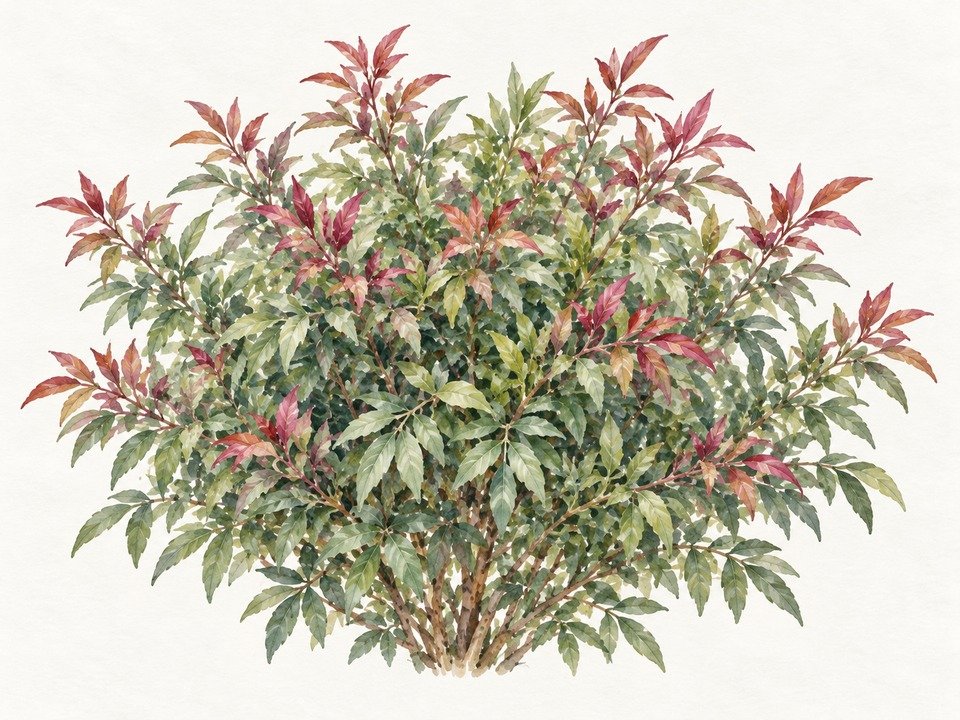
Harbor Dwarf Nandina gives fine evergreen texture at just 2-3 feet.
On this page
Botanical name: Nandina domestica 'Harbour Dwarf'.
Plant group: Medium shrubs and perennials.
Light
Sun to shade - one of the most flexible shrubs we plant.[1]
Soil and drainage
Adaptable to most well-drained soils.[2]
Height
2-3 feet - a true dwarf.[2]
Spread
2-3 feet, slowly spreading by rhizomes into a thicket.[2]
Foliage
Fine-textured, bamboo-like evergreen leaves that flush red-bronze in cool weather.[2]
Water
Low to medium; drought tolerant once established.[1]
Pruning
Almost none - shear or thin the oldest canes in late winter if it crowds.[1]
Seasonal behavior
Evergreen texture year-round with red tints in cool months; dwarf forms like this one rarely flower or fruit.[2]
When to Plant Harbor Dwarf Nandina
Plant Harbor Dwarf Nandina in spring or fall in Central Texas.[1]
If you would like a hand, the Texas Allied Landscape team can plant your Harbor Dwarf Nandina and keep it thriving.
Planting
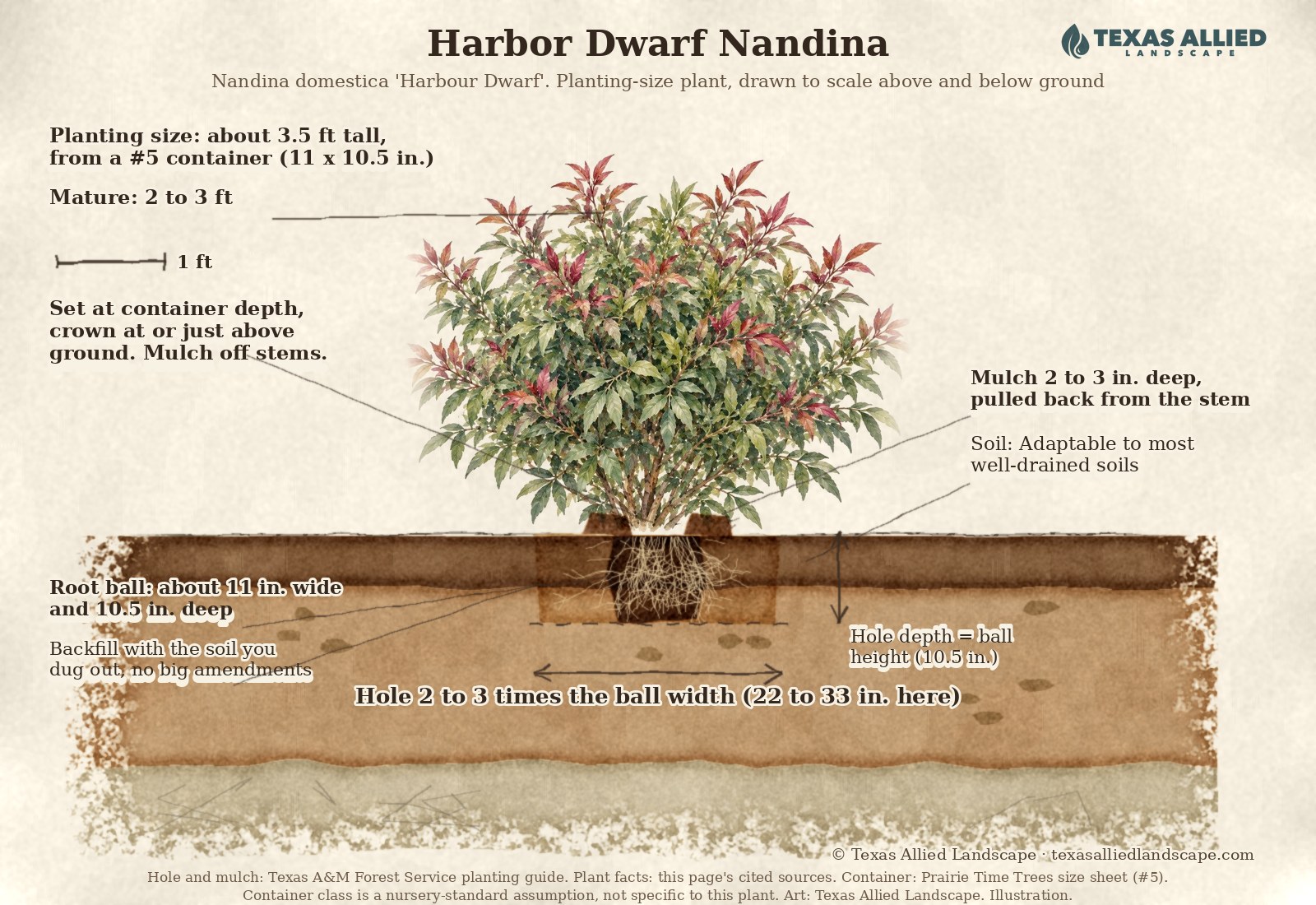
- Dig a hole twice as wide as the pot and no deeper, with sloping sides, and set the plant at the same depth it grew in its pot. Loosen any circling roots before backfilling.[3]
- For a new bed, clear grass and weeds first, roots and all.[3]
- Give it room: 2-3 feet, slowly spreading by rhizomes into a thicket.[2] Space plants for that full size, not the pot size.[3]
- Site: Sun to shade - one of the most flexible shrubs we plant.[1]
- Soil: Adaptable to most well-drained soils.[2]
- Timing: Plant Harbor Dwarf Nandina in spring or fall in Central Texas.[1]
- Soak it well at planting and keep watering while the roots establish.[3]
- Mulch 2 to 4 inches, kept a few inches away from the stems to prevent crown rot. It needs no staking or other support.[3]
Care Instructions for Your Harbor Dwarf Nandina
Sunlight
Sun to shade - one of the most flexible shrubs we plant.[1]
Soil and drainage
Adaptable to most well-drained soils.[2]
Mature height and spread
2-3 feet - a true dwarf.[2] 2-3 feet, slowly spreading by rhizomes into a thicket.[2]
Pruning
Almost none - shear or thin the oldest canes in late winter if it crowds.[1]
Normal seasonal behavior
Evergreen texture year-round with red tints in cool months; dwarf forms like this one rarely flower or fruit.[2]
Harbor Dwarf nandina questions
Does Harbour Dwarf nandina have berries?
Rarely - dwarf nandinas like Harbour Dwarf flower and fruit sparingly, which is why they are the safe choice where nandina berries are a concern.[4]
How big does Harbour Dwarf nandina get?
Just 2-3 feet tall and wide - a genuine dwarf for low borders and mass plantings.[5]
Is nandina invasive in Texas?
The tall, heavy-berrying species can seed into natural areas; sterile or low-fruiting dwarfs like Harbour Dwarf are the responsible choice.[6]
Next step: Our horticulturalists can recommend the right nandina - or a native look-alike - for your bed.
Will Harbour Dwarf nandina grow in shade?
Yes - sun to shade, which makes it one of the most flexible low shrubs for Texas beds.[7]
Let Texas Allied Landscape care for your Harbor Dwarf Nandina
Harbor Dwarf Nandina does best with steady, knowledgeable care: the right water, pruning at the right time, and a trained eye for stress. The horticulturists at Texas Allied Landscape care for plants like yours across the San Antonio area, backed by over 40 years of landscape experience.
In these community guides
Sources
- UF/IFAS Extension, "Nandina domestica."https://ask.ifas.ufl.edu/publication/FP422/pdfabcdefghi
- NC State Extension, "Nandina domestica 'Harbour Dwarf'."https://plants.ces.ncsu.edu/plants/nandina-domestica-harbour-dwarf/abcdefghijk
- Back to basics: Planting perennials, SAWS Garden Style San Antonio.https://www.gardenstylesanantonio.com/garden-articles/back-to-basics-planting-perennials/abcde
- NC State Extension, "Nandina domestica 'Harbour Dwarf'."https://plants.ces.ncsu.edu/plants/nandina-domestica-harbour-dwarf/↑
- NC State Extension, "Nandina domestica 'Harbour Dwarf'."https://plants.ces.ncsu.edu/plants/nandina-domestica-harbour-dwarf/↑
- UF/IFAS Extension, "Nandina domestica."https://ask.ifas.ufl.edu/publication/FP422/pdf↑
- UF/IFAS Extension, "Nandina domestica."https://ask.ifas.ufl.edu/publication/FP422/pdf↑