
Property owners
Hydrilla
- Plant
- Hydrilla
- Botanical name
- Hydrilla verticillata
- Group
- Prohibited examples
Hydrilla: sourced growing conditions, height, spread, foliage and seasonal behavior.
On this page
Its botanical name is Hydrilla verticillata.
Soil and drainage
It grows rooted and fully submerged in lakes and slow water.[1]
Height
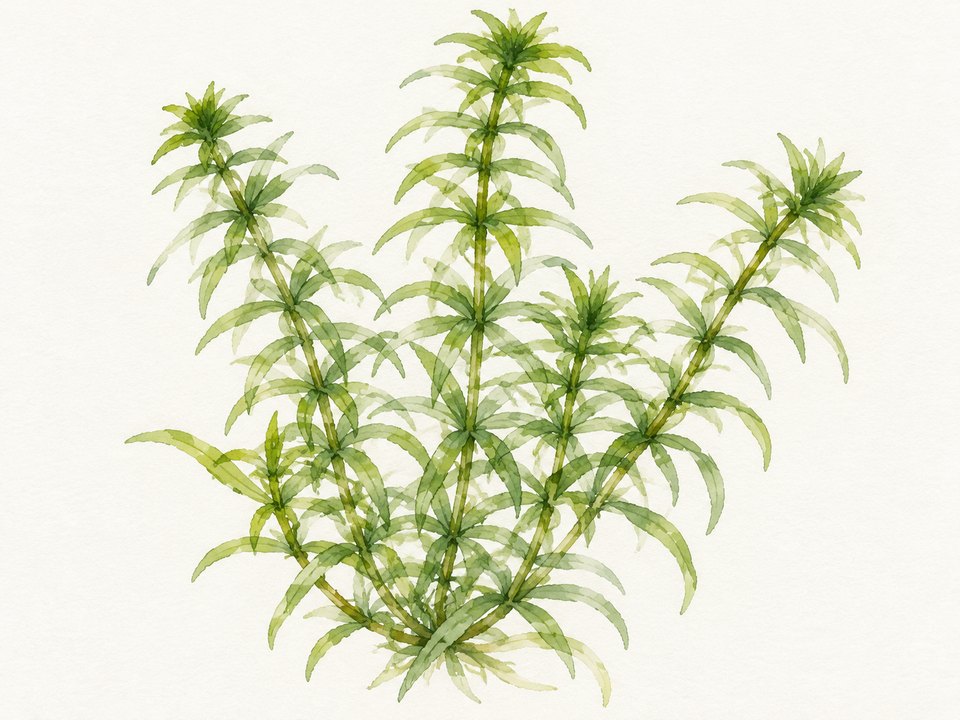
Heavily branched stems can grow up to 30 feet long.
Spread
Can form dense single-species mats at the surface.
Foliage
It is a perennial with small pointed leaves in whorls of 4 to 8. Tiny teeth and bumps along the underside midrib are the key identification feature.
Seasonal behavior
Tiny whitish, translucent flowers float on threadlike stalks. Be careful, because hydrilla is one of the worst invasive aquatic weeds. It is easy to confuse with native elodea and non-native Brazilian waterweed, but those lack the toothed midrib.
Why Hydrilla is a problem here
Hydrilla is listed as an invasive species in Texas and is one of the worst aquatic weeds in the state. It chokes ponds and lakes with dense mats, clogs water intakes, and spreads to new water on boats and trailers.[1][2]
What to do instead
Never plant hydrilla or dump aquarium or pond plants into waterways. If you see it in a pond you manage, Texas Parks & Wildlife and Texas A&M AquaPlant publish control guidance, and the Texas Allied Landscape team can help you plan a fix.[2]
Care Instructions for Your Hydrilla
How to Water a Hydrilla
Soil and drainage
It grows rooted and fully submerged in lakes and slow water.[1]
Mature height and spread
Heavily branched stems can grow up to 30 feet long. It can form dense single-species mats at the surface.
Normal seasonal behavior
Tiny whitish, translucent flowers float on threadlike stalks. Be careful, because hydrilla is one of the worst invasive aquatic weeds. It is easy to confuse with native elodea and non-native Brazilian waterweed, but those lack the toothed midrib.
Hydrilla questions
What is hydrilla?
Hydrilla verticillata is a submerged aquatic plant. It is one of the most invasive water weeds in the world and a serious problem in Texas lakes.[2]
Why is hydrilla such a problem?
It forms surface mats that block boating and swimming, shade out native plants, and alter fish habitat. A single fragment in a boat can start a new infestation.[3]
How does hydrilla spread?
It spreads almost entirely by fragments hitching rides on boats, trailers, and fishing gear. Clean, Drain, and Dry your gear every time you leave a lake.[4]
What should I do if my pond has hydrilla?
Do not ignore it. Small infestations are far easier to manage than matted ones. A pond-management professional can plan treatment.[5]
Next step: We can point you toward the right aquatic vegetation resources for your situation.
In these community guides
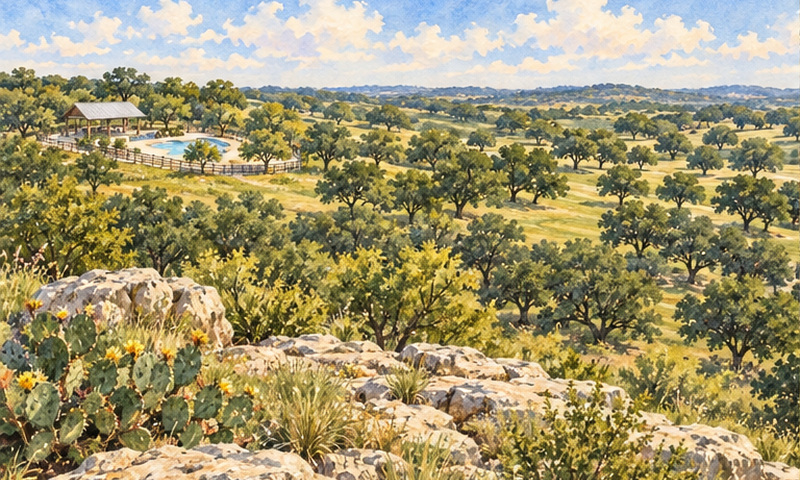
Illustration. Illustration based on reference photos of Mountain Springs Ranch. Not a single literal view. Mountain Springs Ranch Landscaping
Plan your Mountain Springs Ranch yard with planting, lawn and irrigation guidance. Get help from the review package…
Sources
- Hydrilla (Hydrilla verticillata), Texas Invasives.https://www.texasinvasives.org/plant_database/detail.php?symbol=HYVE3abc
- Texas Parks & Wildlife, "Hydrilla Position Paper."https://tpwd.texas.gov/landwater/water/environconcerns/nuisance_plants/media/Hydrilla%20Position%20Paper_03%20Jan%202023.pdfabc
- TexasInvasives.org, "Hydrilla verticillata."https://www.texasinvasives.org/plant_database/detail_print.php?symbol=HYVE3↑
- Native Plant Society of Texas, "Hydrilla verticillata."https://www.npsot.org/posts/invasive-plant/hydrilla-verticillata/↑
- TexasInvasives.org, "Hydrilla Management."https://texasinvasives.org/professionals/management_detail.php?symbol=HYVE3↑