
Property owners
Indigobush
- Plant
- Indigobush
- Botanical name
- Amorpha fruticosa
- Group
- Large shrubs
Plant profile for Indigobush in San Antonio area landscapes.
On this page
Its botanical name is Amorpha fruticosa.
It belongs to the large shrubs group.
When to Plant Indigobush
Plant indigobush from fall through early spring. Like most native shrubs, it roots in best while the weather is cool.[1]
If you would like a hand, the Texas Allied Landscape team can plant your indigobush and keep it thriving.
Planting
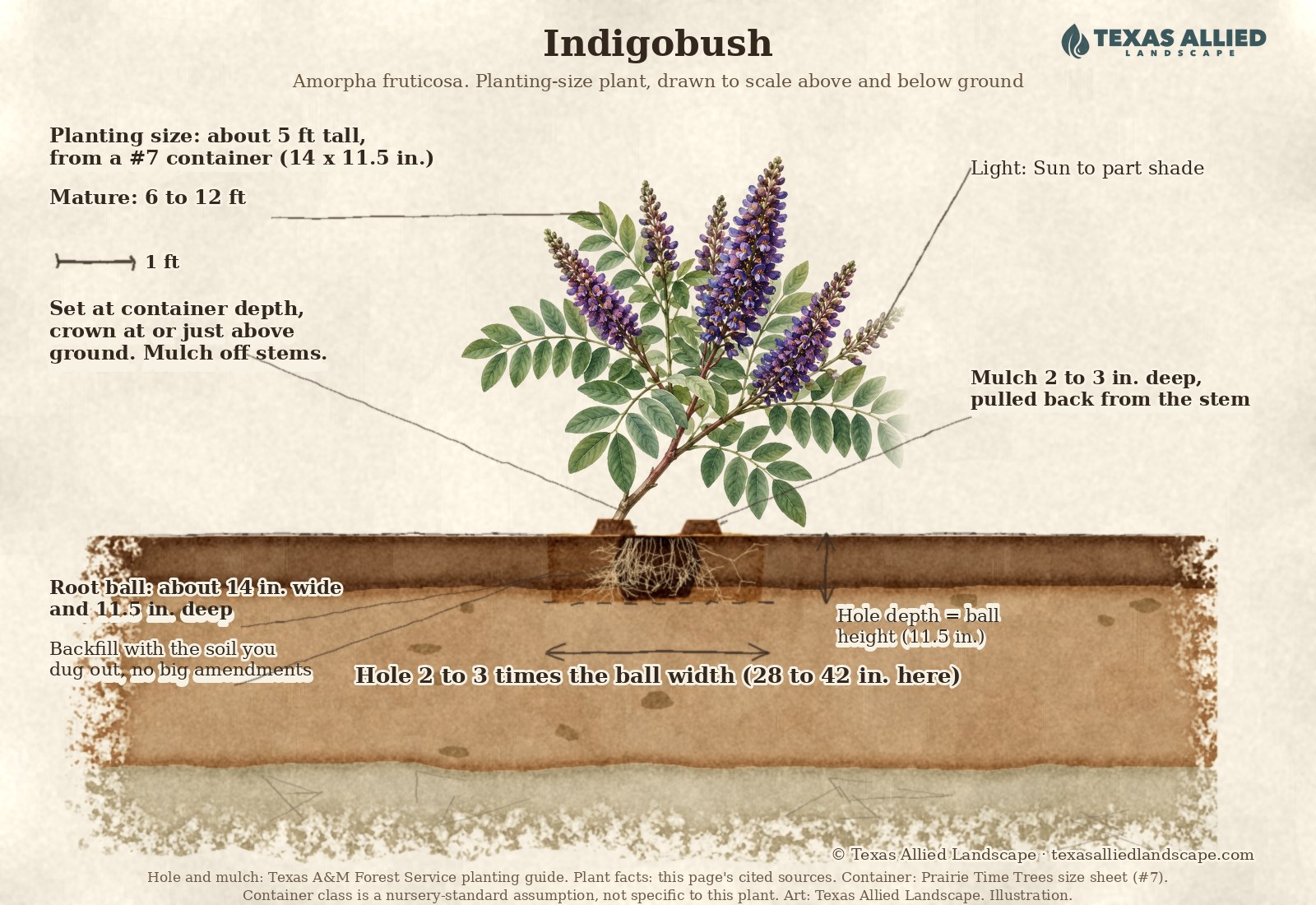
- Dig a hole at least twice as wide as the root ball and no deeper. That lets the roots grow out into the surrounding soil.[2]
- Fill the empty hole with water and check the drainage. If it takes longer than 24 hours to drain, choose another spot. Roots sitting under water will kill the plant.[2]
- Set it with the root collar (where the stems meet the roots) level with the ground. Take off the container and any twine or bags before backfilling.[2]
- Backfill with the same soil that came out of the hole, without amendments. Settle it with water rather than packing it down.[2]
- Give it room. It is a loose, suckering shrub that grows 6-12 ft tall. Give it room, or cut it back hard in late winter to keep it shrub-sized and blooming.[3] Space plants so they can reach that size without crowding.
- For the site, give it sun to part shade and average to moist soil. In nature it lines creeks. It adapts to ordinary garden soil and tolerates both wet feet and drought once established.[4]
- Water regularly through the first growing season while roots establish, without overwatering. A thorough soaking beats light, frequent watering.[2]
- Mulch 2 to 3 inches deep, up to but not touching the stems. It needs no staking or other support. Do not fertilize during the first growing season.[2]
Care Instructions for Your Indigobush
How to Water an Indigobush
Fruit and flowers
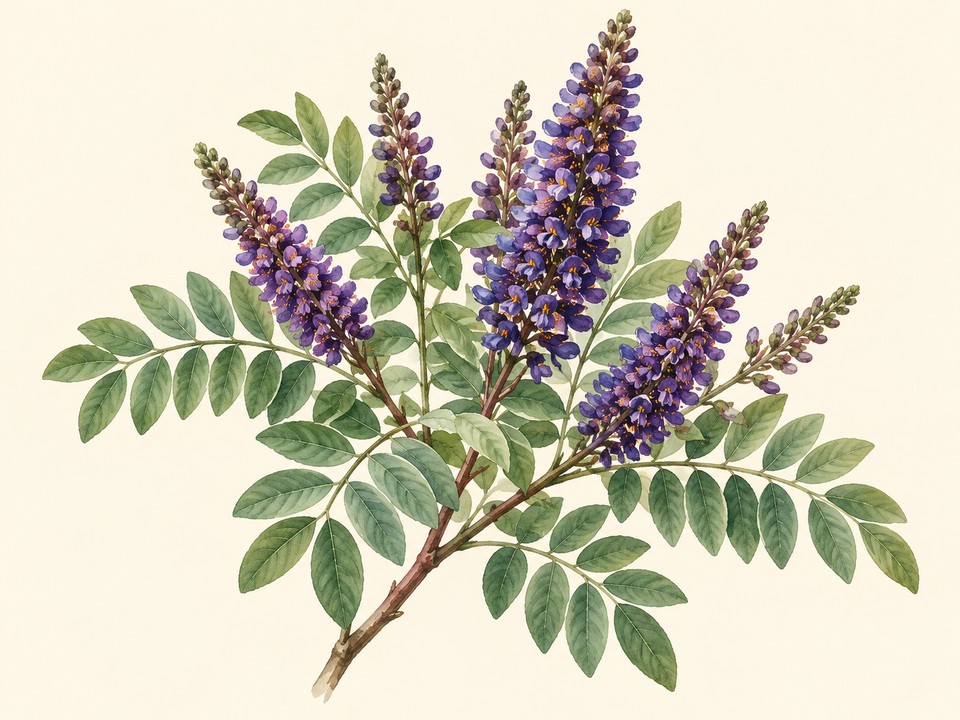
It blooms late spring into summer. The spikes of deep purple flowers have orange anthers that bees and butterflies mob.[1]
Growth and size
It wants sun to part shade and average to moist soil. In nature it lines creeks. It adapts to ordinary garden soil and tolerates both wet feet and drought once established.[4]
Indigobush questions
Is indigobush a Texas native?
Yes. Amorpha fruticosa, or false indigo bush, is a native legume shrub of Texas streamsides and prairies. It is one of five Amorpha species in the state.[5]
When does indigobush bloom?
It blooms late spring into summer. The spikes of deep purple flowers have orange anthers that bees and butterflies mob.[1]
Where does indigobush grow best?
It wants sun to part shade and average to moist soil. In nature it lines creeks. It adapts to ordinary garden soil and tolerates both wet feet and drought once established.[4]
How big does indigobush get?
It is a loose, suckering shrub that grows 6-12 ft tall. Give it room, or cut it back hard in late winter to keep it shrub-sized and blooming.[3]
Next step: Our horticulturalists can keep a vigorous indigobush in bounds with a late-winter cutback.
In these community guides
Sources
- Native Plant Society of Texas, "Amorpha fruticosa."https://www.npsot.org/posts/native-plant/amorpha-fruticosa/abc
- Planting, Texas A&M Forest Service.https://tfsweb.tamu.edu/trees/tree-care/planting/abcdef
- Native Plant Society of Texas, "Amorpha fruticosa."https://www.npsot.org/posts/native-plant/amorpha-fruticosa/ab
- Lady Bird Johnson Wildflower Center, "Amorpha fruticosa."https://www.wildflower.org/plants/result.php?id_plant=amfrabc
- Texas Parks & Wildlife Magazine, "Flora Fact: Leadplant."https://tpwmagazine.com/archive/2014/jun/scout3_florafact_leadplant/↑