
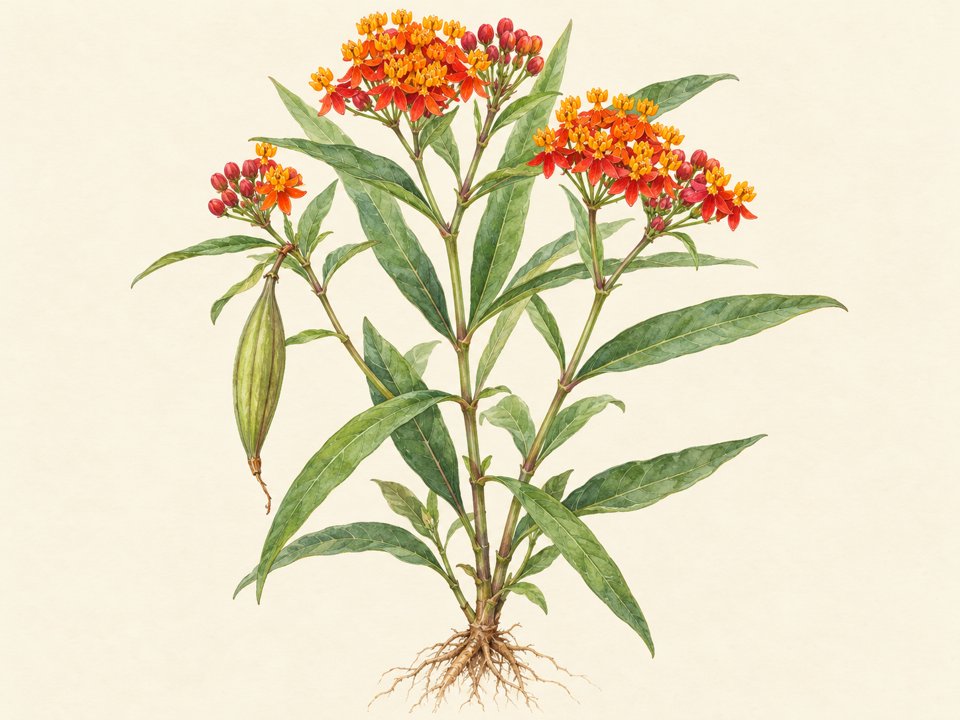
Property owners
Mexican Butterfly Weed
- Plant
- Mexican Butterfly Weed
- Botanical name
- Asclepias curassavica
- Group
- Low shrubs and perennials
Plant profile for Mexican Butterfly Weed in San Antonio area landscapes.
On this page
Botanical name: Asclepias curassavica.
Plant group: Low shrubs and perennials.
Light
Full sun.[1]
Soil and drainage
Moist, fertile, well-drained soil.[1]
Height
2 to 3 ft tall and 1 to 2 ft wide.[1]
When to Plant Mexican Butterfly Weed
Plant Mexican butterfly weed in spring after the last frost, and cut it back in the fall so migrating monarchs keep moving and parasites do not build up.[2]
If you would like a hand, the Texas Allied Landscape team can plant your mexican butterfly weed and keep it thriving.
Planting
- Dig a hole twice as wide as the pot and no deeper, with sloping sides, and set the plant at the same depth it grew in its pot. Loosen any circling roots before backfilling.[3]
- For a new bed, clear grass and weeds first, roots and all.[3]
- Soak it well at planting and keep watering while the roots establish.[3]
- Mulch 2 to 4 inches, kept a few inches away from the stems to prevent crown rot. It needs no staking or other support.[3]
Care Instructions for Your Mexican Butterfly Weed
How to Water a Mexican Butterfly Weed
Pruning and mowing
Yes - cut it to the ground in late fall. It stays green too long and can encourage monarchs to linger and breed when they should migrate, and it hosts the OE parasite.[4]
Winter and cold
Tropical milkweed is root-hardy in Central Texas most winters - the top dies in a freeze and it resprouts from the base in spring.[5]
Mexican butterfly weed questions
Should I cut back tropical milkweed in fall?
Yes - cut it to the ground in late fall. It stays green too long and can encourage monarchs to linger and breed when they should migrate, and it hosts the OE parasite.[4]
Is tropical milkweed bad for monarchs?
It is complicated - monarchs readily use it, but because it does not die back in mild winters it can build up the OE parasite and disrupt migration. Cutting it back hard in fall solves most of the problem; native milkweeds avoid it entirely.[2]
Is tropical milkweed native to Texas?
No - Asclepias curassavica is from the tropics, despite what some retailers claim. Native alternatives include antelope horns, green milkweed and zizotes.[6]
Next step: Want a monarch bed that works with migration instead of against it? Our horticulturalists can swap in native milkweeds.
Will butterfly weed come back after a freeze?
Tropical milkweed is root-hardy in Central Texas most winters - the top dies in a freeze and it resprouts from the base in spring.[5]
In these community guides
Sources
- Asclepias curassavica (Tropical Milkweed), North Carolina Extension Gardener Plant Toolbox.https://plants.ces.ncsu.edu/plants/asclepias-curassavica/abc
- Lady Bird Johnson Wildflower Center, Mr. Smarty Plants, "Asclepias curassavica and OE."https://www.wildflower.org/expert/show.php?id=11318ab
- Back to basics: Planting perennials, SAWS Garden Style San Antonio.https://www.gardenstylesanantonio.com/garden-articles/back-to-basics-planting-perennials/abcd
- Houston Museum of Natural Science, "Monarchs."https://www.hmns.org/cockrell-butterfly-center-old/monarchs/ab
- Houston Museum of Natural Science, "Monarchs."https://www.hmns.org/cockrell-butterfly-center-old/monarchs/ab
- Native Plant Society of Texas, "Choose Native over Tropical Milkweed."https://www.npsot.org/posts/invasives-choose-native-over-tropical-milkweed/↑