
Property owners
Ornamental Majorams
- Plant
- Ornamental Majorams
- Botanical name
- Origanum spp.
- Group
- Ground cover
Ornamental Majorams bring mint-family toughness and summer bloom to hot, dry beds.
On this page
Their botanical name is Origanum spp.
They belong to the ground cover group.
Light
Full sun is best. They tolerate a little afternoon shade but bloom and stay densest in sun.[1]
Soil and drainage
They like poor to average fertility, neutral to alkaline, well-drained soil. Rich, wet soil makes them floppy and short-lived.[1]
Height
They reach 20-24 inches on wiry, woody-based stems.[2]
Spread
They spread 18-24 inches and creep steadily wider. Like other mints, oreganos creep across a bed unless you intervene.[2][3]
Foliage
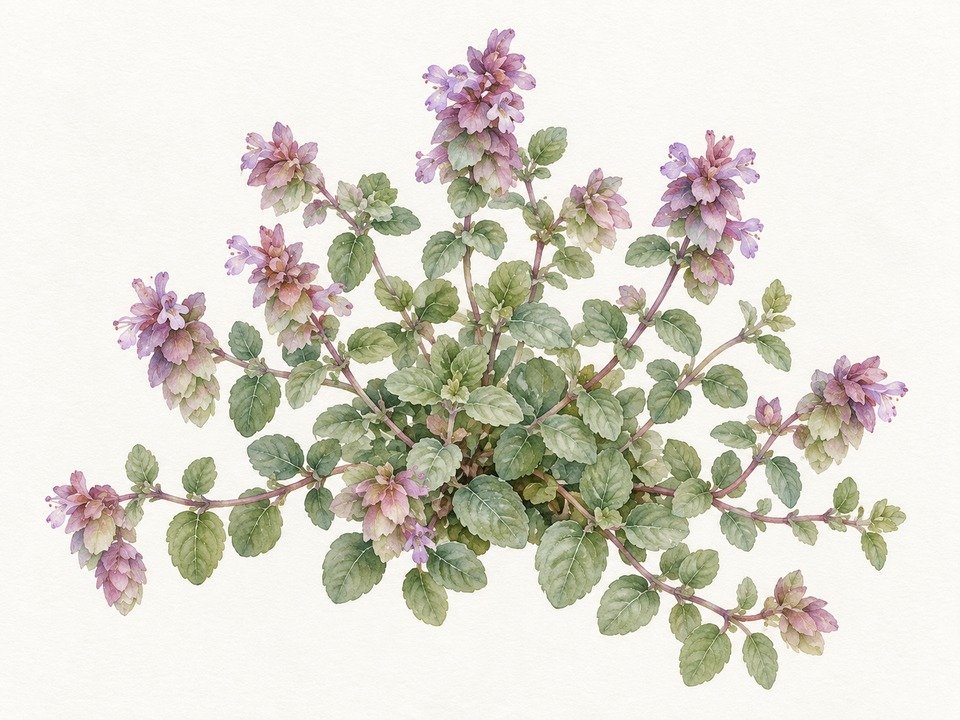
They have aromatic dark green oval leaves on slender woody stems. They are deciduous to semi-evergreen here.[2]
Water
Their water needs are low. They are very drought tough once established. Good drainage matters more than irrigation.[3]
Pruning
Shear them after bloom to keep the mat dense. Harvest culinary types freely through the season.[1]
Seasonal behavior
They have clusters of tiny tubular flowers from July to September. Ornamental kinds are grown for those showy blooms and bracts more than for the kitchen.[2]
When to Plant Ornamental Majorams
Plant Ornamental Majorams in spring after the last frost, or in fall in Central Texas.[1]
If you would like a hand, the Texas Allied Landscape team can plant your Ornamental Majorams and keep them thriving.
Planting
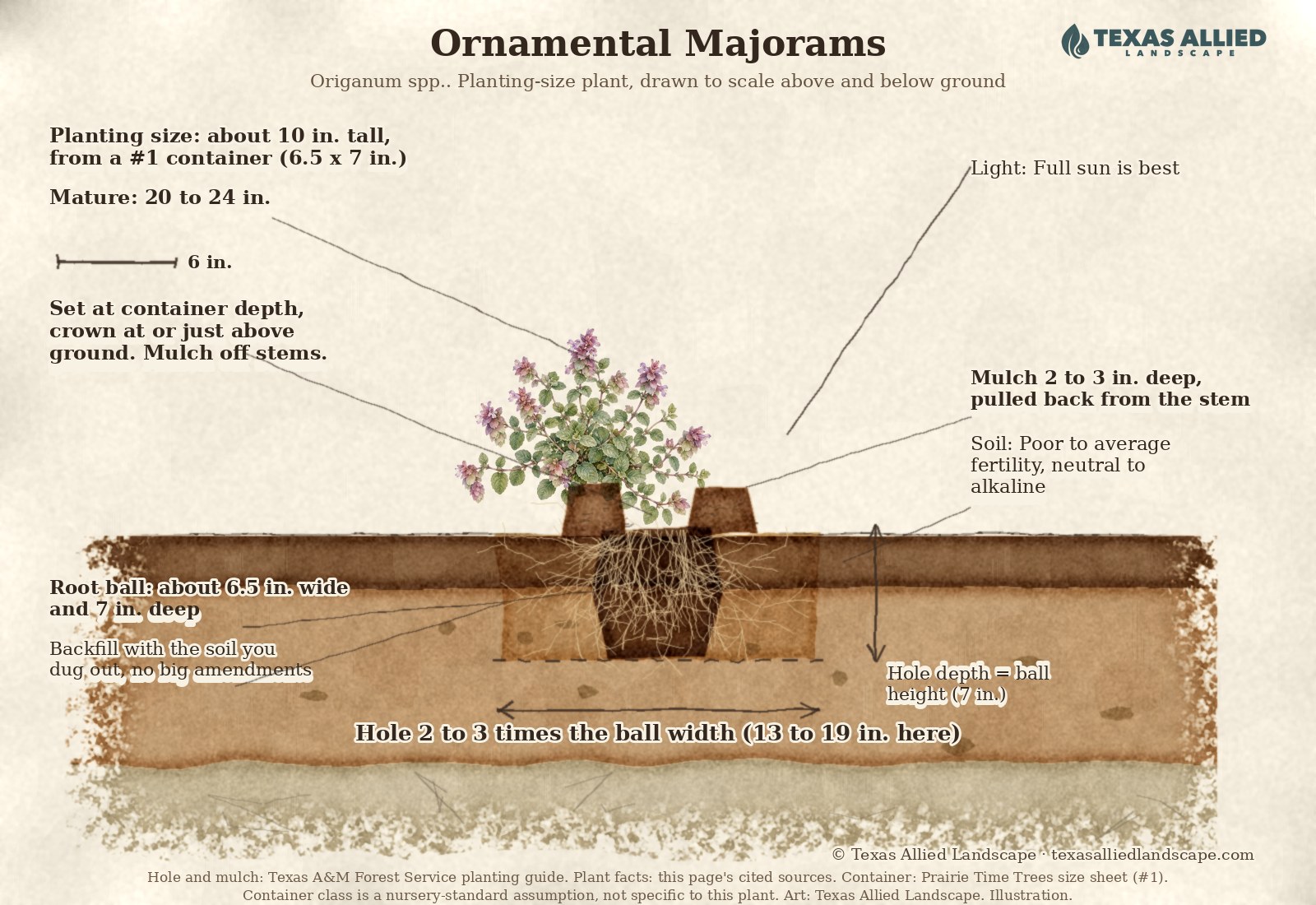
- Dig a hole at least twice as wide as the root ball and no deeper. This lets the roots grow out into the surrounding soil.[4]
- Fill the empty hole with water and check the drainage. If it takes longer than 24 hours to drain, choose another spot. Roots sitting under water will kill the plant.[4]
- Set it with the root collar (where the stems meet the roots) level with the ground. Take off the container and any twine or bags before backfilling.[4]
- Backfill with the same soil that came out of the hole, without amendments. Settle it with water rather than packing it down.[4]
- For site and soil, full sun is best. They tolerate a little afternoon shade but bloom and stay densest in sun.[1] They like poor to average fertility, neutral to alkaline, well-drained soil. Rich, wet soil makes them floppy and short-lived.[1]
- For timing, plant Ornamental Majorams in spring after the last frost, or in fall in Central Texas.[1]
- Water regularly through the first growing season while the roots establish, without overwatering. A thorough soaking beats light, frequent watering.[4]
- Mulch 2 to 3 inches deep, up to but not touching the stems. It needs no staking or other support. Do not fertilize during the first growing season.[4]
Care Instructions for Your Ornamental Majorams
Sunlight
Full sun is best. They tolerate a little afternoon shade but bloom and stay densest in sun.[1]
Soil and drainage
They like poor to average fertility, neutral to alkaline, well-drained soil. Rich, wet soil makes them floppy and short-lived.[1]
Mature height and spread
They reach 20-24 inches on wiry, woody-based stems.[2] They spread 18-24 inches and creep steadily wider. Like other mints, oreganos creep across a bed unless you intervene.[2][3]
Pruning
Shear them after bloom to keep the mat dense. Harvest culinary types freely through the season.[1]
Normal seasonal behavior
They have clusters of tiny tubular flowers from July to September. Ornamental kinds are grown for those showy blooms and bracts more than for the kitchen.[2]
Ornamental majoram questions
What is the difference between oregano and marjoram?
They are close mint-family cousins. Oregano is the hardier, stronger-flavored perennial. Sweet marjoram is tender and milder. Ornamental kinds are bred for showy flowers and bracts.[5]
Is ornamental oregano edible?
The ornamental species are grown for their flowers and look rather than flavor. For cooking, choose a culinary oregano like Greek oregano.[6]
Will oregano take over my bed?
It creeps steadily like its mint relatives. It is not thuggish, but plan to edge it once or twice a season.[7]
Next step: Our horticulturalists can keep creeping herbs in bounds during regular bed visits.
How much water does oregano need?
It needs very little once established. It is drought tough and wants good drainage more than irrigation.[8]
Let Texas Allied Landscape care for your Ornamental Majorams
Ornamental Majorams do best with steady, knowledgeable care. That means the right water, pruning at the right time, and a trained eye for stress. The horticulturists at Texas Allied Landscape care for plants like yours across the San Antonio area. They bring over 40 years of landscape experience.
In these community guides
Sources
- Leslie Halleck, "Oregano - Marjoram, Origanum."https://lesliehalleck.com/garden-library/articles/oreganoabcdefghij
- NC State Extension, "Origanum laevigatum."https://plants.ces.ncsu.edu/plants/origanum-laevigatum/abcdefg
- Central Texas Gardener, "Oregano."https://centraltexasgardener.org/resource/oregano/abcd
- Planting, Texas A&M Forest Service.https://tfsweb.tamu.edu/trees/tree-care/planting/abcdef
- Iowa State Extension, "All About Oregano and Marjoram."https://yardandgarden.extension.iastate.edu/how-to/all-about-oregano-and-marjoram↑
- NC State Extension, "Origanum laevigatum."https://plants.ces.ncsu.edu/plants/origanum-laevigatum/↑
- Central Texas Gardener, "Oregano."https://centraltexasgardener.org/resource/oregano/↑
- Central Texas Gardener, "Oregano."https://centraltexasgardener.org/resource/oregano/↑