
Property owners
Pampas Grass
- Plant
- Pampas Grass
- Botanical name
- Cortaderia selloana
- Group
- Ornamental grasses
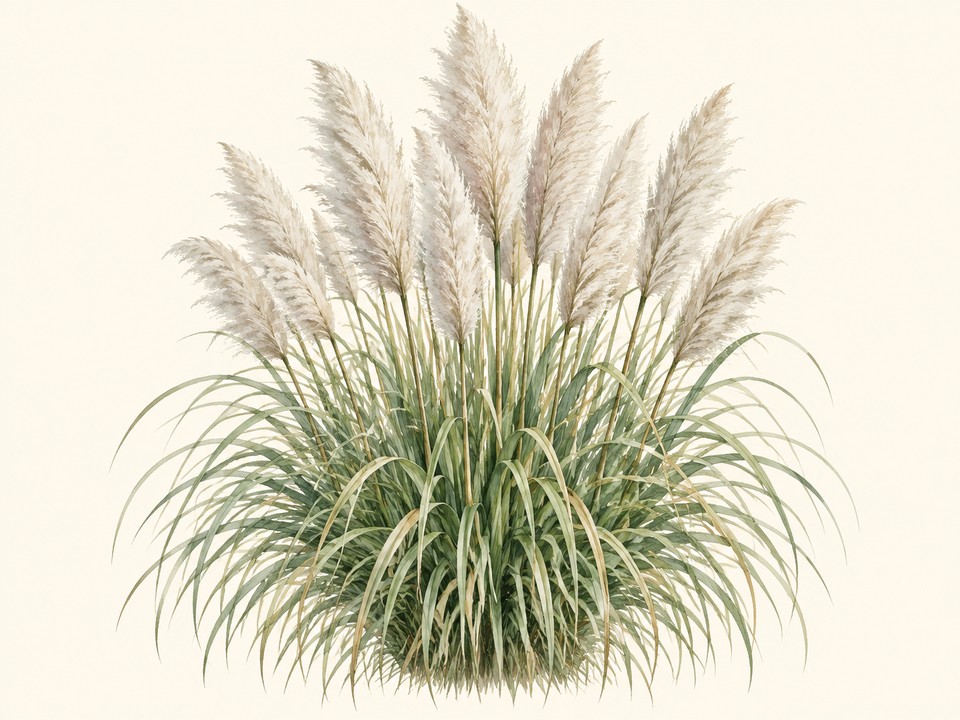
Pampas Grass (Cortaderia selloana) is a giant clumping grass with silvery-white plumes for full sun.
On this page
Botanical name: Cortaderia selloana Group: Ornamental grasses
Pampas Grass is a very large, clumping ornamental grass with tall stalks of silvery-white plumes in late summer and fall. It grows in full sun, tolerates drought once established, and adapts to a wide range of soils.[1]
When to Plant Pampas Grass
Plant Pampas Grass in spring, after the last frost, through early summer. Warm-season grasses root actively as the soil warms, and spring planting gives a full growing season to establish before winter.[2]
Fall planting is possible for hardy ornamental grasses but riskier for a young plant heading into cold weather.
If you would like a hand, the Texas Allied Landscape team can plant your Pampas Grass and keep it thriving.
Planting
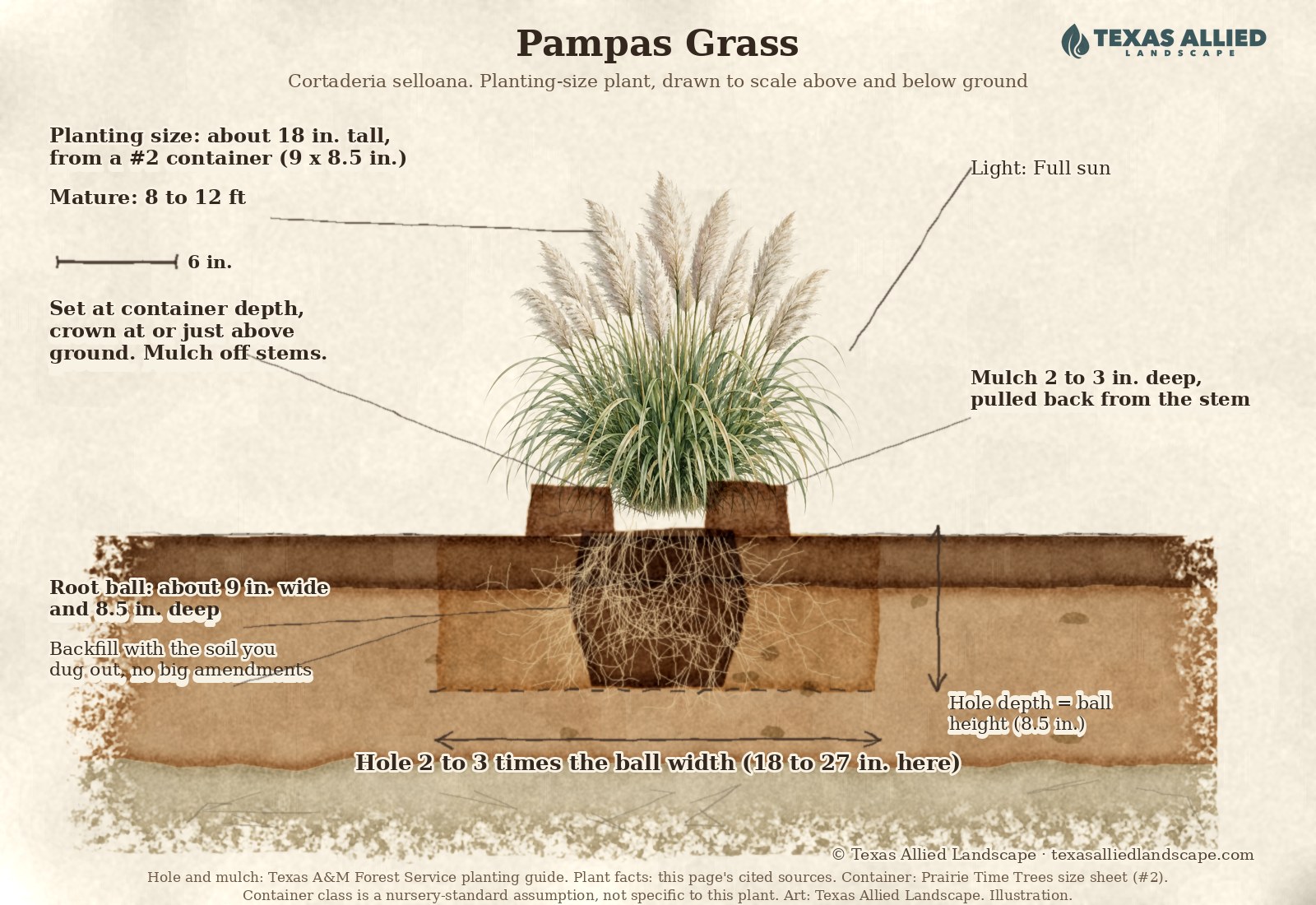
- Dig a hole twice as wide as the pot and no deeper, with sloping sides, and set the plant at the same depth it grew in its pot. Loosen any circling roots before backfilling.[3]
- For a new bed, clear grass and weeds first, roots and all.[3]
- Give it room: Huge - 8-12 ft tall and wide in flower. It swallows small yards whole; give it serious room or choose a smaller grass.[4] Space plants for that full size, not the pot size.[3]
- Site: It grows in full sun, tolerates drought once established, and adapts to a wide range of soils.[1]
- Timing: Warm-season grasses root actively as the soil warms, and spring planting gives a full growing season to establish before winter.[2]
- Soak it well at planting and keep watering while the roots establish.[3]
- Mulch 2 to 4 inches, kept a few inches away from the stems to prevent crown rot. It needs no staking or other support.[3]
Care Instructions for Your Pampas Grass
How to Water a Pampas Grass
Pruning and mowing
Late winter - cut the whole clump to about a foot before new growth starts. Wear long sleeves and gloves: the leaf edges are serrated and will slice you.[5]
Spread and invasiveness
In parts of the US, yes - it is rated highly invasive on the West Coast. In Texas it is more contained but still seeds around, and it is on the Texas invasive plant database.[6]
Growing in Central Texas
For the big plume look on a smaller plant, consider dwarf pampas types or native Lindheimer muhly - dramatic without taking over.[7]
Pampas grass questions
Is pampas grass invasive?
In parts of the US, yes - it is rated highly invasive on the West Coast. In Texas it is more contained but still seeds around, and it is on the Texas invasive plant database.[6]
When should I cut back pampas grass in Texas?
Late winter - cut the whole clump to about a foot before new growth starts. Wear long sleeves and gloves: the leaf edges are serrated and will slice you.[5]
Next step: Our horticulturalists can do the annual pampas cutback with the right gear so you do not get shredded.
How big does pampas grass get?
Huge - 8-12 ft tall and wide in flower. It swallows small yards whole; give it serious room or choose a smaller grass.[4]
Is there a smaller, better-behaved alternative?
For the big plume look on a smaller plant, consider dwarf pampas types or native Lindheimer muhly - dramatic without taking over.[7]
Let Texas Allied Landscape care for your Pampas Grass
Pampas Grass does best with steady, knowledgeable care: the right water, pruning at the right time, and a trained eye for stress. The horticulturists at Texas Allied Landscape care for plants like yours across the San Antonio area, backed by over 40 years of landscape experience.
In these community guides
Sources
- NC State Extension, "Cortaderia selloana"https://plants.ces.ncsu.edu/plants/cortaderia-selloana/ab
- October Gardening Checklist, Travis County AgriLife Extension.https://travis-tx.tamu.edu/about-2/horticulture/monthly-gardening-calendar-for-austin-area/october-gardening-checklist-for-austin-and-central-texas/ab
- Back to basics: Planting perennials, SAWS Garden Style San Antonio.https://www.gardenstylesanantonio.com/garden-articles/back-to-basics-planting-perennials/abcde
- Texas Invasive Species Institute, "Cortaderia selloana."https://www.texasinvasives.org/plant_database/detail.php?symbol=COSE4ab
- Lady Bird Johnson Wildflower Center, Mr. Smarty Plants, "Cutting back pampas grass."https://www.wildflower.org/expert/show.php?id=3684ab
- Texas Invasive Species Institute, "Cortaderia selloana."https://www.texasinvasives.org/plant_database/detail.php?symbol=COSE4ab
- Green Industry Report, "Pampas grass."https://greenindustryreport.com/pampas-grass-plant/ab