
Property owners
Rockrose
- Plant
- Rockrose
- Botanical name
- Pavonia lasiopetala
- Group
- Medium shrubs and perennials
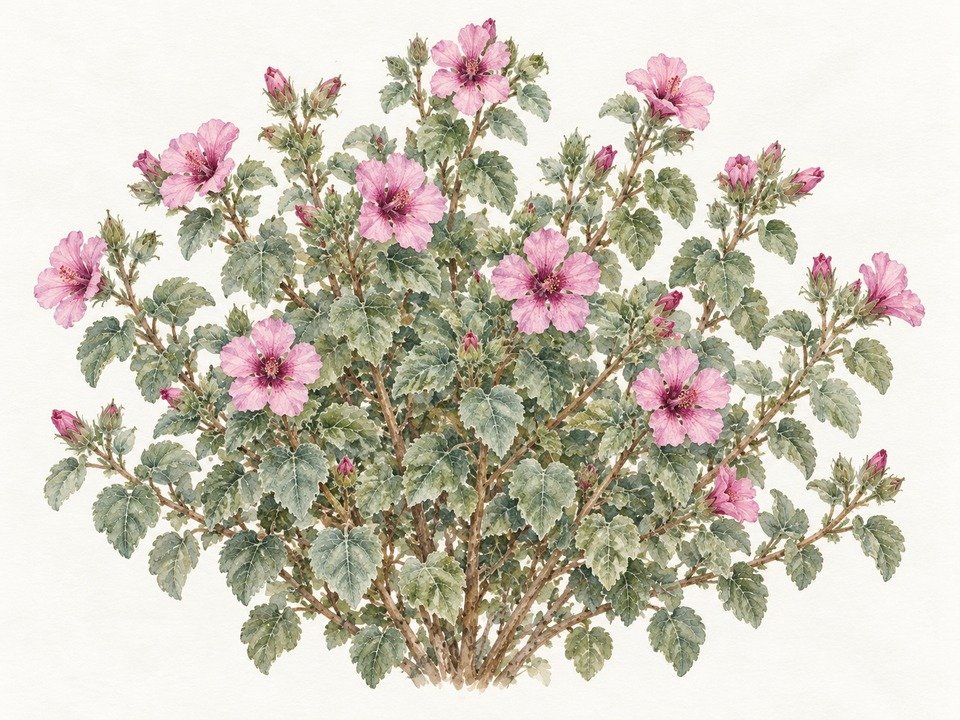
Rockrose is a Texas Superstar native that blooms pink through our worst heat.
On this page
Botanical name: Pavonia lasiopetala.
Plant group: Medium shrubs and perennials.
Light
Sun to part shade - it blooms in both.[1]
Soil and drainage
Caliche, clay, dry loam or sand - well drained, and thoroughly at home in our thin Hill Country soils.[2]
Height
Spread
About 3 feet.[3]
Foliage
Soft green native shrub foliage; deciduous in winter.[1]
Water
Low - a native that blooms through 100-degree stretches without complaint.[3]
Pruning
Shear in late winter to keep it dense; it blooms on new growth.[3]
Seasonal behavior
Pink hibiscus-like flowers from spring to fall, nonstop through brutal heat - bees and butterflies work it daily. It is a named Texas Superstar for a reason.[3][4]
When to Plant Rockrose
Plant Rockrose in spring or fall in Central Texas.[1]
If you would like a hand, the Texas Allied Landscape team can plant your Rockrose and keep it thriving.
Planting
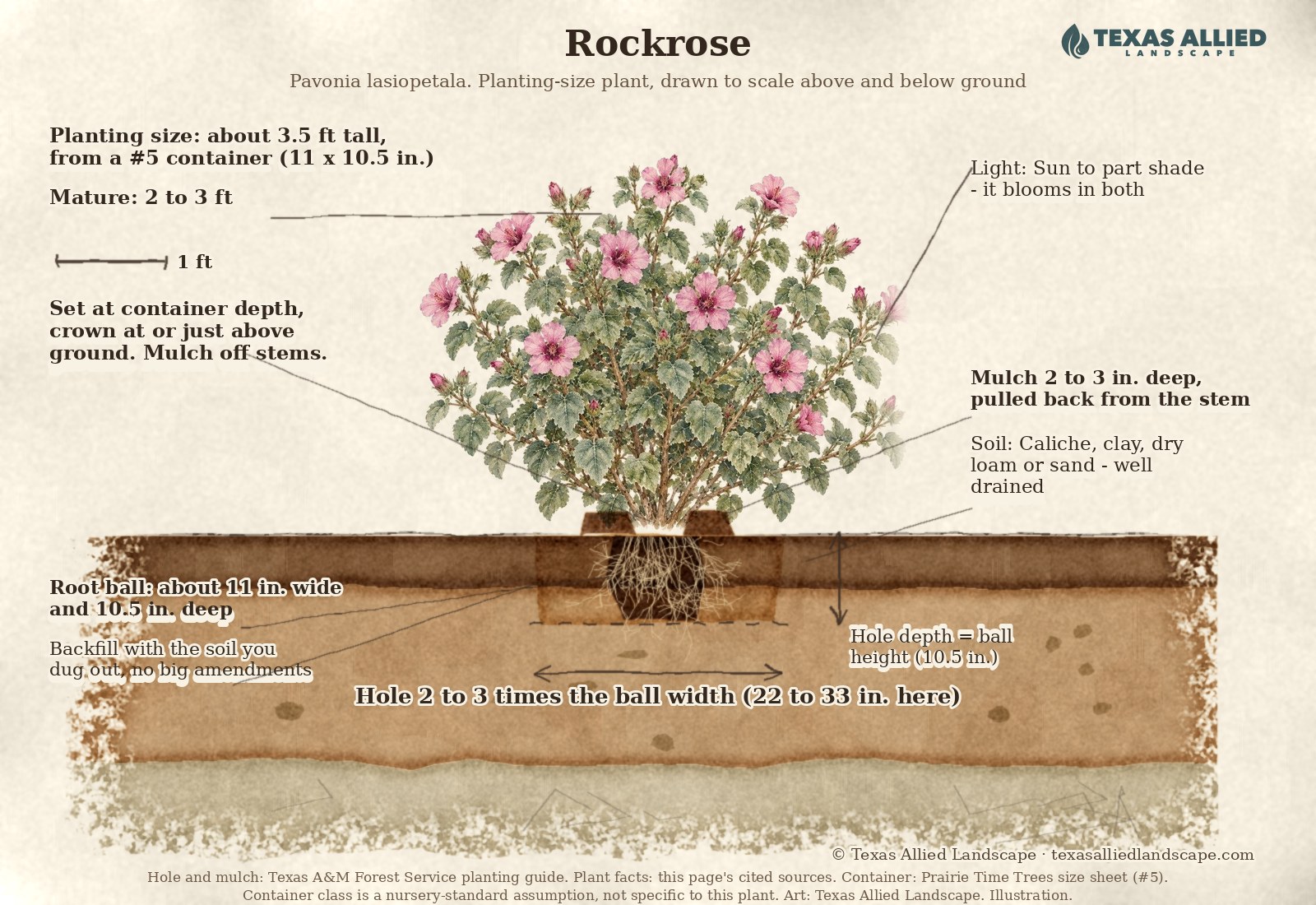
- Dig a hole at least twice as wide as the root ball and no deeper, so the roots can grow out into the surrounding soil.[5]
- Fill the empty hole with water and check the drainage. If it takes longer than 24 hours to drain, choose another spot: roots sitting under water will kill the plant.[5]
- Set it with the root collar (where the stems meet the roots) level with the ground, and take off the container and any twine or bags before backfilling.[5]
- Backfill with the same soil that came out of the hole, without amendments, and settle it with water rather than packing it down.[5]
- Site and soil: Sun to part shade - it blooms in both.[1] Caliche, clay, dry loam or sand - well drained, and thoroughly at home in our thin Hill Country soils.[2]
- Timing: Plant Rockrose in spring or fall in Central Texas.[1]
- Water regularly through the first growing season while roots establish, without overwatering: a thorough soaking beats light, frequent watering.[5]
- Mulch 2 to 3 inches deep, up to but not touching the stems. It needs no staking or other support. Do not fertilize during the first growing season.[5]
Care Instructions for Your Rockrose
Sunlight
Sun to part shade - it blooms in both.[1]
Soil and drainage
Caliche, clay, dry loam or sand - well drained, and thoroughly at home in our thin Hill Country soils.[2]
Mature height and spread
About 2-3 feet.[3][1] About 3 feet.[3]
Pruning
Shear in late winter to keep it dense; it blooms on new growth.[3]
Normal seasonal behavior
Pink hibiscus-like flowers from spring to fall, nonstop through brutal heat - bees and butterflies work it daily. It is a named Texas Superstar for a reason.[3][4]
Rockrose questions
Is rock rose a Texas native?
Yes - Pavonia lasiopetala is an Edwards Plateau native, and it was named a Texas Superstar plant for its toughness and show.[6]
Does rock rose really bloom in 100-degree heat?
Yes - it keeps putting out pink hibiscus-like blooms from spring to fall, right through the worst of summer.[7]
How much water does rock rose need?
Low - it is built for dry Hill Country soils and asks for little once established.[8]
Is rock rose good for pollinators?
Excellent - the ongoing flowers feed bees, butterflies and other beneficial insects all season.[9]
Next step: Our horticulturalists can build a pollinator bed around natives like rock rose.
Let Texas Allied Landscape care for your Rockrose
Rockrose does best with steady, knowledgeable care: the right water, pruning at the right time, and a trained eye for stress. The horticulturists at Texas Allied Landscape care for plants like yours across the San Antonio area, backed by over 40 years of landscape experience.
In these community guides
Sources
- City of Austin Grow Green plant guide, "Rock Rose."https://www.austintexas.gov/department/grow-green/plant-guide/rock-roseabcdefgh
- Native Plant Society of Texas, "Pavonia lasiopetala."https://www.npsot.org/posts/native-plant/pavonia-lasiopetala/abc
- Central Texas Gardener, "Rock Rose."https://centraltexasgardener.org/resource/rock-rose/abcdefghij
- Texas A&M AgriLife, "Rock rose named newest Texas Superstar."https://agrilifetoday.tamu.edu/2021/05/06/rock-rose-ornamental-named-newest-texas-superstar/ab
- Planting, Texas A&M Forest Service.https://tfsweb.tamu.edu/trees/tree-care/planting/abcdef
- Texas A&M AgriLife, "Rock rose named newest Texas Superstar."https://agrilifetoday.tamu.edu/2021/05/06/rock-rose-ornamental-named-newest-texas-superstar/↑
- Central Texas Gardener, "Rock Rose."https://centraltexasgardener.org/resource/rock-rose/↑
- City of Austin Grow Green plant guide, "Rock Rose."https://www.austintexas.gov/department/grow-green/plant-guide/rock-rose↑
- Central Texas Gardener, "Rock Rose."https://centraltexasgardener.org/resource/rock-rose/↑