
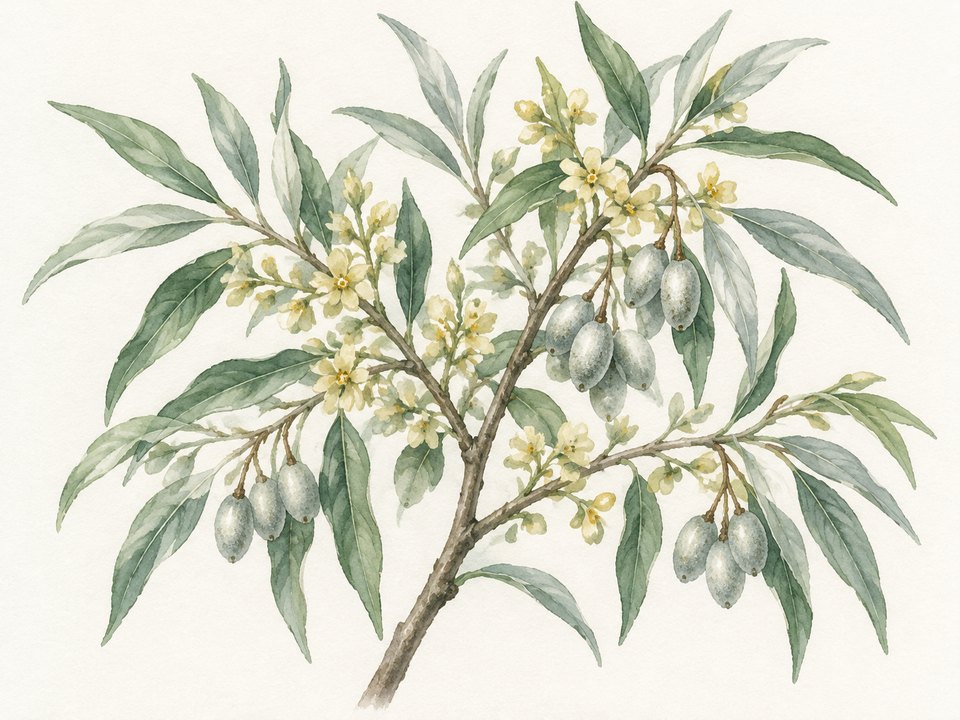
Property owners
Russian Olive
- Plant
- Russian Olive
- Botanical name
- Elaeagnus angustifolia
- Group
- Prohibited examples
Russian Olive: planting and care guidance for Central Texas landscapes.
On this page
Why Russian Olive is a problem here
Russian olive is an invasive tree across much of the United States. It spreads along creeks and rivers. It displaces native willows and other streamside plants. Its thorns and thicket-forming habit make it hard to live with.[1][2]
What to plant instead
For silvery foliage or a tough small tree, without the invasion, consider one of these:
 Illustration
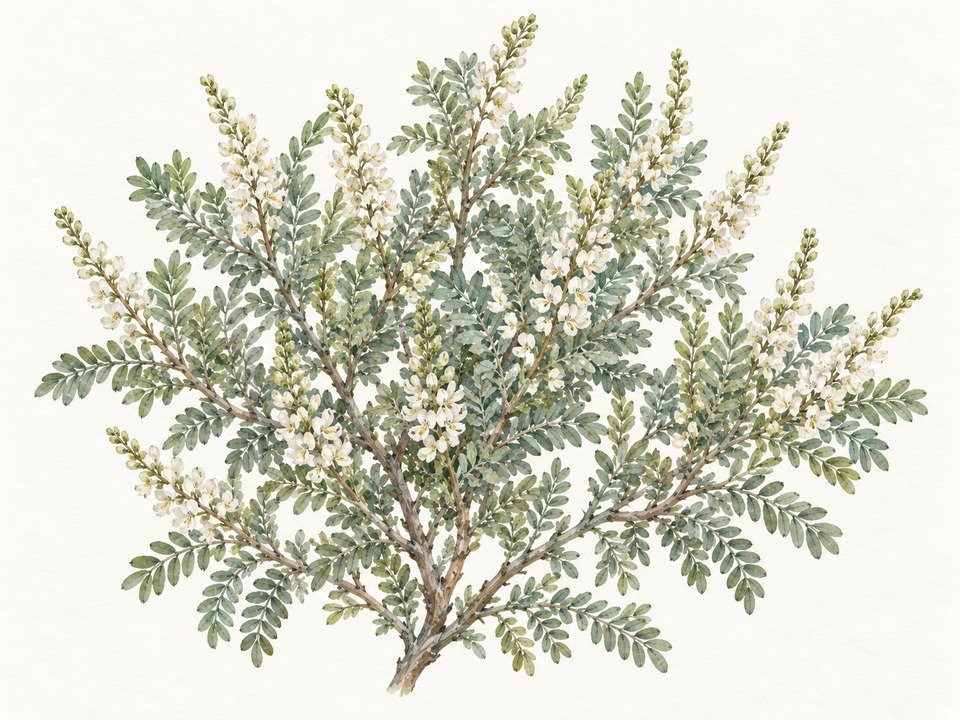
Texas KidneywoodEysenhardtia texanaIllustration 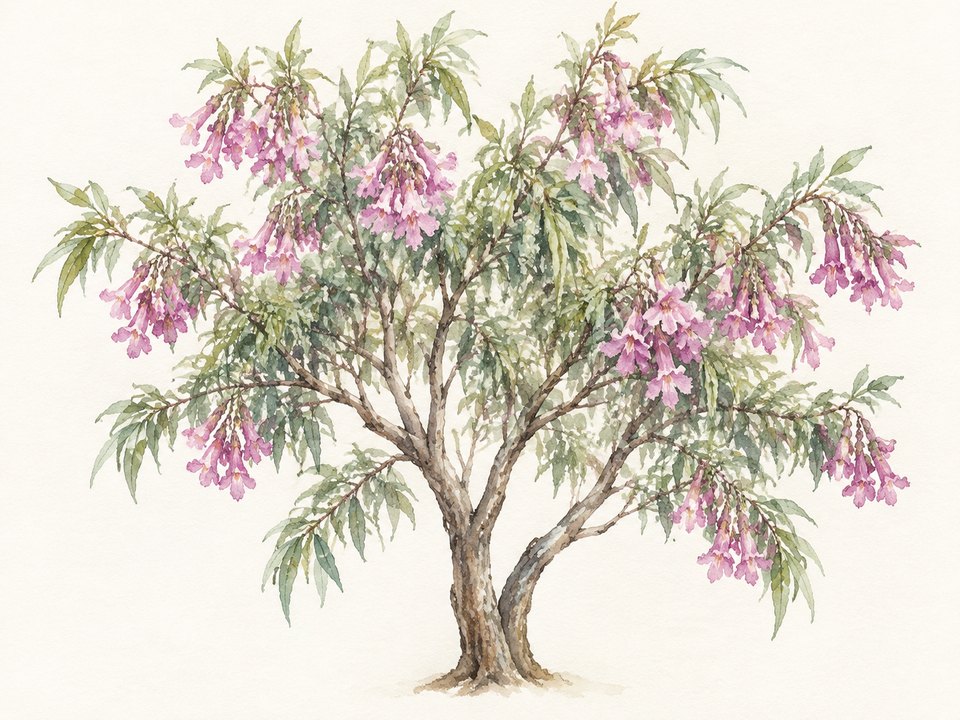 Illustration
Desert WillowChilopsis linearis 'Art's Seedless'Illustration 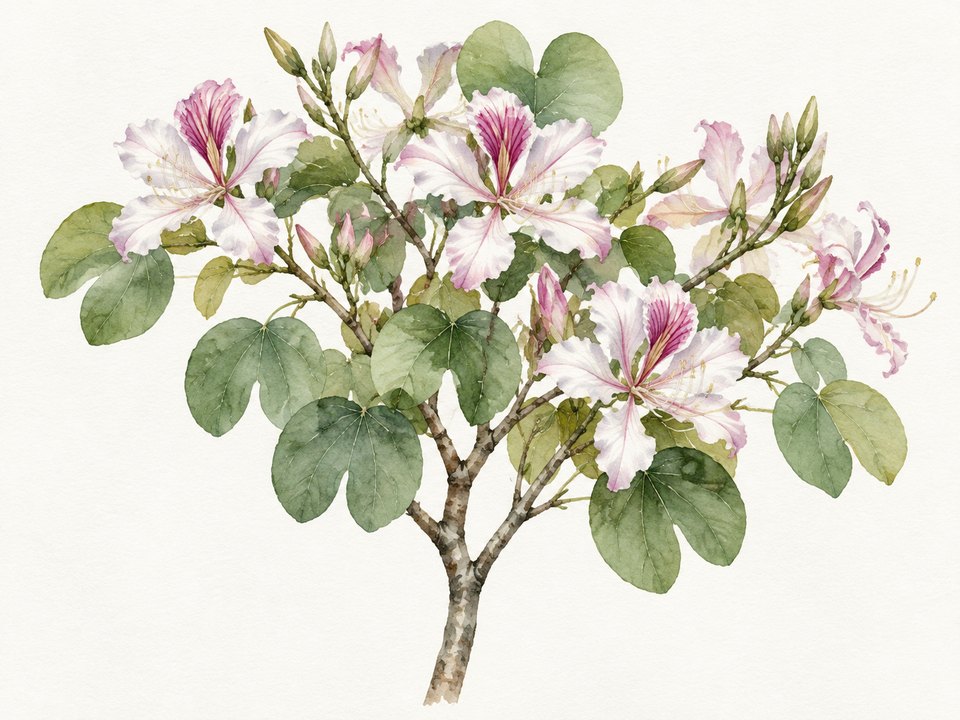 Illustration
Anacacho OrchidBauhinia lunarioidesIllustration
If it is already on your property, the Texas Allied Landscape team can talk through removal and a replacement plan.
Care Instructions for Your Russian Olive
How to Water a Russian Olive
Planting
It was sold for decades as a tough, silvery, drought-proof ornamental and windbreak tree. That is exactly the toughness that lets it escape and take over wild land.[1]
Spread and invasiveness
Yes. Elaeagnus angustifolia spreads by bird-dropped seed into creeks, fields, and roadsides. It forms thorny thickets that crowd out native trees. Several states list it as a noxious or do-not-plant species.[3]
Russian olive questions
Is Russian olive invasive?
Yes. Elaeagnus angustifolia spreads by bird-dropped seed into creeks, fields, and roadsides. It forms thorny thickets that crowd out native trees. Several states list it as a noxious or do-not-plant species.[3]
Why was Russian olive planted in the first place?
It was sold for decades as a tough, silvery, drought-proof ornamental and windbreak tree. That is exactly the toughness that lets it escape and take over wild land.[1]
How do I remove a Russian olive?
Cut it and treat or dig the stump. It resprouts vigorously from the base and roots. So an untreated stump or missed seedlings will start the thicket over.[4]
Next step: Our horticulturalists can take it out, treat the stump, and replace it with a well-behaved native.
What should I plant instead of Russian olive?
Choose native or well-behaved trees with the same silvery or airy look. Desert willow, Texas olive, or a Mexican redbud give the drought toughness without the escape into the wild.[2]
In these community guides
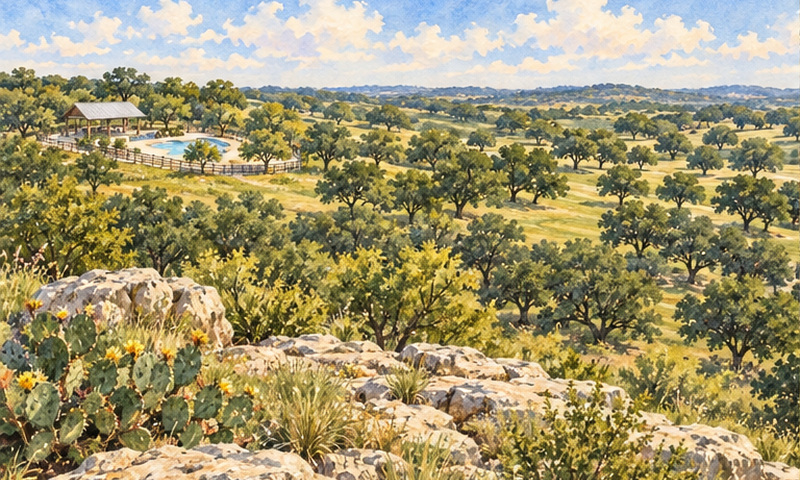
Illustration. Illustration based on reference photos of Mountain Springs Ranch. Not a single literal view. Mountain Springs Ranch Landscaping
Plan your Mountain Springs Ranch yard with planting, lawn and irrigation guidance. Get help from the review package…
Sources
- Invasive Species Council of British Columbia, "Russian olive."https://bcinvasives.ca/invasives/russian-olive/abc
- Minnesota DNR, "Russian olive (Elaeagnus angustifolia)."https://www.dnr.state.mn.us/invasives/terrestrialplants/woody/russianolive.htmlab
- California Department of Fish and Wildlife, "Invasive to Avoid: Russian Olive."https://wildlife.ca.gov/Conservation/Plants/Dont-Plant-Me/Russian-Oliveab
- University of Idaho Extension, "Russian Olive Trees: Control and Management in the Pacific Northwest."https://www.uidaho.edu/extension/publications/pnw-0755↑