
Property owners
Sacahuista
- Plant
- Sacahuista
- Botanical name
- Nolina texana
- Group
- Succulents and cacti
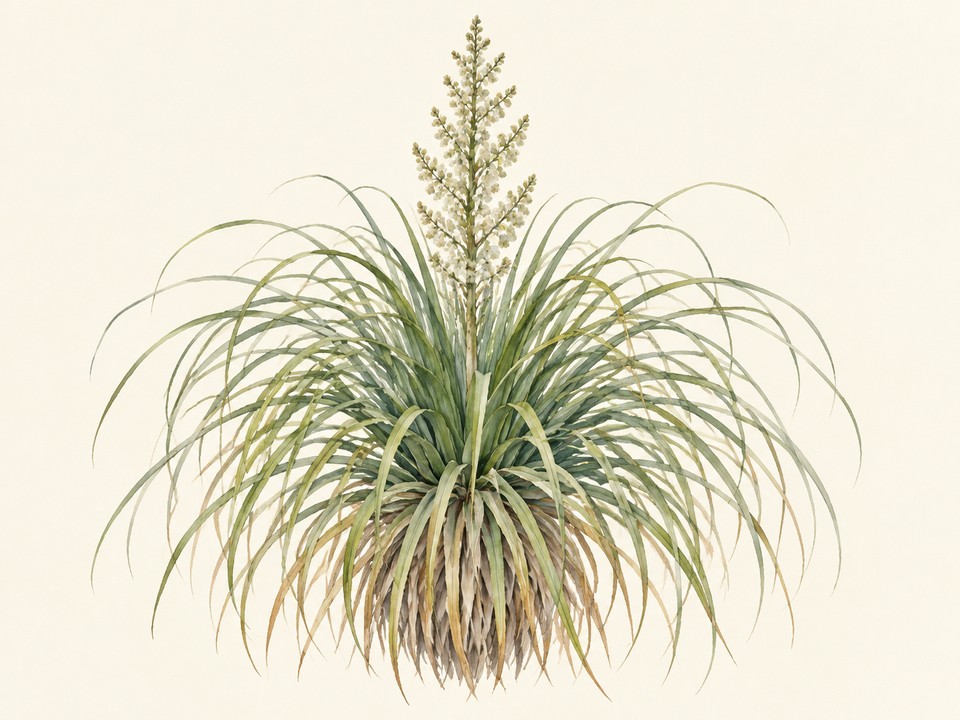
Sacahuista (Nolina texana) is a native evergreen with grass-like leaves and creamy flower spikes.
On this page
Its botanical name is Nolina texana. It belongs to the succulents and cacti group.
Sacahuista (Texas sacahuista) is a native evergreen with clumps of long, narrow, grass-like leaves and tall spikes of small creamy flowers. It thrives in full sun to part shade in well-drained soil. It is very drought tolerant.[1]
When to Plant Sacahuista
Plant Sacahuista in spring through early fall, while the soil is warm. Drainage matters most going into winter. Roots sitting in cold, wet soil rot. A plant established long before winter handles the season better.
Avoid planting right before winter.
If you would like a hand, the Texas Allied Landscape team can plant your Sacahuista and keep it thriving.
Planting
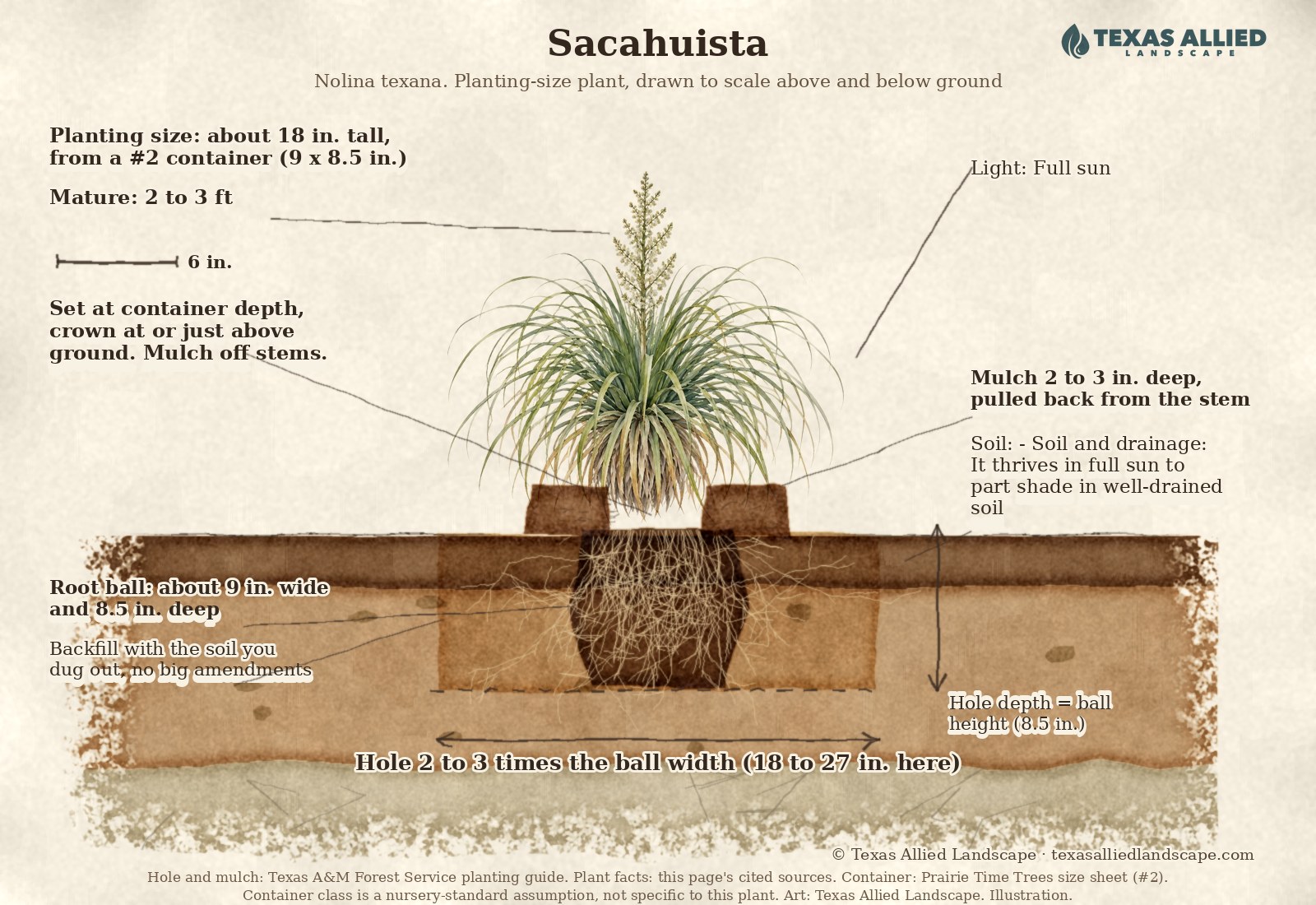
- Set the plant at the same depth it grew in its pot, never deeper. Ease it out of the container instead of pulling on the stems.[2]
- For soil and drainage, it thrives in full sun to part shade in well-drained soil. It is very drought tolerant.[1]
- For timing, plant Sacahuista in spring through early fall, while the soil is warm.
- It needs no staking or other support.
Care Instructions for Your Sacahuista
Watering
It grows in sun to part shade on dry, rocky, well-drained ground. It is at home on Hill Country limestone slopes and needs no irrigation once rooted.[3]
Growing in Central Texas
It is Nolina texana, also called Texas beargrass. It is a native Hill Country plant that forms a fountain of narrow grasslike evergreen leaves. It has short cream flower stalks in spring.[4]
Growth and size
The leaf fountain stays about 2-3 ft tall and wide. It is a tidy, permanent accent for rock gardens and dry beds.[5]
Sacahuista questions
What is sacahuista?
It is Nolina texana, also called Texas beargrass. It is a native Hill Country plant that forms a fountain of narrow grasslike evergreen leaves. It has short cream flower stalks in spring.[4]
Is sacahuista a grass?
No. It is in the asparagus family, more related to yucca than to any grass. The clumping grassy look fools everyone.[6]
Where does sacahuista grow best?
It grows in sun to part shade on dry, rocky, well-drained ground. It is at home on Hill Country limestone slopes and needs no irrigation once rooted.[3]
How big does sacahuista get?
The leaf fountain stays about 2-3 ft tall and wide. It is a tidy, permanent accent for rock gardens and dry beds.[5]
Next step: Our horticulturalists can group sacahuista with other dry-garden natives for a no-water bed with year-round texture.
Let Texas Allied Landscape care for your Sacahuista
Sacahuista does best with steady, knowledgeable care. That means the right water, pruning at the right time, and a trained eye for stress. The horticulturists at Texas Allied Landscape care for plants like yours across the San Antonio area. They bring over 40 years of landscape experience.
In these community guides
Sources
- Native Plant Society of Texas, "Nolina texana"https://www.npsot.org/posts/native-plant/nolina-texana/ab
- Back to basics: Planting perennials, SAWS Garden Style San Antonio.https://www.gardenstylesanantonio.com/garden-articles/back-to-basics-planting-perennials/↑
- Native Plant Society of Texas, "Nolina texana."https://www.npsot.org/posts/native-plant/nolina-texana/ab
- Native Plant Society of Texas, "Nolina texana."https://www.npsot.org/posts/native-plant/nolina-texana/ab
- Lady Bird Johnson Wildflower Center, Mr. Smarty Plants, "Nolina identification."https://www.wildflower.org/expert/show.php?id=7527ab
- Lady Bird Johnson Wildflower Center, Mr. Smarty Plants, "Nolina identification."https://www.wildflower.org/expert/show.php?frontpage=true&id=6433↑