
Property owners
Sago Palm
- Plant
- Sago Palm
- Botanical name
- Cycas revoluta
- Group
- Medium shrubs and perennials
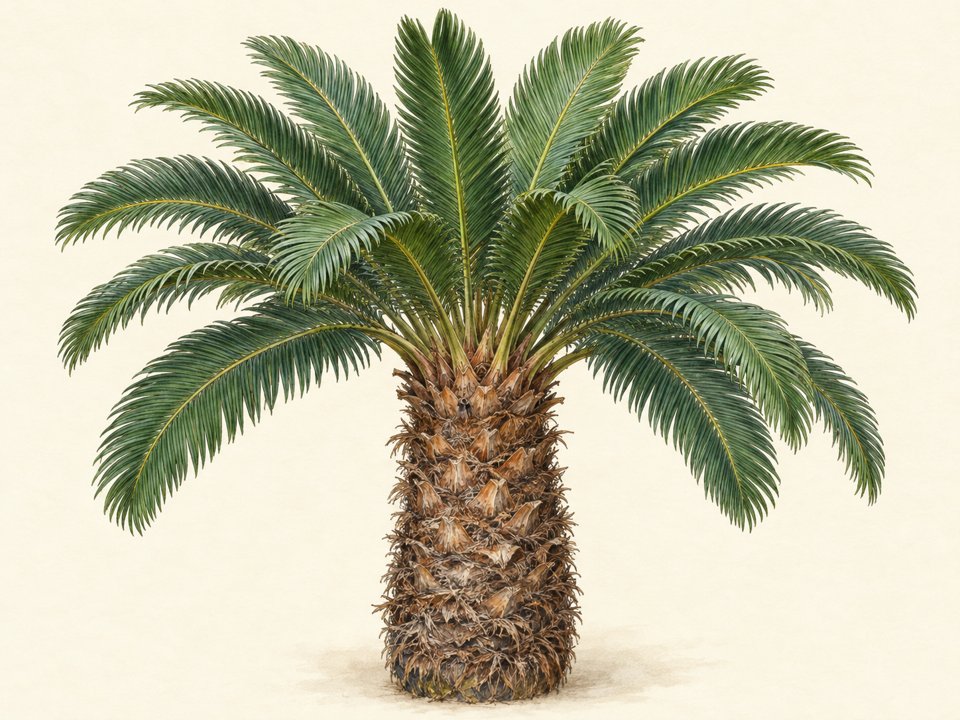
Sago Palm (Cycas revoluta) is a slow-growing cycad with dark green feather-like fronds for part shade.
On this page
Botanical name: Cycas revoluta Group: Medium shrubs and perennials
Sago Palm is a slow-growing cycad, not a true palm, with stiff, dark green, feather-like fronds. It grows in part shade to sun with well-drained soil and moderate water.[1]
Light
Part shade, with direct sun only part of the day.[2]
Soil and drainage
Well-drained soil; root rot occurs if overwatered or poorly drained.[2]
Height
3 to 10 ft tall and wide, very slow growing.[2]
When to Plant Sago Palm
Plant Sago Palm in spring after the last frost, once the soil has warmed, or in early summer. Warm soil helps it root in, and spring planting gives it the longest possible season before cold weather.
Sago palm is damaged by hard freezes, so a plant that goes in with months of warm weather ahead handles its first winter better.
If you would like a hand, the Texas Allied Landscape team can plant your Sago Palm and keep it thriving.
Planting
- Dig a hole twice as wide as the pot and no deeper, with sloping sides, and set the plant at the same depth it grew in its pot. Loosen any circling roots before backfilling.[3]
- For a new bed, clear grass and weeds first, roots and all.[3]
- Site: It grows in part shade to sun with well-drained soil and moderate water.[1]
- Timing: Plant Sago Palm in spring after the last frost, once the soil has warmed, or in early summer.
- Soak it well at planting and keep watering while the roots establish.[3]
- Mulch 2 to 4 inches, kept a few inches away from the stems to prevent crown rot. It needs no staking or other support.[3]
Care Instructions for Your Sago Palm
How to Water a Sago Palm
Planting
Those are pups - baby sagos growing off the parent. They can be pulled away or cut off and potted up to make new plants, or simply removed to keep the parent tidy. Remove them when the weather is warm and the plant is actively growing.[4]
Winter and cold
Usually, yes, if the trunk is still firm. Wait until warm weather: new fronds emerge from the center in spring, and only then cut off the dead ones. A soft, mushy trunk is the bad sign.[5]
Pests, disease, and problems
Cold is the usual suspect in Central Texas: fronds yellow and brown after a hard freeze. Yellowing between freezes points to watering problems or a nutrient deficiency, often manganese. Check which pattern you have before feeding or watering more.[6]
Qualification: Similar yellowing comes from different causes, and the fix differs.
Sago palm questions
Is sago palm toxic to dogs?
Yes, seriously so. Every part of a sago is poisonous to dogs and cats, and the seeds are the most dangerous - even small amounts can cause liver failure. If you have a dog that chews plants, a sago is a poor fit for your yard.[7]
Why are my sago palm's leaves turning yellow?
Cold is the usual suspect in Central Texas: fronds yellow and brown after a hard freeze. Yellowing between freezes points to watering problems or a nutrient deficiency, often manganese. Check which pattern you have before feeding or watering more.[6]
Keep in mind: Similar yellowing comes from different causes, and the fix differs.
Next step: Our horticulturalists can tell cold damage from a nutrient problem in one look and treat the right one.
Will my sago palm come back after a freeze?
Usually, yes, if the trunk is still firm. Wait until warm weather: new fronds emerge from the center in spring, and only then cut off the dead ones. A soft, mushy trunk is the bad sign.[5]
What are the little plants at the base, and can I remove them?
Those are pups - baby sagos growing off the parent. They can be pulled away or cut off and potted up to make new plants, or simply removed to keep the parent tidy. Remove them when the weather is warm and the plant is actively growing.[4]
Let Texas Allied Landscape care for your Sago Palm
Sago Palm does best with steady, knowledgeable care: the right water, pruning at the right time, and a trained eye for stress. The horticulturists at Texas Allied Landscape care for plants like yours across the San Antonio area, backed by over 40 years of landscape experience.
In these community guides
Sources
- NC State Extension, "Cycas revoluta"https://plants.ces.ncsu.edu/plants/cycas-revoluta/ab
- Cycas revoluta (Sago Palm), North Carolina Extension Gardener Plant Toolbox.https://plants.ces.ncsu.edu/plants/cycas-revoluta/abc
- Back to basics: Planting perennials, SAWS Garden Style San Antonio.https://www.gardenstylesanantonio.com/garden-articles/back-to-basics-planting-perennials/abcd
- Florida A&M Cooperative Extension, "Cycas revoluta - The Sago Palm."https://cafs.famu.edu/cooperative-extension/pdf/Cycas%20revoluta%20-%20The%20Sago%20Palm.pdfab
- Ask Extension, "Frozen plants."https://ask.extension.org/kb/faq.php?id=738059ab
- Ask Extension, "Sago palm frost damage."https://ask.extension.org/kb/faq.php?id=681854ab
- ASPCA Poison Control, "Sago Palm."https://www.aspca.org/pet-care/aspca-poison-control/toxic-and-non-toxic-plants/sago-palm↑