
Property owners
Spanish Dagger
- Plant
- Spanish Dagger
- Botanical name
- Yucca faxoniana
- Group
- Succulents and cacti
Sourced care for the catalog's Yucca faxoniana, not other plants called Spanish Dagger.
On this page
The catalog's botanical name is Yucca faxoniana. The common name Spanish Dagger is also used for Yucca treculeana in the SAWS profile. These notes use Yucca faxoniana, not the other species.[1][2]
Light, soil and water
Sun. Low water needs and dry soil. The Wildflower Center lists limestone-based soil, sand, sandy loam and medium loam.[1]
Size and form
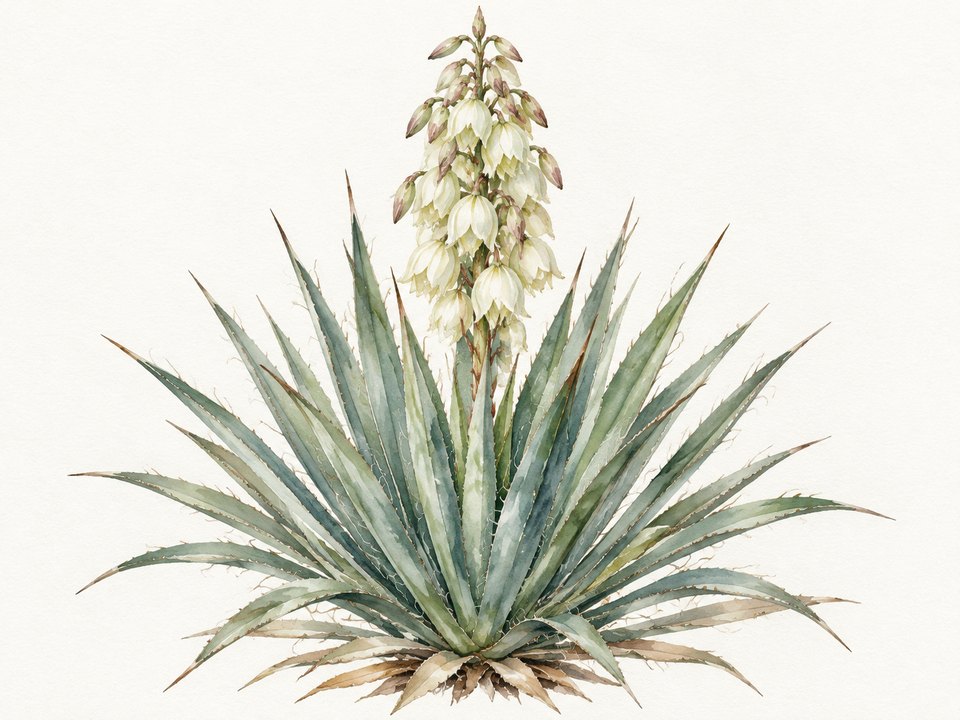
A small evergreen tree with one or more trunks and long, bayonet-like leaves. It can reach about 20 feet tall in bloom.
Flowers and wildlife
White flowers are listed for March and April. Birds and mammals eat the fleshy fruit. The plant is a host for the yucca giant skipper butterfly.[1]
When to Plant Spanish Dagger
Plant Spanish Dagger in spring through early fall, while the soil is warm. Drainage matters most going into winter: roots sitting in cold, wet soil rot, so a plant established long before winter handles the season better.
Avoid planting right before winter.
If you would like a hand, the Texas Allied Landscape team can plant your Spanish Dagger and keep it thriving.
Planting
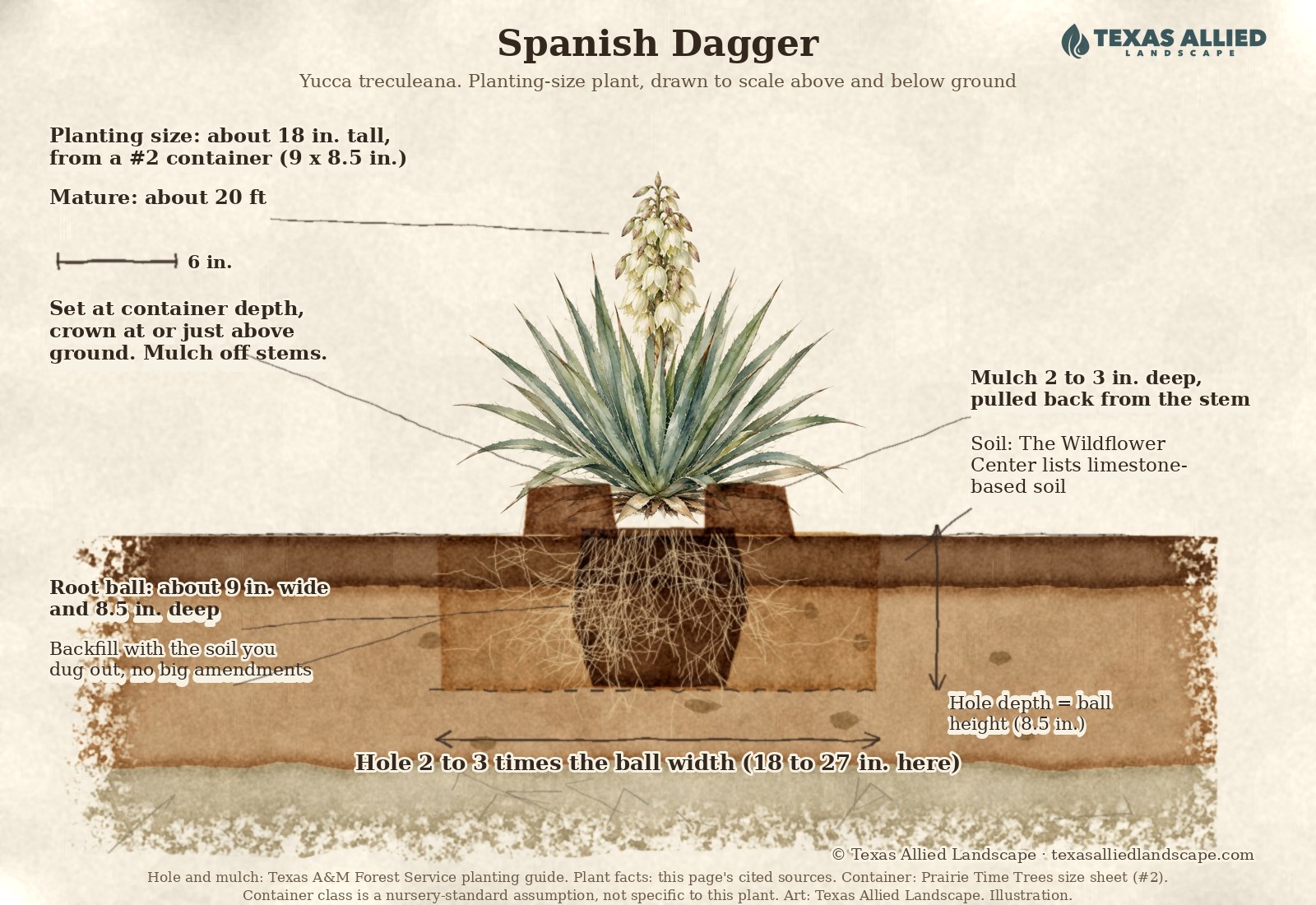
- Dig a hole twice as wide as the pot and no deeper, with sloping sides, and set the plant at the same depth it grew in its pot. Loosen any circling roots before backfilling.[3]
- For a new bed, clear grass and weeds first, roots and all.[3]
- Soil: The Wildflower Center lists limestone-based soil, sand, sandy loam and medium loam.[1]
- Timing: Plant Spanish Dagger in spring through early fall, while the soil is warm.
- Soak it well at planting and keep watering while the roots establish.[3]
- Mulch 2 to 4 inches, kept a few inches away from the stems to prevent crown rot. It needs no staking or other support.[3]
Care Instructions for Your Spanish Dagger
Sunlight, soil and water
Sun. Low water needs and dry soil. The Wildflower Center lists limestone-based soil, sand, sandy loam and medium loam.[1]
Mature height and spread
A small evergreen tree with one or more trunks and long, bayonet-like leaves. It can reach about 20 feet tall in bloom.
Flowers and wildlife
White flowers are listed for March and April. Birds and mammals eat the fleshy fruit. The plant is a host for the yucca giant skipper butterfly.[1]
Spanish dagger questions
Is Spanish dagger the same as yucca?
Spanish dagger is a yucca - Yucca aloifolia - one of the tree-form species with sharp, dagger-stiff leaves on thick trunks. "Yucca" covers many species; this one is the coastal native.[4]
How tall does Spanish dagger get?
Slowly to 10 ft or more, forming one to three leaning trunks with a white flower spike from the center in season.[5]
Are the leaf tips really dangerous?
Yes - the stiff leaves end in hard, sharp points that can puncture skin. Plant it away from walkways, play areas and pool decks, or snip the tips.[6]
Why are my yucca's leaves turning brown?
Usually overwatering or poor drainage - yuccas rot in wet soil. Let the ground dry between waterings and plant in fast-draining soil.[7]
Next step: If the trunk base has gone soft, our horticulturalists can check for rot and reset healthy tops in dry soil.
Let Texas Allied Landscape care for your Spanish Dagger
Spanish Dagger does best with steady, knowledgeable care: the right water, pruning at the right time, and a trained eye for stress. The horticulturists at Texas Allied Landscape care for plants like yours across the San Antonio area, backed by over 40 years of landscape experience.
In these community guides
Sources
- Yucca faxoniana, Lady Bird Johnson Wildflower Center.https://www.wildflower.org/plants/result.php?id_plant=YUFAabcdefg
- Spanish Dagger (Yucca treculeana), SAWS Garden Style San Antonio; cited to distinguish the shared common name, not to supply faxoniana care.https://www.gardenstylesanantonio.com/plants/spanish-dagger/↑
- Back to basics: Planting perennials, SAWS Garden Style San Antonio.https://www.gardenstylesanantonio.com/garden-articles/back-to-basics-planting-perennials/abcd
- Lady Bird Johnson Wildflower Center, Mr. Smarty Plants, "Are Yucca and Spanish dagger the same?"https://www.wildflower.org/expert/show.php?id=2382↑
- Clemson Home & Garden Information Center, "Yucca."https://hgic.clemson.edu/factsheet/yucca/↑
- University of Florida IFAS Extension, "Yucca aloifolia: Spanish Bayonet."https://edis.ifas.ufl.edu/publication/fp614↑
- Lady Bird Johnson Wildflower Center, Mr. Smarty Plants, "Fronds turning brown on yucca."https://www.wildflower.org/expert/show.php?id=3744↑