
Property owners
Spiderwort
- Plant
- Spiderwort
- Botanical name
- Tradescantia virginiana
- Group
- Ground cover
Spiderwort (Tradescantia virginiana): light, water, soil, size and care for San Antonio area landscapes.
On this page
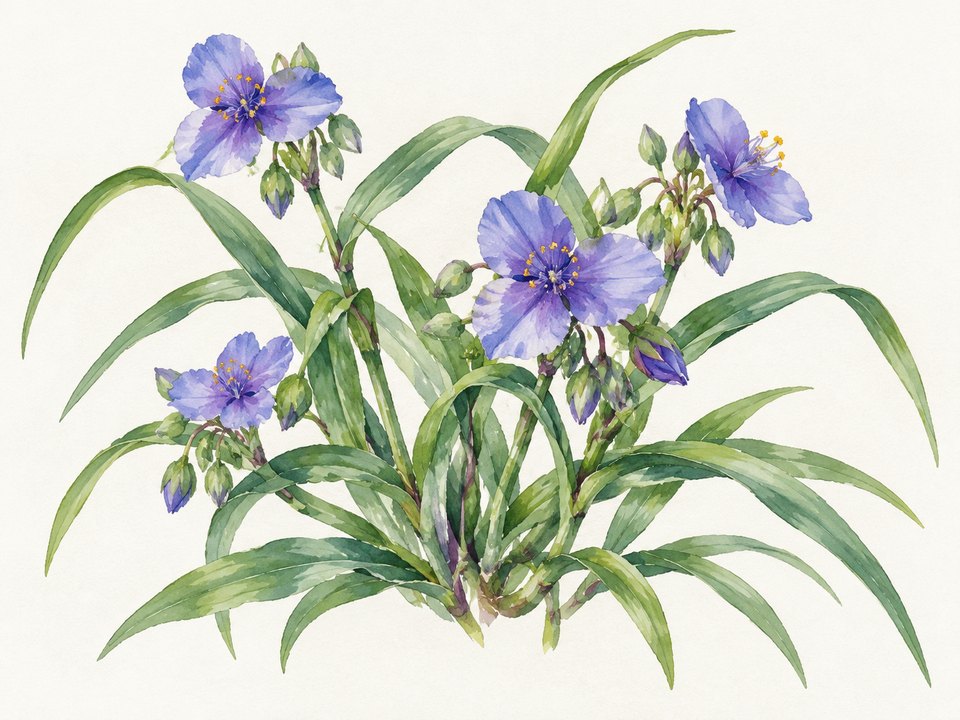
Its botanical name is Tradescantia virginiana.
Light
It grows in sun, partial shade or shade.[1]
Soil and drainage
It prefers humus-rich soil. It is adaptable across several textures and moisture conditions.
Height
Virginia spiderwort grows to 3 feet. Size notes say it usually stays around 2 feet.
Water
It needs low to medium water. If watering ever feels like a guessing game, our horticulturists can care for your Spiderwort on a schedule that fits your yard.
Pruning
Divide it and remove slumping stems that root at nodes to control its spread. Deadheading can encourage another late-summer flowering.
Seasonal behavior
It can spread rapidly by seed under favorable conditions. Another source describes minor contact irritation from the leaves. No precise chemical mechanism is confirmed.
When to Plant Spiderwort
Plant Spiderwort in fall or early spring in Central Texas. A fall planting establishes roots through the cool season. It is ready to grow and bloom the following year. Spring planting works too if you water through the first summer.[2]
If you would like a hand, the Texas Allied Landscape team can plant your Spiderwort and keep it thriving.
Planting
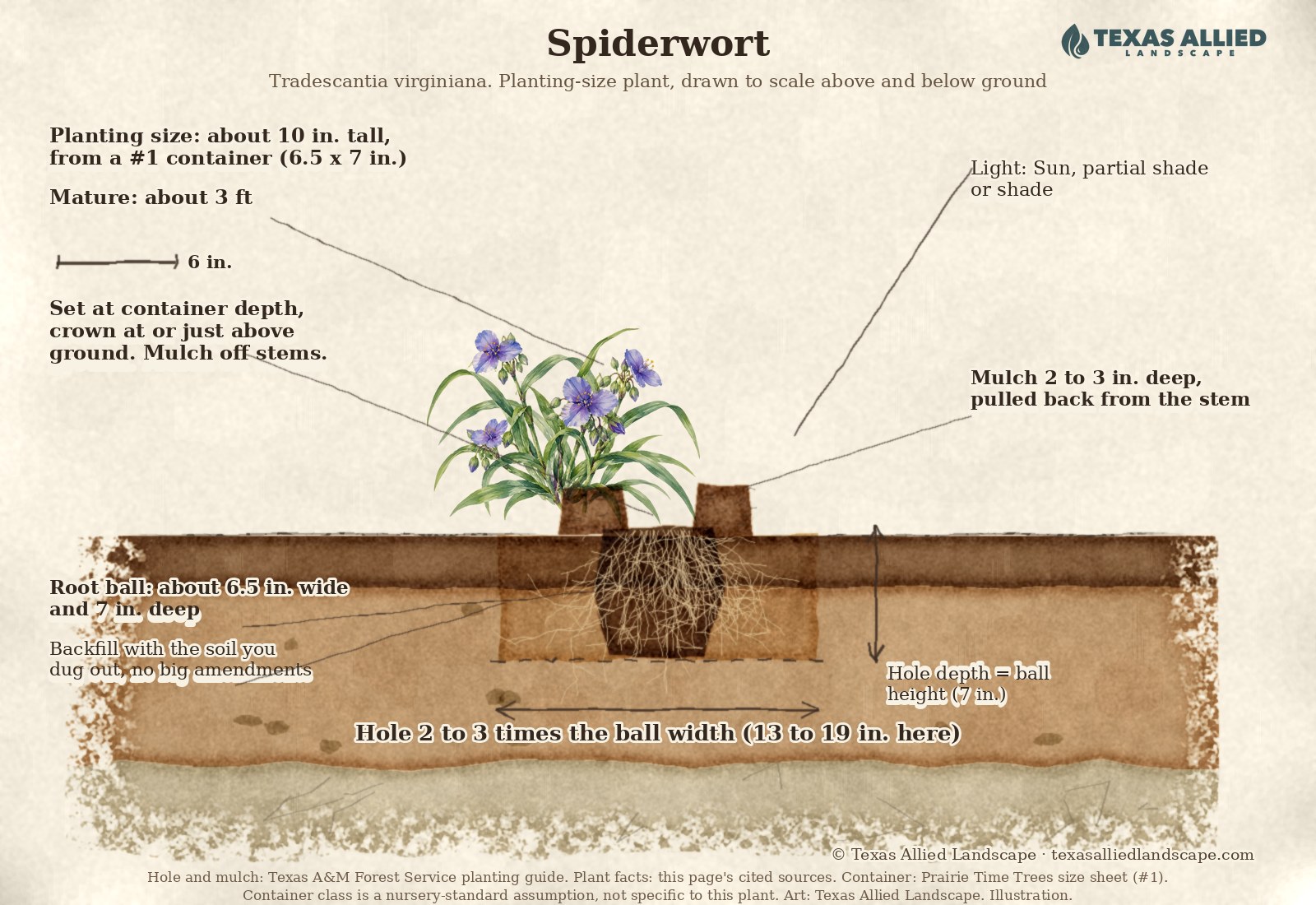
- Dig a hole twice as wide as the pot and no deeper, with sloping sides. Set the plant at the same depth it grew in its pot. Loosen any circling roots before backfilling.[3]
- For a new bed, clear grass and weeds first, roots and all.[3]
- For the site, it grows in sun, partial shade or shade.[1]
- For timing, a fall planting establishes roots through the cool season. It is ready to grow and bloom the following year. Spring planting works too if you water through the first summer.[2]
- Soak it well at planting and keep watering while the roots establish.[3]
- Mulch 2 to 4 inches, kept a few inches away from the stems to prevent crown rot. It needs no staking or other support.[3]
Why is my spiderwort spreading outside its original clump?
Virginia spiderwort can spread rapidly by seed under favorable conditions. Its slumping stems may also root at nodes. The source suggests division and regular removal of those stems to confine the plant. Deadheading can also encourage a second flowering in late summer.
Care Instructions for Your Spiderwort
How to Water a Spiderwort
It needs low to medium water.
Sunlight
It grows in sun, partial shade or shade.[1]
Soil and drainage
It prefers humus-rich soil. It is adaptable across several textures and moisture conditions.
Mature height and spread
Virginia spiderwort grows to 3 feet. Size notes say it usually stays around 2 feet.
Pruning
Divide it and remove slumping stems that root at nodes to control its spread. Deadheading can encourage another late-summer flowering.
Normal seasonal behavior
It can spread rapidly by seed under favorable conditions. Another source describes minor contact irritation from the leaves. No precise chemical mechanism is confirmed.
Spiderwort questions
Sun or shade for spiderwort?
Both. It blooms in sun to part shade. Part shade keeps it fresher through our summers.[4]
When does spiderwort bloom?
It blooms from spring into early summer. Its blue-purple three-petaled flowers open in the morning and close by afternoon.[5]
Why did my spiderwort flop and look ratty in summer?
That is normal. Cut it back hard after bloom. It flushes fresh foliage and often reblooms in fall.[6]
Next step: Our horticulturalists can time the summer cutback so it comes back tidy.
Does spiderwort spread?
Moderately. It self-seeds and its clumps widen. Unwanted seedlings pull easily.[7]
Let Texas Allied Landscape care for your Spiderwort
Spiderwort does best with steady, knowledgeable care. That means the right water, pruning at the right time, and a trained eye for stress. The horticulturists at Texas Allied Landscape care for plants like yours across the San Antonio area. They bring over 40 years of landscape experience.
In these community guides
Sources
- Tradescantia virginiana (Virginia spiderwort), Lady Bird Johnson Wildflower Center Native Plants Database.https://www.wildflower.org/plants/result.php?id_plant=TRVIabc
- October Gardening Checklist, Travis County AgriLife Extension.https://travis-tx.tamu.edu/about-2/horticulture/monthly-gardening-calendar-for-austin-area/october-gardening-checklist-for-austin-and-central-texas/ab
- Back to basics: Planting perennials, San Antonio Water System.https://www.gardenstylesanantonio.com/garden-articles/back-to-basics-planting-perennials/abcd
- NC State Extension, "Tradescantia virginiana."https://plants.ces.ncsu.edu/plants/tradescantia-virginiana/↑
- Morton Arboretum, "Spiderwort."https://mortonarb.org/plant-and-protect/trees-and-plants/spiderwort/↑
- NC State Extension, "Tradescantia virginiana."https://plants.ces.ncsu.edu/plants/tradescantia-virginiana/↑
- NC State Extension, "Tradescantia virginiana."https://plants.ces.ncsu.edu/plants/tradescantia-virginiana/↑