
Property owners
Spineless Prickly Pear
- Plant
- Spineless Prickly Pear
- Botanical name
- Opuntia engelmannii 'Ellisiana'
- Cultivar
- 'Ellisiana'
- Group
- Succulents and cacti
Sourced spineless-prickly-pear care, with a naming and glochid warning.
On this page
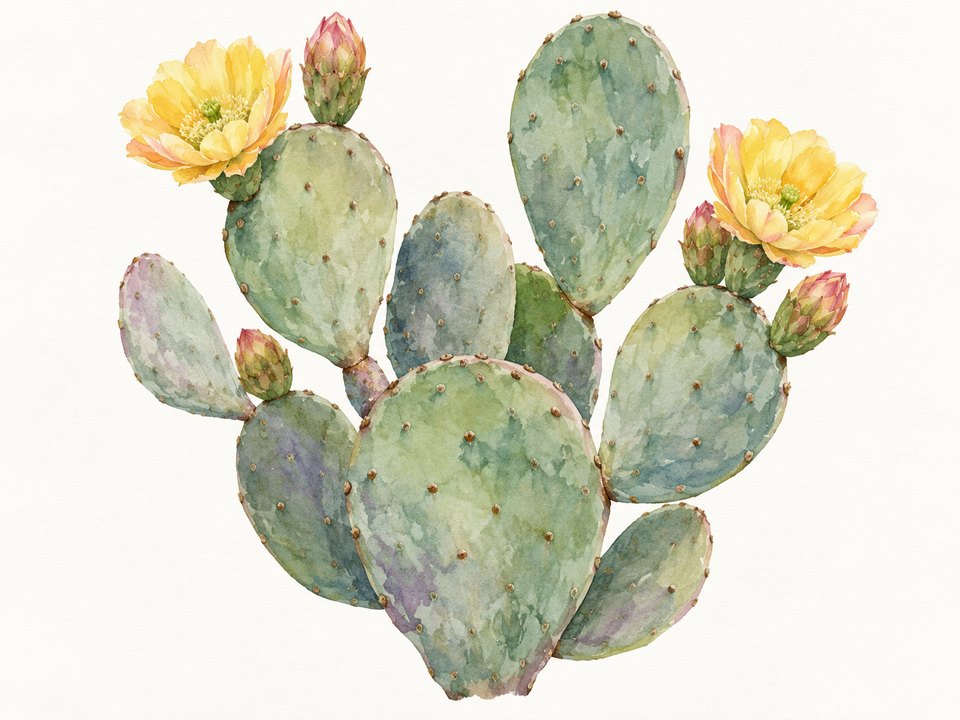
The catalog lists Opuntia engelmannii 'Ellisiana'. The Wildflower Center uses Opuntia ellisiana and describes it as a cultivated spineless form of Opuntia cacanapa. The naming differs, so check the identity of the plant you buy.[1]
Light and water
Sun to partial shade. Low water needs and dry soil in the Wildflower Center profile.[1]
Size and form
An evergreen prickly pear up to about 6 feet tall in the Wildflower Center profile. SAWS lists 6 to 12 feet wide for spineless prickly pear, so allow room for spreading pads.[1][2]
Handle with care
"Spineless" does not mean harmless. Tiny glochids, or barbed slivers, can still irritate skin even where long spines are absent. Handle it carefully, including when wearing gloves.[1][2]
Flowers and pruning
Spring and early-summer flowers are followed by fruits called tunas. SAWS says pads can be selected and removed as needed to control growth. The Wildflower Center says cut surfaces should callus before cuttings are planted.[1][2]
When to Plant Spineless Prickly Pear
Plant Spineless Prickly Pear in spring through early fall, while the soil is warm. Drainage matters most going into winter: roots sitting in cold, wet soil rot, so a plant established long before winter handles the season better.
Avoid planting right before winter.
If you would like a hand, the Texas Allied Landscape team can plant your Spineless Prickly Pear and keep it thriving.
Planting
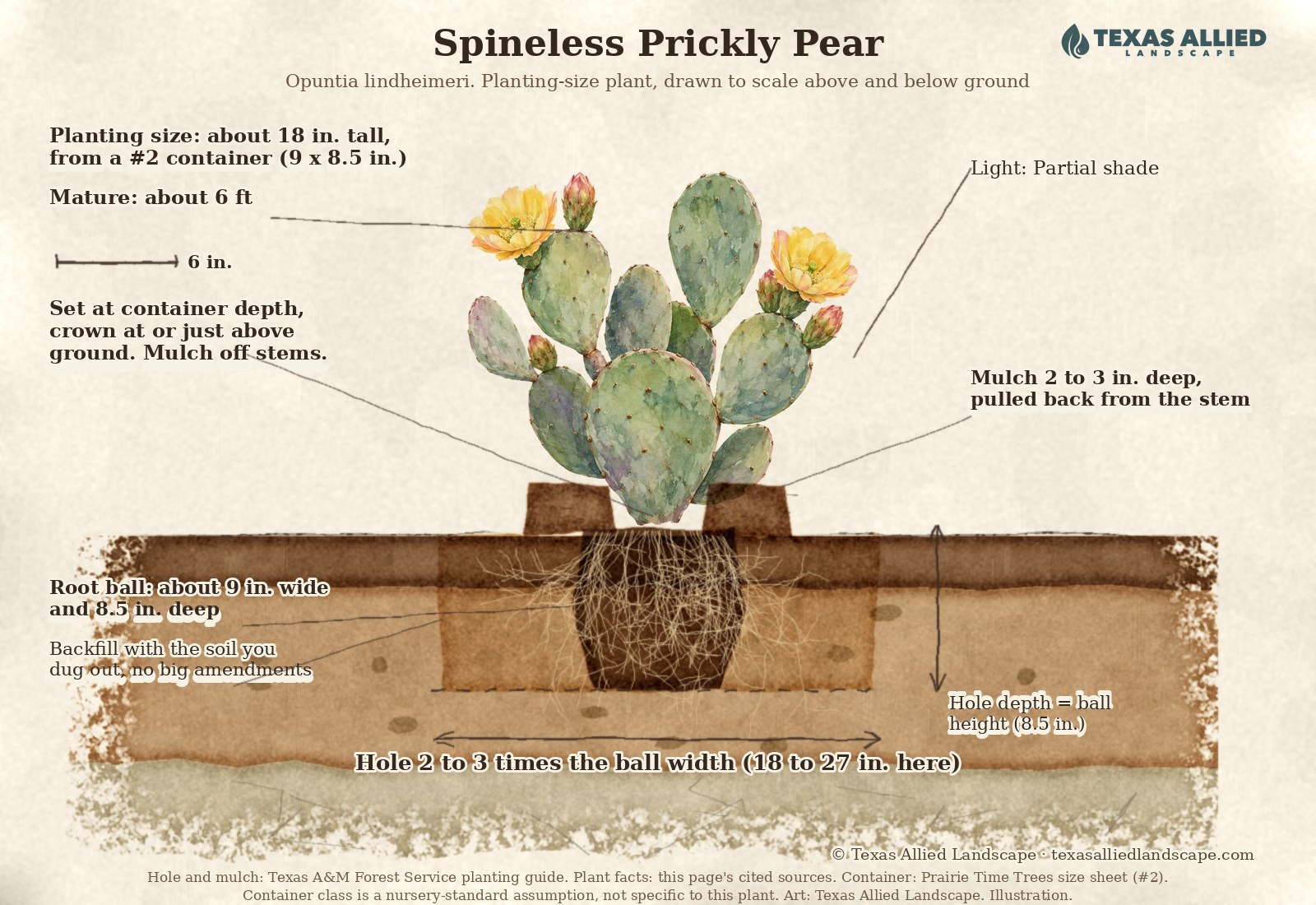
- Dig a hole twice as wide as the pot and no deeper, with sloping sides, and set the plant at the same depth it grew in its pot. Loosen any circling roots before backfilling.[3]
- For a new bed, clear grass and weeds first, roots and all.[3]
- Give it room: An evergreen prickly pear up to about 6 feet tall in the Wildflower Center profile. SAWS lists 6 to 12 feet wide for spineless prickly pear, so allow room for spreading pads.[1][2] "Spineless" does not mean harmless. Space plants for that full size, not the pot size.[3]
- Site: Sun to partial shade. Low water needs and dry soil in the Wildflower Center profile.[1]
- Timing: Plant Spineless Prickly Pear in spring through early fall, while the soil is warm.
- Soak it well at planting and keep watering while the roots establish.[3]
- Mulch 2 to 4 inches, kept a few inches away from the stems to prevent crown rot. It needs no staking or other support.[3]
Care Instructions for Your Spineless Prickly Pear
Sunlight and water
Sun to partial shade. Low water needs and dry soil in the Wildflower Center profile.[1]
Mature height and spread
An evergreen prickly pear up to about 6 feet tall in the Wildflower Center profile. SAWS lists 6 to 12 feet wide for spineless prickly pear, so allow room for spreading pads.[1][2]
Spineless prickly pear questions
Is the Ellisiana prickly pear really spineless?
Essentially - pads lack the long spines, though tiny glochids at the areoles can still irritate skin. Handle with gloves anyway.[4]
Is this prickly pear a Texas native?
The species Opuntia engelmannii is a Texas native; Ellisiana is its nearly spineless garden selection.[5]
Does spineless prickly pear bloom?
Yes - big yellow flowers in spring, often blushing orange, followed by edible purple tunas.[6]
How big does it get?
4-5 ft tall and wider over time - it is a real shrub, so give it a hot, dry spot with room.[7]
Next step: Our horticulturalists can plant it where its pads will never snag a passerby.
Let Texas Allied Landscape care for your Spineless Prickly Pear
Spineless Prickly Pear does best with steady, knowledgeable care: the right water, pruning at the right time, and a trained eye for stress. The horticulturists at Texas Allied Landscape care for plants like yours across the San Antonio area, backed by over 40 years of landscape experience.
In these community guides
Illustration. Illustration based on reference photos of Vicinia. Not a single literal view. Vicinia Landscaping
Bring your address, survey and ideas. Texas Allied Landscape helps check the rules, design the space and prepare for…
Sources
- Opuntia ellisiana, Lady Bird Johnson Wildflower Center.https://www.wildflower.org/plants/result.php?id_plant=opel3abcdefghij
- Spineless Prickly Pear, SAWS Garden Style San Antonio.https://www.gardenstylesanantonio.com/plants/spineless-prickly-pear/abcde
- Back to basics: Planting perennials, SAWS Garden Style San Antonio.https://www.gardenstylesanantonio.com/garden-articles/back-to-basics-planting-perennials/abcde
- Gardening Know How, "Spineless Prickly Pear Info."https://www.gardeningknowhow.com/ornamental/cacti-succulents/prickly-pear/spineless-prickly-pear-info.htm↑
- Spadefoot Nursery, "Opuntia 'Ellisiana'."https://www.spadefootnursery.com/prickly-pear-cactus/opuntia-cacanapa-ellisiana↑
- 505Outside, "Spineless Prickly Pear."https://www.505outside.com/2025/01/09/spineless-prickly-pear-opuntia-cacanapa-ellisiana/↑
- Tula House, "Opuntia cacanapa 'Ellisiana'."https://tula.house/blogs/tulas-plant-library/opuntia-cacanapa-ellisiana↑