
Property owners
Texas Black Walnut
- Plant
- Texas Black Walnut
- Botanical name
- Juglans macrocarpa
- Group
- Ornamental trees
Texas Black Walnut: Full sun.[^bw2-npsot]
On this page
Botanical name: Juglans macrocarpa.
Leer en español
Plant group: Ornamental trees.
Light
Full sun.[1]
Soil and drainage
Creek bottoms and canyon soils - it is native to Central Texas waterways.[1]
Height
15-30 feet, often multi-trunked.[2]
Spread
15-20 feet.[2]
Foliage
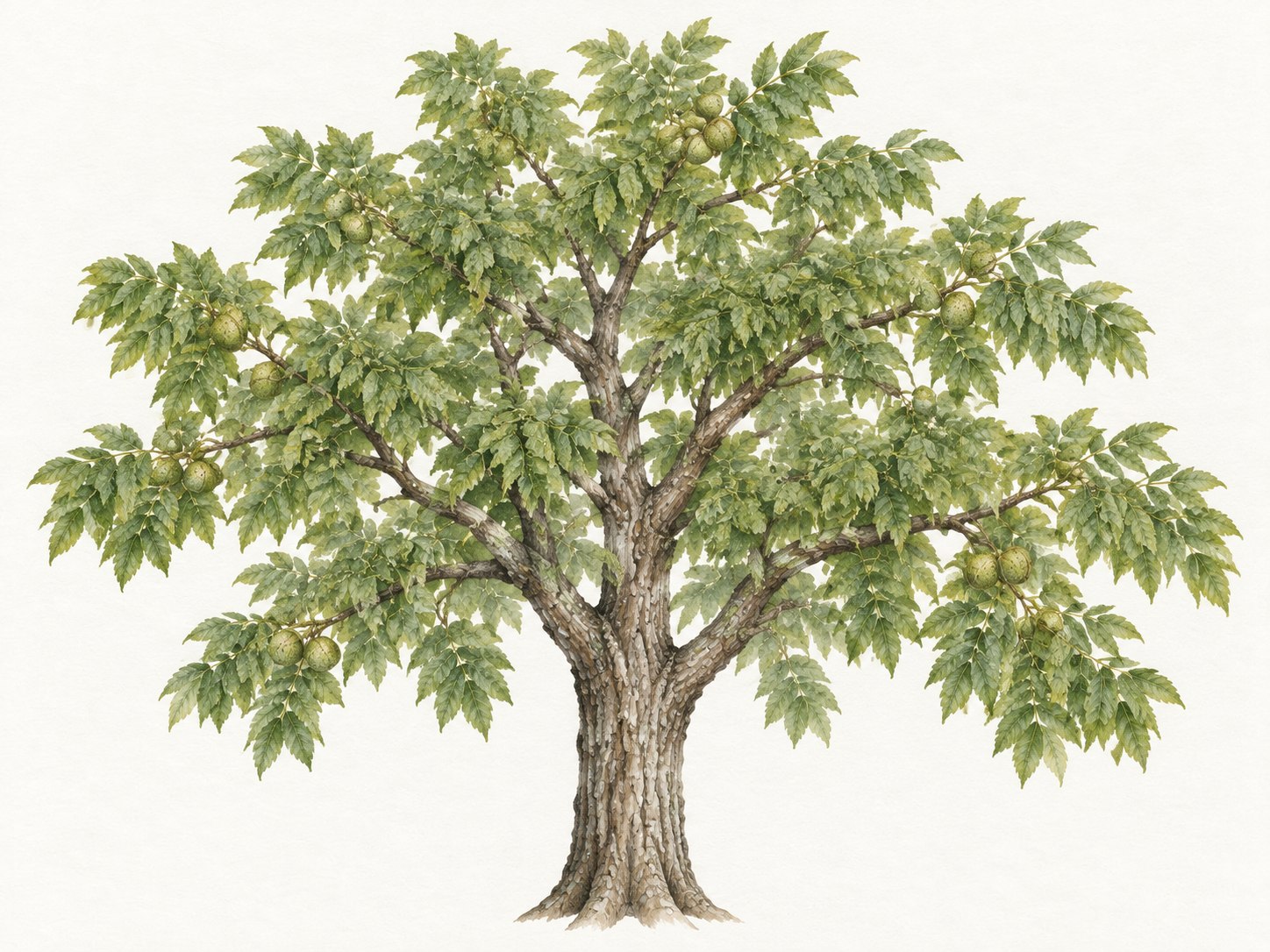
Fine, feathery compound leaves; yellow fall color; deciduous.[1]
Water
Medium - it likes more moisture than most natives, especially young.[2]
Pruning
Low - remove deadwood in winter.[3]
Seasonal behavior
Small round nuts in fall that squirrels tear into; yellow fall color.[4]
When to Plant Texas Black Walnut
Plant Texas Black Walnut in fall or early spring in Central Texas.[1]
If you would like a hand, the Texas Allied Landscape team can plant your Texas Black Walnut and keep it thriving.
Planting
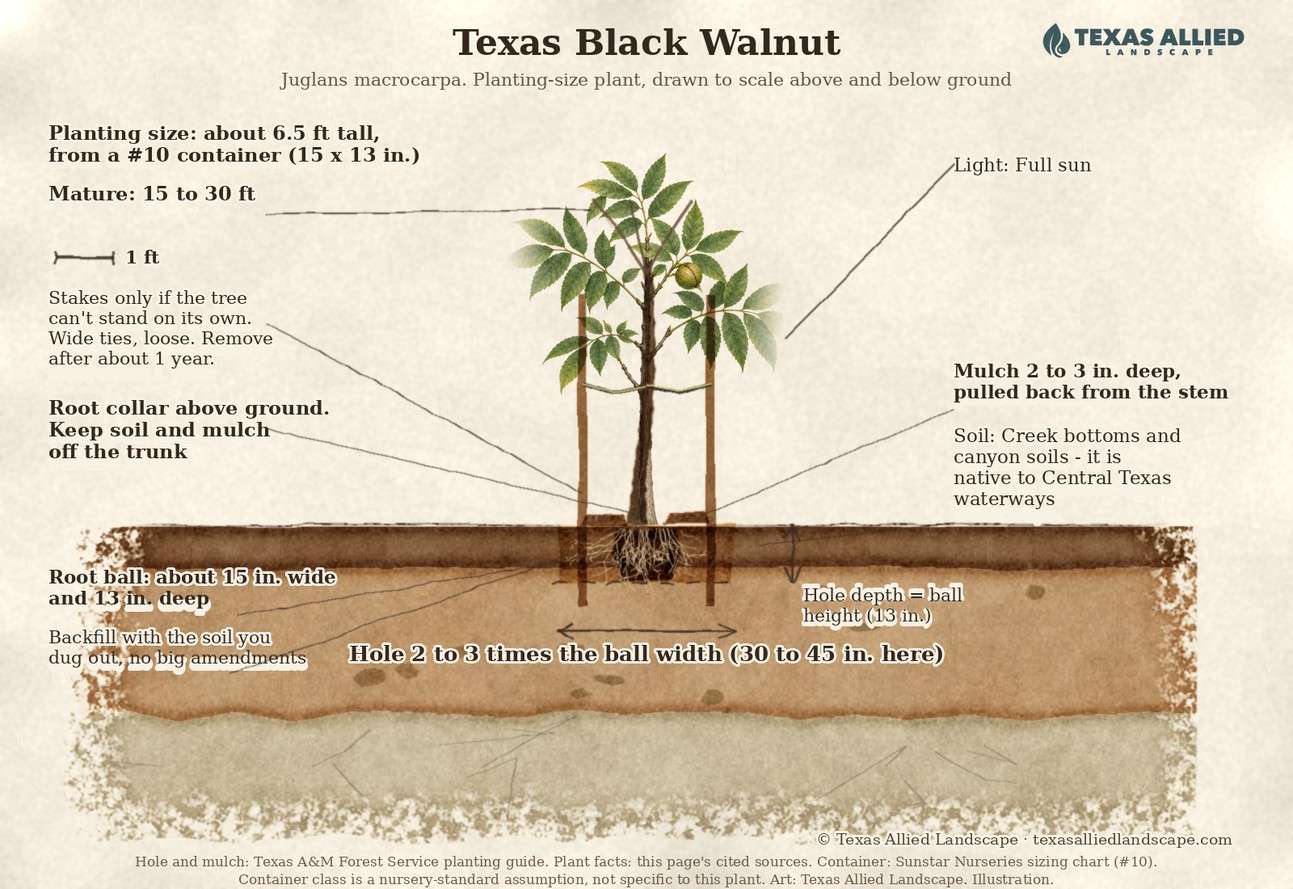
- Dig a hole at least twice as wide as the root ball and no deeper - a square hole keeps the roots from settling too deep while letting them grow out into the surrounding soil.[5]
- Fill the empty hole with water and check the drainage. If it takes longer than 24 hours to drain, choose another spot: roots sitting under water will kill the tree.[5]
- Set it with the root collar (the flare just above the roots) level with or slightly above the ground, and take off all wire, twine, containers and bags before backfilling.[5]
- Backfill with the same soil that came out of the hole, without amendments, and settle it with water rather than packing it down.[5]
- Site: Full sun.[1]
- Timing: Plant Texas Black Walnut in fall or early spring in Central Texas.[1]
- Water for at least the first two years, without overwatering: a thorough soaking beats light, frequent watering.[5]
- Mulch 2 to 3 inches deep, out to the drip line and up to but not touching the trunk. Stake only if it cannot stand on its own and take stakes off within a year - most need no support. Do not fertilize during the first growing season.[5]
Care Instructions for Your Texas Black Walnut
Sunlight
Full sun.[1]
Soil and drainage
Creek bottoms and canyon soils - it is native to Central Texas waterways.[1]
Mature height and spread
15-30 feet, often multi-trunked.[2] 15-20 feet.[2]
Pruning
Low - remove deadwood in winter.[3]
Normal seasonal behavior
Small round nuts in fall that squirrels tear into; yellow fall color.[4]
Texas black walnut questions
Is Texas black walnut a Texas native?
Yes - Juglans macrocarpa is native to Central Texas creek bottoms and canyons.[6]
Are the nuts edible?
Technically yes, but small and thick-shelled - the squirrels get far more out of them than you will.[7]
How big does Texas walnut get?
15-30 feet - a small to medium native tree, often with several trunks.[8]
Does Texas walnut poison other plants like black walnut does?
Far less of an issue - it is in the walnut family, but most plants grow happily around it.[9]
Next step: Our horticulturalists can tell you what to plant nearby with confidence.
Let Texas Allied Landscape care for your Texas Black Walnut
Texas Black Walnut does best with steady, knowledgeable care: the right water, pruning at the right time, and a trained eye for stress. The horticulturists at Texas Allied Landscape care for plants like yours across the San Antonio area, backed by over 40 years of landscape experience.
In these community guides
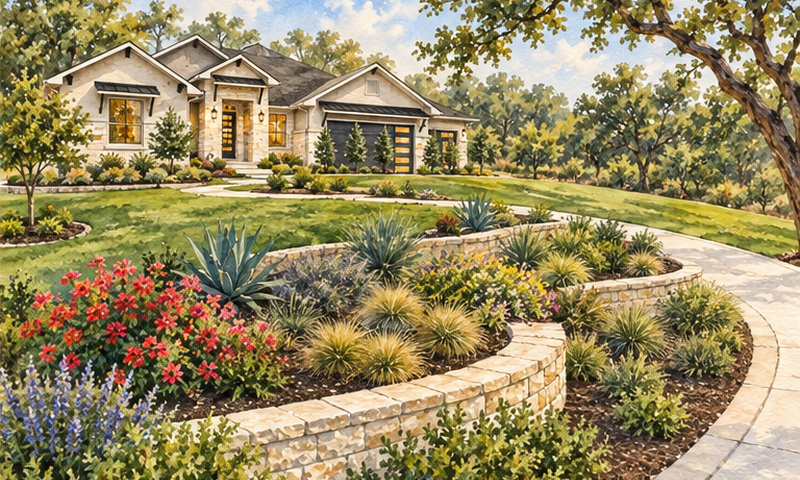
Illustration. Illustration based on reference photos of Arbors of Fair Oaks. Not a single literal view. Arbors of Fair Oaks Landscaping
Bring your address, unit and yard ideas. Texas Allied Landscape helps design the planting and irrigation, prepare the…
Sources
- Native Plant Society of Texas, "Juglans microcarpa."https://www.npsot.org/posts/native-plant/juglans-microcarpa/abcdefgh
- City of Austin Grow Green plant guide, "Walnut, Little."https://www.austintexas.gov/department/grow-green/plant-guide/walnut-littleabcdef
- Texas A&M Forest Service, Texas Tree Planting, "Little Walnut."https://texastreeplanting.tamu.edu/Display_Onetree.aspx?tid=40ab
- PlantNative, "Texas Walnut."https://plantnative.org/native-plants/texas-walnut-juglans-microcarpa.htmab
- Planting, Texas A&M Forest Service.https://tfsweb.tamu.edu/trees/tree-care/planting/abcdef
- Native Plant Society of Texas, "Juglans microcarpa."https://www.npsot.org/posts/native-plant/juglans-microcarpa/↑
- PlantNative, "Texas Walnut."https://plantnative.org/native-plants/texas-walnut-juglans-microcarpa.htm↑
- City of Austin Grow Green plant guide, "Walnut, Little."https://www.austintexas.gov/department/grow-green/plant-guide/walnut-little↑
- Texas A&M Forest Service, Texas Tree Planting, "Little Walnut."https://texastreeplanting.tamu.edu/Display_Onetree.aspx?tid=40↑