
Property owners
Wedelia
- Plant
- Wedelia
- Botanical name
- Wedelia acapulcensis var. hispida
- Variety
- var. hispida
- Group
- Ground cover
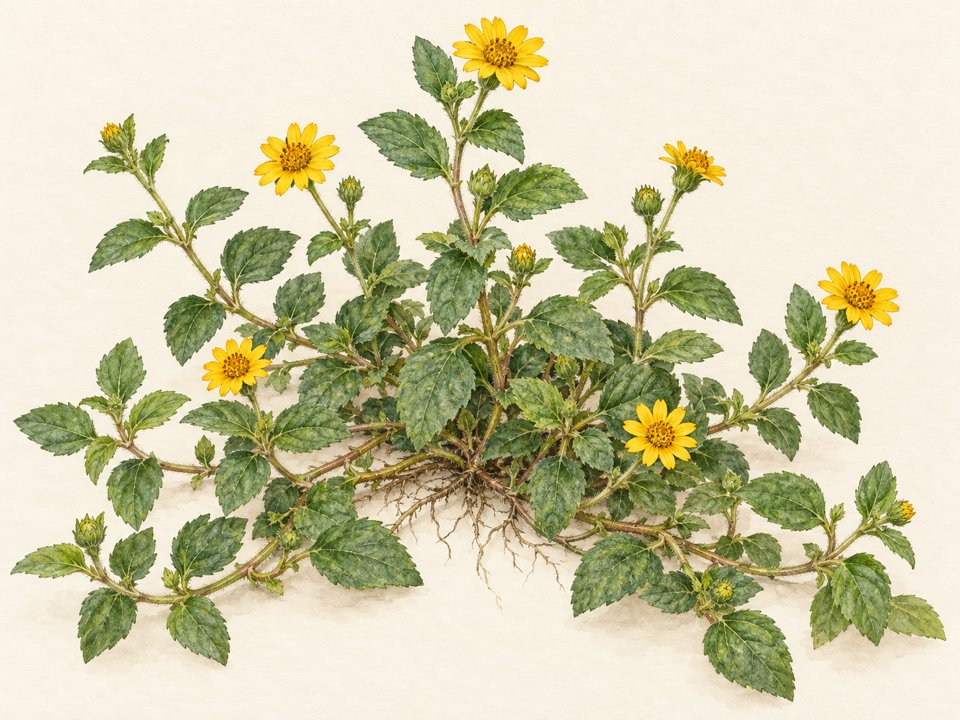
Wedelia (Wedelia acapulcensis var. hispida) is a tough native ground cover with yellow daisies to frost.
On this page
Its botanical name is Wedelia acapulcensis var. hispida. It belongs to the ground cover group.
Wedelia (zexmenia, hairy wedelia) is a tough native ground cover with rough-hairy leaves and yellow daisy flowers from late spring to frost. It grows in sun to part shade. It needs little water and spreads to form a dense mat.[1]
Light
Sun to part shade.[2]
Soil and drainage
Dry, well-drained soils; long-lived and drought tolerant.[2]
Height
Up to about 3 ft tall.[2]
When to Plant Wedelia
Wedelia is frost-tender, so plant it in spring after the last frost. That is around mid-March in San Antonio. It needs warm months ahead to establish. It often dies back to the roots in winter.
If you would like a hand, the Texas Allied Landscape team can plant your Wedelia and keep it thriving.
Planting
- Dig a hole twice as wide as the pot and no deeper, with sloping sides. Set the plant at the same depth it grew in its pot. Loosen any circling roots before backfilling.[3]
- For a new bed, clear grass and weeds first, roots and all.[3]
- For the site, it grows in sun to part shade. It needs little water and spreads to form a dense mat.[1]
- For timing, wedelia is frost-tender. Plant it in spring after the last frost, around mid-March in San Antonio.
- Soak it well at planting and keep watering while the roots establish.[3]
- Mulch 2 to 4 inches, kept a few inches away from the stems to prevent crown rot. It needs no staking or other support.[3]
Care Instructions for Your Wedelia
How to Water a Wedelia
Planting
It is nearly indestructible. It is evergreen and fast, with yellow daisies, and it tolerates shade and drought. Those are exactly the traits that make it escape into natural areas.[4]
Spread and invasiveness
Yes. Sphagneticola trilobata (creeping oxeye) is a non-native groundcover that spreads aggressively by rooting stems. It is listed as invasive.[5]
Wedelia questions
Is wedelia invasive in Texas?
Yes. Sphagneticola trilobata (creeping oxeye) is a non-native groundcover that spreads aggressively by rooting stems. It is listed as invasive.[5]
How do I get rid of wedelia?
It roots at every node, so digging must get every stem. Rake it up and bag it; do not compost it. Repeat on regrowth. Solarizing or smothering under cardboard and mulch helps in beds.[6]
Next step: Our horticulturalists can clear a wedelia mat and replant with a well-behaved groundcover.
Why was wedelia planted so much?
It is nearly indestructible. It is evergreen and fast, with yellow daisies, and it tolerates shade and drought. Those are exactly the traits that make it escape into natural areas.[4]
What can I plant instead of wedelia?
For a tough low groundcover with yellow blooms, look at native frogfruit, damianita or wedelia's better-behaved cousins. They have the same look with no escape risk.[7]
Let Texas Allied Landscape care for your Wedelia
Wedelia does best with steady, knowledgeable care. That means the right water, pruning at the right time, and a trained eye for stress. The horticulturists at Texas Allied Landscape care for plants like yours across the San Antonio area. They bring over 40 years of landscape experience.
In these community guides
Sources
- Lady Bird Johnson Wildflower Center, "Wedelia acapulcensis var. hispida"https://www.wildflower.org/plants/result.php?id_plant=WEACHab
- Wedelia acapulcensis var. hispida (Zexmenia), Lady Bird Johnson Wildflower Center.https://www.wildflower.org/plants/result.php?id_plant=WEACHabc
- Back to basics: Planting perennials, SAWS Garden Style San Antonio.https://www.gardenstylesanantonio.com/garden-articles/back-to-basics-planting-perennials/abcd
- Dave's Garden, "Sphagneticola trilobata."https://davesgarden.com/guides/pf/go/1303ab
- Lady Bird Johnson Wildflower Center, Mr. Smarty Plants, "Sphagneticola trilobata as non-native invasive."https://www.wildflower.org/expert/show.php?id=973ab
- Lady Bird Johnson Wildflower Center, Mr. Smarty Plants, "Sphagneticola trilobata control."https://www.wildflower.org/expert/show.php?id=6468↑
- Lady Bird Johnson Wildflower Center, Mr. Smarty Plants, "Sphagneticola trilobata as non-native invasive."https://www.wildflower.org/expert/show.php?id=973↑