
Property owners
White Brush
- Plant
- White Brush
- Botanical name
- Aloysia gratissima
- Group
- Large shrubs
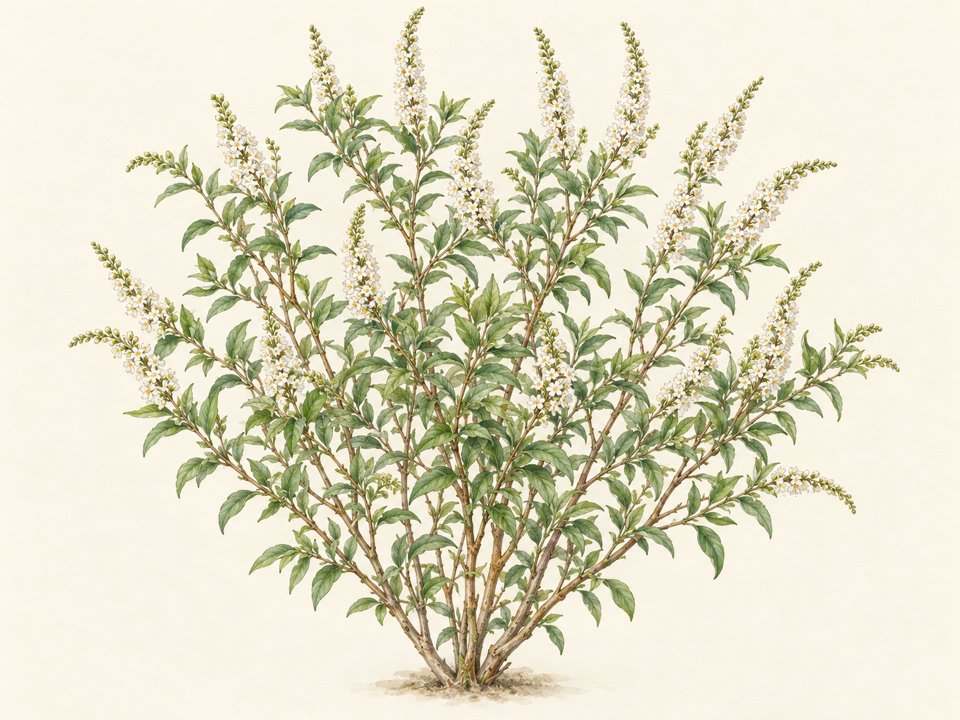
White Brush (Aloysia gratissima) is a native shrub with fragrant white flower spikes after rains.
On this page
Its botanical name is Aloysia gratissima. It belongs to the large shrubs group.
White Brush (beebrush) is a native large shrub with slender spikes of tiny, intensely fragrant white flowers that appear after rains and draw bees and butterflies. It grows in full sun in rocky, well-drained soil and is very drought tolerant.[1]
Light
Sun to part shade.[2]
Soil and drainage
Moist, rocky soils - sandy, loam or clay.[2]
Height
Up to about 10 ft tall.[2]
When to Plant White Brush
Fall, October through November, and late winter into early spring are the best times to plant White Brush in Central Texas. Cooler months give the roots time to establish before summer heat.[3]
Container-grown shrubs can go in at other times if you keep up with watering. Avoid planting in the peak of summer.
If you would like a hand, the Texas Allied Landscape team can plant your White Brush and keep it thriving.
Planting
- Dig a hole at least twice as wide as the root ball and no deeper. This lets the roots grow out into the surrounding soil.[4]
- Fill the empty hole with water and check the drainage. If it takes longer than 24 hours to drain, choose another spot. Roots sitting under water will kill the plant.[4]
- Set it with the root collar (where the stems meet the roots) level with the ground. Take off the container and any twine or bags before backfilling.[4]
- Backfill with the same soil that came out of the hole, without amendments. Settle it with water rather than packing it down.[4]
- For soil and light, it grows in full sun in rocky, well-drained soil and is very drought tolerant.[1]
- For timing, fall, October through November, and late winter into early spring are the best times to plant White Brush in Central Texas.
- Water regularly through the first growing season while the roots establish, without overwatering. A thorough soaking beats light, frequent watering.[4]
- Mulch 2 to 3 inches deep, up to but not touching the stems. It needs no staking or other support. Do not fertilize during the first growing season.[4]
Care Instructions for Your White Brush
How to Water a White Brush
Fruit and flowers
It blooms in flushes after rains from spring through fall. Each good rain triggers a new wave of fragrant white bloom.[5]
Growth and size
It grows best in full sun and dry, rocky, well-drained ground. It is a tough South and West Texas native that asks for no irrigation once rooted.[6]
White brush questions
What is white brush?
It is Aloysia gratissima, a native Texas shrub also called beebrush. It has clouds of tiny fragrant white flowers that bees and butterflies mob in waves from spring to fall.[7]
Why is it called beebrush?
Walk past one in bloom and you will hear it before you see it. The flower spikes are among the best native pollinator plants in the state, and beekeepers prize the honey.[8]
When does white brush bloom?
It blooms in flushes after rains from spring through fall. Each good rain triggers a new wave of fragrant white bloom.[5]
Where does white brush grow best?
It grows best in full sun and dry, rocky, well-drained ground. It is a tough South and West Texas native that asks for no irrigation once rooted.[6]
Next step: Our horticulturalists can place white brush where its pollinator traffic is a feature, not a front-door surprise.
Let Texas Allied Landscape care for your White Brush
White Brush does best with steady, knowledgeable care. That means the right water, pruning at the right time, and a trained eye for stress. The horticulturists at Texas Allied Landscape care for plants like yours across the San Antonio area. They bring over 40 years of landscape experience.
In these community guides
Sources
- Lady Bird Johnson Wildflower Center, "Aloysia gratissima"https://www.wildflower.org/plants/result.php?id_plant=algr2ab
- Aloysia gratissima (Whitebrush), Lady Bird Johnson Wildflower Center.https://www.wildflower.org/plants/result.php?id_plant=ALGR2abc
- October Gardening Checklist, Travis County AgriLife Extension.https://travis-tx.tamu.edu/about-2/horticulture/monthly-gardening-calendar-for-austin-area/october-gardening-checklist-for-austin-and-central-texas/↑
- Planting, Texas A&M Forest Service.https://tfsweb.tamu.edu/trees/tree-care/planting/abcdef
- Texas A&M Plants of Texas Rangelands, "Whitebrush, Beebush."https://rangeplants.tamu.edu/plant/whitebrush-beebush-beebrush/ab
- Native Plant Society of Texas, "Aloysia gratissima."https://www.npsot.org/posts/native-plant/aloysia-gratissima/ab
- Texas A&M Plants of Texas Rangelands, "Whitebrush, Beebush."https://rangeplants.tamu.edu/plant/whitebrush-beebush-beebrush/↑
- Native Plant Society of Texas, "Aloysia gratissima."https://www.npsot.org/posts/native-plant/aloysia-gratissima/↑