
Property owners
Wooly Bumelia
- Plant
- Wooly Bumelia
- Botanical name
- Sideroxylon lanuginosum
- Group
- Shade trees
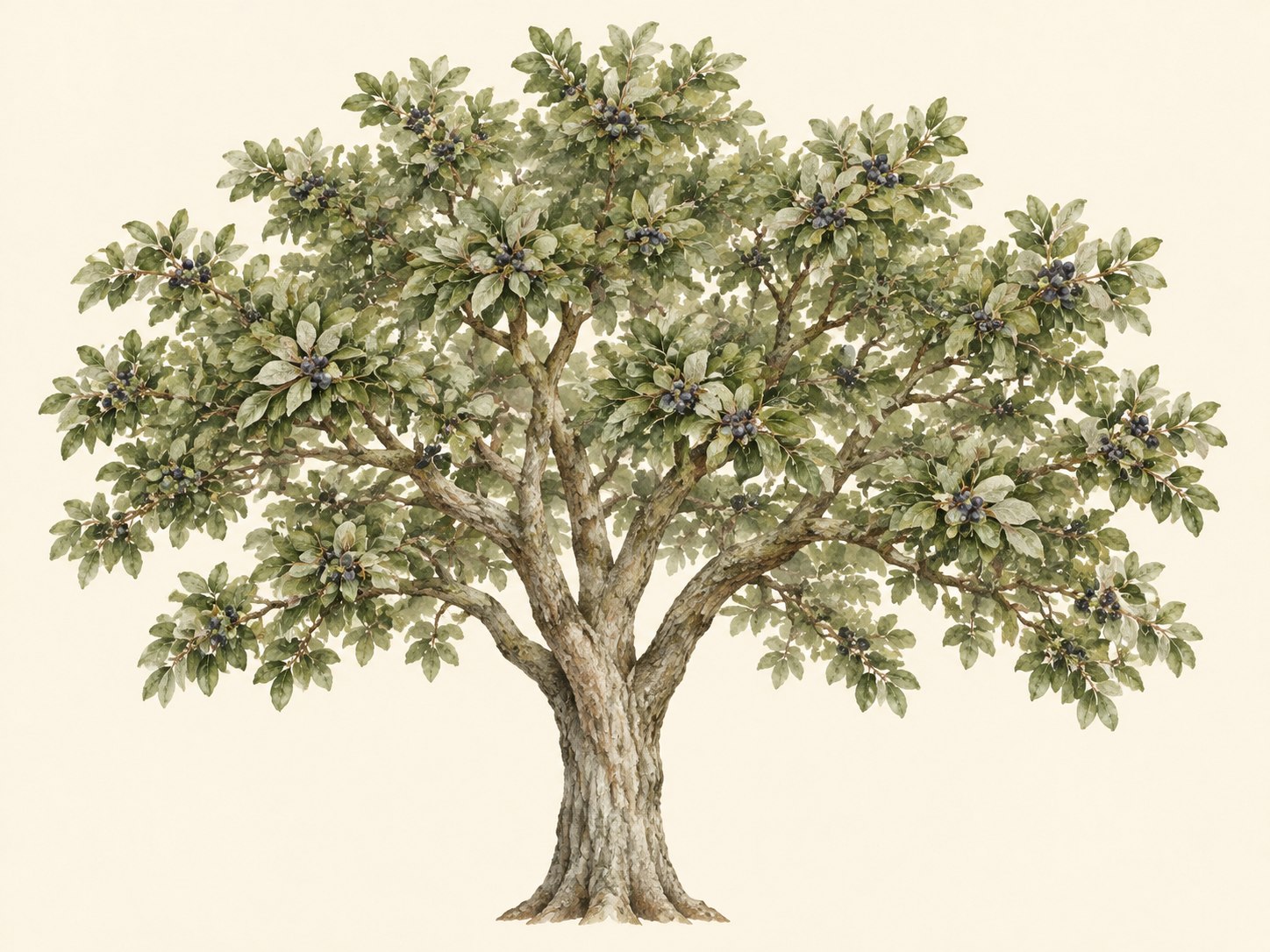
Wooly Bumelia is a tough native tree with fragrant summer blooms and blue fruit.
On this page
Its botanical name is Sideroxylon lanuginosum.
It belongs to the shade trees group.
Light
It grows in full sun to part shade. It grows wild in open woods, fencerows and dry uplands.[1]
Soil and drainage
It is adaptable, and it handles dry and alkaline ground. It is a tough native of the south-central states and Mexico.[1][2]
Height
It grows 15 to 45 feet tall depending on the site, with a narrow crown.[1]
Spread
It spreads 10 to 30 feet.[1]
Foliage
It is deciduous. The undersides of the leaves carry a woolly fuzz, which gives the tree its name.[2]
Water
It needs low to moderate water. It is drought tough once established.[1]
Pruning
It needs little pruning. Watch for the stiff spines along the branches when you work around it.[1]
Seasonal behavior
It has fragrant small white flowers in June. Blue-black fruit follows, and birds take it. The tree is bare and spiny in winter.[1]
When to Plant Wooly Bumelia
Plant Wooly Bumelia in fall or early spring in Central Texas so the roots establish through the cool season.[1]
If you would like a hand, the Texas Allied Landscape team can plant your Wooly Bumelia and keep it thriving.
Planting
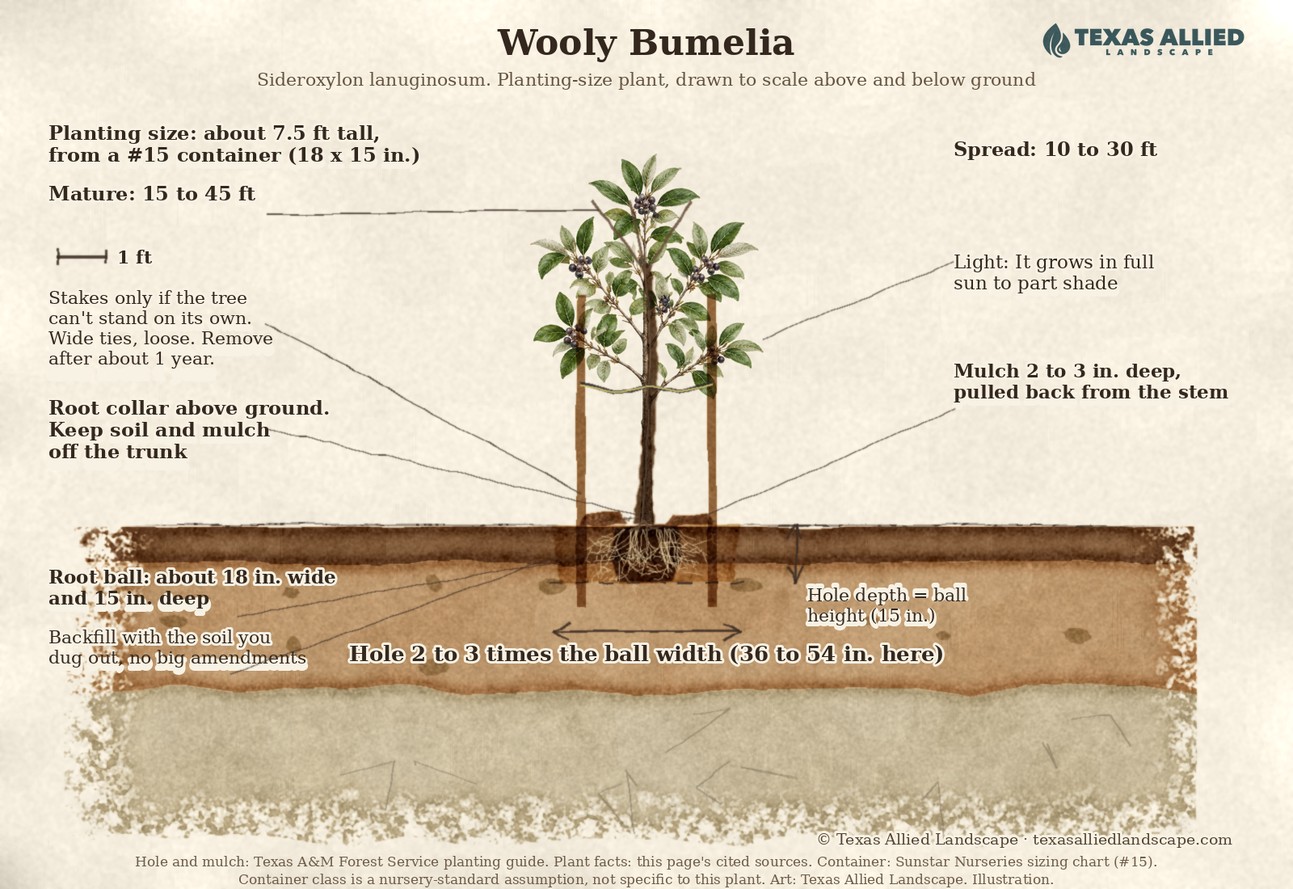
- Dig a hole at least twice as wide as the root ball and no deeper. A square hole keeps the roots from settling too deep while letting them grow out into the surrounding soil.[3]
- Fill the empty hole with water and check the drainage. If it takes longer than 24 hours to drain, choose another spot. Roots sitting under water will kill the tree.[3]
- Set it with the root collar (the flare just above the roots) level with or slightly above the ground. Take off all wire, twine, containers and bags before backfilling.[3]
- Backfill with the same soil that came out of the hole, without amendments. Settle the soil with water rather than packing it down.[3]
- Site and soil: It belongs to the shade trees group. It grows in full sun to part shade, and it grows wild in open woods, fencerows and dry uplands.[1] It is adaptable, handling dry and alkaline ground. It is a tough native of the south-central states and Mexico.[1][2]
- Timing: Plant Wooly Bumelia in fall or early spring in Central Texas so the roots establish through the cool season.[1]
- Water it for at least the first two years, but do not overwater. A thorough soaking beats light, frequent watering.[3]
- Mulch 2 to 3 inches deep, out to the drip line and up to but not touching the trunk. Stake it only if it cannot stand on its own, and take the stakes off within a year. Most trees need no support. Do not fertilize during the first growing season.[3]
Care Instructions for Your Wooly Bumelia
Sunlight
It grows in full sun to part shade. It grows wild in open woods, fencerows and dry uplands.[1]
Soil and drainage
It is adaptable, and it handles dry and alkaline ground. It is a tough native of the south-central states and Mexico.[1][2]
Mature height and spread
It grows 15 to 45 feet tall depending on the site, with a narrow crown.[1] It spreads 10 to 30 feet.[1]
Pruning
It needs little pruning. Watch for the stiff spines along the branches when you work around it.[1]
Normal seasonal behavior
It has fragrant small white flowers in June. Blue-black fruit follows, and birds take it. The tree is bare and spiny in winter.[1]
Wooly bumelia questions
Is wooly bumelia a Texas native?
Yes. Sideroxylon lanuginosum is native to the southeastern and south-central United States into Mexico, including Texas. It is hardy in zones 6 to 10.[4]
Does wooly bumelia have thorns?
Yes. It is a spiny tree, with stiff, sharp, spur-like branches. Site it away from paths and play areas.[5]
Is wooly bumelia good for wildlife?
Very. The fragrant June flowers draw pollinators, and the blue-black fall fruit feeds birds.[6]
Next step: Our horticulturalists can suggest the right native wildlife tree for your lot size.
What other names does wooly bumelia go by?
It goes by gum bumelia, woolly buckthorn, chittamwood, gum bully and false buckthorn. It has collected a crowd of common names, and it was formerly Bumelia lanuginosa.[7]
Let Texas Allied Landscape care for your Wooly Bumelia
Wooly Bumelia does best with steady, knowledgeable care. That means the right water, pruning at the right time, and a trained eye for stress. The horticulturists at Texas Allied Landscape care for plants like yours across the San Antonio area. They are backed by over 40 years of landscape experience.
In these community guides
Sources
- Missouri Botanical Garden, "Sideroxylon lanuginosum."https://www.missouribotanicalgarden.org/PlantFinder/PlantFinderDetails.aspx?isprofile=0&n=1&taxonid=291378abcdefghijklmnopqr
- NC State Extension, "Sideroxylon lanuginosum."https://plants.ces.ncsu.edu/plants/sideroxylon-lanuginosum/abcd
- Planting, Texas A&M Forest Service.https://tfsweb.tamu.edu/trees/tree-care/planting/abcdef
- Missouri Botanical Garden, "Sideroxylon lanuginosum."https://www.missouribotanicalgarden.org/PlantFinder/PlantFinderDetails.aspx?isprofile=0&n=1&taxonid=291378↑
- Missouri Botanical Garden, "Sideroxylon lanuginosum."https://www.missouribotanicalgarden.org/PlantFinder/PlantFinderDetails.aspx?isprofile=0&n=1&taxonid=291378↑
- Missouri Botanical Garden, "Sideroxylon lanuginosum."https://www.missouribotanicalgarden.org/PlantFinder/PlantFinderDetails.aspx?isprofile=0&n=1&taxonid=291378↑
- NC State Extension, "Sideroxylon lanuginosum."https://plants.ces.ncsu.edu/plants/sideroxylon-lanuginosum/↑