
Property owners
Wooly Rosemallow
- Plant
- Wooly Rosemallow
- Botanical name
- Hibiscus lasiocarpos
- Group
- Medium shrubs and perennials
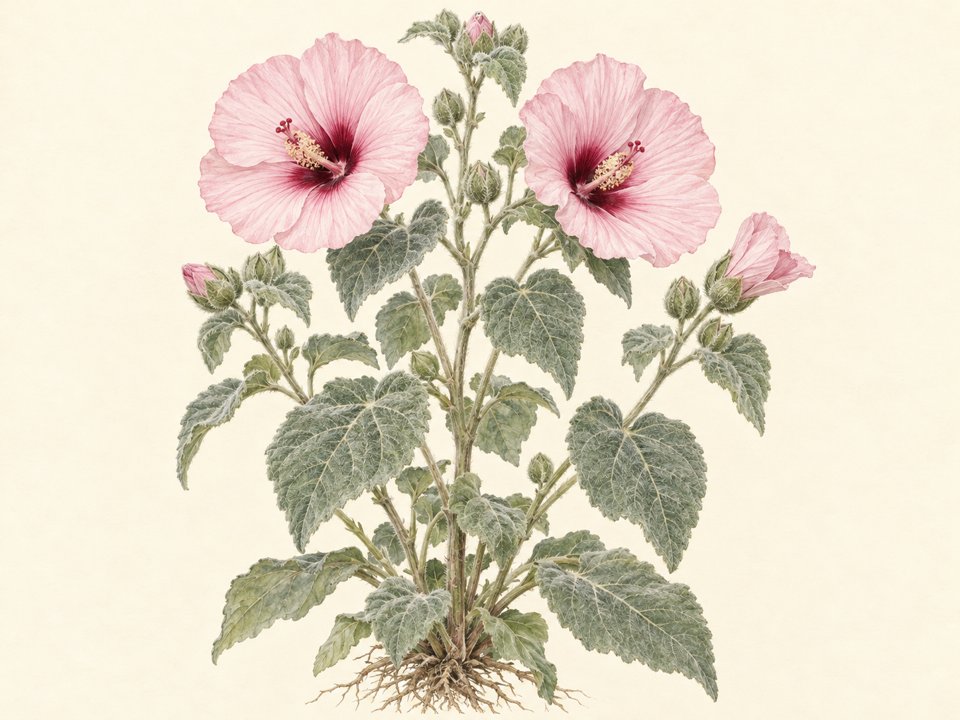
Wooly Rosemallow (Hibiscus lasiocarpos) is a native hibiscus with large pale summer blooms.
On this page
Its botanical name is Hibiscus lasiocarpos. It belongs to the medium shrubs and perennials group.
Wooly Rosemallow is a native perennial hibiscus with soft, hairy leaves and large white to pale pink flowers with a dark center through summer. It grows in full sun and tolerates wet or periodically moist soils.[1]
Light
Full sun produces the best flowering; tolerates some light shade.[2]
Soil and drainage
Average, medium-wet to wet soil; keep moist through the seasons; tolerates summer heat and humidity.[2]
Height
Up to about 8 ft tall, often shorter.[2]
When to Plant Wooly Rosemallow
Plant Wooly Rosemallow in fall or early spring in Central Texas. A fall planting establishes roots through the cool season. The plant is ready to grow and bloom the following year. Spring planting works too if you water through the first summer.[3]
If you would like a hand, the Texas Allied Landscape team can plant your Wooly Rosemallow and keep it thriving.
Planting
- Dig a hole twice as wide as the pot and no deeper, with sloping sides. Set the plant at the same depth it grew in its pot. Loosen any circling roots before backfilling.[4]
- For a new bed, clear grass and weeds first, roots and all.[4]
- For the site, it grows in full sun and tolerates wet or periodically moist soils.[1]
- For timing, a fall planting establishes roots through the cool season. The plant is ready to grow and bloom the following year. Spring planting works too if you water through the first summer.[3]
- Soak it well at planting and keep watering while the roots establish.[4] Once established, a fall planting has roots set through the cool season. The plant is ready to grow and bloom the following year. Spring planting works too if you water through the first summer.[3]
- Mulch 2 to 4 inches, kept a few inches away from the stems to prevent crown rot. It needs no staking or other support.[4]
Care Instructions for Your Wooly Rosemallow
How to Water a Wooly Rosemallow
Sunlight and soil
It prefers it. This is a swamp mallow, happiest with consistent moisture or even standing water. It tolerates ordinary garden beds if watered regularly.[5]
Winter and cold
Yes. It is herbaceous. Cut the dead stems to the ground after frost and it resprouts vigorously in late spring.[6]
Fruit and flowers
It blooms in summer. The huge showy flowers open over a long season. Each lasts a day or two but is followed by more buds.[7]
Woolly rosemallow questions
What is woolly rosemallow?
It is Hibiscus lasiocarpos, a native Texas perennial with dinner-plate white or pink hibiscus flowers. It grows to 6 ft in wet ground along ditches and pond edges.[8]
Does woolly rosemallow need wet soil?
It prefers it. This is a swamp mallow, happiest with consistent moisture or even standing water. It tolerates ordinary garden beds if watered regularly.[5]
When does woolly rosemallow bloom?
It blooms in summer. The huge showy flowers open over a long season. Each lasts a day or two but is followed by more buds.[7]
Does woolly rosemallow die back in winter?
Yes. It is herbaceous. Cut the dead stems to the ground after frost and it resprouts vigorously in late spring.[6]
Next step: Our horticulturalists can place woolly rosemallow in the low, wet corner of your yard where other flowers sulk.
Let Texas Allied Landscape care for your Wooly Rosemallow
Wooly Rosemallow does best with steady, knowledgeable care. That means the right water, pruning at the right time, and a trained eye for stress. The horticulturists at Texas Allied Landscape care for plants like yours across the San Antonio area. They bring over 40 years of landscape experience.
In these community guides
Sources
- Lady Bird Johnson Wildflower Center, "Hibiscus lasiocarpos"https://www.wildflower.org/plants/result.php?id_plant=HILA6ab
- Hibiscus moscheutos ssp. lasiocarpos (Woolly Rose-mallow), Lady Bird Johnson Wildflower Center.https://www.wildflower.org/plants/result.php?id_plant=HIMOLabc
- October Gardening Checklist, Travis County AgriLife Extension.https://travis-tx.tamu.edu/about-2/horticulture/monthly-gardening-calendar-for-austin-area/october-gardening-checklist-for-austin-and-central-texas/abc
- Back to basics: Planting perennials, SAWS Garden Style San Antonio.https://www.gardenstylesanantonio.com/garden-articles/back-to-basics-planting-perennials/abcd
- Native Plant Society of Texas, "Plant of the Month: Swamp Mallow."https://www.npsot.org/posts/plant-of-the-month-swamp-mallow/ab
- Native Plant Society of Texas, "Plant of the Month: Swamp Mallow."https://www.npsot.org/posts/plant-of-the-month-swamp-mallow/ab
- Native Plant Society of Texas, "Hibiscus moscheutos ssp. lasiocarpos."https://www.npsot.org/posts/native-plant/hibiscus-moscheutos-ssp-lasiocarpos/ab
- UT Austin Plant Resources Center, "Woolly Rose-mallow."https://w3.biosci.utexas.edu/prc/wildflowers/flower/hibiscus-lasiocarpos↑