
Property owners
George's Ranch Landscaping
One-acre Hill Country homesites with a natural-landscape vision written into the deed restrictions. Texas Allied Landscape plans, submits, builds and cares for George's Ranch yards.
Get a quoteOn this page
George's Ranch is a private, gated retreat on a historic 1,140-acre Hill Country ranch. It pairs one-acre homesites with a landscape vision written into its recorded restrictions. Front yards should read as natural Hill Country, not a sod grid.[1] [2] Texas Allied Landscape helps you plan a yard that fits that vision. We prepare the review package, build the approved design and care for it.
Plan, submit and build
Your George's Ranch approval timeline
Submit the full plan set as a PDF.
Final plans go to the ACC reviewer as a PDF. That includes the site plan and the landscape plans with fencing and walls. The ACC has up to 30 days to review each master plan and plot plan. The clock starts once the complete plan and related fees are submitted.[2]
Fence the envelope before work.
No construction begins until the ACC gives written approval. The building envelope must be fenced with orange construction fencing. Erosion controls must be in place. The design should respond to natural features. That keeps vegetation loss and grading minimal.[2]
Landscape on the ownership clock.
Landscaping begins within 30 days of the transfer of ownership. It is completed within 60 days.[2]
Pass the final compliance inspection.
When the improvements are complete, the ACC reviewer performs a final completion compliance inspection. Schedule inspections at least 7 days ahead. Re-inspection fees run $150 for a second inspection. A third costs $300. Each one after that costs $500.[2]
Landscape rules for your lot
The recorded Unit 1 declaration sets the landscape standards. Landscape Guidelines and an approved plant list are available from the management company.[2]
Lot setbacks
The declaration sets minimum setback lines for every lot: 50 feet at the front, 10 feet at the sides and 25 feet at the rear. The front line is measured from the 60-foot private roadway, drainage and utility easement shown on the plat. Owners are encouraged to place the home farther back than the minimum, and any structure or equipment in a setback area needs prior written ACC approval.[2]
Hover over the drawing to magnify it.Press and hold the drawing to magnify it.With a keyboard, focus the drawing and press Enter or Space to open the magnifier, use the arrow keys to move it and Escape to close it. Every distance is also listed below.
- Property boundary
- Building setback (no buildings past this line)
- Vegetation preserve (natural vegetation stays)
- Easement (utility or drainage access)
- Project footprint (proposed work)
The dashed lines mark where buildings may not go. Inside the setback lines, other limits (easements, ACC) still apply.
Band widths are drawn in proportion to each other; the lot is a schematic rectangle, not a survey.
The natural-blend vision
The declaration is explicit about the look. The front yard should be a natural-looking landscape. It should blend uniformly with the neighbors. Sod, grasses and plants are massed and curvilinear. Planting sod from property line to property line in a grid is called out as not the goal.[2]
Plants and turf
Use xeriscape-oriented or drought-tolerant plants. Use drip irrigation where possible. Plants must be Texas natives or adapted plants from the approved list. Tropical and non-indigenous plants such as palms, bananas and bamboo are not allowed. All grass must be native Bermuda. St. Augustine is prohibited for its water demand. Landscaping must also comply with the City of Boerne's conservation, drought and turf management regulations. They are recorded as an exhibit to the declaration.[2]
New and unimproved lots
Unimproved lots may stay in a native state. The ACC must find them undisturbed, vegetated and not unsightly. The area within 50 feet of the roadway must stay free of invasive weeds. Fire hazards such as dead timber must be removed. Existing gravel or dirt ranch roads must be remediated within 12 months of purchase. The association may also adopt oak wilt protection rules. Every owner must meet them.[2]
Right-of-ways and bar ditches
The roadways are private. Each owner maintains the non-paved right-of-way to the road's edge. Slow the water with hydro-mulched native grasses. Keep the lawn-to-roadway edge planted with sod or native landscaping. That is part of the lot's landscape plan. Keep any street monument area weed-free. Bull rock is not permitted without prior ACC approval.[2]
Choose plants that fit
The declaration points owners to Texas natives and adapted plants. It favors xeriscape thinking and drip irrigation. The approved plant list is available from the management company.[2]
Live Oak, Cedar Elm and Mountain Laurel are good starting points. So are Texas Sage, Lantana and Red Yucca. We can develop them into a plan for your lot. Every planting plan still goes to the ACC. The cards do not grant approval.
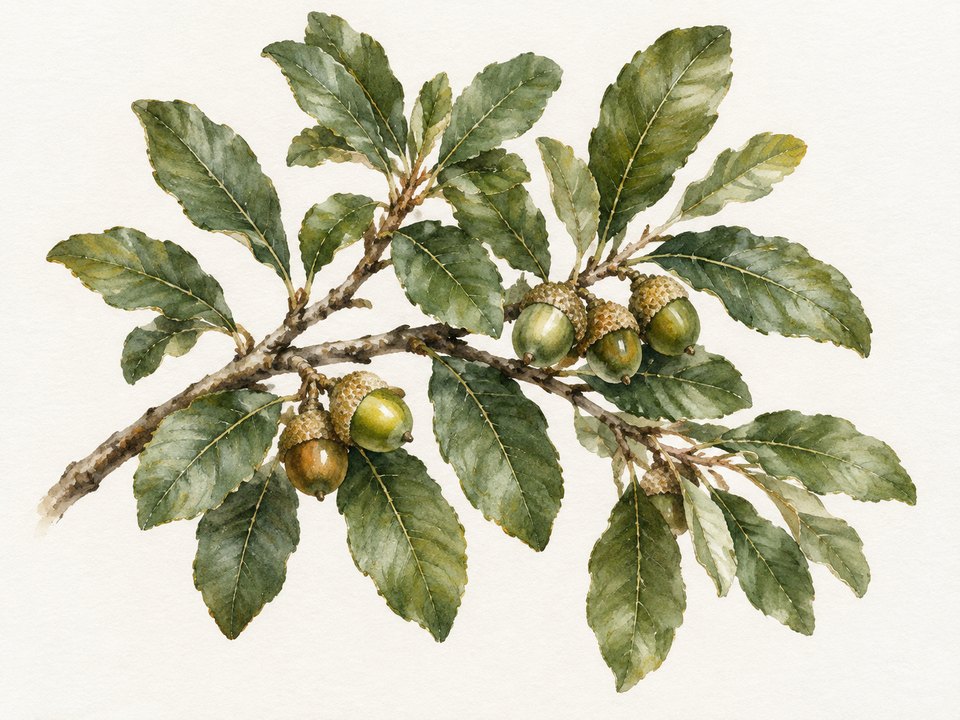 Illustration
Live OakQuercus virginianaIllustration 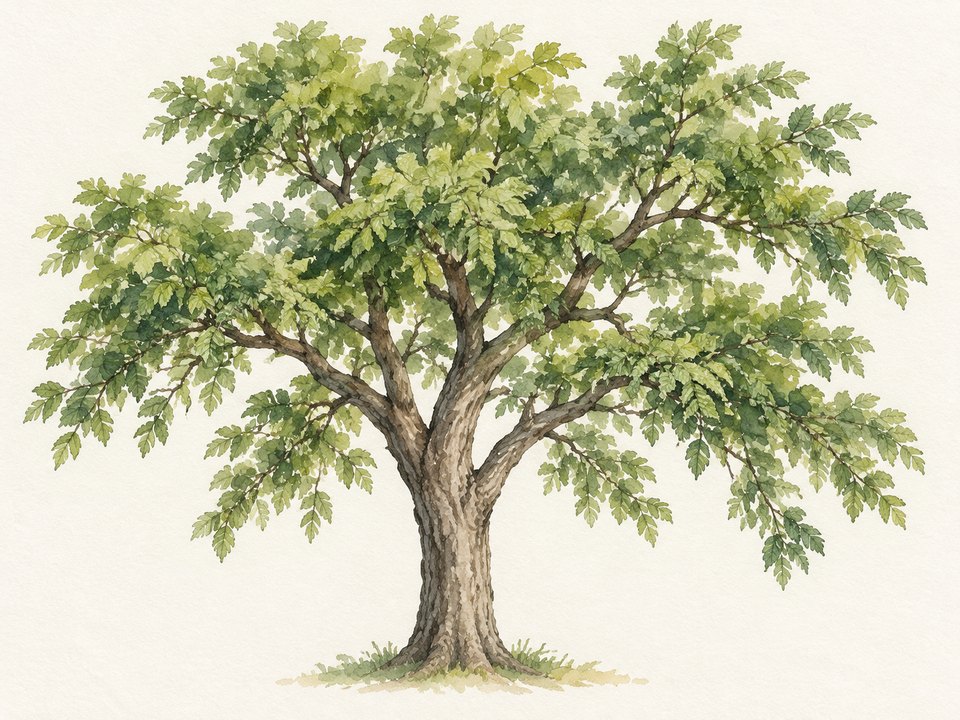 Illustration
Cedar ElmUlmus crassifoliaIllustration 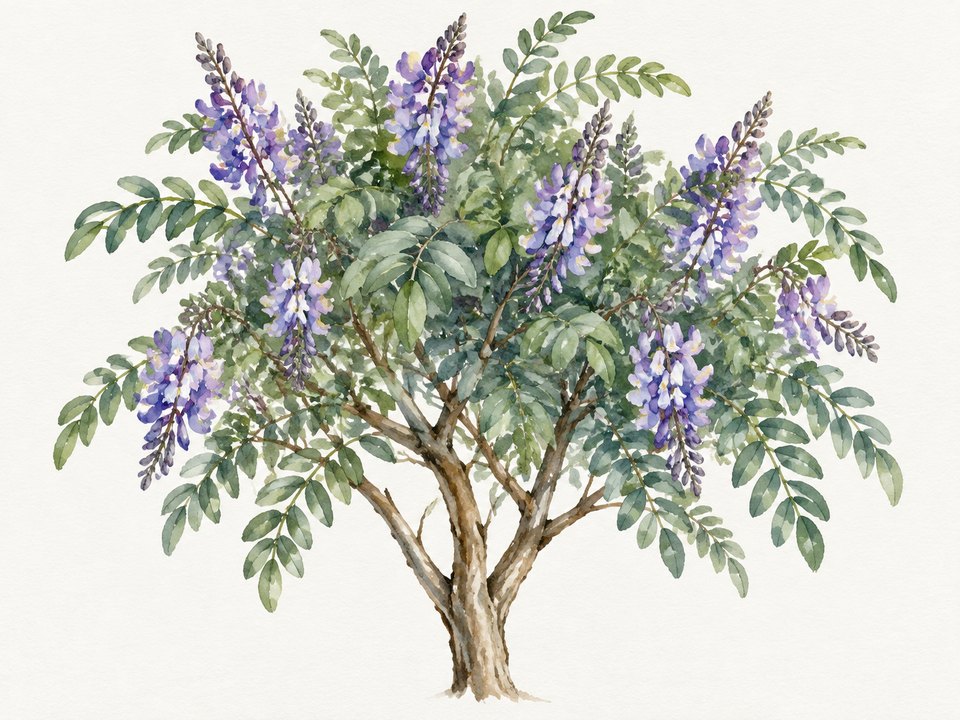 Illustration
Mountain LaurelSophora secundifloraIllustration 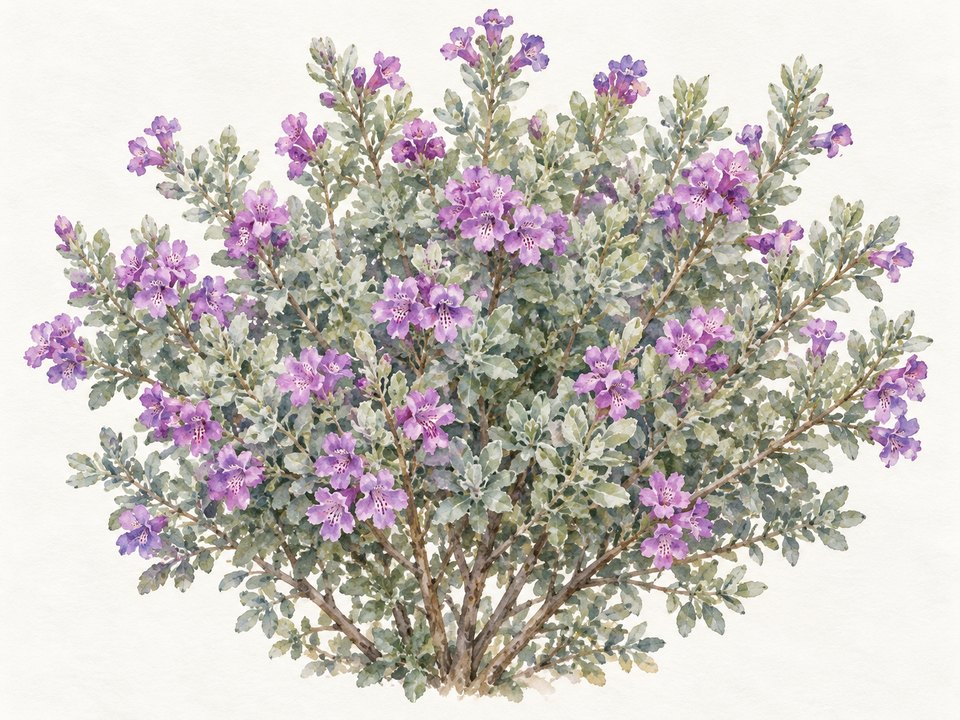 Illustration
Texas SageLeucophyllum frutescensIllustration  Illustration
LantanaLantana camaraIllustration 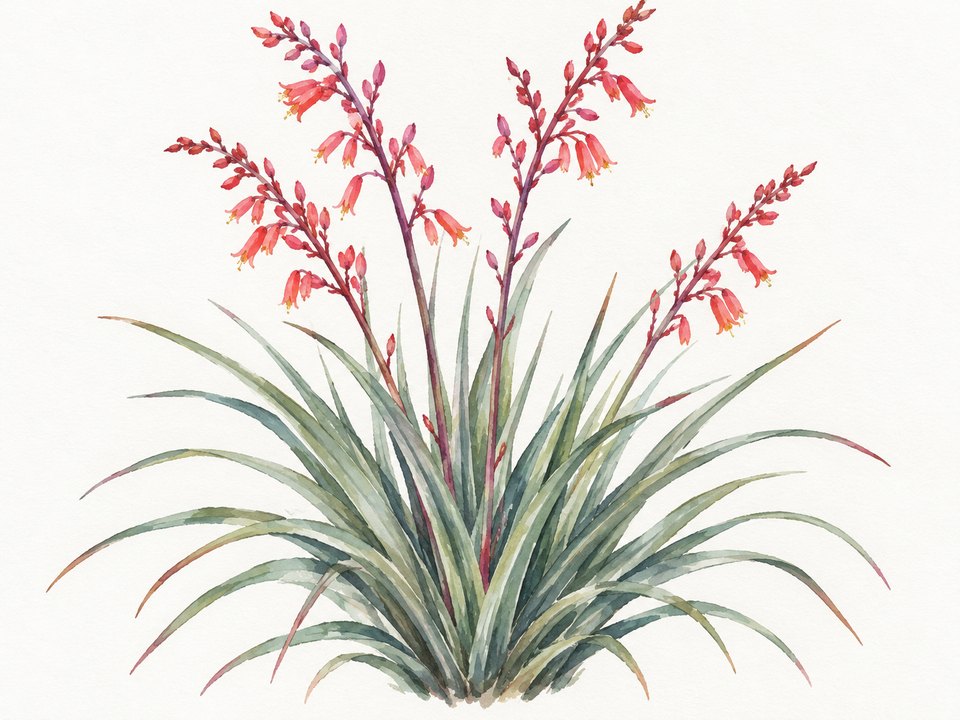 Illustration
Red YuccaHesperaloe parvifloraIllustration
Water and irrigation
The City of Boerne is the retail water provider inside Kendall County WCID No. 4A. It charges out-of-city rates. The declaration binds owners to the city's conservation and drought management regulations.[3] [2] Drip irrigation is the declaration's stated preference where possible. Rainfall harvesting is encouraged. It needs advance ACC approval of the technique, facilities, design and location.[2]
Lighting and exterior changes
George's Ranch is a dark-sky community. All residential lighting must comply with Kendall County's outdoor lighting order. It is recorded as an exhibit. Fixtures must conceal the light source. No bare lamp may be visible from the street or neighbors. Floodlights are prohibited. HID, sodium and mercury vapor yard lights are banned. Soffit and tree lights are shielded or aimed into vegetation.[2] Mailboxes need ACC approval. Sport courts sit behind the residence. They are not lit for night play without approval. No more than three feet of foundation slab may show.[2]
Review costs and contacts
Annual association dues are $770 for The Homestead and $870 for Adeline.[4] Closing-side charges on the recorded certificate include a $1,500 working capital fee. They also include a $340 transfer fee and a $375 resale certificate. ACC re-inspection fees run $150 to $500.[5] [2]
Goodwin & Company manages the association: PO Box 203310, Austin, TX 78720, 855-289-6007, info@goodwintx.com. Governing documents are on the community's TownSq portal.[5] ACC plan submissions and inspection scheduling go to the ACC reviewer at accreview@thelookoutoutgroup.com, as listed in the declaration.[2]
Plan your yard with Texas Allied Landscape
Bring us your George's Ranch address and survey. Tell us the changes you have in mind. We design the landscape to the community's natural-blend vision. We prepare the review package. We build the approved plan and care for it afterward. We also offer lawn care, plant health care, and irrigation checks and repairs.
George's Ranch landscape questions
What grass can I plant at George's Ranch?
Native Bermuda only. The recorded declaration prohibits St. Augustine because of its water demand.[2]
How long does ACC review take?
The ACC has up to 30 days to review a complete master plan or plot plan. The clock starts once it and the related fees are submitted. Inspections need at least 7 days' notice.[2]
How much are HOA dues at George's Ranch?
The community lists $770 per year for The Homestead and $870 per year for Adeline.[4]
Can I keep my acreage lot natural?
Unimproved lots may remain native. The ACC must find them undisturbed, vegetated and tidy. The first 50 feet from the roadway must stay free of invasive weeds. Dead timber must come out. Old gravel or dirt ranch roads must be remediated within 12 months of purchase.[2]
Is dark-sky lighting really required?
Yes. The declaration records Kendall County's outdoor lighting order as an exhibit. Light sources must be concealed. Bare lamps, floodlights, and HID, sodium or mercury vapor yard lights are not allowed.[2]
More community guides
Your community profile
Community profile
George's Ranch
1 permissive5 protective
| Design latitude | 4/5 |
|---|---|
| Approval scope | 5/5 |
| Approval layers | 1/5 |
| Approval cost | 3/5 |
| Plan preparation | 4/5 |
| Enforcement capability | — |
Higher means more documented control or burden, not a better community.
Design latitude
4/5
- 1
- 2
- 3
- 4 (this score)
- 5
How much of the plant and design palette is prescribed. A higher score means less design freedom.
Why this score
The declaration prescribes a natural, blended landscape vision, requires Texas native or approved adapted plants, bans tropical species, allows only native Bermuda grass and folds in the City of Boerne's turf and drought rules.
Approval scope
5/5
- 1
- 2
- 3
- 4
- 5 (this score)
How much exterior work needs written sign-off.
Why this score
No building, structure, improvement or exterior change may happen without written ACC approval, landscape plans are part of the required submittal, and a final compliance inspection closes the project.
Approval layers
1/5
- 1 (this score)
- 2
- 3
- 4
- 5
Counts distinct required community reviewers only. City, county and state permits, optional steps and repeat submissions are not counted.
Why this score
One architectural control committee reviews for the community.
Approval cost
3/5
- 1
- 2
- 3 (this score)
- 4
- 5
What the community's own approval process costs to apply.
Why this score
Documented re-inspection fees run $150 to $500, and buyers pay a $1,500 working capital fee plus a $340 transfer fee at closing.
Plan preparation
4/5
- 1
- 2
- 3
- 4 (this score)
- 5
How much drawing and documentation an application needs.
Why this score
Submittals are a full PDF plan set with site and landscape plans, colors, materials and impervious cover, with inspections scheduled 7 days ahead.
Enforcement capability
—
- 1
- 2
- 3
- 4
- 5
Which remedies the verified governing documents and adopted policies provide. The score reflects verified documented provisions, not observed enforcement practice or legal conclusions. Not finding an express clause is not a conclusion that no authority exists.
George's Ranch sits in Kendall County outside Boerne. The land was once owned by George Wilkins Kendall, the county's namesake. Homes run from the $900s to over $2 million. Builders include Drees, Perry and Toll Brothers. Custom builders work in the Adeline section. Owners may bring their own builder under the community's architectural guidelines.[1] [6] The community is zoned to Boerne ISD schools.[4]
The George's Ranch Homeowner's Association, Inc. is managed by Goodwin & Company. Architectural review is handled by the community's ACC reviewer.[5] [2] The association lists annual dues of $770 for The Homestead section and $870 for Adeline.[4]
The ratings reflect the recorded standards. One ACC reviews plans within a 30-day window. A documented landscape vision sets a required plant palette. Kendall County's dark-sky lighting order and the City of Boerne's water rules are folded into the declaration.[2]
Sources
- George's Ranch official community site, checked November 15, 2026.https://georgesranch.com/ab
- Covenants, Conditions, and Restrictions for George's Ranch Unit One (Kendall County Doc. 2024-386496), Sections 3.01, 3.07, 3.16, 3.44-3.51, published by the community.https://georgesranch.com/wp-content/uploads/2024/11/GKR-CCR-compressed.pdfabcdefghijklmnopqrstuvwxyz27
- Kendall County Water Control and Improvement District No. 4A FAQ (2024), published by the community.https://georgesranch.com/wp-content/uploads/2024/09/KCWCID_4A_FAQ_2024.pdf↑
- Community resources (dues, schools, utilities), George's Ranch official site, checked November 15, 2026.https://georgesranch.com/resources/abcd
- Management Certificate, George's Ranch Homeowner's Association, Inc., Kendall County Doc. 2025-396198 (recorded February 11, 2025), Texas HOA registry.https://www.hoa.texas.gov/sites/default/files/certificates/105038/13383-25356/am/George%26%23039%3Bs%20Ranch%20%28KENDALL%29%20Mgmt%20Cert%20%282025-396198%29.pdfabc
- Builders and pricing, George's Ranch official site, checked November 15, 2026.https://georgesranch.com/builders/↑