
Property owners
Texas Sage
- Plant
- Texas Sage
- Botanical name
- Leucophyllum frutescens
- Group
- Large shrubs
Texas Sage (Leucophyllum frutescens): light, water, soil, size and care for San Antonio area landscapes.
On this page
Its botanical name is Leucophyllum frutescens.
Light
Full sun.[1]
Soil and drainage
It is native to the calcareous soils of the South Texas Plains/Trans-Pecos. It needs good drainage.[2]
Height
It reaches 5-8 ft. Another source notes around 6 ft tall, with 'Compacta' at 4 ft and 'Microburst' at 3.5 ft.
Spread
It spreads 4-5 ft. Another source notes about 6 ft wide.
Foliage
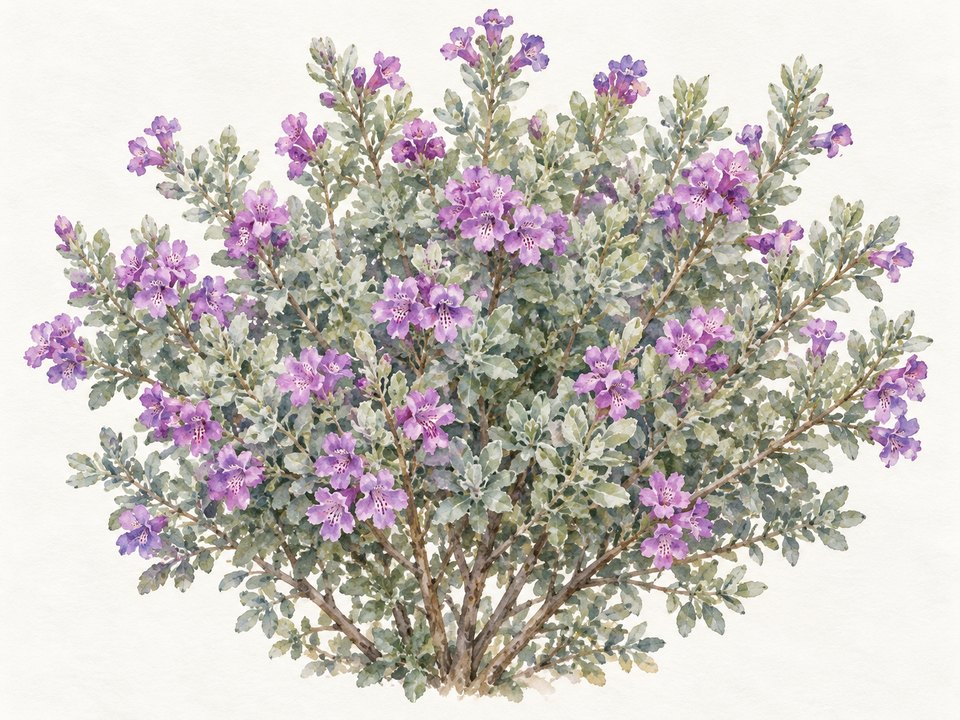
It is evergreen with silver-green foliage.
Water
It has low water needs per the Austin plant guide. If watering ever feels like a guessing game, our horticulturists can care for your Texas Sage on a schedule that fits your yard.
Pruning
It flowers on new wood. Prune in early to mid-spring, then do light shaping for the rest of the year. Stop pruning in fall ahead of winter dormancy.
Seasonal behavior
It is called barometer bush for its habit of flowering after seasonal rain. It typically begins blooming in early summer and sporadically thereafter. Its flowers are pink to mauve, and also white.
When to Plant Texas Sage
Fall, October through November, and late winter into early spring are the best times to plant Texas Sage in Central Texas. Cooler months give the roots time to establish before summer heat.[3]
Container-grown shrubs can go in at other times if you keep up with watering. Avoid planting in the peak of summer.
If you would like a hand, the Texas Allied Landscape team can plant your Texas Sage and keep it thriving.
Planting
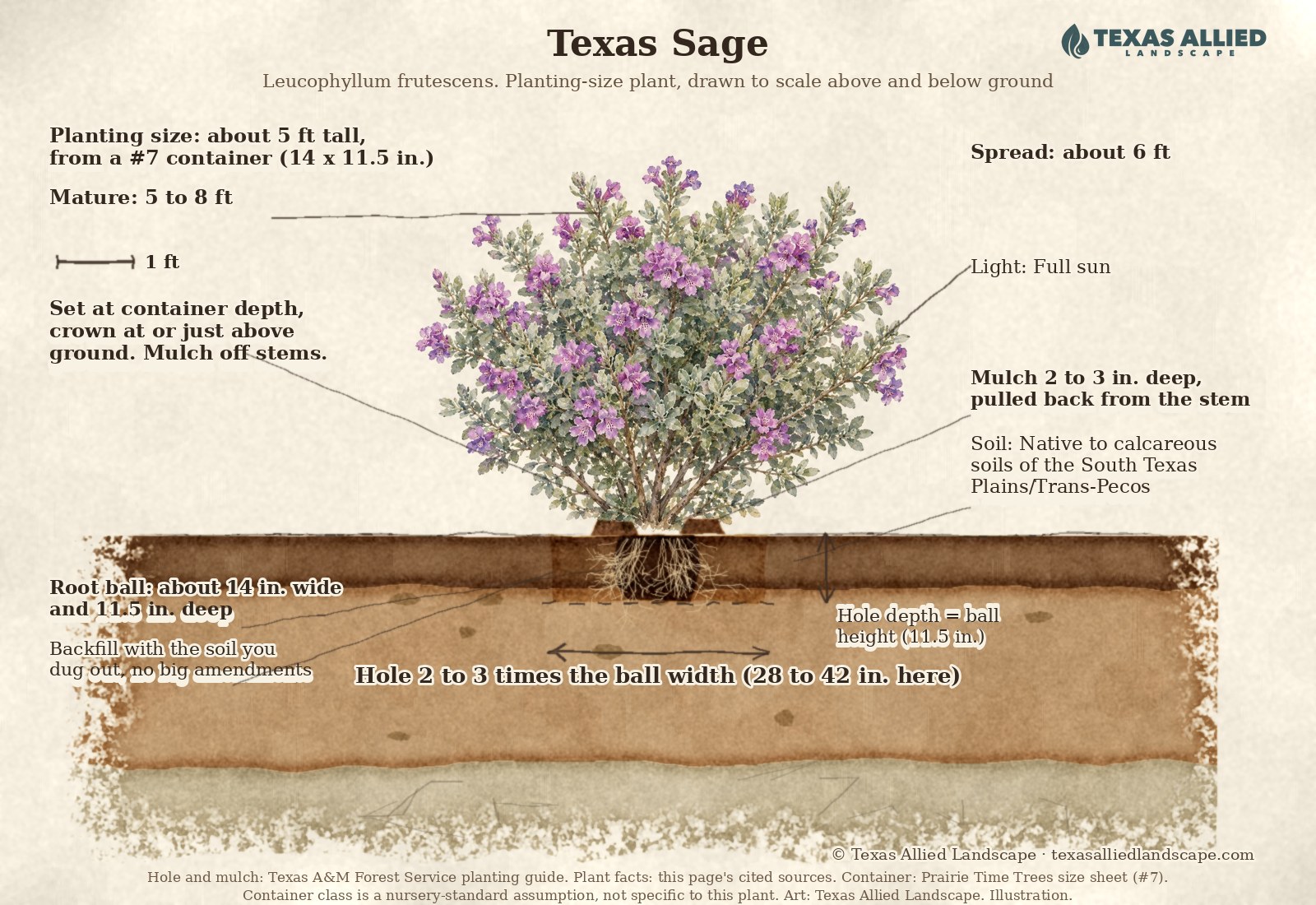
- Dig a hole at least twice as wide as the root ball and no deeper. This lets the roots grow out into the surrounding soil.[4]
- Fill the empty hole with water and check the drainage. If it takes longer than 24 hours to drain, choose another spot. Roots sitting under water will kill the plant.[4]
- Set it with the root collar (where the stems meet the roots) level with the ground. Take off the container and any twine or bags before backfilling.[4]
- Backfill with the same soil that came out of the hole, without amendments. Settle it with water rather than packing it down.[4]
- For site and soil, it needs full sun.[1] It is native to the calcareous soils of the South Texas Plains/Trans-Pecos. It needs good drainage.[2]
- For timing, fall, October through November, and late winter into early spring are the best times to plant Texas Sage in Central Texas.
- Water regularly through the first growing season while the roots establish, without overwatering. A thorough soaking beats light, frequent watering.[4]
- Mulch 2 to 3 inches deep, up to but not touching the stems. It needs no staking or other support. Do not fertilize during the first growing season.[4]
Why is my Texas sage getting leggy and sparse?
Texas sage gets leggy without pruning. Prune in early to mid-spring, since flowers form on new wood. Shape it lightly through the year and stop in fall.[5]
Why did my Texas sage suddenly burst into bloom?
Texas sage is called barometer bush for its habit of flowering after seasonal rains. This is a normal and celebrated behavior, not a problem.
Care Instructions for Your Texas Sage
How to Water a Texas Sage
It has low water needs per the Austin plant guide.
Sunlight
Full sun.[1]
Soil and drainage
It is native to the calcareous soils of the South Texas Plains/Trans-Pecos. It needs good drainage.[2]
Mature height and spread
It reaches 5-8 ft. Another source notes around 6 ft tall, with 'Compacta' at 4 ft and 'Microburst' at 3.5 ft. It spreads 4-5 ft. Another source notes about 6 ft wide.
Pruning
It flowers on new wood. Prune in early to mid-spring, then do light shaping for the rest of the year. Stop pruning in fall ahead of winter dormancy.
Normal seasonal behavior
It is called barometer bush for its habit of flowering after seasonal rain. It typically begins blooming in early summer and sporadically thereafter. Its flowers are pink to mauve, and also white.
Questions about Texas Sage
What light does it need?
Full sun.[1]
What soil and drainage does it need?
It is native to the calcareous soils of the South Texas Plains/Trans-Pecos. It needs good drainage.[2]
Why isn't my Texas sage blooming?
Texas sage, or cenizo, is nicknamed the barometer bush because it bursts into purple bloom when humidity rises, usually after a rain. A plant in full sun that never blooms is often getting too much water or too much shade. Ease off the irrigation and give it sun, and it will do its job.[6]
Next step: Our horticulturalists can dial in your watering so your Texas sage blooms on every summer rain.
Why is my Texas sage dying?
The two killers are water and cold. Texas sage rots in soil that stays wet, so drainage matters more than anything. A hard winter can burn or kill older plants. Plant it high, in soil that drains fast. Prune out cold damage after the last freeze.[7]
Keep in mind: Dead sections after a hard freeze are cold damage; decline in wet soil is root trouble. The fix is different for each.
Next step: If drainage is the issue, Texas Allied Landscape can rebuild the bed so Texas sage and other natives finally take off.
How should I prune Texas sage?
Prune it lightly and only occasionally. Trim for shape in early spring and let the plant keep its loose, natural form. Heavy shearing into tight balls weakens it over time. Never cut back hard into old bare wood expecting it to flush out.[8]
How big does Texas sage get?
Most Texas sage plants settle in at 5 to 8 feet tall and wide over time, with compact varieties staying smaller. Give it room so you are not fighting its size with pruning.[9]
Next step: Our horticulturalists can pick the right sage variety for the exact space you have.
Let Texas Allied Landscape care for your Texas Sage
Texas Sage does best with steady, knowledgeable care. That means the right water, pruning at the right time, and a trained eye for stress. The horticulturists at Texas Allied Landscape care for plants like yours across the San Antonio area. They bring over 40 years of landscape experience.
In these community guides
Illustration. Illustration based on reference photos of Vicinia. Not a single literal view. Vicinia Landscaping
Bring your address, survey and ideas. Texas Allied Landscape helps check the rules, design the space and prepare for…
Illustration. Illustration based on reference photos of Stone Oak. Not a single literal view. Stone Oak Landscaping
Bring your Stone Oak address, survey and ideas. Texas Allied can plan the yard, prepare the review package, build it…
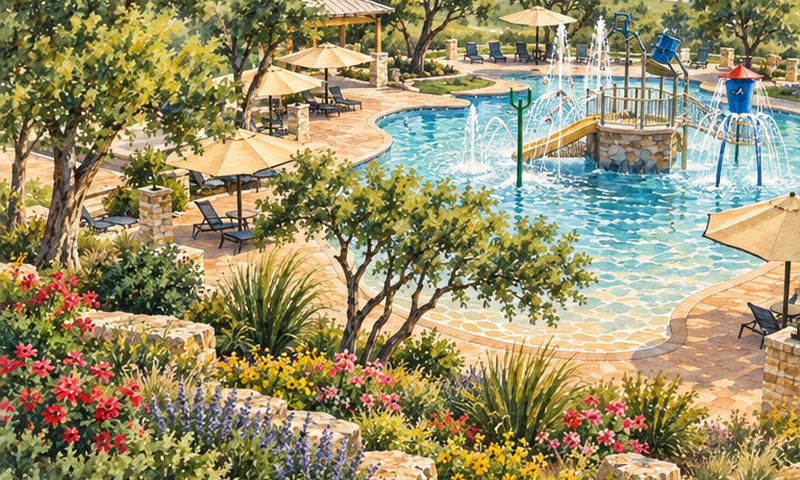
Illustration. Illustration based on reference photos of Alamo Ranch. Not a single literal view. Alamo Ranch Landscaping
Bring your yard ideas and survey. Texas Allied Landscape helps plan planting and irrigation, prepare review details and…
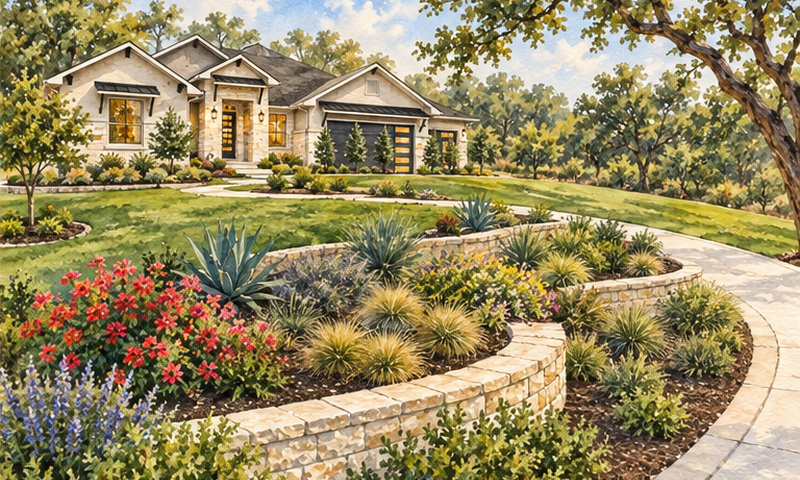
Illustration. Illustration based on reference photos of Arbors of Fair Oaks. Not a single literal view. Arbors of Fair Oaks Landscaping
Bring your address, unit and yard ideas. Texas Allied Landscape helps design the planting and irrigation, prepare the…
- Art in progress
Canyon Springs Landscaping
Bring your address, survey and yard ideas. We help check your section rules, prepare the review package and build the…

Illustration. Illustration based on reference photos of Cibolo Canyons. Not a single literal view. Cibolo Canyons Landscaping
Bring your address, survey and yard ideas. We help check your section's rules, prepare the review package and build the…
- Art in progress
Cordillera Ranch Landscaping
Bring your address, survey and yard ideas. We check the right guideline set, plan planting and irrigation, prepare the…
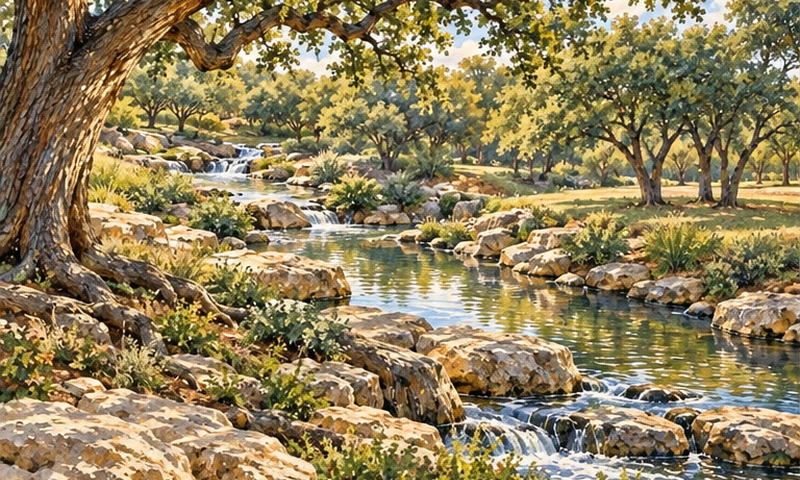
Illustration. Illustration based on reference photos of The Dominion. Not a single literal view. The Dominion Landscaping
Plan your Dominion landscape with help on planting, irrigation and the ACC package. We check your lot's standards and…
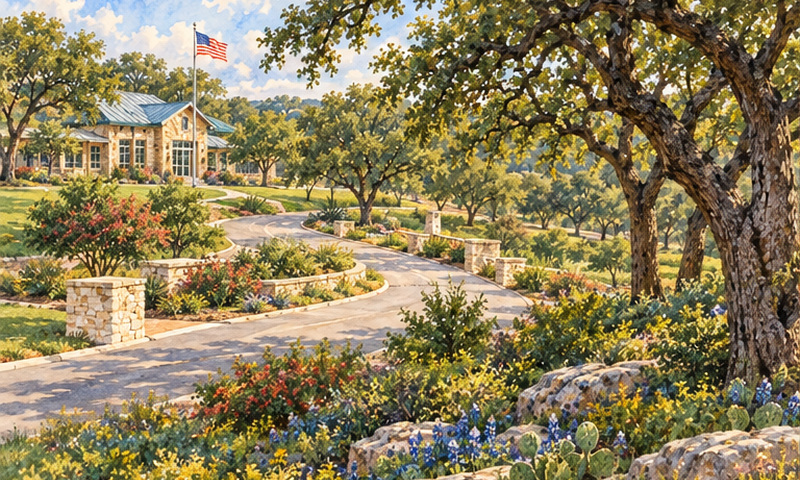
Illustration. Illustration based on reference photos of Encino Park. Not a single literal view. Encino Park Landscaping
Plan an Encino Park landscape with help on plants, irrigation and the review package. We confirm your association and…
- Art in progress
Esperanza Landscaping
Plan your Esperanza landscape with help on plants, irrigation and the approval package. We check your neighborhood, lot…
- Art in progress
Homestead Landscaping
Share your Homestead address, survey and yard ideas with Texas Allied Landscape. We help prepare a clear plan for…
- Art in progress
Inwood Landscaping
Share your Inwood address, survey and yard ideas with Texas Allied Landscape. We help plan planting, irrigation and…

Illustration. Illustration based on reference photos of John Newcombe Estates. Not a single literal view. John Newcombe Estates Landscaper and Landscaping
Request a quote for your John Newcombe Estates yard. Share your address, survey and yard ideas with Texas Allied…

Illustration. Illustration based on reference photos of Johnson Ranch. Not a single literal view. Johnson Ranch Landscaping
Share your Johnson Ranch address, survey and yard ideas. Texas Allied Landscape can help plan planting, irrigation and…
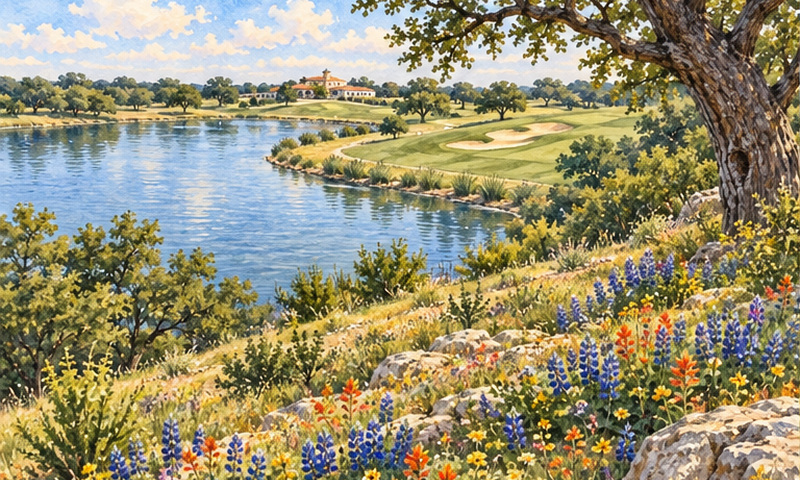
Illustration. Illustration based on reference photos of Mission del Lago. Not a single literal view. Mission del Lago Landscaping
Plan planting, lawn and irrigation for your Mission del Lago address. Get help with the review package, approved work…
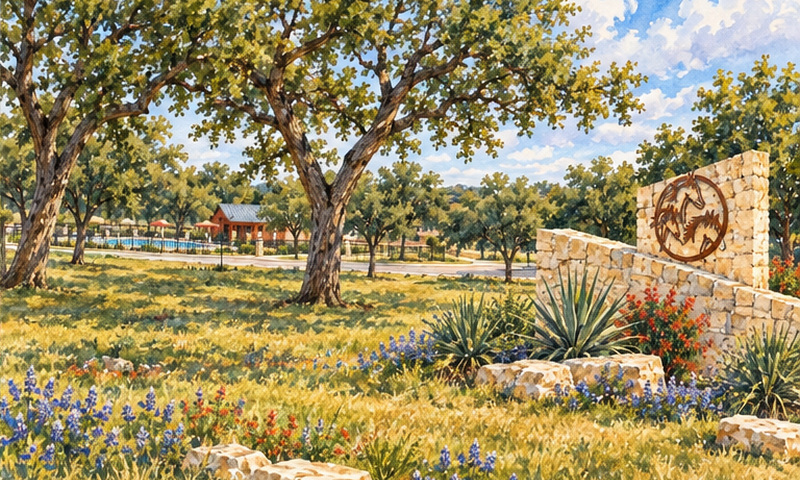
Illustration. Illustration based on reference photos of Remuda Ranch. Not a single literal view. Remuda Ranch Landscaping
Plan your Remuda Ranch yard with planting, lawn and irrigation guidance. Get help from the review package through…
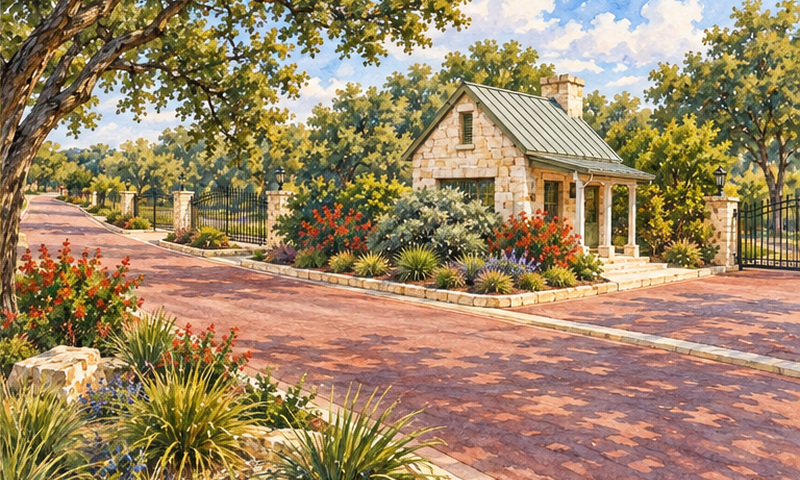
Illustration. Illustration based on reference photos of Rogers Ranch - Point Bluff and other neighborhoods. Not a single literal view. Rogers Ranch Landscaping
Plan your Rogers Ranch landscape with lawn, tree and irrigation guidance. Get help with the review package, approved…
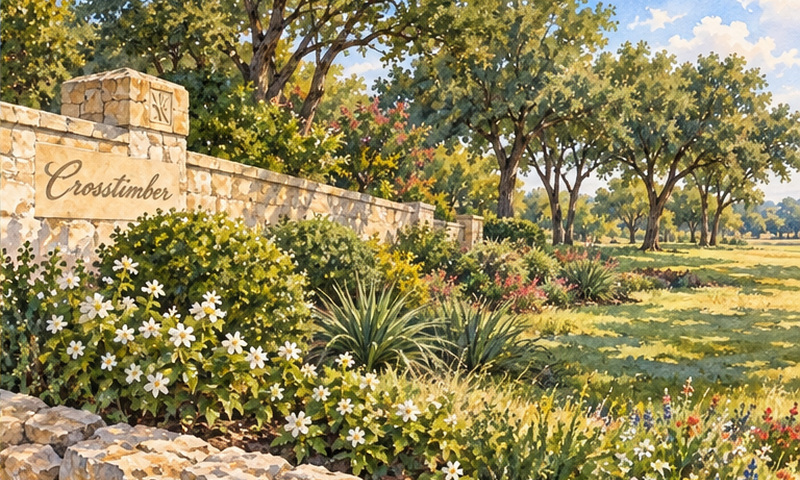
Illustration. Illustration based on reference photos of Shavano Rogers Ranch - Crosstimber. Not a single literal view. Crosstimber Landscaping
Plan your Crosstimber plants, shade and irrigation. Get help matching your lot rules, preparing the review package and…
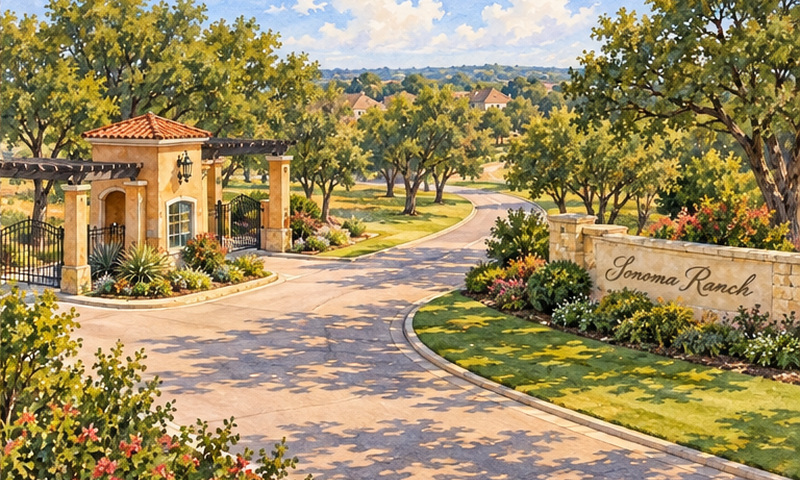
Illustration. Illustration based on reference photos of Sonoma Ranch. Not a single literal view. Sonoma Ranch Landscaping
Bring your Sonoma Ranch address and ideas. Texas Allied can design the yard, prepare the review package, build the…
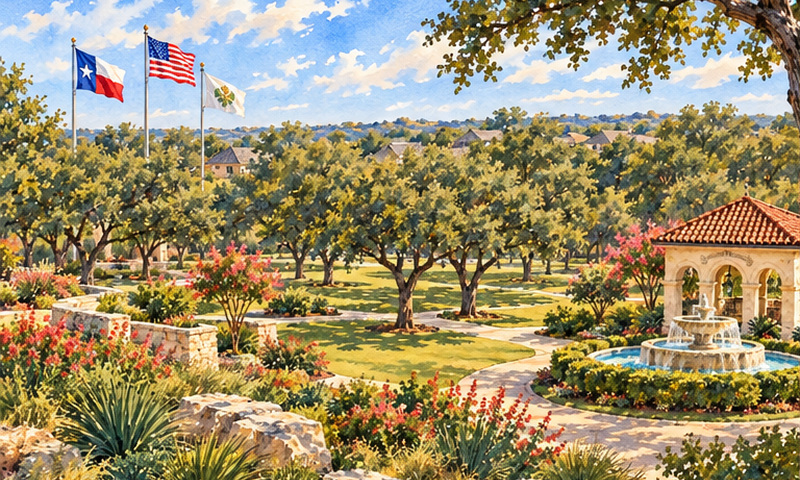
Illustration. Illustration based on reference photos of Sonterra. Not a single literal view. Sonterra Landscaping
Bring your Sonterra address and ideas. Texas Allied can design the yard, prepare the review package, build the approved…
- Art in progress
The Springs at Stone Oak Landscaping
Bring your address and ideas for The Springs at Stone Oak. Texas Allied can design the yard, prepare the review…
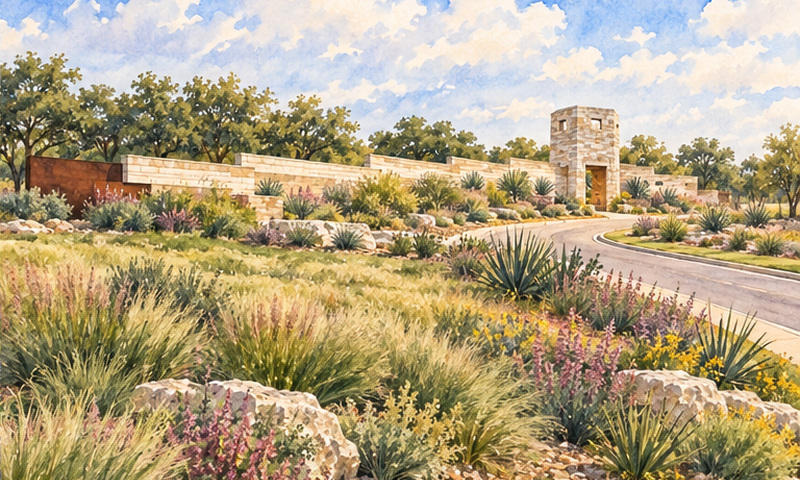
Illustration. Illustration based on reference photos of Turning Stone. Not a single literal view. Turning Stone Landscaping
Bring your Turning Stone address, survey and ideas. Texas Allied can design the yard, prepare the review package, build…
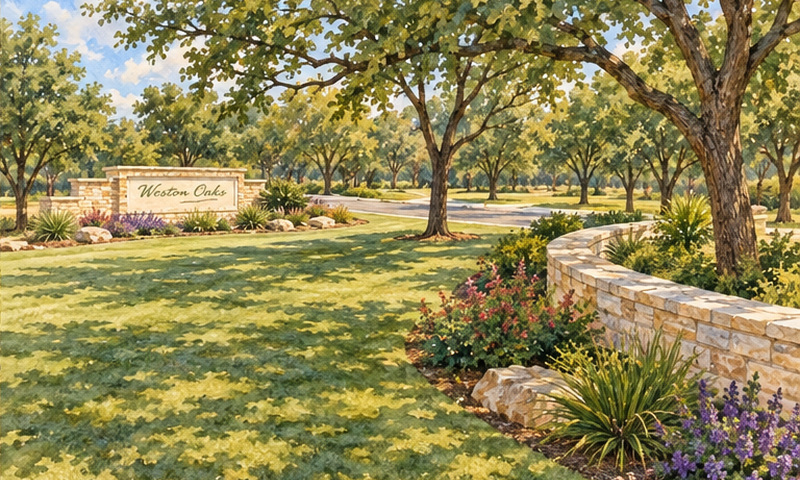
Illustration. Illustration based on reference photos of Weston Oaks. Not a single literal view. Weston Oaks Landscaping
Bring your Weston Oaks address and ideas. Texas Allied can check your unit rules, plan the yard, prepare the review…
Sources
- Sage, Texas (Leucophyllum frutescens), City of Austin Watershed Protection Grow Green Guide.https://www.austintexas.gov/watershed-protection/plant-guide/sage-texasabcd
- Texas Sage Brings Color to Drought Tolerant Landscapes, Brazos County AgriLife Extension Service.https://txmg.org/brazos/texas-sage-article/abcd
- October Gardening Checklist, Travis County AgriLife Extension.https://travis-tx.tamu.edu/about-2/horticulture/monthly-gardening-calendar-for-austin-area/october-gardening-checklist-for-austin-and-central-texas/↑
- Planting, Texas A&M Forest Service.https://tfsweb.tamu.edu/trees/tree-care/planting/abcdef
- When Should I Prune Texas Sage?, Lady Bird Johnson Wildflower Center.https://www.wildflower.org/expert/show.php?id=12458↑
- Brazos County Master Gardeners, "Texas sage."https://txmg.org/brazos/texas-sage-article/↑
- Neil Sperry, "Cold winters likely cause of damage to mature Texas sage shrubs."https://www.timesrecordnews.com/story/life/2016/01/09/gardeners-mailbag-sperry-cold-winters-likely-cause-of-damage-to-mature-texas-sage-shrubs/92487100/↑
- Lady Bird Johnson Wildflower Center, "When should I prune Texas sage?"https://www.wildflower.org/expert/show.php?id=12458↑
- Better Homes & Gardens, "How to plant and grow Texas sage."https://www.bhg.com/how-to-plant-and-grow-texas-sage-8286146↑