
Property owners
Turning Stone Landscaping
Make your Turning Stone yard a place to relax and gather. Texas Allied Landscape can design planting, irrigation and outdoor spaces, prepare the review package and build the approved plan.
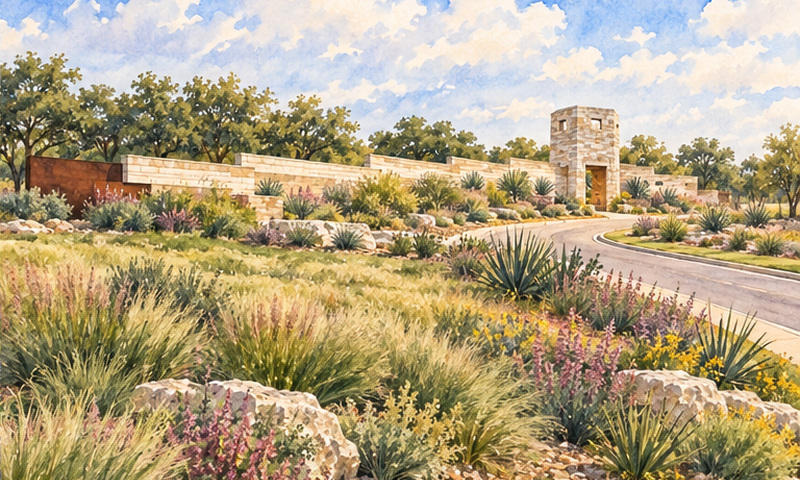
Get a quoteIllustration based on reference photos of Turning Stone. Not a single literal view.
On this page
Make your Turning Stone yard a place to relax, gather and enjoy time outside. Texas Allied Landscape can bring planting, irrigation and outdoor spaces into one plan that fits your home. We can prepare the review package, build the approved design and care for the finished yard. Start with your address, survey and ideas. Then the plan can fit your section's rules and the way you live.
Know your neighborhood and your section
Pools, parks and neighborhood events give Turning Stone places to relax and connect in Cibolo.[1] Your own yard can add a comfortable outdoor space close to home.
Match your lot to its rules before design. The master rules begin with Units E-1 and W-1. Later land can be added through recorded supplements. The posted package includes the E-1/W-1 supplement, five master amendments through 2018 and a 2014 fine policy.[2] [3] [4] [5]
Mesa at Turning Stone has separate unit supplements and amendments. Some addresses may also have a sub-association. Design guidelines, added rules and a Water Pollution and Abatement Plan can add requirements. Confirm the full set and approval route for your address.[2] [3]
Prepare your plan and get approval
Get written approval before visible landscape work starts. Approval covers work that is built, put up, removed, planted or maintained. Small changes may also need a plan if they can be seen from another lot or the street.[2]
Show the type of work, shape, height, materials, floor plans, colors and location. The main contractor for landscape construction also needs the committee's written approval before work. Confirm the full plan package, including anything the design guidelines add.[2]
Submit the plan and contractor for written approval.
Include the plans and details needed for your project. Allow 30 days for an answer. No answer means denial, so do not treat silence as permission to start.[2]
Build after written approval.
Keep the approved plan and conditions with your contractor. Texas Allied can prepare the package and follow the approved design.[2]
Fit the layout, materials and screening
Keep rock and other material besides mulch or vegetation to no more than 10% of the front yard. ACC-approved driveways and sidewalks are excluded from that limit. Plan beds, lawn and paths around this cap before choosing materials.[2]
Screen trash receptacles from view with landscaping or fencing.[2]
Get ACC consent before fence work. The ACC may require vegetation screening. Unless it approves another option, use cedar or spruce with steel posts, or wrought iron, no more than six feet high. Chain link is prohibited. Wooden slats must touch.[4]
Fence staining needs ACC approval. The designated finish for owner cedar-plank fences is semi-transparent Olympic Rustic Cedar. An equivalent semi-transparent stain and color from another brand also works.[4]
Confirm any lot-specific setbacks and easements from the applicable records and survey. This guide does not add setback dimensions or a lot diagram that the earlier review did not establish.
Choose plants and plan oak care
Build a water-wise planting plan around your yard's sun, soil and existing trees. The plants below are ideas to develop and submit for review. They are not a verified community-approved list.
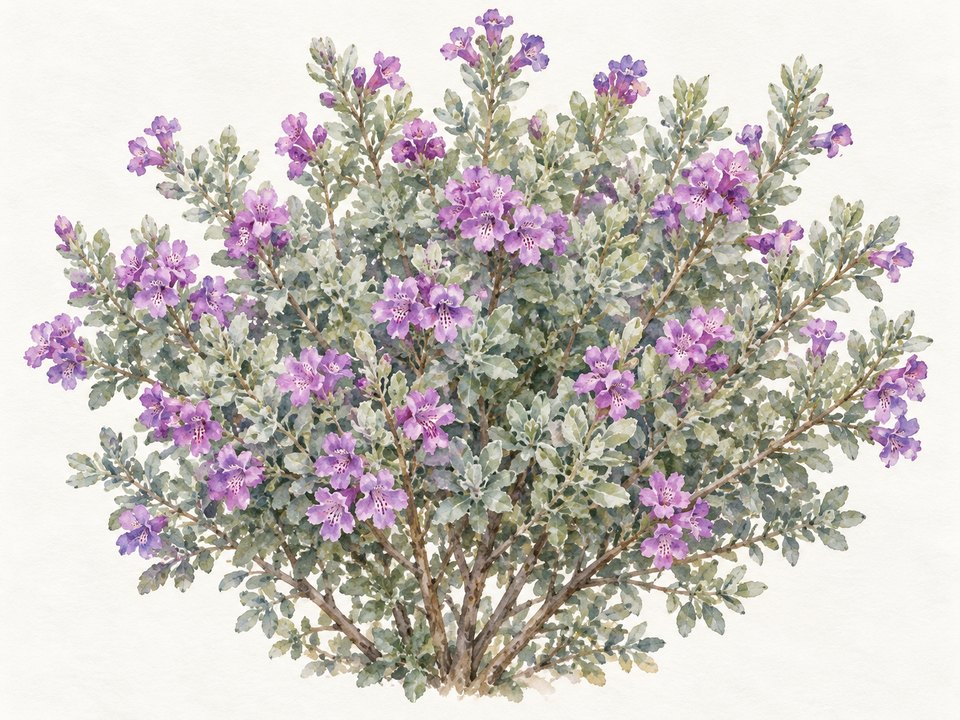
A proposed palette can include Texas Sage, Lantana, Red Yucca, Autumn Sage and Gold Star Esperanza. Cedar Elm and carefully maintained Live Oak add structure and shade. The cards illustrate these plants. They do not grant planting approval.
 Illustration
Texas SageLeucophyllum frutescensIllustration  Illustration
LantanaLantana camaraIllustration  Illustration
Red YuccaHesperaloe parvifloraIllustration 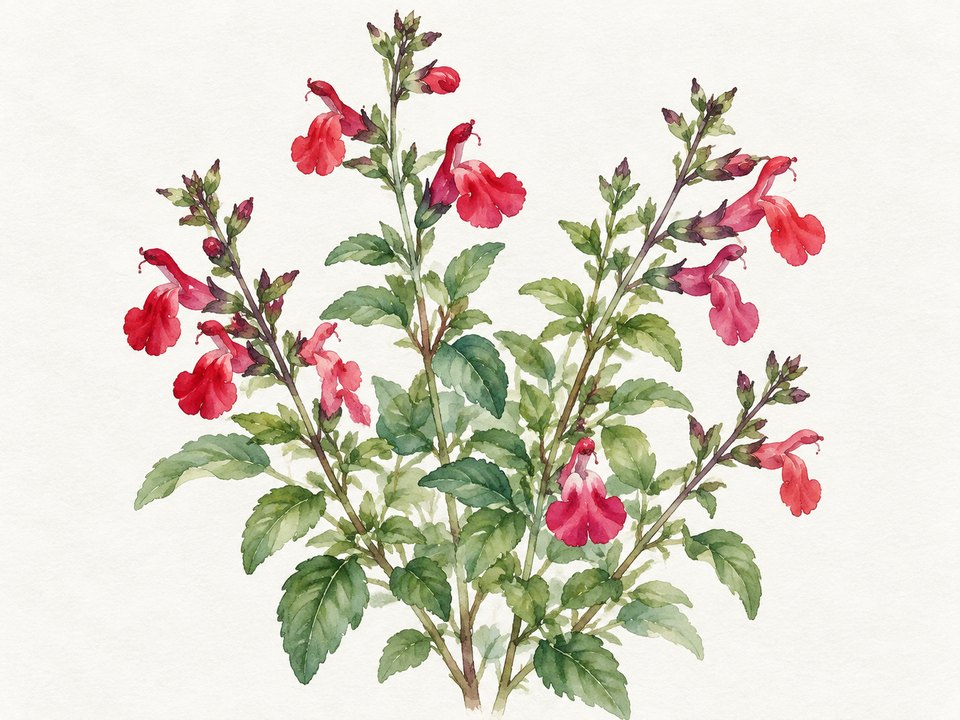 Illustration
Salvia GreggiiSalvia greggiiIllustration 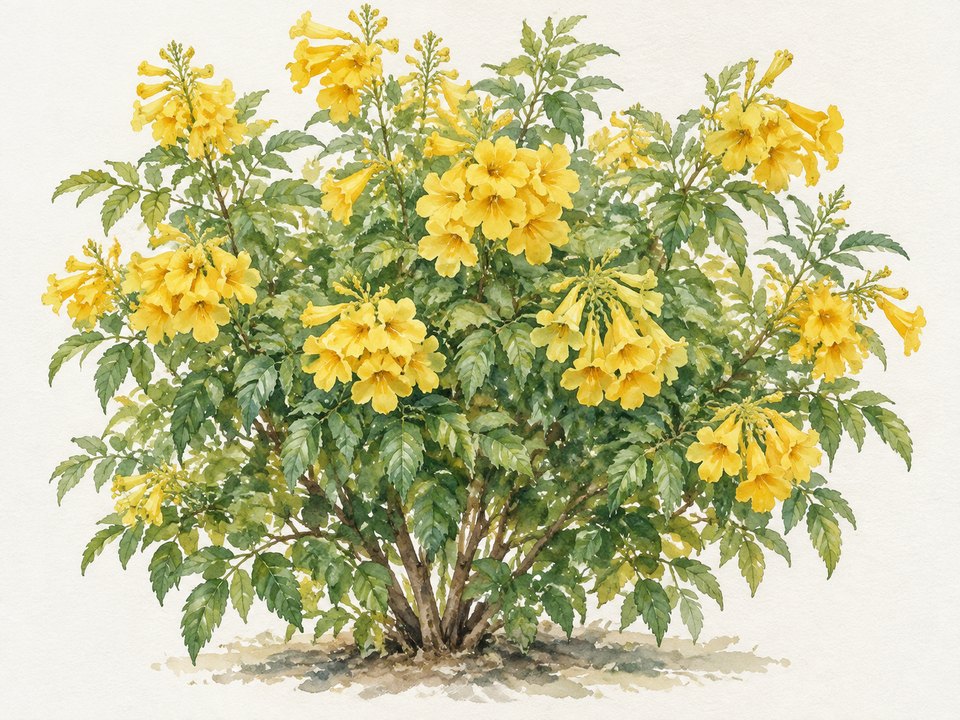 Illustration
EsperanzaTecoma stansIllustration 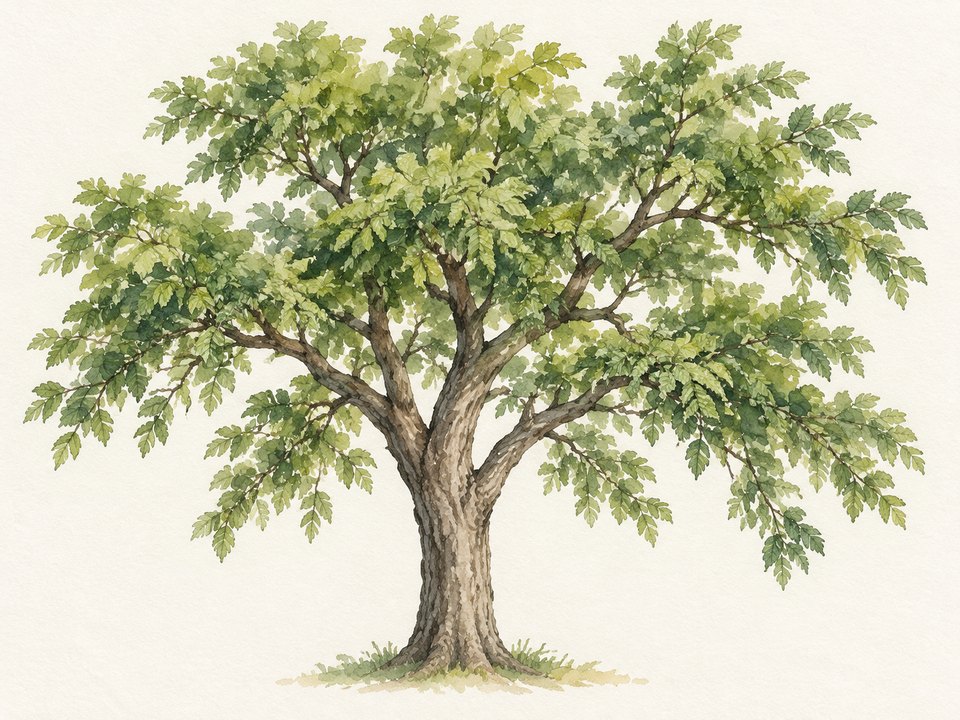 Illustration
Cedar ElmUlmus crassifoliaIllustration 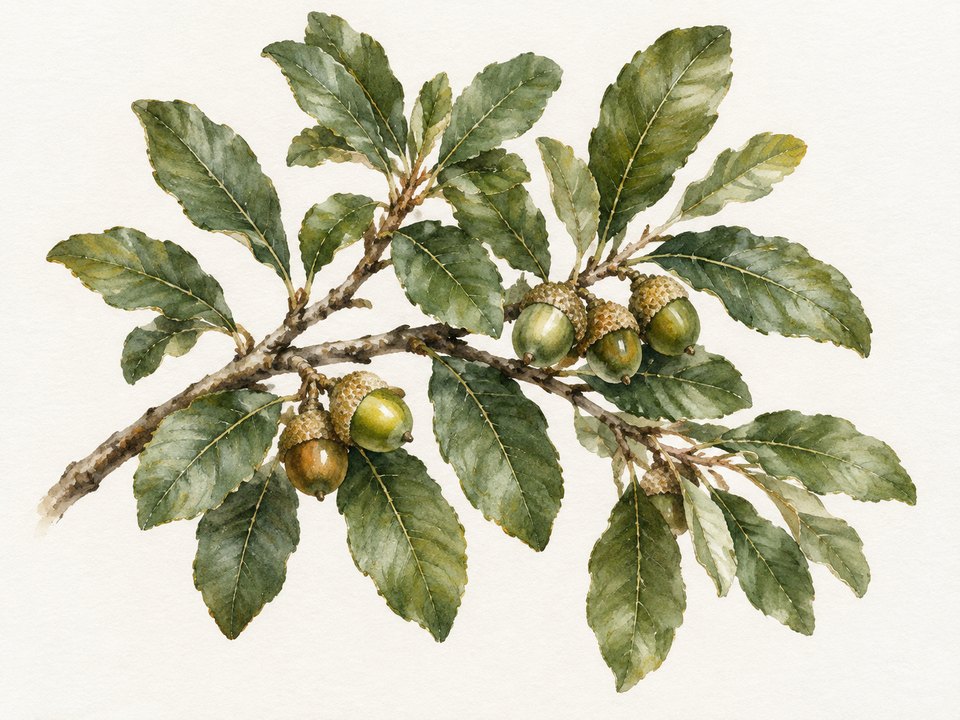 Illustration
Live OakQuercus virginianaIllustration
Prepare a detailed plant list with the plan. Texas Allied can help fit the palette to your lot and submit it for review.
Oak-wilt duties need care from the start. Infected oaks must be destroyed. Pruning wounds must be dressed right away. Needless pruning must be avoided. A trench must be cut around infected trees. Texas Allied's plant health care team can plan oak care around these requirements.[2]
Plan irrigation and water collection
Keep irrigation pipes and tanks buried. Temporary hoses, movable irrigation pipes and work with written ACC approval are exceptions.[2]
Rain-barrel and rainwater-harvesting rules have not yet been verified for this guide. Work must also meet a recorded Water Pollution and Abatement Plan, but its lot-specific limits remain unverified. Confirm those requirements before adding water collection to the design.[2]
Plan fees, yard care and enforcement
Keep front and back lawns mowed under six inches. Keep weeds, grass, shrubs and trees cut and tidy.[2]
Submission fees are allowed. Owners also pay to prepare and record a compliance certificate they request. Confirm the current amounts before submitting. This guide does not establish a fixed fee or free review.[2]
The 2014 general fine schedule sets $25 per day for a first specified violation and $50 per day for second and later violations. Written notice and a chance to cure come first. No fine is imposed if the violation is cured by the stated deadline.[5]
Maintenance failures may also be corrected at the owner's expense. Confirm the current schedule, keep notices and deadlines together and address a notice promptly.[2] [5]
Landscaping questions at Turning Stone
Does silence after 30 days mean approval?
No. No answer means denial. Get written approval before starting work, and include time for that decision in your project schedule.[2]
Can I replace the whole front lawn with rock?
The front-yard cap is 10% for rock or material besides mulch or vegetation. ACC-approved driveways and sidewalks are excluded. Plan the layout around that cap and submit the design for review.[2]
Plan your Turning Stone landscape
Bring your address, survey and ideas. Texas Allied Landscape can design your yard, prepare the review package, build to the approved plan and care for the finished landscape.
Documents and limits of this guide
This rewrite keeps the earlier review of the master rules, E-1/W-1 supplement, five posted master amendments through 2018 and 2014 fine policy. It is not a new records audit or a promise that no newer rule exists. Mesa/unit supplements, design guidelines, added rules, the water-pollution plan and rain-harvesting requirements remain open coverage checks. Confirm later amendments and the current requirements for your address before design or work. County-search and document-library links help locate the named records. They are not direct document links.
Community score card
Community profile
Turning Stone
1 permissive5 protective
| Design latitude | — |
|---|---|
| Approval scope | 5/5 |
| Approval layers | — |
| Approval cost | — |
| Plan preparation | — |
| Enforcement capability | 3/5 |
Higher means more documented control or burden, not a better community.
Design latitude
—
- 1
- 2
- 3
- 4
- 5
How much of the plant and design palette is prescribed. A higher score means less design freedom.
Why this score
Rules cover rock coverage, lawn height and irrigation. Before design, we check the full landscape choices and any unit-specific standards for your address.
Approval scope
5/5
- 1
- 2
- 3
- 4
- 5 (this score)
How much exterior work needs written sign-off.
Why this score
Get approval before anything is constructed, erected, removed, planted or maintained. Contractor approval is also required.
Approval layers
—
- 1
- 2
- 3
- 4
- 5
Counts distinct required community reviewers only. City, county and state permits, optional steps and repeat submissions are not counted.
Why this score
Mesa addresses may fall under a sub-association with its own added rules. We check the approval route for your address before you submit.
Approval cost
—
- 1
- 2
- 3
- 4
- 5
What the community's own approval process costs to apply.
Why this score
The declaration allows submission fees. Owners also pay to prepare and record a compliance certificate they request. We check the current amounts for your project.
Plan preparation
—
- 1
- 2
- 3
- 4
- 5
How much drawing and documentation an application needs.
Why this score
The declaration requires plans and specifications. Design guidelines may add requirements. We check the full package your project needs.
Enforcement capability
3/5
- 1
- 2
- 3 (this score)
- 4
- 5
Which remedies the verified governing documents and adopted policies provide. The score reflects verified documented provisions, not observed enforcement practice or legal conclusions. Not finding an express clause is not a conclusion that no authority exists.
Why this score
The recorded resolution sets $25 per day for a first violation and $50 per day for second and subsequent violations, after written notice naming a cure date. No cap is documented.
Higher scores mean more documented control or burden. Each measure covers a separate part of the project. The ratings keep the earlier reviewed set and its limits. Unverified measures stay blank. The fines above do not create an enforcement score.[2] [3] [4] [5]
Sources
- Community character: Turning Stone: public community description, checked November 8, 2026.https://turningstoneownersassociation.com/↑
- Master Declaration (2012), Inst.2012004406, Div.3 and Sections4.3/4.5/4.6/4.8, PDF1-41.https://turningstoneownersassociation.com/turning_stone/media/document_pdfs/CCRs.pdfabcdefghijklmnopqrs
- E1/W1 supplement (2012), Inst.2012004407, PDF42-45.https://turningstoneownersassociation.com/turning_stone/media/document_pdfs/CCRs.pdfabcde
- Third Amendment (2018), fence Section4.3.7(A), PDF51-53.https://turningstoneownersassociation.com/turning_stone/media/document_pdfs/CCRs.pdfabcd
- Fine resolution (2014), Inst.2014022437, PDF61-65.https://turningstoneownersassociation.com/turning_stone/media/document_pdfs/CCRs.pdfabcd