
Property owners
Salvia Greggii
- Plant
- Salvia Greggii
- Botanical name
- Salvia greggii
- Group
- Low shrubs and perennials
Salvia Greggii (Salvia greggii): light, water, soil, size and care for San Antonio area landscapes.
On this page
Its botanical name is Salvia greggii.
Light
Soil and drainage
It must have a well-drained site. It likes rocky limestone soils, and it also grows in sands and loams.
Height
It normally grows 2-3 ft and can reach 5 ft. Another source lists 2-3 ft.
Spread
It spreads 2-3 ft.
Foliage
Its evergreen cover lasts a long season.
Water
It has low water use and high drought and heat tolerance. It responds well to supplemental water in sun. If watering ever feels like a guessing game, our horticulturists can care for your Salvia Greggii on a schedule that fits your yard.
Pruning
Cut it back in late winter and again in June. Removing dead wood and older canes gives a better-looking plant. You can also prune heavily the first week of March and lightly the first week of August.[4]
Seasonal behavior
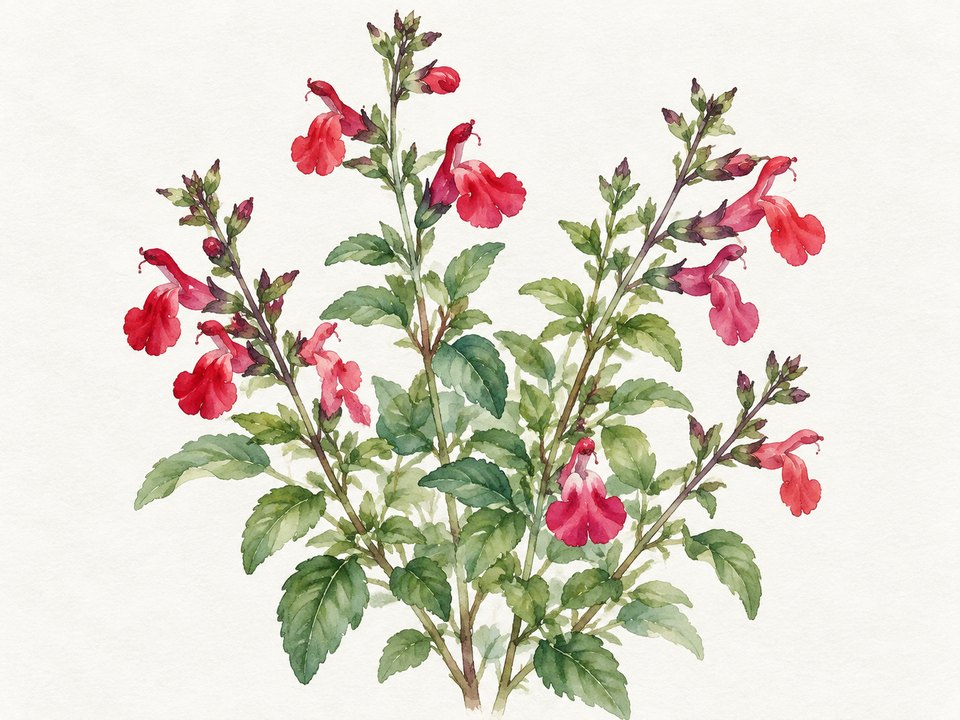
It shows tubular red, pink, purple or white flowers March through November. It is a premier hummingbird plant. It is also deer resistant.
When to Plant Salvia Greggii
Plant Salvia Greggii in fall or early spring in Central Texas. A fall planting establishes roots through the cool season. It is then ready to grow and bloom the following year. Spring planting works too if you water through the first summer.[5]
If you would like a hand, the Texas Allied Landscape team can plant your Salvia Greggii and keep it thriving.
Planting
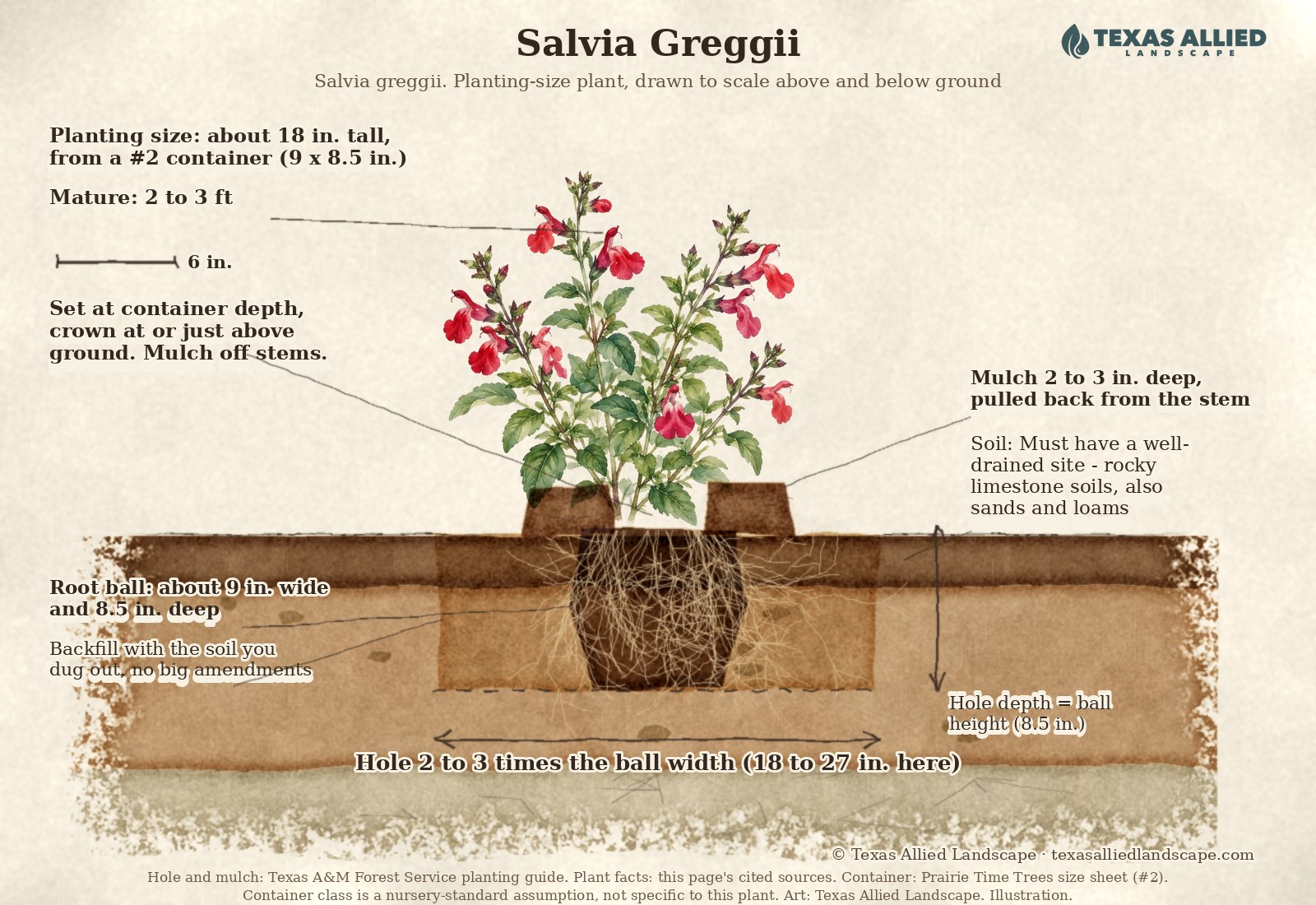
- Dig a hole twice as wide as the pot and no deeper, with sloping sides. Set the plant at the same depth it grew in its pot. Loosen any circling roots before backfilling.[6]
- For a new bed, clear grass and weeds first, roots and all.[6]
- Site: It wants sun to part shade.[1][2][3]
- Timing: A fall planting establishes roots through the cool season and is ready to grow and bloom the following year. Spring planting works too if you water through the first summer.[5]
- Soak it well at planting and keep watering while the roots establish.[6] Once established: It has low water use and high drought and heat tolerance. It responds well to supplemental water in sun. Cut it back in late winter and again in June. Removing dead wood and older canes gives a better-looking plant. You can also prune heavily the first week of March and lightly the first week of August.[4]
- Mulch 2 to 4 inches, kept a few inches away from the stems to prevent crown rot. It needs no staking or other support.[6]
When do I prune autumn sage?
Cut it back in late winter and again in June. Its salvia article suggests a heavy prune the first week of March and a light one the first week of August.
Care Instructions for Your Salvia Greggii
How to Water a Salvia Greggii
It has low water use and high drought and heat tolerance. It responds well to supplemental water in sun.
Sunlight
It wants sun to part shade.[1][2][3]
Soil and drainage
It must have a well-drained site. It likes rocky limestone soils, and it also grows in sands and loams.
Mature height and spread
It normally grows 2-3 ft and can reach 5 ft. Another source lists 2-3 ft. It spreads 2-3 ft.
Pruning
Cut it back in late winter and again in June. Removing dead wood and older canes gives a better-looking plant. You can also prune heavily the first week of March and lightly the first week of August.[4]
Normal seasonal behavior
It shows tubular red, pink, purple or white flowers March through November. It is a premier hummingbird plant. It is also deer resistant.
Autumn sage questions
When should I cut back autumn sage?
Do the hard prune in late winter, around February in Central Texas. Cut the woody stems back by about half to two-thirds before new growth starts. During the growing season, a light shear after each bloom wave keeps it compact and flowering into fall.[7]
Next step: If your salvia is old and woody at the base, our horticulturalists can do the reset prune and put it on a shape-up schedule.
Why is my salvia greggii leggy and flopping over?
Too much shade is the usual cause. Autumn sage wants full sun to at least half a day of direct light to stay dense. Too much water or nitrogen fertilizer also pushes soft, floppy growth. Move it or thin it back, and let it grow leaner.[8]
How much water does autumn sage need?
Very little once established. It is one of the most drought-tough flowering shrubs for Central Texas. Water to establish the first season, then only during long dry spells. Constant moisture rots its roots faster than drought hurts it.[9]
Do deer eat salvia greggii?
Rarely. Autumn sage is rated deer resistant, which is one reason it is a Hill Country staple. A very hungry deer may sample new growth, but it is far down the menu.[10]
Let Texas Allied Landscape care for your Salvia Greggii
Salvia Greggii does best with steady, knowledgeable care. That means the right water, pruning at the right time, and a trained eye for stress. The horticulturists at Texas Allied Landscape care for plants like yours across the San Antonio area. They are backed by over 40 years of landscape experience.
In these community guides
Illustration. Illustration based on reference photos of Vicinia. Not a single literal view. Vicinia Landscaping
Bring your address, survey and ideas. Texas Allied Landscape helps check the rules, design the space and prepare for…
Illustration. Illustration based on reference photos of Stone Oak. Not a single literal view. Stone Oak Landscaping
Bring your Stone Oak address, survey and ideas. Texas Allied can plan the yard, prepare the review package, build it…
Illustration. Illustration based on reference photos of Alamo Ranch. Not a single literal view. Alamo Ranch Landscaping
Bring your yard ideas and survey. Texas Allied Landscape helps plan planting and irrigation, prepare review details and…
Illustration. Illustration based on reference photos of Arbors of Fair Oaks. Not a single literal view. Arbors of Fair Oaks Landscaping
Bring your address, unit and yard ideas. Texas Allied Landscape helps design the planting and irrigation, prepare the…
- Art in progress
Canyon Springs Landscaping
Bring your address, survey and yard ideas. We help check your section rules, prepare the review package and build the…
Illustration. Illustration based on reference photos of Cibolo Canyons. Not a single literal view. Cibolo Canyons Landscaping
Bring your address, survey and yard ideas. We help check your section's rules, prepare the review package and build the…
- Art in progress
Cordillera Ranch Landscaping
Bring your address, survey and yard ideas. We check the right guideline set, plan planting and irrigation, prepare the…
Illustration. Illustration based on reference photos of The Dominion. Not a single literal view. The Dominion Landscaping
Plan your Dominion landscape with help on planting, irrigation and the ACC package. We check your lot's standards and…
Illustration. Illustration based on reference photos of Encino Park. Not a single literal view. Encino Park Landscaping
Plan an Encino Park landscape with help on plants, irrigation and the review package. We confirm your association and…
- Art in progress
Inwood Landscaping
Share your Inwood address, survey and yard ideas with Texas Allied Landscape. We help plan planting, irrigation and…
Illustration. Illustration based on reference photos of John Newcombe Estates. Not a single literal view. John Newcombe Estates Landscaper and Landscaping
Request a quote for your John Newcombe Estates yard. Share your address, survey and yard ideas with Texas Allied…
Illustration. Illustration based on reference photos of Mission del Lago. Not a single literal view. Mission del Lago Landscaping
Plan planting, lawn and irrigation for your Mission del Lago address. Get help with the review package, approved work…
Illustration. Illustration based on reference photos of Remuda Ranch. Not a single literal view. Remuda Ranch Landscaping
Plan your Remuda Ranch yard with planting, lawn and irrigation guidance. Get help from the review package through…
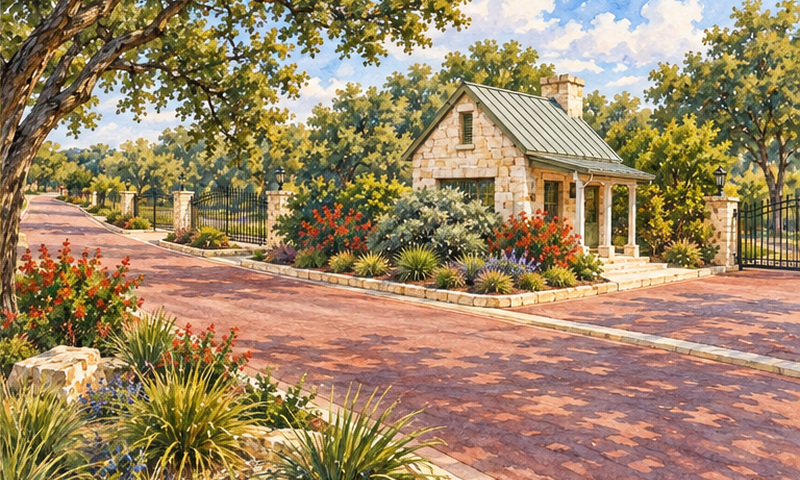
Illustration. Illustration based on reference photos of Rogers Ranch - Point Bluff and other neighborhoods. Not a single literal view. Rogers Ranch Landscaping
Plan your Rogers Ranch landscape with lawn, tree and irrigation guidance. Get help with the review package, approved…
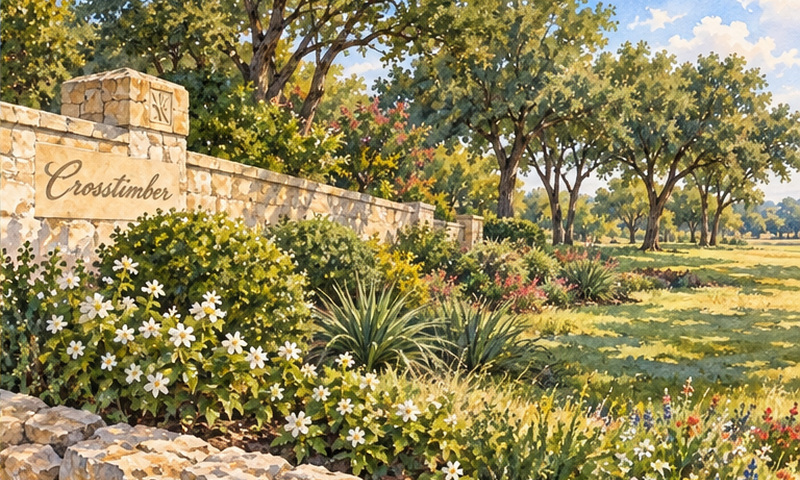
Illustration. Illustration based on reference photos of Shavano Rogers Ranch - Crosstimber. Not a single literal view. Crosstimber Landscaping
Plan your Crosstimber plants, shade and irrigation. Get help matching your lot rules, preparing the review package and…
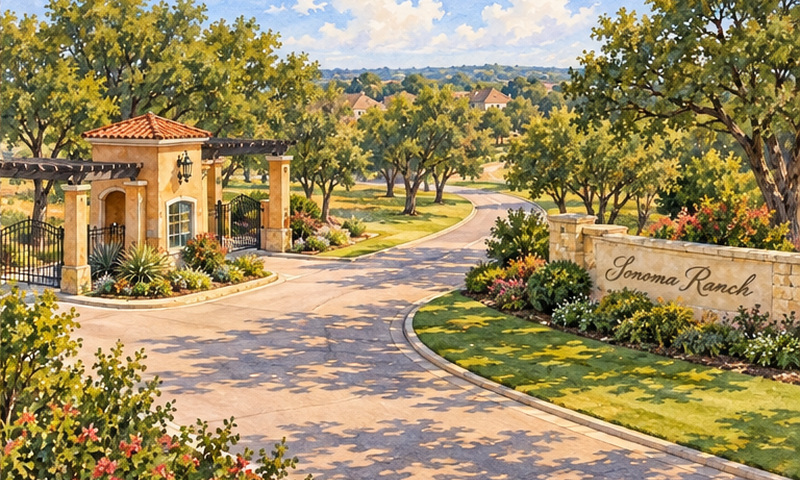
Illustration. Illustration based on reference photos of Sonoma Ranch. Not a single literal view. Sonoma Ranch Landscaping
Bring your Sonoma Ranch address and ideas. Texas Allied can design the yard, prepare the review package, build the…
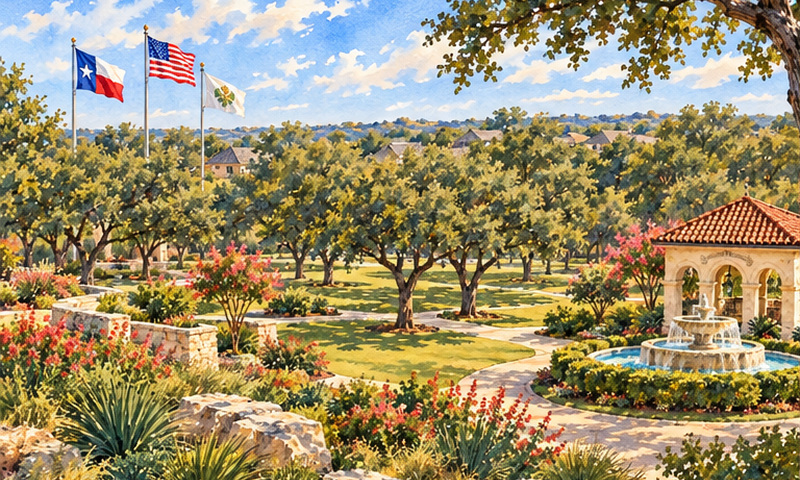
Illustration. Illustration based on reference photos of Sonterra. Not a single literal view. Sonterra Landscaping
Bring your Sonterra address and ideas. Texas Allied can design the yard, prepare the review package, build the approved…
- Art in progress
The Springs at Stone Oak Landscaping
Bring your address and ideas for The Springs at Stone Oak. Texas Allied can design the yard, prepare the review…
Illustration. Illustration based on reference photos of Turning Stone. Not a single literal view. Turning Stone Landscaping
Bring your Turning Stone address, survey and ideas. Texas Allied can design the yard, prepare the review package, build…
Illustration. Illustration based on reference photos of Weston Oaks. Not a single literal view. Weston Oaks Landscaping
Bring your Weston Oaks address and ideas. Texas Allied can check your unit rules, plan the yard, prepare the review…
Sources
- Salvia greggii (Autumn sage), Lady Bird Johnson Wildflower Center.https://www.wildflower.org/plants/result.php?id_plant=sagr4abc
- Autumn Sage, San Antonio Water System - Garden Style San Antonio.https://www.gardenstylesanantonio.com/plants/autumn-sage/abc
- Sage, Cherry (Autumn Sage), City of Austin Watershed Protection - Grow Green.https://www.austintexas.gov/plant-guide/sage-cherry-autumn-sageabc
- Say Sí to Salvias!, San Antonio Water System - Garden Style San Antonio.https://www.gardenstylesanantonio.com/garden-articles/say-ssed-to-salvias/abc
- October Gardening Checklist, Travis County AgriLife Extension.https://travis-tx.tamu.edu/about-2/horticulture/monthly-gardening-calendar-for-austin-area/october-gardening-checklist-for-austin-and-central-texas/ab
- Back to basics: Planting perennials, SAWS Garden Style San Antonio.https://www.gardenstylesanantonio.com/garden-articles/back-to-basics-planting-perennials/abcd
- Central Texas Gardener, "Winter Pruning: Autumn Sage & Mealy Blue Sage."https://centraltexasgardener.org/2024/02/winter-pruning-autumn-sage-mealy-blue-sage/↑
- Denton County Master Gardener Association, "Autumn Sage (Salvia greggii) plant facts."https://www.dcmga.com/wp-content/uploads/docs/plant-facts-trees-shrubs/pf-autumn-sage.pdf↑
- City of Austin Grow Green plant guide, "Sage, Cherry (Autumn Sage)."https://www.austintexas.gov/plant-guide/sage-cherry-autumn-sage↑
- Lady Bird Johnson Wildflower Center, Ask Mr. Smarty Plants on Salvia greggii.https://www.wildflower.org/expert/show.php?id=1789↑