
Property owners
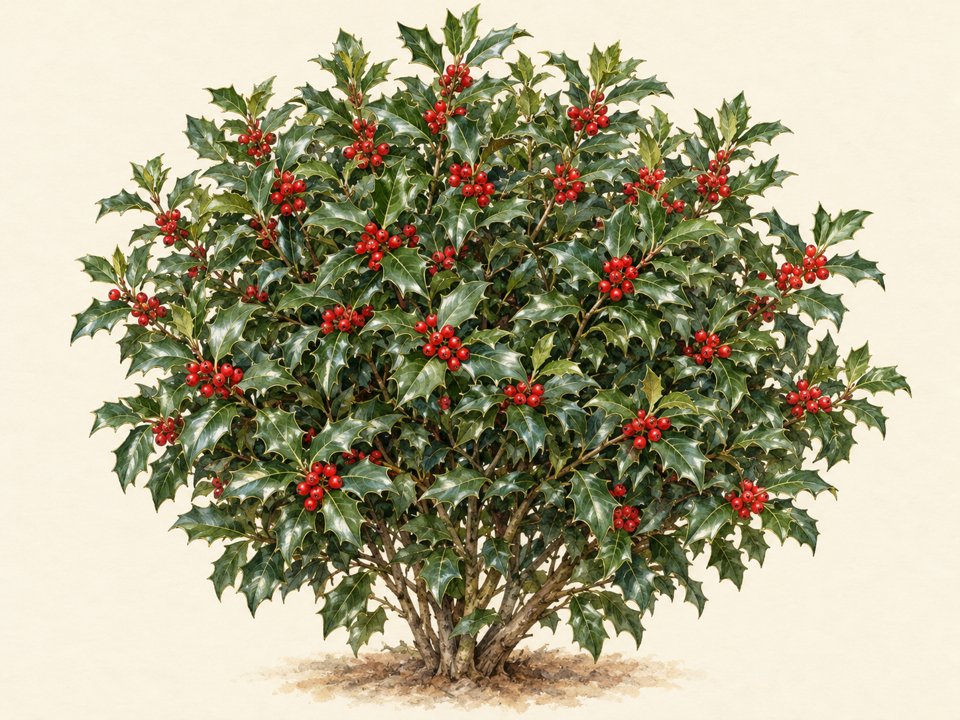
Burford Holly
- Plant
- Burford Holly
- Botanical name
- Ilex cornuta 'Burfordii'
- Cultivar
- 'Burfordii'
- Group
- Medium shrubs and perennials
Sourced light, water, size and care details for Burford Holly.
On this page
Its botanical name is Ilex cornuta 'Burfordii'.
It belongs to the medium shrubs and perennials group.
Light
Full sun to part shade; berry and flower production drops off in shade.[1]
Soil and drainage
Best in rich, well-drained, slightly acidic soil; tolerates most soils except poorly drained ones. Drought tolerant once established.[1]
Height
15 to 25 ft tall and 8 to 15 ft wide; a dense evergreen shrub or small tree that takes pruning well.[1]
When to Plant Burford Holly
Plant Burford Holly in fall or early spring in Central Texas. A fall planting establishes roots through the cool season and is ready to grow and bloom the following year. Spring planting works too if you water through the first summer.[2]
If you would like a hand, the Texas Allied Landscape team can plant your Burford Holly and keep it thriving.
Planting
- Dig a hole twice as wide as the pot and no deeper, with sloping sides. Set the plant at the same depth it grew in its pot. Loosen any circling roots before backfilling.[3]
- For a new bed, clear grass and weeds first, roots and all.[3]
- Timing: A fall planting establishes roots through the cool season and is ready to grow and bloom the following year. Spring planting works too if you water through the first summer.[2]
- Soak it well at planting and keep watering while the roots establish.[3] Once it is established, a fall planting is ready to grow and bloom the following year. Spring planting works too if you water through the first summer.[2]
- Mulch 2 to 4 inches, kept a few inches away from the stems to prevent crown rot. It needs no staking or other support.[3]
Care Instructions for Your Burford Holly
How to Water a Burford Holly
Planting
No. Burford is a female Chinese holly that sets heavy red berry crops without a pollinator. That is part of why it became so popular. If you want zero berries, the dwarf 'Burfordii Nana' fruits lightly.[4]
Pruning and mowing
Prune in late winter, before spring growth. Burford takes shearing into formal shapes, but it looks best with hand pruning that keeps its natural dense mound. It tolerates hard renewal cuts if it outgrows its spot.[5]
Fruit and flowers
Like most hollies, the berries are mildly toxic to people and pets if eaten in quantity. They cause stomach upset. Birds handle them fine. Normal landscaping contact is no hazard.[6]
Burford holly questions
Does Burford holly need a male plant to get berries?
No. Burford is a female Chinese holly that sets heavy red berry crops without a pollinator. That is part of why it became so popular. If you want zero berries, the dwarf 'Burfordii Nana' fruits lightly.[4]
When should I prune Burford holly?
Prune in late winter, before spring growth. Burford takes shearing into formal shapes, but it looks best with hand pruning that keeps its natural dense mound. It tolerates hard renewal cuts if it outgrows its spot.[5]
Next step: Our horticulturalists can reshape an overgrown Burford in one visit without leaving it scalped.
Are Burford holly berries poisonous?
Like most hollies, the berries are mildly toxic to people and pets if eaten in quantity. They cause stomach upset. Birds handle them fine. Normal landscaping contact is no hazard.[6]
How big does Burford holly get?
Bigger than most people expect. The standard form reaches 8 to 15 feet tall and wide if unpruned. The dwarf form ('Burfordii Nana') stays 3 to 6 feet. Check which one you have before planting near the house.[7]
Let Texas Allied Landscape care for your Burford Holly
Burford Holly does best with steady, knowledgeable care. That means the right water, pruning at the right time, and a trained eye for stress. The horticulturists at Texas Allied Landscape care for plants like yours across the San Antonio area. They are backed by over 40 years of landscape experience.
In these community guides
Sources
- Ilex cornuta 'Burfordii' (Burford Holly), North Carolina Extension Gardener Plant Toolbox.https://plants.ces.ncsu.edu/plants/ilex-cornuta-burfordii/abc
- October Gardening Checklist, Travis County AgriLife Extension.https://travis-tx.tamu.edu/about-2/horticulture/monthly-gardening-calendar-for-austin-area/october-gardening-checklist-for-austin-and-central-texas/abc
- Back to basics: Planting perennials, SAWS Garden Style San Antonio.https://www.gardenstylesanantonio.com/garden-articles/back-to-basics-planting-perennials/abcd
- Neil Sperry's GARDENS, "A Most Popular Holly."https://neilsperry.com/2019/11/a-most-popular-holly/ab
- Texas A&M AgriLife Extension, "Pruning with a Purpose."https://aggie-horticulture.tamu.edu/wp-content/uploads/2013/06/Pruning-with-a-Purpose.pdfab
- Lady Bird Johnson Wildflower Center, plant profile for Ilex cornuta.https://www.wildflower.org/plants/result.php?id_plant=ILCOab
- Lady Bird Johnson Wildflower Center, plant profile for Ilex cornuta 'Burfordii'.https://www.wildflower.org/plants/result.php?id_plant=ILCO↑