
Property owners
Eleagnus
- Plant
- Eleagnus
- Genus
- Elaeagnus spp
- Group
- Large shrubs
Eleagnus (Elaeagnus sp.): light, water, soil, size and care for San Antonio area landscapes.
On this page
Botanical name: Elaeagnus sp.. SAWS profiles elaeagnus at the genus level, and the facts below follow that profile.
Light
Sun to part shade.[1]
Soil and drainage
Handles sandy or clay soil.
Height
Up to 15 feet tall.
Spread
10 to 20 feet wide.
Foliage
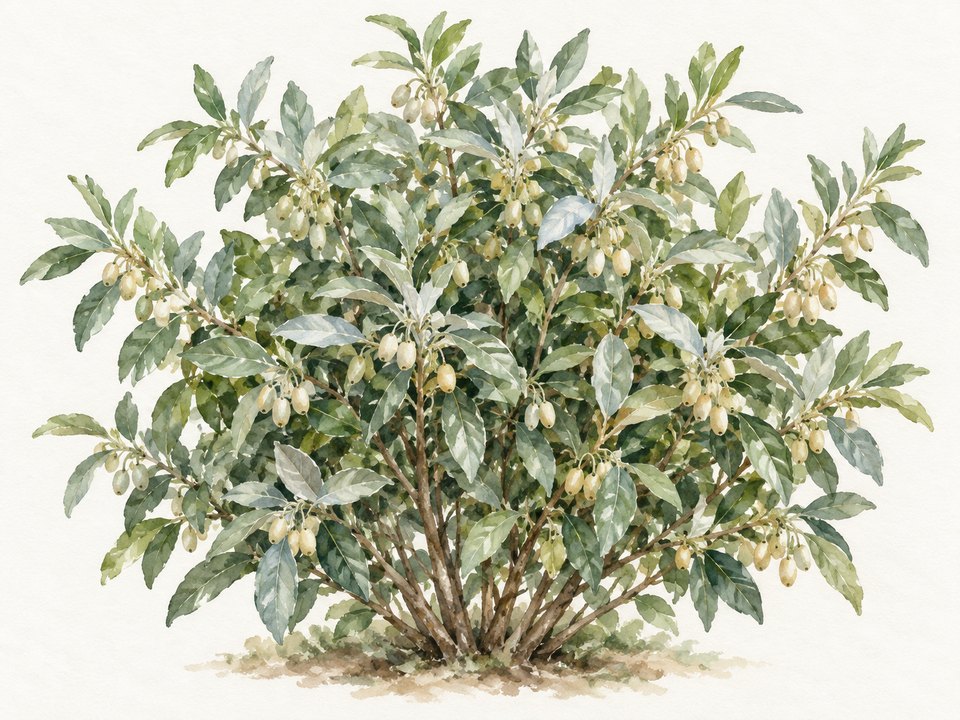
Evergreen, with gray-green leaves that are silvery underneath.
Water
Low water; tolerates heat and drought once established. If watering ever feels like a guessing game, our horticulturists can care for your Eleagnus on a schedule that fits your yard.
Pruning
Hedge as needed to control size; it takes hedging well.
Seasonal behavior
A very large, sprawling shrub that shoots up tall, arching canes through the growing season. Too big for small spaces; it makes an excellent screen and gives wildlife cover. Variegated and dwarf forms exist.
When to Plant Eleagnus
Fall, October through November, and late winter into early spring are the best times to plant Eleagnus in Central Texas. Cooler months give the roots time to establish before summer heat.[2]
Container-grown shrubs can go in at other times if you keep up with watering, but avoid planting in the peak of summer.
If you would like a hand, the Texas Allied Landscape team can plant your Eleagnus and keep it thriving.
Planting
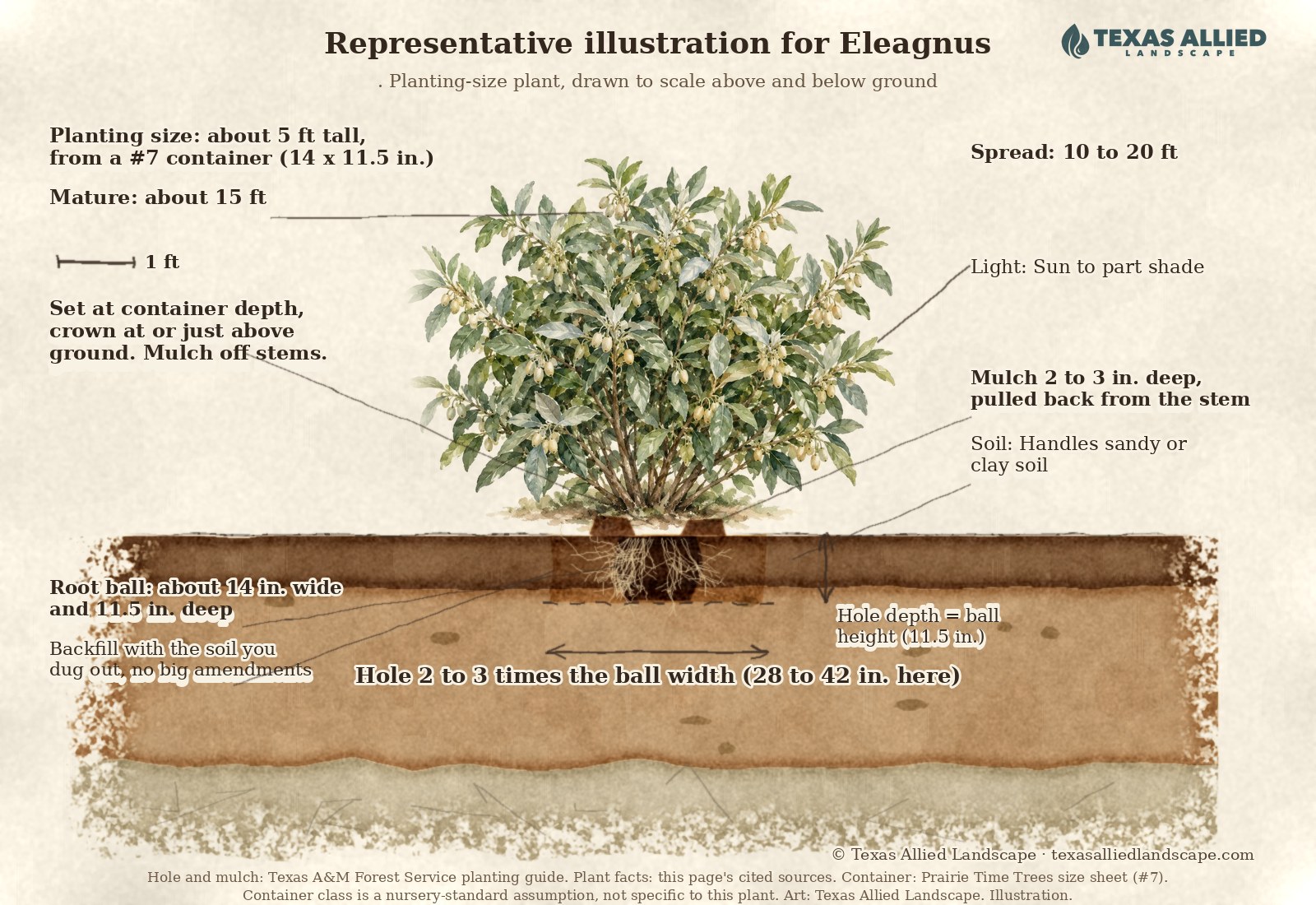
- Dig a hole at least twice as wide as the root ball and no deeper, so the roots can grow out into the surrounding soil.[3]
- Fill the empty hole with water and check the drainage. If it takes longer than 24 hours to drain, choose another spot: roots sitting under water will kill the plant.[3]
- Set it with the root collar (where the stems meet the roots) level with the ground, and take off the container and any twine or bags before backfilling.[3]
- Backfill with the same soil that came out of the hole, without amendments, and settle it with water rather than packing it down.[3]
- Site: Sun to part shade.[1]
- Timing: Fall, October through November, and late winter into early spring are the best times to plant Eleagnus in Central Texas.
- Water regularly through the first growing season while roots establish, without overwatering: a thorough soaking beats light, frequent watering.[3]
- Mulch 2 to 3 inches deep, up to but not touching the stems. It needs no staking or other support. Do not fertilize during the first growing season.[3]
Is elaeagnus a good choice for a small yard?
No - it becomes a very large, sprawling shrub up to 15 feet tall and 10-20 feet wide. It suits big open spots and screens, not small spaces.
Care Instructions for Your Eleagnus
How to Water an Eleagnus
Low water; tolerates heat and drought once established.
Sunlight
Sun to part shade.[1]
Soil and drainage
Handles sandy or clay soil.
Mature height and spread
Up to 15 feet tall. 10 to 20 feet wide.
Pruning
Hedge as needed to control size; it takes hedging well.
Normal seasonal behavior
A very large, sprawling shrub that shoots up tall, arching canes through the growing season. Too big for small spaces; it makes an excellent screen and gives wildlife cover. Variegated and dwarf forms exist.
Eleagnus questions
Is eleagnus a good hedge for Texas?
It has been for decades - fast, dense, drought-proof - but lacebugs and cotton root rot bother it, and it is going out of favor for good reasons.[4]
Why is my eleagnus dying back?
Cotton root rot is the usual killer in our alkaline soils - whole branches go suddenly, and there is no cure.[5]
Next step: Our horticulturalists can confirm the cause and suggest a tougher replacement hedge.
How big does eleagnus get?
10-15 feet unpruned - much bigger than most people expect at planting.[6]
Is eleagnus invasive?
Some Elaeagnus species are invasive elsewhere; in Texas the bigger complaint is disease and ragged decline in old hedges.[7]
Let Texas Allied Landscape care for your Eleagnus
Eleagnus does best with steady, knowledgeable care: the right water, pruning at the right time, and a trained eye for stress. The horticulturists at Texas Allied Landscape care for plants like yours across the San Antonio area, backed by over 40 years of landscape experience.
In these community guides
- Art in progress
Cordillera Ranch Landscaping
Bring your address, survey and yard ideas. We check the right guideline set, plan planting and irrigation, prepare the…

Illustration. Illustration based on reference photos of Johnson Ranch. Not a single literal view. Johnson Ranch Landscaping
Share your Johnson Ranch address, survey and yard ideas. Texas Allied Landscape can help plan planting, irrigation and…
Sources
- Elaeagnus, SAWS Garden Style San Antonio.https://www.gardenstylesanantonio.com/plants/elaeagnus/abc
- October Gardening Checklist, Travis County AgriLife Extension.https://travis-tx.tamu.edu/about-2/horticulture/monthly-gardening-calendar-for-austin-area/october-gardening-checklist-for-austin-and-central-texas/↑
- How to Plant a Tree, Texas A&M Forest Service.https://tfsweb.tamu.edu/trees/tree-care/planting/abcdef
- Tyler Morning Telegraph, "Elaeagnus in Texas."https://tylerpaper.com/2020/07/14/elaeagnus-in-texas-can-be-bothered-by-lacebugs-cotton-root-rot/↑
- Texas A&M Plant Disease Handbook, "Elaeagnus."https://plantdiseasehandbook.tamu.edu/landscaping/shrubs/eleaeagnus/↑
- Texas Tech Plant Resources, "Elaeagnus pungens."https://www.depts.ttu.edu/plantresources/Pages/directories/landscape-info-sheets/woody-info/Elaeagnus_pungens.php↑
- Texas A&M Plant Disease Handbook, "Elaeagnus."https://plantdiseasehandbook.tamu.edu/landscaping/shrubs/eleaeagnus/↑