
Property owners
Fountain Grass
- Plant
- Fountain Grass
- Botanical name
- Pennisetum setaceum
- Group
- Ornamental grasses
Fountain Grass: sourced light needs, growing conditions, spread, foliage, water needs, pruning, seasonal behavior and planting.
On this page
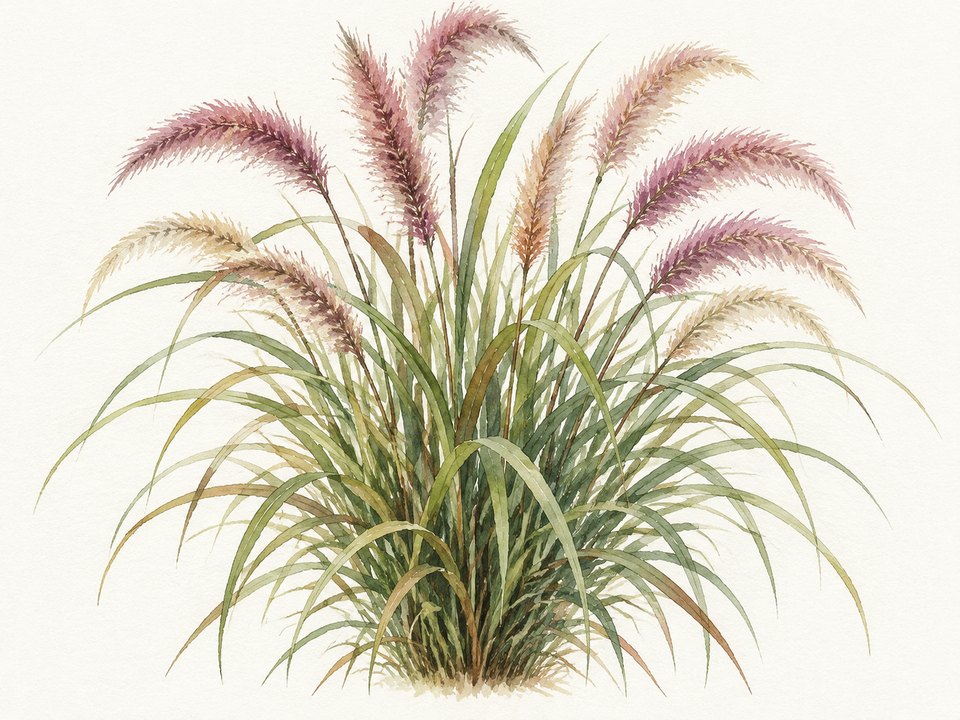
Botanical name: Pennisetum setaceum 'Rubrum'.
Light
Full sun.[1]
Soil and drainage
Sandy, well-drained or clay soils; it wants consistent soil moisture during the growing season.
Spread
Up to about 1.5 feet wide.
Foliage
A warm-season bunchgrass, evergreen in warm winters.
Water
Medium water. If watering ever feels like a guessing game, our horticulturists can care for your Fountain Grass on a schedule that fits your yard.
Pruning
It dies to the ground with frost; after a hard freeze, cut back or snap off the tattered flower plumes.
Seasonal behavior
Purple-red plumes show May through October. Caution: this introduced ornamental has proven invasive in warm climates including Florida, Arizona, California and Hawaii, where escaped plants can catch fire easily during wildfires. It has not yet been observed spreading into central Texas natural areas, and the Rubrum form is considered least likely to set seed, but the regional profile recommends native grasses instead.
When to Plant Fountain Grass
Plant Fountain Grass in spring after the last frost, once the soil is warm. This grass is frost-tender in Central Texas and needs a full warm season to establish; expect it to die back or be lost in a hard winter.
If you would like a hand, the Texas Allied Landscape team can plant your Fountain Grass and keep it thriving.
Planting
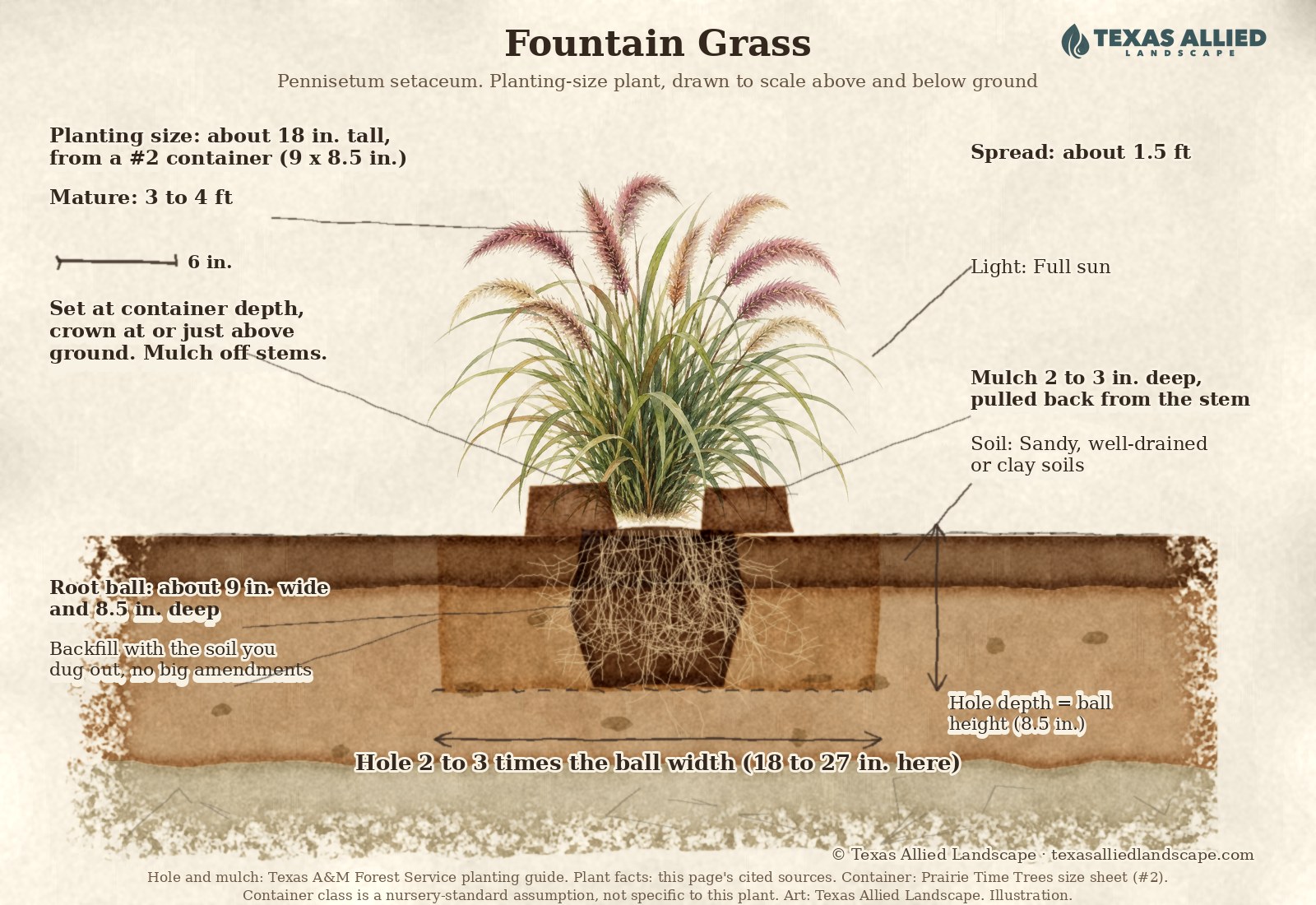
- Dig a hole twice as wide as the pot and no deeper, with sloping sides, and set the plant at the same depth it grew in its pot. Loosen any circling roots before backfilling.[2]
- For a new bed, clear grass and weeds first, roots and all.[2]
- Site: Full sun.[1]
- Timing: Plant Fountain Grass in spring after the last frost, once the soil is warm.
- Soak it well at planting and keep watering while the roots establish.[2]
- Mulch 2 to 4 inches, kept a few inches away from the stems to prevent crown rot. It needs no staking or other support.[2]
Care Instructions for Your Fountain Grass
How to Water a Fountain Grass
Medium water.
Sunlight
Full sun.[1]
Soil and drainage
Sandy, well-drained or clay soils; it wants consistent soil moisture during the growing season.
Mature height and spread
Up to about 1.5 feet wide.
Pruning
It dies to the ground with frost; after a hard freeze, cut back or snap off the tattered flower plumes.
Normal seasonal behavior
Purple-red plumes show May through October. Caution: this introduced ornamental has proven invasive in warm climates including Florida, Arizona, California and Hawaii, where escaped plants can catch fire easily during wildfires. It has not yet been observed spreading into central Texas natural areas, and the Rubrum form is considered least likely to set seed, but the regional profile recommends native grasses instead.
Fountain grass questions
Is purple fountain grass a perennial in Central Texas?
Treat it as an annual or root-hardy perennial - 'Rubrum' often dies back in a hard freeze and does not always return.[3]
How big does purple fountain grass get?
3-4 feet tall and wide - a big, bold burgundy mound for one season of drama.[4]
When do I cut back fountain grass?
Late winter, to a few inches - and if winter took it, that is your cue to replant or replace.[5]
Next step: Our horticulturalists can swap in a hardier grass if yours does not return.
Sun or shade for fountain grass?
Full sun - the burgundy color and the bloom plumes both need light.[6]
Let Texas Allied Landscape care for your Fountain Grass
Fountain Grass does best with steady, knowledgeable care: the right water, pruning at the right time, and a trained eye for stress. The horticulturists at Texas Allied Landscape care for plants like yours across the San Antonio area, backed by over 40 years of landscape experience.
In these community guides
- Art in progress
Cordillera Ranch Landscaping
Bring your address, survey and yard ideas. We check the right guideline set, plan planting and irrigation, prepare the…

Illustration. Illustration based on reference photos of Johnson Ranch. Not a single literal view. Johnson Ranch Landscaping
Share your Johnson Ranch address, survey and yard ideas. Texas Allied Landscape can help plan planting, irrigation and…
Sources
- Purple Fountain Grass 'Rubrum', SAWS Garden Style San Antonio.https://www.gardenstylesanantonio.com/plants/purple-fountain-grass/abc
- Back to basics: Planting perennials, SAWS Garden Style San Antonio.https://www.gardenstylesanantonio.com/garden-articles/back-to-basics-planting-perennials/abcd
- Texas Master Gardeners, "Purple Fountain Grass."https://txmg.org/hendersonmg/plant-library/grass-purple-fountain/↑
- Texas Tech Plant Resources, "Pennisetum setaceum 'Rubrum'."https://www.depts.ttu.edu/plantresources/Pages/directories/landscape-info-sheets/herbaceous-info/Pennisetum_setaceumRubrum.php↑