
Property owners
Inland Seaoats
- Plant
- Inland Seaoats
- Botanical name
- Chasmanthium latifolium
- Group
- Ornamental grasses
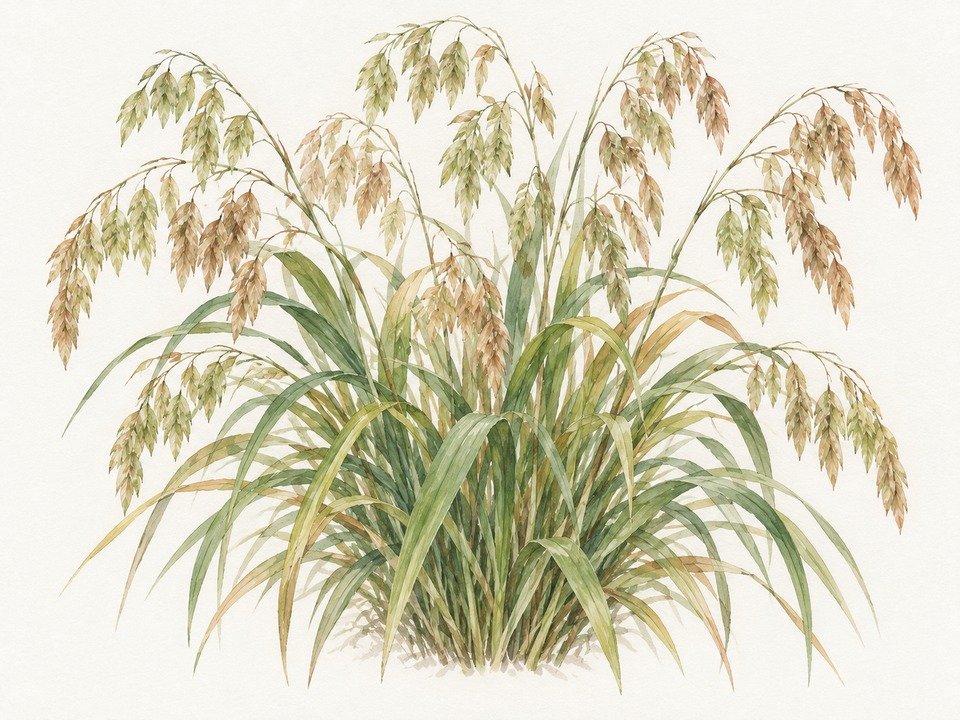
Inland seaoats is the native grass for shade - soft bamboo-like blades and dangling oat heads that turn bronze in fall.
On this page
Botanical name: Chasmanthium latifolium.
Plant group: Ornamental grasses.
Light
Part shade to full shade - one of the few ornamental grasses that thrives under trees; it tolerates sun with extra water.[1]
Soil and drainage
Adaptable, from average garden soil to clay; happiest with some moisture but handles dry shade once established.[2]
Height
2-4 ft in bloom.[3]
Spread
Clumps widen steadily and it reseeds into a colony - great for filling a shaded bed, easy to thin where it is not wanted.[1]
Foliage
Soft green bamboo-like blades with flat, dangling oat seed heads that turn bronze in fall.
Water
Low to moderate - established clumps take dry shade, but they look fullest with occasional summer water. If watering ever feels like a guessing game, our horticulturists can set a schedule that fits your yard.
Pruning
Cut the whole clump to a few inches in late winter before new growth.[3]
Seasonal behavior
Fresh green in spring, seed heads form in summer, copper-bronze in fall, dormant tan in winter. Seed heads dry beautifully for arrangements.[1]
When to Plant Inland Seaoats
Plant inland seaoats in fall or early spring in Central Texas. Fall planting establishes roots through the cool season for a strong first summer in the shade.[2]
If you would like a hand, the Texas Allied Landscape team can plant your Inland Seaoats and keep it thriving.
Planting
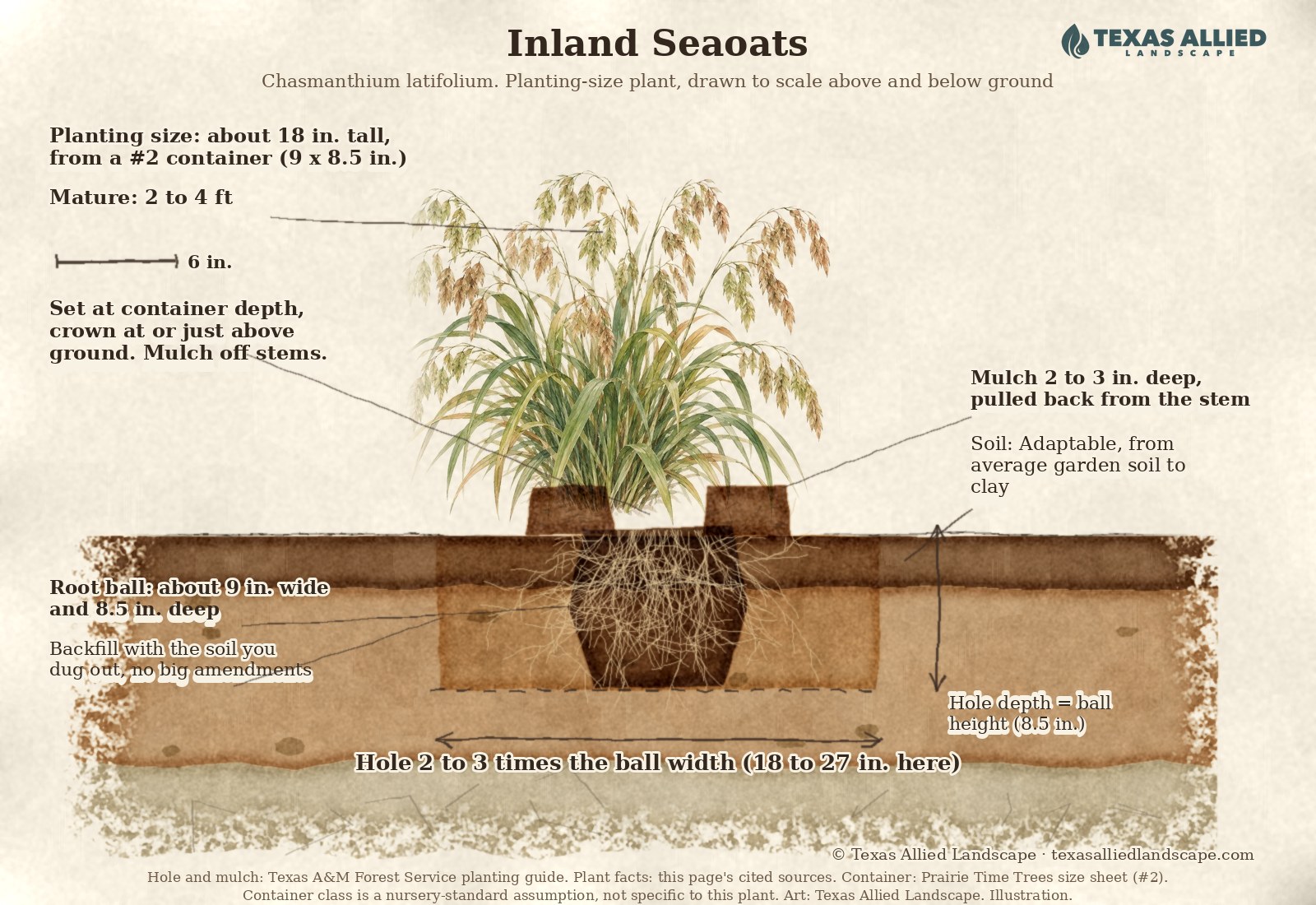
- Dig a hole twice as wide as the pot and no deeper, with sloping sides, and set the plant at the same depth it grew in its pot. Loosen any circling roots before backfilling.[4]
- For a new bed, clear grass and weeds first, roots and all.[4]
- Site: Part shade to full shade - one of the few ornamental grasses that thrives under trees; it tolerates sun with extra water.[1]
- Soil: Adaptable, from average garden soil to clay; happiest with some moisture but handles dry shade once established.[2]
- Timing: Fall planting establishes roots through the cool season for a strong first summer in the shade.[2]
- Soak it well at planting and keep watering while the roots establish.[4] Once established: Low to moderate - established clumps take dry shade, but they look fullest with occasional summer water. Cut the whole clump to a few inches in late winter before new growth.[3]
- Mulch 2 to 4 inches, kept a few inches away from the stems to prevent crown rot. It needs no staking or other support.[4]
Care Instructions for Your Inland Seaoats
How to Water an Inland Seaoats
Low to moderate - established clumps take dry shade, but they look fullest with occasional summer water.
Sunlight
Part shade to full shade - one of the few ornamental grasses that thrives under trees; it tolerates sun with extra water.[1]
Soil and drainage
Adaptable, from average garden soil to clay; happiest with some moisture but handles dry shade once established.[2]
Mature height and spread
2-4 ft in bloom.[3] Clumps widen steadily and it reseeds into a colony - great for filling a shaded bed, easy to thin where it is not wanted.[1]
Pruning
Cut the whole clump to a few inches in late winter before new growth.[3]
Normal seasonal behavior
Fresh green in spring, seed heads form in summer, copper-bronze in fall, dormant tan in winter. Seed heads dry beautifully for arrangements.[1]
Inland sea oats questions
Is inland sea oats good for shade?
It is THE grass for shade - a Texas native that grows 2-4 ft in spots too dark for turf, with drooping oat-like seed heads from summer into fall.[5]
Is inland sea oats aggressive?
It self-sows enthusiastically - seedlings pop up around the bed. Cut the seed heads in fall if you do not want volunteers, and pull what sprouts where it is not wanted.[6]
Is inland sea oats a Texas native?
Yes - Chasmanthium latifolium is native to Texas woodlands and stream banks, and one of our few ornamental grasses for deep shade.[7]
When do I cut back inland sea oats?
Late winter - cut the tan stalks to a few inches before new growth. The dried seed heads are great in arrangements if you cut them first.[8]
Next step: Our horticulturalists can manage the self-sowing and annual cutback so the patch stays where you want it.
Let Texas Allied Landscape care for your Inland Seaoats
Inland Seaoats does best with steady, knowledgeable care: the right water, pruning at the right time, and a trained eye for stress. The horticulturists at Texas Allied Landscape care for plants like yours across the San Antonio area, backed by over 40 years of landscape experience.
In these community guides
Sources
- Chasmanthium latifolium, Native Plant Society of Texas.https://www.npsot.org/posts/native-plant/chasmanthium-latifolium/abcdefg
- Inland Seaoats, City of Austin Watershed Protection plant guide.https://www.austintexas.gov/watershed-protection/plant-guide/inland-seaoatsabcde
- Inland Sea Oats, Texas Tech Plant Database.https://www.depts.ttu.edu/plantresources/Pages/directories/landscape-info-sheets/herbaceous-info/Chasmanthium_latifolium.phpabcde
- Back to basics: Planting perennials, SAWS Garden Style San Antonio.https://www.gardenstylesanantonio.com/garden-articles/back-to-basics-planting-perennials/abcd
- Native Plant Society of Texas, "Inland Sea Oats."https://www.npsot.org/posts/inland-sea-oats-your-can-i-grow-anything-in-that-shady-spot-plant/↑
- USDA NRCS, "Chasmanthium latifolium Fact Sheet."https://plants.sc.egov.usda.gov/DocumentLibrary/factsheet/pdf/fs_chla5.pdf↑
- Lady Bird Johnson Wildflower Center, "Chasmanthium latifolium."https://www.wildflower.org/plants/result.php?id_plant=CHLA5↑
- USDA NRCS, "Chasmanthium latifolium Fact Sheet."https://plants.sc.egov.usda.gov/DocumentLibrary/factsheet/pdf/fs_chla5.pdf↑