
Property owners
Japanese Yew
- Plant
- Japanese Yew
- Group
- Large shrubs
Japanese Yew (Podocarpus macrophyllus): light, water, soil, size and care for San Antonio area landscapes.
On this page
Botanical name: Podocarpus macrophyllus. This plant is not a true yew (Taxus).
Light
Shade or part shade; protect it from scorching afternoon summer sun, which dries out the leaves.[1]
Soil and drainage
Fertile, well-drained, moist soil; plan on preparing the site for this in San Antonio.
Height
8 to 30 feet tall, depending on form and age; many forms are available.
Spread
5 to 15 feet wide.
Foliage
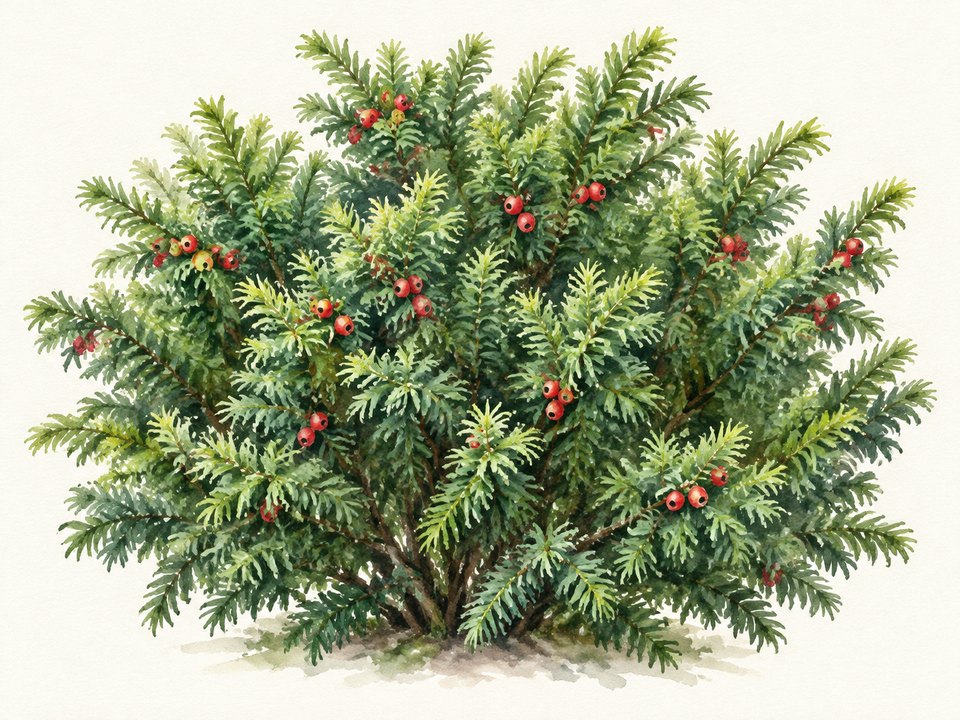
Evergreen, with flat, dark green, needle-like leaves and a fairly conical shape.
Water
Medium water; extra water in summer is appreciated. If watering ever feels like a guessing game, our horticulturists can care for your Japanese Yew on a schedule that fits your yard.
Pruning
Tolerates hedging, and it branches low to the ground, so it works well as an evergreen screen.
Seasonal behavior
Long-lived in local landscapes when planted in semi-shade around buildings and established live oaks. This plant is toxic.
When to Plant Japanese Yew
Fall, October through November, and late winter into early spring are the best times to plant Japanese Yew in Central Texas. Cooler months give the roots time to establish before summer heat.[2]
Container-grown shrubs can go in at other times if you keep up with watering, but avoid planting in the peak of summer.
If you would like a hand, the Texas Allied Landscape team can plant your Japanese Yew and keep it thriving.
Planting
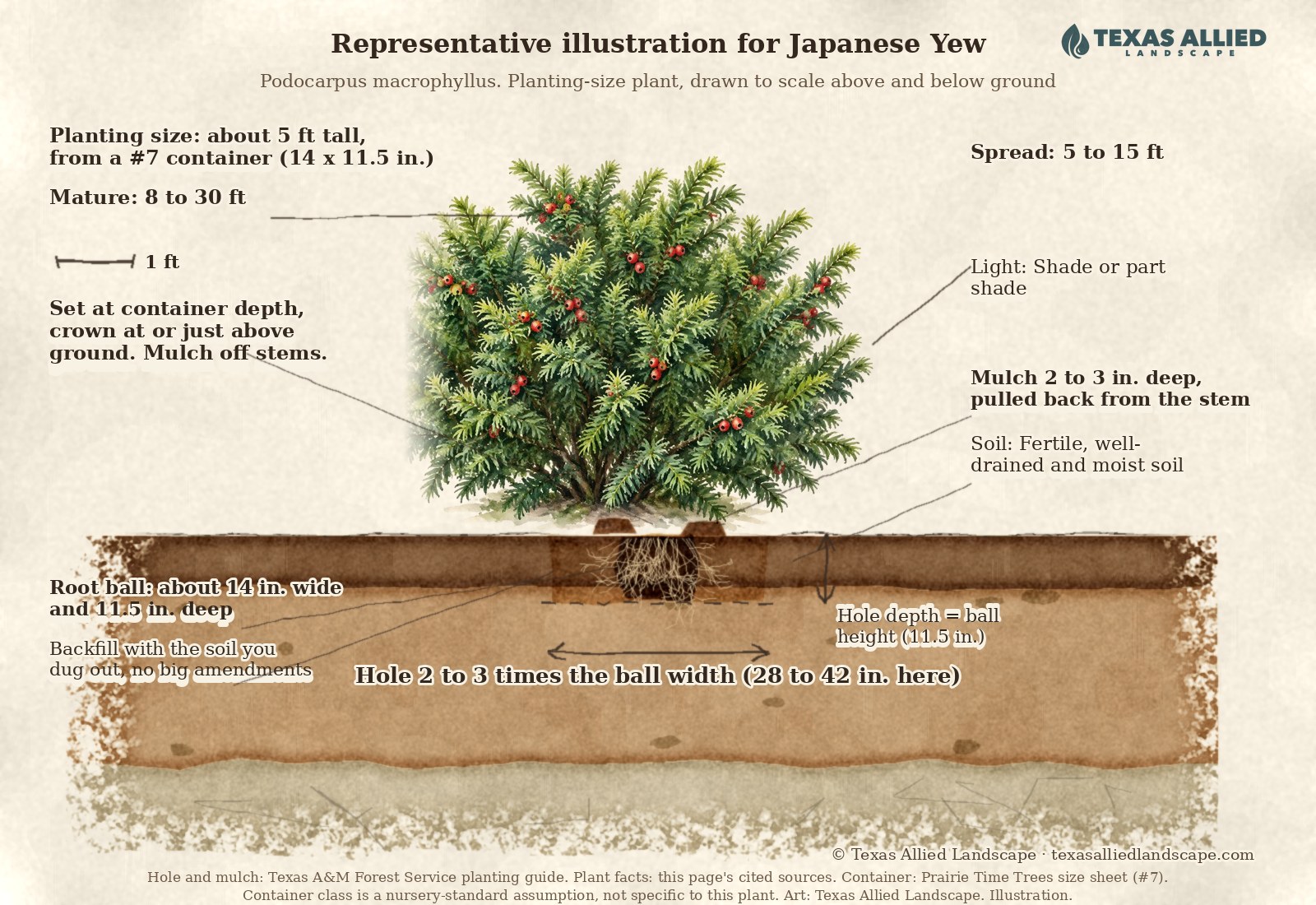
- Dig a hole twice as wide as the pot and no deeper, with sloping sides, and set the plant at the same depth it grew in its pot. Loosen any circling roots before backfilling.[3]
- For a new bed, clear grass and weeds first, roots and all.[3]
- Site: Shade or part shade; protect it from scorching afternoon summer sun, which dries out the leaves.[1]
- Timing: Fall, October through November, and late winter into early spring are the best times to plant Japanese Yew in Central Texas.
- Soak it well at planting and keep watering while the roots establish.[3]
- Mulch 2 to 4 inches, kept a few inches away from the stems to prevent crown rot. It needs no staking or other support.[3]
Will Japanese yew take full sun?
Afternoon summer sun scorches and dries out the leaves. Give it shade or part shade, especially protection from late-day sun.
Care Instructions for Your Japanese Yew
How to Water a Japanese Yew
Medium water; extra water in summer is appreciated.
Sunlight
Shade or part shade; protect it from scorching afternoon summer sun, which dries out the leaves.[1]
Soil and drainage
Fertile, well-drained, moist soil; plan on preparing the site for this in San Antonio.
Mature height and spread
8 to 30 feet tall, depending on form and age; many forms are available. 5 to 15 feet wide.
Pruning
Tolerates hedging, and it branches low to the ground, so it works well as an evergreen screen.
Normal seasonal behavior
Long-lived in local landscapes when planted in semi-shade around buildings and established live oaks. This plant is toxic.
Japanese yew questions
Is Japanese yew really a yew?
No - Podocarpus macrophyllus is a podocarpus, not a true yew (Taxus). Same look, different family, and it handles our heat better.[4]
Sun or shade for Japanese yew?
Both - it is one of the few conifer-type evergreens happy in shade, and it takes sun too.[5]
How big does Japanese yew get?
Slowly to 10-20 feet or more unpruned, but it shears beautifully and is often kept as a hedge or column.[6]
Can I prune Japanese yew hard?
Yes - it tolerates heavy shearing better than most conifers, which is why it is the classic clipped hedge here.[7]
Next step: Our horticulturalists can keep it sheared tight or thin it into a natural column.
Let Texas Allied Landscape care for your Japanese Yew
Japanese Yew does best with steady, knowledgeable care: the right water, pruning at the right time, and a trained eye for stress. The horticulturists at Texas Allied Landscape care for plants like yours across the San Antonio area, backed by over 40 years of landscape experience.
In these community guides
Sources
- Japanese Yew, SAWS Garden Style San Antonio.https://www.gardenstylesanantonio.com/plants/japanese-yew/abc
- October Gardening Checklist, Travis County AgriLife Extension.https://travis-tx.tamu.edu/about-2/horticulture/monthly-gardening-calendar-for-austin-area/october-gardening-checklist-for-austin-and-central-texas/↑
- Back to basics: Planting perennials, SAWS Garden Style San Antonio.https://www.gardenstylesanantonio.com/garden-articles/back-to-basics-planting-perennials/abcd
- City of Austin Watershed Protection plant guide, "Japanese Yew."https://www.austintexas.gov/watershed-protection/plant-guide/japanese-yew↑
- Missouri Botanical Garden, "Podocarpus macrophyllus."https://www.missouribotanicalgarden.org/PlantFinder/PlantFinderDetails.aspx?kempercode=a165↑
- Missouri Botanical Garden, "Podocarpus macrophyllus."https://www.missouribotanicalgarden.org/PlantFinder/PlantFinderDetails.aspx?kempercode=a165↑
- City of Austin Watershed Protection plant guide, "Japanese Yew."https://www.austintexas.gov/watershed-protection/plant-guide/japanese-yew↑