
Property owners
Passion Flower
- Plant
- Passion Flower
- Botanical name
- Passiflora incarnata
- Group
- Vines
Sourced light, water and growth details for Passiflora incarnata.
On this page
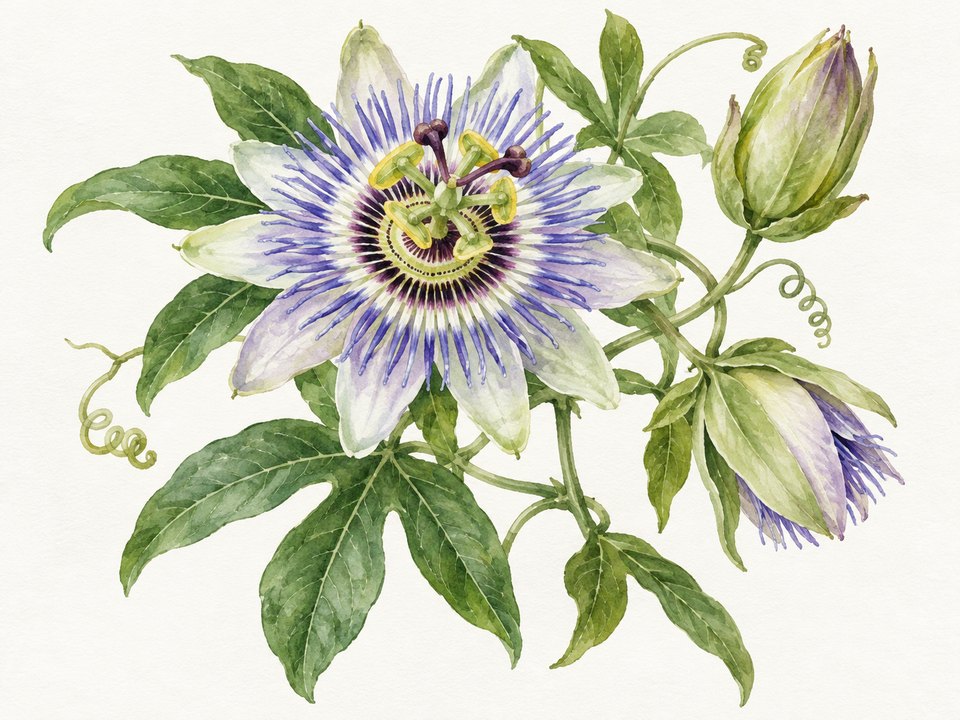
This page covers Passiflora incarnata, also called Maypop or Purple Passionflower. The common name Passion Flower covers more than one species; check the botanical label before using this care information.[^wild]
Light, soil and water
It grows in sun to partial shade. It has low to medium water use, in dry to moist conditions. The profile lists rich, non-saline clay, loam and sandy soils.[^wild]
Size and spread
It is a deciduous vine with climbing stems up to about 25 feet long. It climbs by tendrils or trails over the ground. Established plants can send up many root suckers, so leave room for spread.[^wild]
Flowers and butterflies
The lavender flowers can be about 3 inches across. The profile lists bloom months from March through November across its range, not a promise of flowers every month in one yard. It is a larval host for Gulf Fritillary and several other butterflies.[^wild]
Maintenance
Pinch young plants back during the first growing season to encourage bushy growth. The profile lists propagation by seed or cuttings but notes that seed germination can be low.[^wild]
When to Plant Passion Flower
Passion Flower is frost-tender, so plant it in spring after the last frost, around mid-March in San Antonio. It grows fast in warm weather and needs the season ahead of it, not behind it.
If you would like a hand, the Texas Allied Landscape team can plant your Passion Flower and keep it thriving.
Planting
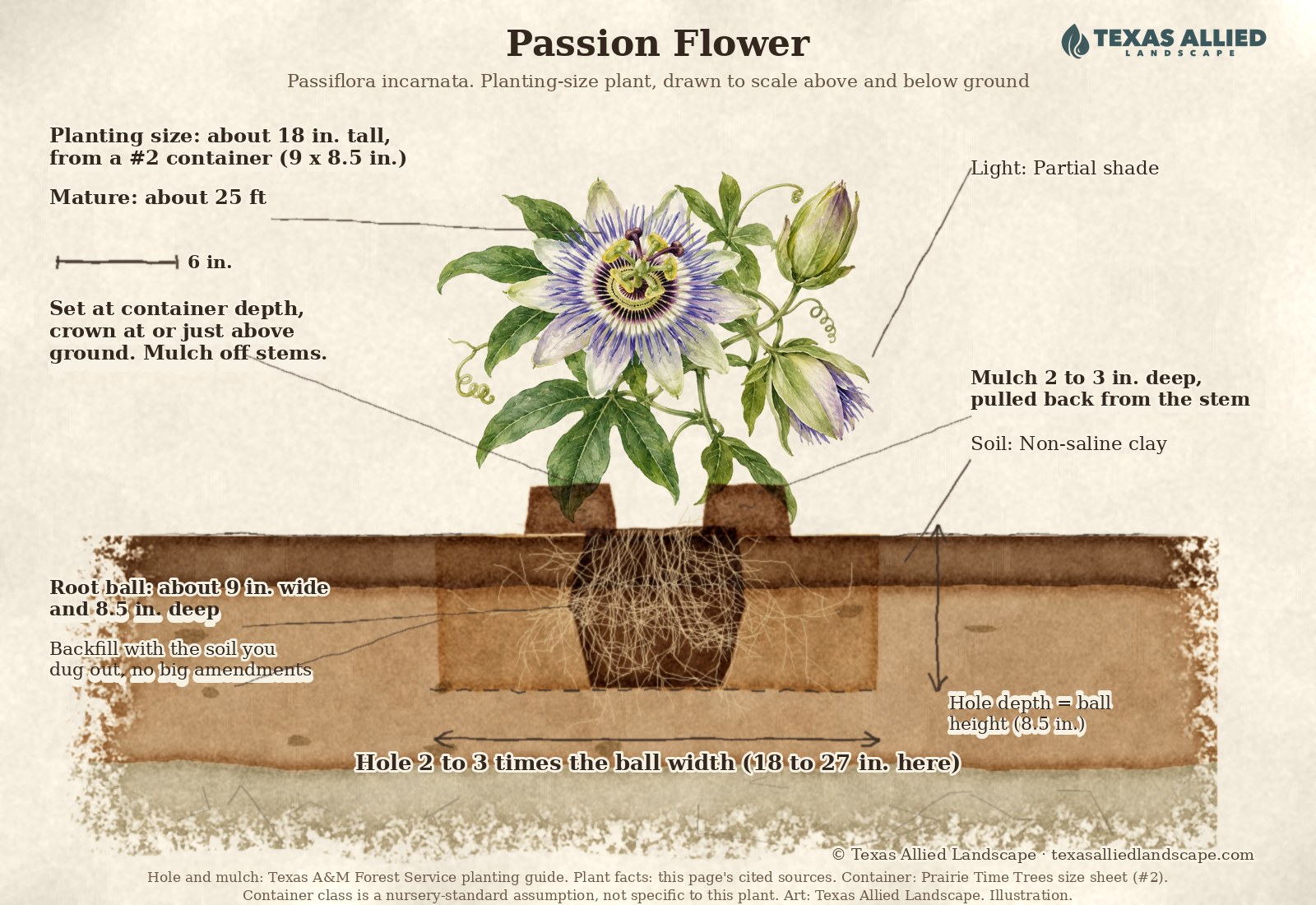
- Dig a hole twice as wide as the pot and no deeper, with sloping sides. Set the plant at the same depth it grew in its pot. Loosen any circling roots before backfilling.[1]
- Support: Plant it at the base of whatever it should climb, such as a trellis, fence or arbor, so it can take hold from the start.
- Soil: The profile lists rich, non-saline clay, loam and sandy soils.
- Timing: Passion Flower is frost-tender, so plant it in spring after the last frost, around mid-March in San Antonio.
- Soak it well at planting and keep watering while the roots establish.[1]
- Mulch 2 to 4 inches, kept a few inches away from the stems to prevent crown rot.[1]
Let Texas Allied Landscape care for your Passion Flower
Passion Flower does best with steady, knowledgeable care. That means the right water, pruning at the right time, and a trained eye for stress. The horticulturists at Texas Allied Landscape care for plants like yours across the San Antonio area. They are backed by over 40 years of landscape experience.
In these community guides
- Art in progress
Cordillera Ranch Landscaping
Bring your address, survey and yard ideas. We check the right guideline set, plan planting and irrigation, prepare the…

Illustration. Illustration based on reference photos of Johnson Ranch. Not a single literal view. Johnson Ranch Landscaping
Share your Johnson Ranch address, survey and yard ideas. Texas Allied Landscape can help plan planting, irrigation and…
Care Instructions for Your Passion Flower
How to Water a Passion Flower
It has low to medium water use, in dry to moist conditions.[^wild]
Sunlight, soil and water
It grows in sun to partial shade. It has low to medium water use, in dry to moist conditions. The profile lists rich, non-saline clay, loam and sandy soils.[^wild]
Maintenance
Pinch young plants back during the first growing season to encourage bushy growth. The profile lists propagation by seed or cuttings but notes that seed germination can be low.[^wild]
Passion flower questions
Is passion flower native to Texas?
Yes. Passiflora incarnata, the maypop, is a Texas native vine. Its exotic-looking purple and white flowers appear all summer.[2]
Are passion flower fruits edible?
Yes. The maypop fruits ripen yellow-green in late summer and are edible, with a tropical sweet-tart pulp. Native Americans ate them long before anyone grew the vine for looks.[3]
Will passion flower come back after a freeze?
Yes. The vine dies to the ground after a freeze, but the roots are hardy here. It resprouts vigorously in late spring. Be patient, because it is late to wake up.[4]
Why is passion flower taking over my beds?
It runs by underground shoots and pops up feet away from where you planted it. That is great on a fence but pushy in a flower bed. Mow or pull the wandering shoots where they are not wanted.[5]
Next step: Our horticulturalists can keep it confined to its support and out of your beds.
Sources
- Back to basics: Planting perennials, SAWS Garden Style San Antonio.https://www.gardenstylesanantonio.com/garden-articles/back-to-basics-planting-perennials/abc
- UF/IFAS Gardening Solutions, "Passion Flower."https://gardeningsolutions.ifas.ufl.edu/plants/ornamentals/passion-flower/↑
- Passionflow, "FAQ: Passiflora, passion fruit and passionflowers."https://www.passionflow.co.uk/faq/↑
- Royal Horticultural Society, "How to grow passion flowers."https://www.rhs.org.uk/plants/passion-flower/growing-guide↑
- Ask Extension, "Passion Flower vine."https://ask.extension.org/kb/faq.php?id=840349↑