
Property owners
Poison Ivy
- Plant
- Poison Ivy
- Botanical name
- Toxicodendron radicans
- Group
- Prohibited examples
Poison Ivy: sourced light needs, growing conditions, height, foliage and seasonal behavior.
On this page
Botanical name: Toxicodendron radicans.
Light
Part shade to shade.[1]
Soil and drainage
Moist soils.
Height
Very variable: a ground cover to about 18 inches, a shrub to 5 feet, or a vine to 100 feet long.
Foliage
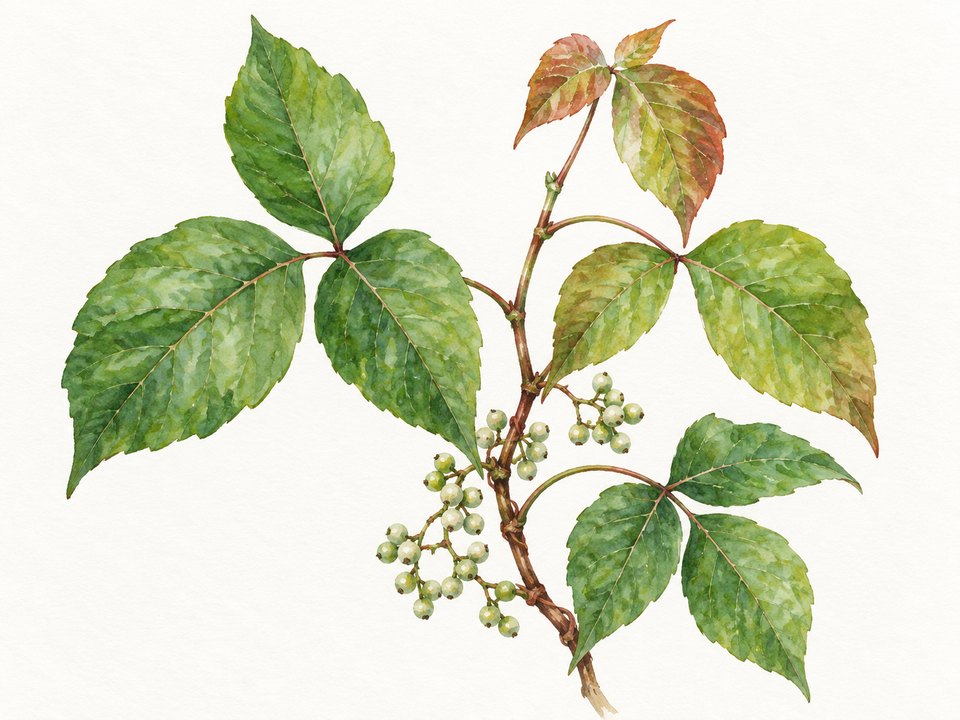
Deciduous, with three-part leaves; orange to deep-red fall color.
Seasonal behavior
Small yellowish-white flower clusters April to June, followed by amber berries. WARNING: all parts are poisonous in all seasons - sap contact causes severe skin redness, itching, swelling and blisters. Old vine stems look hairy with fibrous roots.
Why Poison Ivy is a problem here
Poison ivy is a native Texas plant, but it has no place in a maintained landscape: every part of the plant carries urushiol, the oil that causes an itchy rash on contact, and it spreads by seed and creeping roots into beds and fence lines.[1][2]
What to plant instead
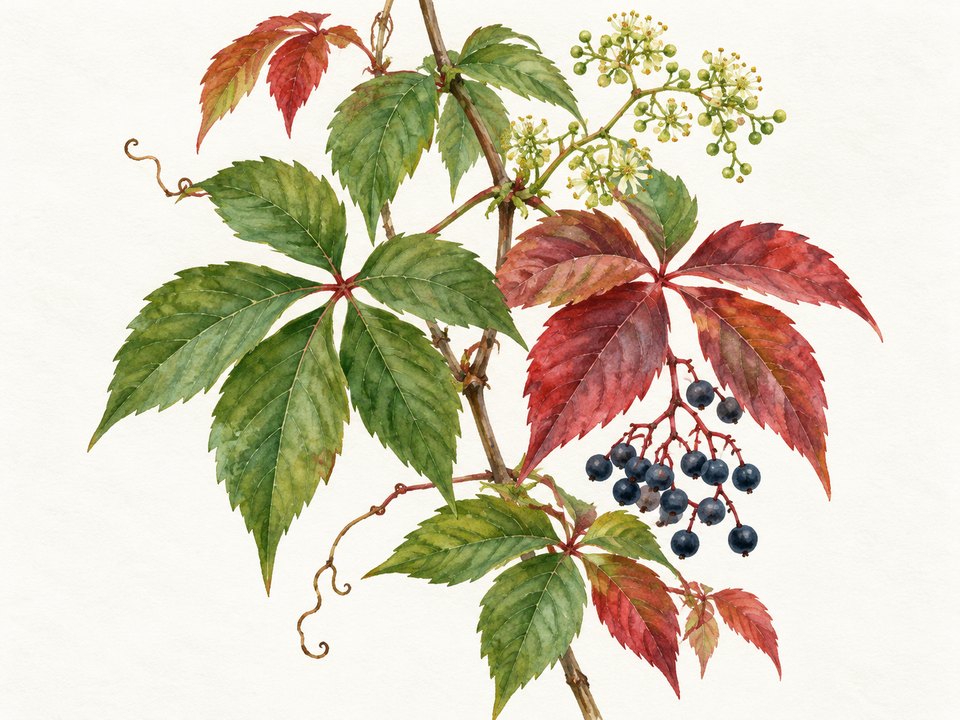
For a climbing or sprawling native that will not leave you itching:
 Illustration
Virginia CreeperParthenocissus quinquefoliaIllustration 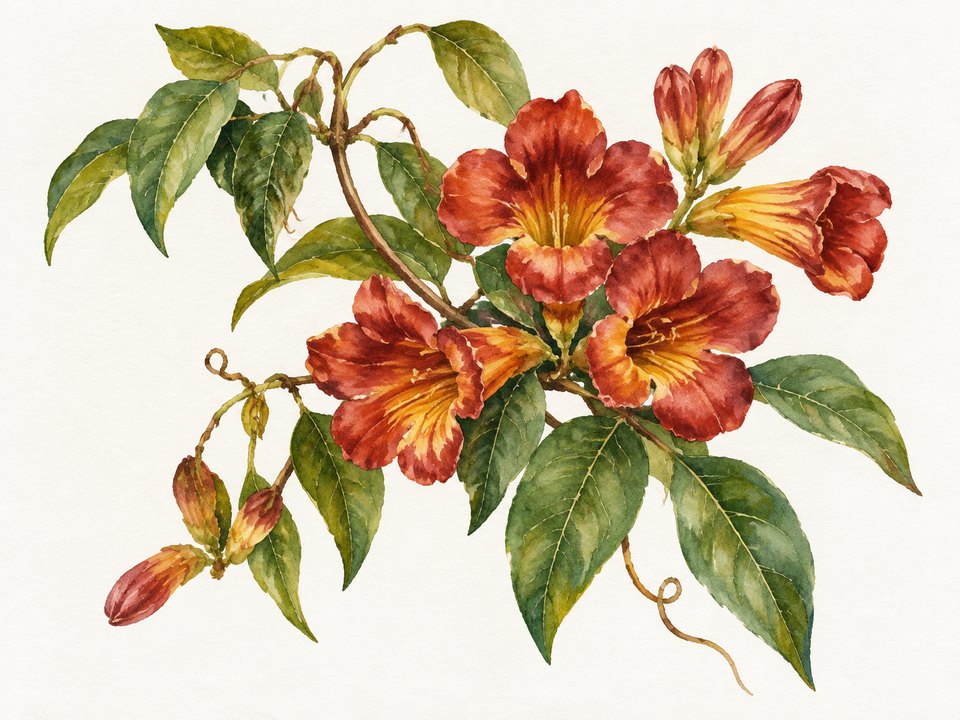 Illustration
CrossvineBignonia capreolataIllustration
If it is already on your property, the Texas Allied Landscape team can talk through removal and a replacement plan.
Care Instructions for Your Poison Ivy
How to Water a Poison Ivy
Sunlight
Part shade to shade.[1]
Soil and drainage
Moist soils.
Mature height and spread
Very variable: a ground cover to about 18 inches, a shrub to 5 feet, or a vine to 100 feet long.
Normal seasonal behavior
Small yellowish-white flower clusters April to June, followed by amber berries. WARNING: all parts are poisonous in all seasons - sap contact causes severe skin redness, itching, swelling and blisters. Old vine stems look hairy with fibrous roots.
Poison ivy questions
How do I identify poison ivy?
"Leaves of three, let it be" - each leaf has three leaflets, the middle one on a longer stalk, growing as a vine or low shrub. In Texas it often climbs trees and fences as a hairy vine.[2]
Is a poison ivy rash contagious?
No - the rash itself cannot spread person to person. It comes from urushiol oil, which can linger on skin, clothes, tools, and pet fur and cause new spots until it is washed off.[3]
How do I get rid of poison ivy in my yard?
Never burn it - the smoke carries the oil. Dig out small plants with the roots, or treat cut stems and foliage with a labeled herbicide, always with skin fully covered.[4]
Next step: Our horticulturalists can remove poison ivy safely so you never have to touch it.
Is poison ivy good for anything?
It is a native plant and its berries feed birds, so it is not "invasive" - but it has no place where people and pets walk, and removing it from yards is the right call.[5]
In these community guides
Illustration. Illustration based on reference photos of Mountain Springs Ranch. Not a single literal view. Mountain Springs Ranch Landscaping
Plan your Mountain Springs Ranch yard with planting, lawn and irrigation guidance. Get help from the review package…
Sources
- Toxicodendron radicans (Eastern Poison Ivy), Lady Bird Johnson Wildflower Center.https://www.wildflower.org/plants/result.php?id_plant=tora2abc
- Clemson Home & Garden Information Center, "How to Identify and Control Poison Ivy."https://hgic.clemson.edu/factsheet/how-to-identify-and-control-poison-ivy-toxicodendron-radicans/ab
- Michigan State University Extension, "Poison ivy: Frequently Asked Questions."https://www.canr.msu.edu/news/poison_ivy_frequently_asked_questions↑
- Iowa State University Extension Yard and Garden, "How do I control poison ivy?"https://yardandgarden.extension.iastate.edu/faq/how-do-i-control-poison-ivy↑
- Penn State Extension, "Manage Poison Ivy Safely."https://extension.psu.edu/manage-poison-ivy-safely↑